Category: Environment

  • Tenneco Clean Air India kicks off landmark tree plantation drive in Pune, plants 5,000 saplings

    Tenneco Clean Air India kicks off landmark tree plantation drive in Pune, plants 5,000 saplings

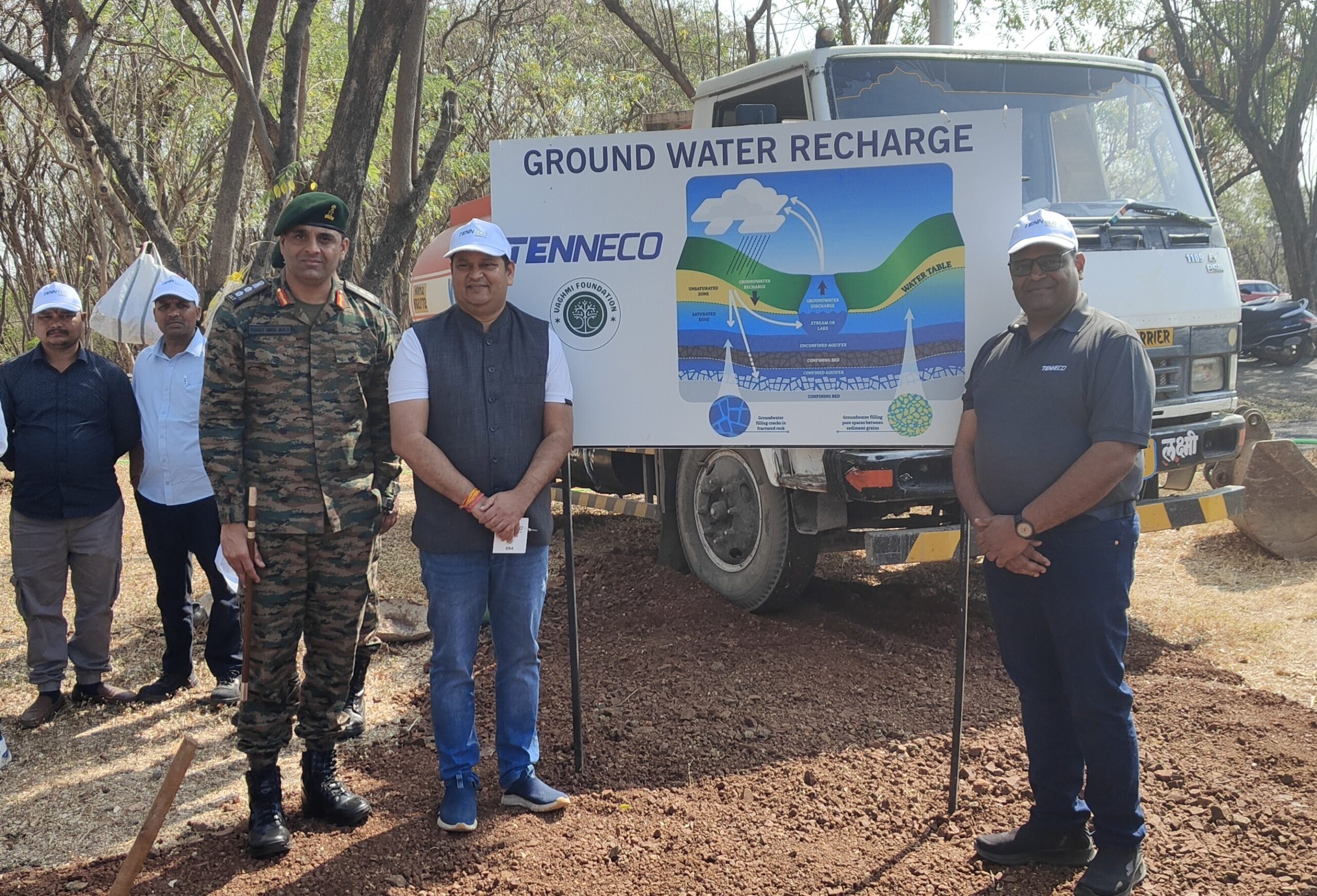
    Tenneco Clean Air India on Sunday launched its landmark tree plantation drive, known as Vriksharopan Abhiyan, in collaboration with the 15th Battalion of the Jat Regiment and Vaghmi Foundation, planting 5,000 saplings at the regiment’s premises in Lullanagar, Pune.

    The sustainable initiative includes 18 months of maintenance to ensure sapling survival, with each plant tagged for geo-monitoring, survival tracking and quarterly reporting by the Vaghmi Foundation.

    Tenneco leadership, regiment officers and foundation representatives attended the event, underscoring the company’s commitment to environmental conservation.

    “The Vriksharopan Abhiyan is a meaningful step in Tenneco’s larger ambition to contribute to India’s environmental priorities,” said Rishi Verma, President of Tenneco India. “Our focus is on nurturing long-term green cover through structured care, protection and scientific monitoring to create healthier, more resilient ecosystems.”

    Tenneco employees and foundation members will conduct periodic revisits to support ongoing care.

    Tenneco Clean Air India, part of the global Tenneco Group, supplies clean air, powertrain and suspension systems to automotive original equipment manufacturers in India, operating 12 manufacturing facilities and two R&D centres.

  • Habitats Trust Grants 2026: Rs 3.5 Cr for strategic conservation

    Habitats Trust Grants 2026: Rs 3.5 Cr for strategic conservation

    The Habitats Trust, a non-profit organisation tackling biodiversity loss, climate crisis and water scarcity, on Wednesday opened applications for the 9th edition of the strategic Habitats Trust Grants, totalling Rs 3.5 crore.

    Applications for the Habitats Trust Grants are accepted from January 10 to February 10, 2026, with recipients announced in the first week of August 2026.

    India hosts 7-8% of global biodiversity, but many species and ecosystems outside protected areas remain underfunded. The grants target holistic, innovative and replicable projects focused on lesser-known species and underrepresented habitats.

    “India’s conservation challenges are complex and interconnected with climate and governance issues,” said Rushikesh Chavan, Director of The Habitats Trust. “The strategic Habitats Trust Grants aim to support models that address urgent needs while ensuring sustainability and replicability, especially for overlooked species.”

    The grants are divided into three categories:

    • THT Conservation Grants (Rs 1 crore each, over three years): Awarded to two organisations for comprehensive efforts on critical habitats.
    • THT Research Grants (Rs 40 lakh each, over two years): Awarded to two organisations for interdisciplinary research informing on-ground action.
    • THT Action Grants/Action Service Projects (Rs 25 lakh each, over two years): Awarded to three organisations or individuals for urgent interventions.

    A 12-member expert panel will evaluate applications based on relevance, impact, stakeholder engagement, scalability and sustainability.

    Since 2018, the programme has supported 38 projects across 21 states and union territories, disbursing over Rs 16.2 crore. In 2025, eight grantees received Rs 3.8 crore, including Grameen Sahara and Hume Centre for Ecology and Wildlife Biology (Conservation Grants), Coastal Conservation Foundation and Wildlife Institute of India (Research Grants), and others for Action Grants.

    Founded in 2018 by Roshni Nadar Malhotra and Shikhar Malhotra, The Habitats Trust operates in 32 states and union territories, partnering with over 120 entities across more than 600,000 hectares.

    Application forms and details are available at the official website: www.thehabitatstrust.org or apply directly via registrations.thehabitatstrust.org.

    For inquiries, contact: grants@thehabitatstrust.org

  • Hyundai plants landmark 1 million trees in IONIQ Forest

    Hyundai plants landmark 1 million trees in IONIQ Forest

    Hyundai Motor India Foundation (HMIF), the corporate social responsibility arm of Hyundai Motor India Limited, has completed the landmark plantation of 1 million trees under its IONIQ Forest initiative near Talegaon in Pune district.

    The project covers 90.5 acres and incorporates 41 native species using the Miyawaki afforestation method, making it one of India’s most significant single-site, time-bound efforts.

    Work began with site clearance in May 2025, followed by initial planting on World Environment Day in June. The forest was officially inaugurated in September 2025 by Maharashtra Chief Minister Devendra Fadnavis.

    Each tree is geo-tagged with a QR code for transparency and real-time monitoring.

    “Hyundai Motor India Foundation’s IONIQ Forest project is more than an afforestation effort; it represents a vision to create a greener and more sustainable future,” said Puneet Anand, AVP and Vertical Head – Corporate Affairs at HMIL.

    “By combining environmental restoration with community empowerment, Hyundai is setting a benchmark for sustainable growth in India,” he said in a statement.

    The initiative has created livelihoods for over 150 members of local tribal communities. Over five years, the forest is expected to sequester 63,000 tons of CO2, boost biodiversity and enhance climate resilience.

    It will also serve as an educational hub for schools and communities to promote environmental awareness.

    The effort aligns with HMIF’s Rs 56 crore CSR commitment in Maharashtra, spanning environment, healthcare, road safety and community development.

  • Zerodha CSR grant boosts SusMafia climate ecosystem

    Zerodha CSR grant boosts SusMafia climate ecosystem

    Brokerage firm Zerodha has awarded a Rs 2 crore CSR grant crore CSR grant to The Sustainability Mafia (SusMafia), a non-profit focused on climate education and early-stage incubation, to boost India’s climate-tech ecosystem.

    The Zerodha CSR grant will enable SusMafia, legally known as The Sustainability Engine Foundation, to expand programs building a skilled climate workforce and supporting startups in sectors like air quality, water sanitation, waste management, carbon reduction, and the circular economy.

    SusMafia addresses gaps in talent readiness, early validation for founders, and connections to capital and pilots.

    Over recent years, the organization has trained over 400 climate professionals via its Climate Ninja program and deployed Rs 1 crore in grants to ventures, fostering a network of more than 80 climate entrepreneurs.

    With the new funding, SusMafia plans to train over 300 additional Climate Ninjas, support more than 20 early-stage startups, and host events like SusCrunch for stakeholder collaboration.

    “Strong climate outcomes emerge when founders, practitioners, and learners have access to the right knowledge and support early in their journey,” said Nithin Kamath, CEO of Zerodha. “SusMafia is building this connective tissue, and we’re pleased to back their work.”

    Ganesh Shankar, Director of SusMafia, added: “This Zerodha CSR grant strengthens our ability to build community, bringing founders, talent, and partners closer to make sustainability the default choice.”

    Zerodha, through its Rain Matter initiative, supports long-term climate and sustainability efforts across India.

    SusMafia collaborates with institutions including the Indian School of Business (ISB), IIT Madras, and Ashoka University, and networks with startups like PadCare, Dexler Energy, and Lucro.

  • Crop residue energy: slash pollution, lift farmer earnings

    Crop residue energy: slash pollution, lift farmer earnings

    Renowned Indian chemical engineer Padma Bhushan Dr J B Joshi urged harnessing crop residue to generate sustainable energy, a move that could slash air pollution in northern India and add up to Rs 5,00,000 annually to farmers’ earnings.

    India produces about 600 million tonnes of crop residue yearly, much of it burned in fields and contributing to toxic smog in Delhi and surrounding areas, Joshi told a conference on Energy Conservation Day organised by the Progressive Chambers of Commerce.

    “Converting this biomass into coal and gas via modern indigenous technology would cut reliance on imported fossil fuels,” Joshi said at the “Viksit Bharat 2047” event. He cited a pilot project in Sindhudurg district, Maharashtra, turning cashew waste into energy as proof of concept.

    The initiative aligns with India’s push for renewable sources amid rising energy demands. Panel moderator Dr A K Nayak warned that achieving developed-nation status by 2047 requires 40 times current energy output, all sustainably sourced.

    Somaiya University head Prof Ajay Kapoor stressed pairing tech investments with everyday conservation to ease citizens’ lives.

    The event launched the book “Food Security by Radiation – The Unreasoned Fear for Irradiated Food” by Arun K Nayak, Satendra Gautam, Ravindra Bansal and Samyak Munot, debunking myths on food irradiation.

  • Coal Ministry urges companies to align CSR efforts with local community needs

    Coal Ministry urges companies to align CSR efforts with local community needs

    Ministry of Coal on Tuesday held a stakeholder consultation on strengthening the Corporate Social Responsibility framework for coal companies, with officials calling for better coordination of welfare and sustainability programmes.

    Additional Secretary Rupinder Brar urged coal companies to align their CSR, welfare and sustainability initiatives to maximise community benefits, according to a statement.

    She stressed the need to prioritise local requirements when planning CSR activities.

    Brar emphasised the importance of engaging credible agencies for need and impact assessments to enable more effective CSR programmes, the ministry said.

    Coal public sector undertakings and private sector companies shared experiences on major CSR projects, community engagement and lessons from impact assessments during the New Delhi meeting.

    India is the world’s second-largest coal producer and consumer after China, with coal accounting for about 70% of the country’s power generation.

  • LG Electronics India celebrates sustainability on Global Volunteer Day

    LG Electronics India celebrates sustainability on Global Volunteer Day

    LG employees took part in a tree plantation drive in Greater Noida and Pune.

    LG Electronics India, a major consumer durables brand, marked Global Volunteer Day on June 5 by organizing a series of environmental initiatives to promote sustainability, the company said on Thursday.

    On June 4, the company held an e-waste collection drive at its corporate office in New Delhi, allowing employees to bring in old gadgets for proper disposal. Experts conducted an awareness session on e-waste management.

    The following day, LG employees took part in a tree plantation drive in Greater Noida and Pune. They were also encouraged to plant trees at home with their families, with many sharing photos on social media.

    “At LG Electronics, we believe in leading by example when it comes to environmental sustainability,” said Hong Ju Jeon, managing director of LG Electronics India.

    “Our Global Volunteer Day activities reflect our dedication to creating a sustainable future and our commitment to the communities we serve.”

    LG said it has partnered with 16 major recyclers across India and has so far collected 850,000 kg of e-waste as part of its extended producer responsibility obligations.

    Since 2021, the company has developed and maintained a 3.1 km (1.9 mile) green area in Greater Noida, including a Miyawaki Forest with 12,000 plants.

  • Coca-Cola installs benches from recycled plastic waste to promote sustainability

    Coca-Cola installs benches from recycled plastic waste to promote sustainability

    The soft drinks giant repurposed about 19,000 kg of plastic waste collected during last year’s ICC Cricket World Cup in India to create the eco-friendly benches.

    Coca-Cola India on Wednesday launched a campaign called “#BenchPeBaat” to promote sustainability and meaningful conversations, installing 380 benches made from recycled plastic waste across 10 cities in the country.

    The soft drinks giant, through its philanthropic arm Anandana and in partnership with United Way Mumbai, repurposed about 19,000 kg of plastic waste collected during last year’s ICC Cricket World Cup in India to create the eco-friendly benches.

    Each bench is made from approximately 50 kg of recycled plastic waste, Coca-Cola said, adding the benches have been installed in schools, colleges, public parks and municipal corporation offices in cities including Delhi, Mumbai, Kolkata and Bangalore.

    “Our #BenchPeBaat campaign is a testament to our dedication towards sustainability, as we transform waste into meaningful community assets,” said Rajesh Ayapilla, senior director for corporate social responsibility and sustainability at Coca-Cola India and Southwest Asia.

    Coca-Cola conceptualised the campaign in line with its global “World Without Waste” strategy aimed at driving a circular economy for packaging, he added.

    The campaign film was created by Havas People India, the talent communication and employer branding agency of Havas Group India.

    “We are proud to partner with Coca-Cola India on the groundbreaking #BenchPeBaat campaign, which ignites awareness and dedication to sustainability,” said Arindam Sengupta, managing director of Havas People India.

    Last year, Coca-Cola India deployed reverse vending machines and collection bins at stadiums and hospitality zones in 10 host cities during the cricket World Cup to collect plastic waste that was later repurposed into the benches.

    George Aikara, CEO of United Way Mumbai, said the initiative exemplified sustainable practices while enriching communities with innovative street furniture and vibrant social spaces.

  • Adani’s Ambuja Cements bags top green awards for water, energy conservation

    Adani’s Ambuja Cements bags top green awards for water, energy conservation

    Over 85% of the product portfolio comprises blended green cement, aligning with their sustainable manufacturing practices.

    In a boost to its green credentials, Ambuja Cements, part of billionaire Gautam Adani’s diversified portfolio, has won prestigious environmental awards for its plants in Chhattisgarh and Uttarakhand.

    The company’s Bhatapara plant in Chhattisgarh clinched the Platinum Award at the 8th Apex India Excellence Awards for its innovative use of green energy.

    Nearly 30%of the plant’s power needs are met through solar energy and a Waste Heat Recovery System (WHRS). The plant also stands out for its water conservation efforts, achieving an impressive 8-times water positivity.

    Similarly, the Roorkee plant in Uttarakhand bagged the Gold Award for its exemplary water management practices. The unit has slashed its water consumption by a substantial 33%, setting a new industry benchmark.

    “These accolades reflect our unwavering commitment to operational excellence and environmental stewardship,” said Ajay Kapur, CEO of Adani Group’s cement business.

    He added that over 85% of their product portfolio comprises blended green cement, aligning with their sustainable manufacturing practices.

    The accolades come at a time when corporate India is under increasing pressure to adopt eco-friendly practices. Ambuja Cements has been leading this charge, becoming 11 times water positive and 8 times plastic negative.

    As climate change concerns mount, such initiatives by major industrial players are seen as critical. Industry experts believe that Adani’s green push in its cement business could set a precedent for other sectors to follow.

  • Ambuja Cement Foundation ties up with SLB to implement women & water program in Barmer

    Ambuja Cement Foundation ties up with SLB to implement women & water program in Barmer

    The joint project will cover 5 villages of the Gudamalini block of Barmer, reaching over 7200 beneficiaries and 2300 households.

    Ambuja Cement Foundation (ACF) has partnered with SLB Limited to implement Community Development Programs in the Barmer district of Rajasthan.

    Under this partnership ACF aims to empower women through Self-Help Group (SHG) formation, reach out to adolescent girls and focus on bringing water tohousehold doorsteps by encouraging building rooftop rainwater harvesting systems.

    The joint project will cover 5 villages of the Gudamalini block of Barmer, reaching over 7200 beneficiaries and 2300 households, ACF said in a statement.

    Under the Women Empowerment initiative, ACF will focus on capacity building of women who belong to socially and economically weaker sections of the society.

    The area in the desert state is a typical rural setting where females are restricted to household chores,have no say in family decision making and are primarily housebound. These women have no access to higher education and are financially dependent on male members of their families. They are even victims of dowry and domestic violence.

    Due to these issues SLB’s CSR Lead, Shreya Sudhir and ACF’s Senior Management have decided to come together to mobilisethese rural women,organise them into groups, and support them in becoming self-reliant.

    Talking about the new partnership, Ambuja Cement Foundation CEO Pearl Tiwari said, “We not only aim to empower women, but build their confidence to overcome the many varied social problems they face. The partnership helps us take a step forward towards our vision of rural prosperity and we look forward to empowering these women to become agents of change in their families and communities.”

    The joint program intends to strengthen the existing 42 SHGs by conducting training program and exposure visits, along with initiatingincome generation activities. ACF will also introduce social security schemes, and encourage stakeholder meetings and workshops in the villages.

    ACF will form groups of adolescent girls – providing training and awareness on areas like nutrition and health education, life skills, access to public services and child care practices, whilst also conductinghealth check-ups along with counselling and guidance on family welfare. Vocational training will also be provided to rural girls above the age of 16 under the National Skill Development Program.

    To enhance year-round access to water, ACF will encourage households to set up Rooftop Rainwater Harvesting systems to capture rainwater and provide drinking water in their homes. Households will be offered support to build systems with a water storage capacity of 10,000 litres.

    Barmer is an area outside the current functional geography of Ambuja Foundation. However, as a grassroots implementation agency with almost 3 decades of vast experience in remote rural areas, ACF is able to replicate its program models seamlessly. Rajasthan is one of the largest priority states for ACF’s community development work, thus both regional skills and networks will be harnessed to reach out to beneficiaries in Barmer.