ACC, part of the Adani Portfolio, and the Adani Foundation are advancing climate resilience through transforming water conservation efforts in rural Maharashtra.
In Dhakori village, Wani block, Yavatmal district, the companies addressed chronic water scarcity by building an upstream cement nala bund under the 2024-25 Climate Action Water Conservation initiative.
Despite heavy monsoons, runoff previously left fields dry by November, restricting farmers to one crop annually.
The new structure stores nearly 48,000 litres of water, recharges borewells and provides year-round supply to 96 acres of farmland.
Around 35 farmers now grow multiple crops, with incomes rising by about Rs 18,000 per acre.
The project has also secured household and livestock water supplies, fostering community stability.
By revitalising resources in Dhakori, ACC and the Adani Foundation demonstrate how targeted, community-led initiatives can achieve sustainable rural development amid climate challenges.
For more on ACC’s initiatives, visit ACC Limited. Details on Adani Foundation’s work available at Adani Foundation.
In the arid landscapes of Rajasthan, where traditional farming often meant meager earnings and uncertainty, Hindustan Zinc’s Samadhan Project is sparking a quiet revolution. This flagship CSR initiative has reached nearly 1.4 lakh farmers, helping them generate over Rs 192 crore in diversified income in just the past year through modern, sustainable practices.
Take Shankar Lal Dangi from Chota Guda village near Udaipur. Like many, his family once scraped by on Rs 6,000–7,000 a month, limited by old-fashioned methods, scarce water, and unreliable markets. Through the Samadhan Project, Shankar embraced drip irrigation, scientific cropping, and joined a Farmer Producer Organization for better prices, according to the company statement.
Today, his yields are higher, milk production has doubled, and his income has soared—bringing stability, pride, and a brighter future for his family.
Close-up of raw milk being poured into container with dairy cows in background
Similar hope blooms in Sindesar Kalan village, Rajsamand district, with Dinesh Puri Goswami. He shifted from low-yield crops to diverse vegetables and upgraded dairy practices.
Using raised-bed nurseries and better animal care, Dinesh earned Rs 78,000 from vegetables in four months, plus Rs 12,000 monthly from milk. “It’s reduced our risks and given us steady income,” he shares.
Women are at the heart of this change too. Gendi Bai from Ganeshpura village turned one bigha of land into a thriving vegetable plot with drip irrigation and mulching, earning ₹90,000 and gaining recognition as a progressive farmer.
From leading Farmer Interest Groups to running dairy enterprises, women under Samadhan are driving household prosperity and community strength.
The project’s multi-pronged approach—crop diversification, precision irrigation, livestock improvement, microenterprises, and farmer-owned institutions—has delivered real results: ₹90 crore in livestock assets, 280 lakh litres of milk worth ₹88 crore, and revenues from farmer-led ventures.
With 510 Farmer Interest Groups and five Producer Organizations involving over 9,300 shareholders, Samadhan covers 2,449 hectares in climate-smart practices like trellis farming and bio-fortified crops. It’s not just boosting incomes; it’s building resilience, nutrition, and agri-entrepreneurship.
As a Vedanta Group company, Hindustan Zinc extends its impact beyond farming through education, healthcare, and more, touching 23 lakh lives across 2,300 villages—aligning with India’s vision of inclusive growth.
These stories of Shankar, Dinesh, Gendi Bai, and thousands more show how the Samadhan Project is turning subsistence into sustainability, one farm at a time.
On Kisan Diwas, as India honours its hardworking farmers, there’s a quiet revolution unfolding in villages across 16 states—one that’s putting smiles on faces and money directly into pockets. bigbasket, a TATA Enterprise, is at the heart of this change, empowering over 50,000 farmers through a network of more than 120 collection centres right at the farm gate.
Imagine a farmer in rural Karnataka, waking before dawn to harvest crisp vegetables. Instead of haggling with middlemen who take a big cut, he loads his produce onto a truck heading to a nearby bigbasket centre. By evening, the payment hits his bank account—within just 48 hours. No delays, no uncertainty. This simple shift has brought stability to thousands of families who once worried about unpredictable income.
It all started small in 2015, with one collection centre in Malur near Bengaluru. Over the past decade, bigbasket has strengthened this model, building trust one harvest at a time. Today, a dedicated team of over 400 agricultural graduates, including agronomists at every centre, works hand-in-hand with farmers. Using the in-house Farmus app, they geotag fields, forecast harvests, and advise on growing high-demand crops that fetch better prices.
“Our relationship with farmers is central to everything we do,” says Seshu Kumar Tirumala, chief buying & merchandising officer at bigbasket. “It’s about long-term trust and shared success, not just buying produce.”
For organic farmers, the support goes even deeper. Through 12 exclusive centres, bigbasket helps around 6,300 growers get certified—at no cost to them. Trained local youth, called Jaivikmitras, visit farms to teach natural methods, like preparing Jeevamruth and Beejamruth, traditional elixirs that enrich the soil without chemicals.
These stories aren’t just numbers—they’re about real people gaining dignity, security, and hope. As bigbasket continues to revolutionize farmer empowerment, it’s proving that a fairer food chain benefits everyone: fresher produce on our tables, and brighter futures in India’s fields.
Maruti Suzuki India Limited launched a revolutionary Maruti WagonR swivel seat option on Thursday, marking a pioneering step toward inclusive mobility in India’s mass market automobile segment.
The WagonR swivel seat is specifically designed to provide greater convenience for senior citizens and persons with disabilities, aligning with the United Nations’ Sustainable Development Goal 10 on reducing inequality.
“Swivel seat will make daily travel more convenient for senior citizens and persons with disabilities,” said Hisashi Takeuchi, Managing Director and CEO of Maruti Suzuki India.
“This initiative reflects our vision of inclusive mobility and reinforces our commitment to customer-focused solutions,” he said in a statement.
Customers can order the swivel seat as a retrofitting kit at Maruti Suzuki Arena dealerships. The seat can be installed in new WagonR models or retrofitted in existing vehicles, according to the company statement.
The product initially will be available at more than 200 Arena dealerships across 11 cities, with plans to scale up based on customer demand.
WagonR’s tall-boy design offers spacious headroom and legroom, facilitating easier entry and exit, making it suitable for this innovative mobility solution. The model ranks among India’s top 10 selling vehicles.
Installation does not modify the vehicle’s structure or core functioning. The swivel seat comes with a three-year warranty.
“By integrating our innovation into a model loved by the masses, we can ensure that inclusive mobility becomes a mainstream reality,” said Naina Padaki, founder of TRUEAssist Technology Private Limited.
The initiative draws inspiration from Suzuki Group’s corporate slogan “By Your Side,” embodying the group’s commitment to customer-focused solutions rooted in founder Michio Suzuki’s vision.
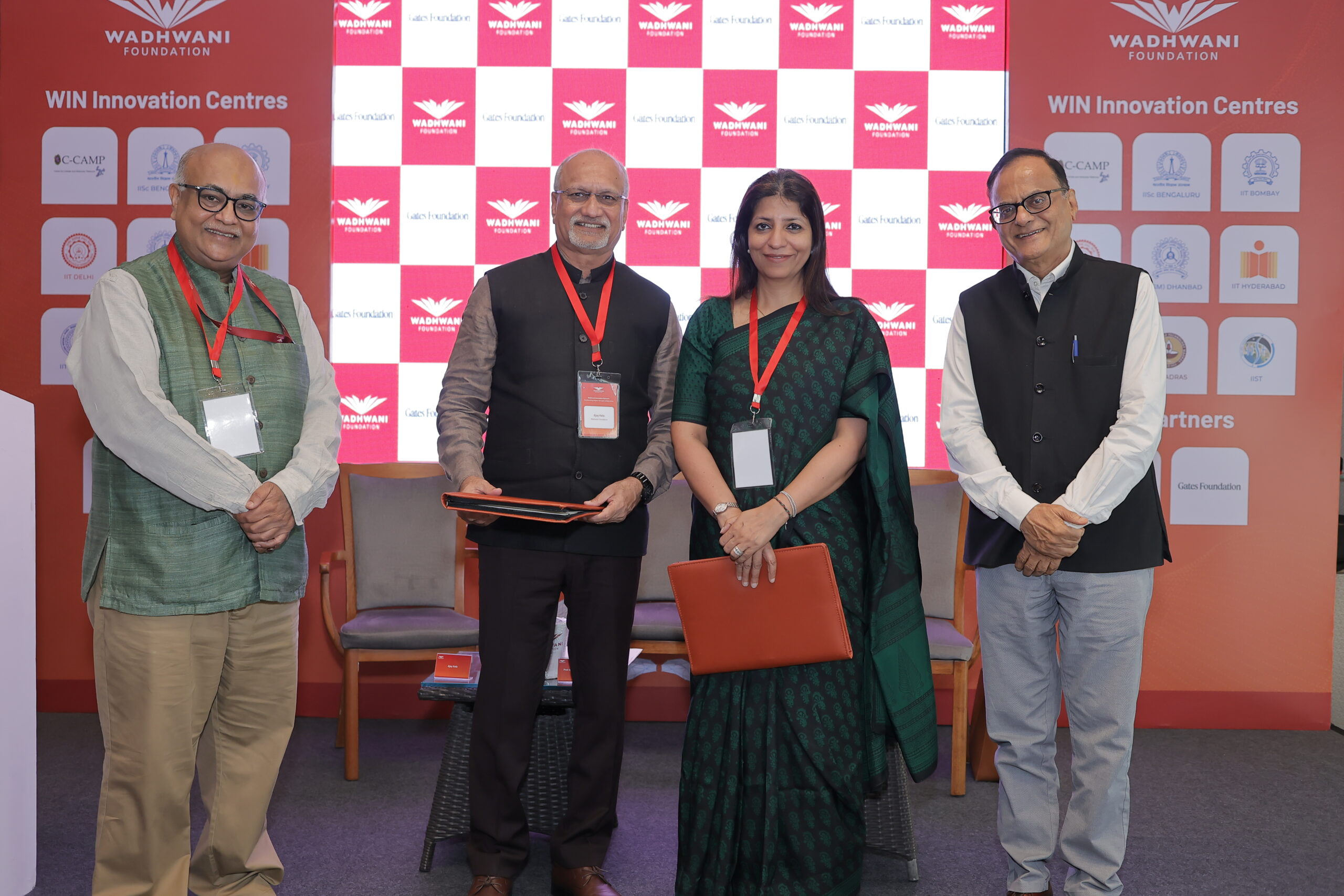
The Gates Foundation appointed Archna Vyas as its Gates Foundation India Director, the organization said on Tuesday, making her the first woman to lead its operations in one of its most significant country partnerships.
Vyas will oversee the foundation’s collaboration with Indian government agencies, philanthropists and private sector partners on healthcare, sanitation, gender equality and agricultural development initiatives aligned with India’s development goals, the foundation said in a statement.
The foundation has operated in India since 2003, working on issues ranging from digital public infrastructure to financial empowerment as the country has lifted millions out of poverty over the past two decades.
As the new Gates Foundation India Director, Vyas previously served as global director for the foundation’s Global Policy and Advocacy division, leading work on growth, opportunity and empowerment. She joined the organization in 2014 and has worked across its health and poverty alleviation programs.
“India is our most significant country partnership,” Vyas said in the statement. “I look forward to working closely with governments, communities, philanthropists, and our partners to support the Government of India’s vision of becoming a developed economy by 2047.”
Before joining the foundation, Vyas led communications and digital marketing for Reckitt across South and Southeast Asia. She holds a master’s degree in physics from the University of Delhi and a postgraduate diploma in business administration from the Institute of Management Technology.
Ankur Vora, the foundation’s chief strategy officer, said the Gates Foundation India Director brings deep understanding of India’s development landscape and a track record of building impactful partnerships.
Vyas succeeds Hari Menon, who led the India office since 2019 and will transition to a global leadership role in January 2026, the foundation said.
Renowned Indian chemical engineer Padma Bhushan Dr J B Joshi urged harnessing crop residue to generate sustainable energy, a move that could slash air pollution in northern India and add up to Rs 5,00,000 annually to farmers’ earnings.
India produces about 600 million tonnes of crop residue yearly, much of it burned in fields and contributing to toxic smog in Delhi and surrounding areas, Joshi told a conference on Energy Conservation Day organised by the Progressive Chambers of Commerce.
“Converting this biomass into coal and gas via modern indigenous technology would cut reliance on imported fossil fuels,” Joshi said at the “Viksit Bharat 2047” event. He cited a pilot project in Sindhudurg district, Maharashtra, turning cashew waste into energy as proof of concept.
The initiative aligns with India’s push for renewable sources amid rising energy demands. Panel moderator Dr A K Nayak warned that achieving developed-nation status by 2047 requires 40 times current energy output, all sustainably sourced.
Somaiya University head Prof Ajay Kapoor stressed pairing tech investments with everyday conservation to ease citizens’ lives.
The event launched the book “Food Security by Radiation – The Unreasoned Fear for Irradiated Food” by Arun K Nayak, Satendra Gautam, Ravindra Bansal and Samyak Munot, debunking myths on food irradiation.
In the rural hamlet of Gagal in Himachal Pradesh, ACC, a unit of the Adani Group’s diversified portfolio and India’s fastest-growing building materials firm, is bolstering youth livelihoods via targeted, community-driven skill development programs.
Sakshi, 22, hails from a humble family in Gagal village, where early tragedy struck: her father died young, leaving her mother and elder brother to shoulder the financial load. Her sibling, a heavy machinery operator, toiled long hours to fund the household and Sakshi’s schooling amid mounting pressures.
Eager to ease the strain, Sakshi turned to the Adani Skill Development Centre (ASDC), a joint initiative of ACC and the Adani Foundation. She joined the Retail Sales Associate program, honing key competencies in communication, customer interaction and sales techniques. The rigorous curriculum fortified her self-assurance and primed her for the competitive retail job market.
Upon graduation, Sakshi landed a position at Royal Signet, a Bhatinda-based retailer, drawing a monthly salary of Rs 12,000 plus meals and lodging. Her ascent underscores the potent ripple effects of ACC‘s skill development efforts, which arm disadvantaged youth with tools to surmount barriers and forge stable prospects.
Lighting company Signify on Monday launched an initiative to install energy-efficient LED streetlights in 100 villages along the 1,700-km Indo-Nepal border, aiming to enhance nighttime safety and support local economies.
The project, part of Signify’s “Har Gaon Roshan” corporate social responsibility (CSR) programme, targets communities facing mobility and security challenges after dusk. Each village was selected based on local input regarding footfall, safety risks and evening activities such as markets and school commutes.
“At Signify, we believe in bringing the best of innovations to communities across India,” said Nikhil Gupta, head of marketing, strategy, government affairs and CSR for Greater India. “Through this initiative, we aim to bring long-term safety, sustainability and confidence to border communities. This partnership reflects our commitment to using light to positively impact lives in India, fostering sustainable growth and community empowerment.”
The effort, developed in collaboration with the Tarq Foundation, addresses practical needs in remote areas where poor illumination hampers women’s safety, children’s education and small-scale trade.
“Real development starts by listening to the people it is meant to serve,” said Manoviraj Singh, founding partner at Tarq Foundation. “Border communities have their own unique rhythms: evening markets, long walks home from school, and the daily movement of women whose sense of safety is directly shaped by how well-lit their surroundings are. This initiative responds to these lived realities. In these villages, light is not symbolic; it is practical, protective and deeply empowering.”
The Indo-Nepal border lighting project marks a milestone in rural infrastructure, with installations expected to reduce energy use while promoting stronger social networks. Signify, a global leader in sustainable lighting solutions, said the rollout will continue monitoring community feedback for future expansions.
Ambuja Foundation, an independent pan-India social development group focused on rural transformation, convened an open dialogue on empowering skill building for Viksit Bharat at Bharat Mandapam here on Thursday.
The event drew over 150 stakeholders, including government officials, global academics, industry leaders and on-ground practitioners, to explore how skill building can reshape tomorrow’s workforce and boost India’s economic trajectory.
Keynote speakers, among them Dr Rashmi Singh, secretary for women and child development and art, culture and languages in the New Delhi government; Raman Wadhwa, deputy director of the Deendayal Antyodaya Yojana under India’s National Rural Livelihoods Mission; and Col Gunjan Chowdhary, director of the National Council for Vocational Education and Training, outlined national skilling initiatives, access to opportunities and the need for cross-sector collaboration to realise Viksit Bharat.
Swiss vocational education expert Urs Keller highlighted his country’s dual system, where two-thirds of training occurs on the job and nearly 66% of youth pursue vocational paths, backed by strong parental support and career guidance.
Two panel discussions followed: one on corporate, agency and academic investments in skill building strategies; the other on industry leaders’ views of evolving sector needs and partnerships between government, business and academia.
Attendees heard success stories from two graduates of Ambuja’s Skill and Entrepreneurship Development Institutes (SEDI), which have trained 1.34 million rural youth across 51 centres in 13 states for sustainable livelihoods. The event also launched a report on SEDI’s impact.
“These discussions reaffirm our conviction that skill building will lead the path to Viksit Bharat,” said Pearl Tiwari, CEO of Ambuja Foundation. “Empowering individuals from disadvantaged backgrounds demands collaboration among social organisations, corporates and government for systemic change.”
The Institute of Company Secretaries of India (ICSI) on Thursday inaugurated its fourth Centre for Corporate Governance, Research and Training (CCGRT Manesar) at IMT Manesar in Haryana, aiming to bolster research, training and consultancy amid rising global needs for ethical business practices.
The 31,049 sq ft facility, spanning basement plus ground and four floors, features classrooms, a library, multipurpose rooms, hostel, IT lab, dining hall and recreation areas to foster world-class incubation and capacity building.
“This pioneering CCGRT Manesar will integrate governance seamlessly into corporate functions, serving as a hub for holistic stakeholder programs,” ICSI President CS Dhananjay Shukla said at the launch.
Former ICSI President CS Ranjeet Pandey, chairman of the ESG and Sustainability Board, added: “True governance transcends compliance—it’s a culture CCGRT Manesar is designed to nurture for ethical leadership across students, members and employees.”
ICSI Council Member and government nominee Shri Inder Deep Singh Dhariwal emphasised: “This strategic investment in CCGRT Manesar highlights robust governance as vital to India’s dynamic business landscape.”
The event drew ICSI Vice President CS Pawan G Chandak, former President CS Manish Gupta and other council members. ICSI Secretary CS Asish Mohan delivered the vote of thanks.
The ICSI, a global body under the Company Secretaries Act, uses its network of CCGRTs—including prior centres—to promote transparency, accountability and streamlined processes in Indian corporates, supporting regulators, statutory bodies and industry.