Blog

  • HDFC Bank Parivartan builds 15,289 water assets, boosts rural India

    HDFC Bank Parivartan builds 15,289 water assets, boosts rural India

    HDFC Bank Parivartan has built and restored over 15,289 water structures across more than 10,430 villages, delivering a powerful boost to rural water security and benefiting 14.92 lakh households.

    The flagship CSR programme has also provided access to safe drinking water in over 950 villages through community purification systems using UV, RO, and multi-stage filtration technology, supported by dedicated water tanks, tap connections, and regular quality monitoring.

    From farm ponds and check dams to jal minars, rainwater harvesting systems, lift irrigation, and recharge wells, HDFC Bank Parivartan has created diverse water assets tailored to local needs, especially helping tribal farming communities in Central India.

    Powering long-term impact, the bank combines every water structure with agricultural support including micro irrigation systems, shade net houses, Bio-Input Resource Centres, and multilayer farming. These integrated efforts have significantly increased irrigated area, reduced dependence on erratic rainfall, and improved crop yields for smallholder farmers.

    Community ownership remains central to the programme’s success. Women’s Self-Help Groups and Water User Associations actively participate in Village Action Plans, while GIS-based planning and convergence with government schemes like MGNREGA ensure precision and sustainability. Trained water user groups focus on water budgeting and judicious usage to keep assets productive for years.

    “At HDFC Bank Parivartan, we meet communities where they are — whether building ice stupas in the mountains or installing purification plants in villages that never had clean tap water,” said Ms. Nusrat Pathan, Head of CSR, HDFC Bank.

    “Through Parivartan, our work spans watershed development, rainwater harvesting, rejuvenation of water bodies, last-mile irrigation infrastructure, and climate-smart agricultural practices. Over 15,000 water structures and safe drinking water for nearly a thousand villages is a major milestone, but the real success lies in fields now yielding a second crop and children no longer falling ill from contaminated water. We remain committed to building a water-secure India,” she added.

    Natural Resource Management was introduced as a dedicated focus area under Parivartan in FY 2024-25, integrating water conservation with afforestation, soil health, and solar energy. The programme supports Sustainable Development Goal 6 (clean water and sanitation) and SDG 13 (climate action).

    HDFC Bank Parivartan operates across six key pillars — Rural Development, Education, Skill Development & Livelihood Enhancement, Healthcare & Hygiene, Financial Literacy & Inclusion, and Natural Resource Management. As of March 2025, it has positively impacted over 10.56 crore lives across 28 states and 8 Union Territories. In FY 2024-25, HDFC Bank spent Rs. 1,068.03 crore on CSR activities under the Parivartan umbrella.

  • Syngenta India sponsors 650 motorised tricycles to empower specially abled citizens in Madhya Pradesh

    Syngenta India sponsors 650 motorised tricycles to empower specially abled citizens in Madhya Pradesh

    Agro-innovation company Syngenta India has launched what it called a first-of-its-kind corporate social responsibility initiative, committing to sponsor 650 motorised tricycles for specially abled individuals in Madhya Pradesh, in a move that links agricultural enterprise with disability inclusion.

    The first batch of vehicles was handed over on Sunday by Union Agriculture Minister Shivraj Singh Chouhan at the Unnat Krishi Mahotsav 2026, an agriculture exhibition and conference held in Raisen, Madhya Pradesh, on April 12.

    “Empowering them with mobility is a critical step towards ensuring dignity, inclusion, and self-reliance,” Chouhan said, adding that the government remained committed to addressing the needs of marginalised communities, including the Divyangjan — a Hindi term for persons with disabilities. He singled out the Vidisha region, his parliamentary constituency, as a focus area for broader mobility initiatives.

    Chouhan framed the distribution of motorised tricycles not merely as a mobility intervention but as a pathway to economic participation, saying recipients could use the vehicles as livelihood tools and engage in local rural economies.

    Vivek Sharma, officiating Managing Director and Head of Marketing at Syngenta India, said the initiative was anchored in the company’s sustainability priorities, integrating social inclusion with agricultural advancement. He said the programme aimed to support last-mile connectivity, on-farm engagement and participation in rural enterprises across the agricultural value chain.

    Sharma said Syngenta planned to complement the mobility support with skill development and improved market access, with the stated aim of enabling “long-term transformation at the grassroots.”

    Syngenta India has operated in Madhya Pradesh through several community development programmes, including I RISE, a rural skilling initiative; I CLEAN, a market-access and hygiene awareness programme; and I SAFE, which promotes responsible use of agricultural inputs. At the Raisen exhibition, the company showcased new products and technologies for farmers.

  • Sebi boosts Social Stock Exchange with NPO registration relief

    Sebi boosts Social Stock Exchange with NPO registration relief

    Securities and Exchange Board (Sebi) has boosted key rules for not-for-profit organisations on the Social Stock Exchange (SSE), extending the period during which NPO registration remains valid without fund-raising to three years from two, as it seeks to widen the fledgling platform’s reach.

    The regulator issued a circular on Wednesday outlining measures it said were aimed at promoting the SSE and facilitating fundraising for non-profits facing practical hurdles, including delays in statutory and regulatory approvals.

    Under the revised framework, an NPO may remain enrolled on an SSE for two years without raising capital through it. That window can be extended by a further year, subject to SSE approval — giving social-sector organisations more runway to ready themselves before tapping investors.

    “A NPO may register on a SSE and not raise funds through it for a period of two years from the date of registration. Such period of two years may be further extended by one additional year subject to approval by the SSE,” Sebi said.

    Sebi also slashed the minimum subscription threshold for Zero Coupon Zero Principal (ZCZP) instruments — the primary debt-like tool available to NPOs on the SSE — to 50 per cent from 75 per cent. The relaxation applies only to projects where costs and outcomes can be tracked on a clearly identifiable per-unit basis, ensuring that a partial fund-raise does not undermine project viability.

    SSEs will be required to conduct due diligence before granting in-principle approval for such partial fundraising, satisfying themselves that proceeds can be deployed meaningfully toward the stated objectives. Funds will be refunded to investors if the minimum subscription threshold is not met.

    The moves come weeks after Sebi’s board in March eased the minimum investment required from individual investors in social impact funds to Rs 1,000 from Rs 200,000, a step aimed at broadening retail participation on the SSE.

    The SSE, launched in 2022, has struggled to attract widespread participation. Analysts have cited high compliance costs and rigid fundraising conditions as barriers for smaller NPOs. Wednesday’s circular signals continued regulatory effort to unlock the platform’s potential as a mainstream social-financing channel.

  • Signify Khel Jyoti illuminates Haryana’s sports future

    Signify Khel Jyoti illuminates Haryana’s sports future


    Signify, the world leader in lighting, has illuminated four Kabaddi and Kho-Kho training centers across rural Haryana under its flagship CSR initiative, Signify Khel Jyoti, in a move designed to transform grassroots sports development across one of India’s most sports-rich states.

    The intervention, timed ahead of the International Day of Sport for Development and Peace, deploys industry-leading energy-efficient LED sports lighting to extend usable training hours beyond sunset, improve athlete safety, and drive inclusive participation — particularly among women and youth.

    “Sport has the power to bring communities together and create opportunities for young talent, especially in underserved regions,” said Nikhil Gupta, Head of Strategy & Marketing, Signify, Greater India.

    “Through Signify Khel Jyoti, we are enabling access to safe and inclusive sporting spaces by improving infrastructure at the grassroots level.”

    The centers were identified through a structured selection process in partnership with JSW Sports and Haryana Steelers, prioritizing active training ecosystems, coaching support, and long-term community impact. Ground-level execution was managed by Pro Sport Development.

    Divyanshu Singh, CEO of JSW Sports and Haryana Steelers, said the initiative unlocks significant potential at the grassroots level. “In a state like Haryana, where Kabaddi is part of everyday life, extending training hours and improving safety can directly influence participation and performance,” he said.

    The newly illuminated centers have historically produced athletes who have gone on to represent India at the highest levels, including the Pro Kabaddi League. Officials report increased enrollment across age groups, with a notable early rise in girls’ participation.

    The Haryana project forms part of a broader national effort: Signify Khel Jyoti has now illuminated over 200 grassroots sports centers across India, reinforcing the company’s commitment to building an inclusive and sustainable sports ecosystem through the power of light.

  • Beyond One-Time Plantations: Why CSR Must Invest in Living Forests

    Beyond One-Time Plantations: Why CSR Must Invest in Living Forests

    By Kapil Sharma and Deokant Payasi

    Every monsoon, plantation drives sweep across India. Corporate volunteers gather, saplings are planted, photographs are taken, and annual CSR reports celebrate impressive numbers.

    But after the cameras leave, the real question begins: how many of those saplings will survive five years later? Programs such as those implemented by SayTrees Environmental Trust demonstrate this shift, with over 9 million saplings planted across 20,000+ hectares of farmland supporting more than 25,000 farmers through agroforestry systems, capturing over 120,000–160,000 tonnes of CO₂ annually while improving soil health and farm resilience.

    Planting a tree is the easiest part of the process. Protecting it, nurturing it, and allowing it to become part of a thriving ecosystem is the real work. And that work does not end with a plantation event, it begins there. Such agroforestry landscapes can capture over 120,000–160,000 tonnes of CO₂ annually while improving soil health and farm resilience.

    India’s climate ambitions demand more than symbolic greening. They demand ecological integrity.

    India has committed to creating an additional carbon sink of 2.5 to 3 billion tonnes of CO₂ equivalent by 2030 through increased forest and tree cover. Achieving this target cannot depend on plantation numbers alone, it requires ecosystems that survive and mature.

    Recent debates around commercial plantations and forest leasing have renewed an old question: what qualifies as a forest? A plantation, especially one driven by short-term economic returns, is not automatically a forest. Forests are living systems composed of native species, layered canopies, soil microbiology, water cycles, and biodiversity networks that evolve over decades.

    When restoration is reduced to numbers, ecological complexity is lost.

    Across the country, survival rates of plantation drives often drop sharply after the first few years due to inadequate maintenance, poor species selection, water stress, grazing pressures, and lack of community engagement. Reviews of afforestation efforts by institutions such as the Comptroller and Auditor General (CAG) have pointed to gaps between plantation targets and long-term ecological outcomes. A sapling in the soil is only the first step in a 20-year ecological journey. Without protection and monitoring, it rarely becomes a mature canopy.

    True climate resilience lies in diversity.

    Fast-growing monocultures may deliver quick carbon metrics, but ecological research from the Indian Council of Forestry Research and Education (ICFRE) and global assessments by FAO show that biodiverse, mixed-species forests provide greater long-term resilience, better soil stability, and stronger ecosystem services than single-species plantations.

    A living forest, particularly in urban and peri-urban landscapes, performs multiple functions simultaneously. According to research by the Forest Survey of India (FSI) and studies by institutions such as IISc Bengaluru, dense native tree cover can help moderate urban heat, reduce runoff during heavy rainfall, stabilise soil, and improve air quality. As Indian cities experience rising temperatures and more intense rainfall events, these ecological services are no longer optional, they are essential infrastructure.

    But these benefits emerge only through thoughtful ecological design: native species diversity, multi-layered canopy planning, soil restoration, and long-term stewardship.

    Equally critical is community partnership. Restoration efforts that exclude local communities rarely endure. Evidence from Joint Forest Management initiatives across India shows that when local communities participate in protection and monitoring, survival and regeneration outcomes improve significantly.

    Ecological restoration is not merely a technical exercise; it is a long-term social commitment.

    CSR in India has the potential to support meaningful ecological regeneration, but only if it shifts from annual plantation targets to multi-year restoration commitments. This means budgeting not only for saplings, but for maintenance, monitoring, and biodiversity support over five to ten years.

    Climate action cannot be reduced to a photo opportunity.

    India does not need more one-day plantation drives. It needs living forests, biodiverse, climate-resilient ecosystems that are designed to thrive long after the CSR cycle ends.

    If corporate responsibility is to truly serve climate resilience in 2026 and beyond, the shift is clear: from planting trees to growing forests with life. Planting is an act. Growing is a commitment. And the future of India’s climate leadership depends on choosing the latter.

    The writers are founder and co-founder of Bengaluru-based NGO SayTrees Environmental Trust.

  • HCLFoundation expands My Clean City program to Agra, donates Sanitation fleet to Nagar Nigam

    HCLFoundation expands My Clean City program to Agra, donates Sanitation fleet to Nagar Nigam

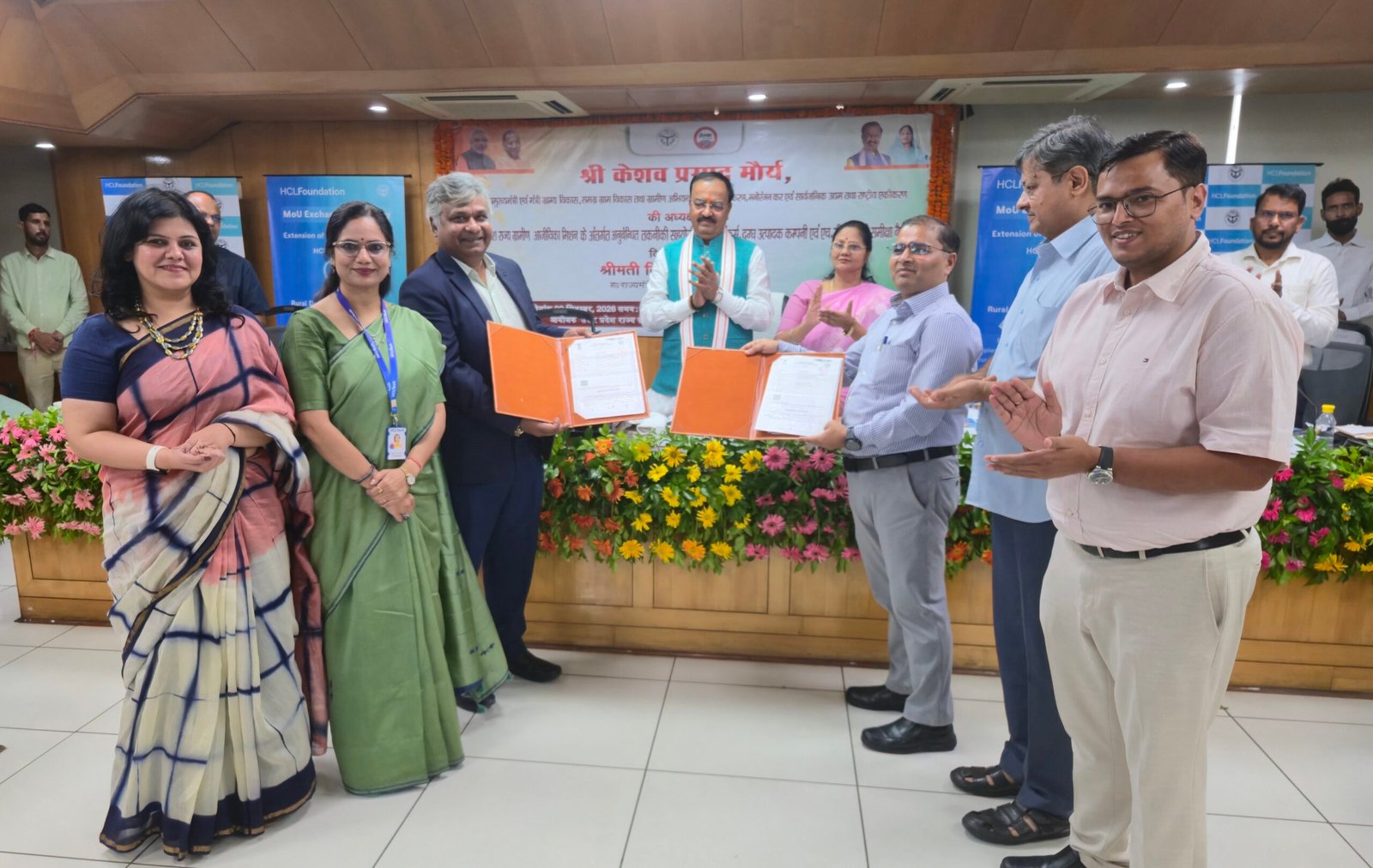
    HCLFoundation, which drives the corporate social responsibility agenda of HCLTech in India, announced on Monday the expansion of its My Clean City program to Agra, Uttar Pradesh — the first city outside the Noida–Greater Noida belt to receive the initiative since its 2019 launch.

    As part of the rollout, the foundation donated 10 e-drain carts, two e-street sweeping machines and one HomoSep robot — a mechanised septic tank cleaning device — to Agra Nagar Nigam, the city’s municipal body. The equipment is intended to reduce hazardous manual work while improving the scale and consistency of urban waste management.

    The HomoSep robot, already deployed in Gautam Buddha Nagar, has cleared more than 100,000 litres of sludge across 452 manholes and sewer sites — removing sanitation workers from direct exposure to toxic conditions. The device represents a broader pivot within the program toward mechanisation as a tool for worker safety.

    Since its launch, My Clean City has engaged nearly 750,000 citizens through behavioural sensitisation drives and trained more than 61,000 stakeholders on waste management practices. The program has managed over 17,000 tonnes of waste in Noida and Greater Noida, and runs a Waste Champions Club involving more than 2,400 school students.

    The initiative also carries a social welfare component. Under its Social Inclusion of Sanitation Workers program, 200 sanitation worker families in Gautam Buddha Nagar receive support across health, education, financial literacy and skill development — a recognition that sustainable sanitation reform extends beyond infrastructure.

    Five biogas plants, each processing between 1,500 and 1,800 kg of cow dung daily, have been established in the region as part of complementary clean energy efforts, generating fuel from waste material.

    HCLFoundation said the Agra expansion reflects a strategy of replicating proven urban sanitation models in new municipal geographies. The foundation, which reported having positively impacted over 7.5 million lives to date, focuses thematically on education, health and sanitation, skill development, environment, and disaster risk reduction.

  • Malabar Gold pledges bold Rs 200 cr CSR push in 2026-27

    Malabar Gold pledges bold Rs 200 cr CSR push in 2026-27

    Malabar Gold & Diamonds has kicked off its most ambitious Corporate Social Responsibility cycle to date, with a bold Rs 200 crore programme for 2026-27 now under way across 19 states.

    The retail jewellery group unveiled the plan earlier this week at the Dr. Ambedkar International Centre in New Delhi, where Union Minister for Commerce and Industry Piyush Goyal inaugurated the distribution of educational scholarships for 33,000 girl students.

    The Malabar Gold CSR 2026-27 initiative spans 15 major programmes at more than 3,000 locations and is designed to benefit over two lakh people by the end of the financial year.

    “Malabar Gold & Diamonds’ decision to allocate INR 200 crore towards CSR will further strengthen the nation’s progress,” Goyal said at the launch event Wednesday. He emphasised that India’s growth is rooted in the empowerment of women and girls.

    Education receives the largest share at Rs 114 crore. Scholarships are now being distributed to students across 284 districts in 18 states — a rollout timed to mark the group’s 33rd anniversary. Micro-learning centres for street children, run in partnership with the Pratham Education Foundation, are also being expanded this year from 1,543 to 2,500 locations across 17 states, with enrolment targets rising from 64,000 to one lakh students.

    Group Chairman M.P. Ahammad said “human resource development is the backbone of national growth,” and added that the scholarship programme gives students the means to contribute to national development. Pratham CEO Rukmini Banerji, who attended the New Delhi launch, called the micro-learning model a proven route to reaching the hardest-to-reach children.

    Food security is the second-largest priority. The Hunger Free World project, allocated Rs 30 crore, already provides daily nutritious meals to 1,15,000 people in India, Zambia, and Ethiopia — a figure the group aims to grow through this cycle. The Grandma Home initiative for destitute mothers anchors the Rs 25 crore housing allocation, while Rs 14.2 crore funds healthcare access, including subsidised medicines through Malabar-Thanal pharmacies.

    Environmental protection receives Rs 10 crore, with the remaining Rs 6.8 crore directed at other humanitarian activities.

    The programmes are administered by the Malabar Charitable Trust, which channels five per cent of the company’s net trading profit into CSR activities annually. The group operates under ESG principles centred on women’s empowerment, healthcare, and education.

    The launch on Wednesday was attended by Malabar Group Managing Director of India Operations Asher Ottamoochikkal, Executive Directors Nishad A.K. and Abdulla Ibrahim, Kerala House Resident Commissioner Puneet Kumar, and Thanal Chairman Idris.

  • HCLTech dominates Hurun India Sustainability Rankings 2026

    HCLTech dominates Hurun India Sustainability Rankings 2026

    HCLTech has secured the No. 2 overall position in the Perpetual Capital–Hurun India Impact 50 2026 report, reinforcing the technology major’s standing as a leader in corporate sustainability across global markets.

    The Hurun India Impact 50 report evaluates companies based on visible and measurable contributions toward the United Nations’ 17 Sustainable Development Goals (SDGs).

    HCLTech’s dominant HCLTech sustainability rankings reflect top-tier placements across multiple categories, with the company claiming No. 1 in Gender Equality and Affordable & Clean Energy, and No. 2 in Sustainable Cities and Communities and Responsible Consumption and Production.

    “These recognitions from globally renowned forums validate our efforts to embed sustainability-led positive impact across our operations,” said Vipul Arora, Global Head of Sustainability at HCLTech. “HCLTech will continue to enable clients and communities to reap the benefits of new technologies responsibly and sustainably.”

    The recognition builds on a broader series of ESG milestones. For the fourth consecutive year, HCLTech has been included in the S&P Global Sustainability Yearbook, a benchmark index tracking companies with strong environmental, social, and governance performance.

    HCLTech also holds a Gold rating from EcoVadis, placing it among the top 4% of rated IT companies globally. TIME magazine further recognised the company among the top 15 firms in the Professional Services category in its World’s Most Sustainable Companies 2025 list.

    The results signal growing investor and institutional confidence in HCLTech’s long-term ESG strategy, as the company continues to align technology deployment with sustainable development imperatives across its global operations.

  • RBL Bank’s UMEED empowers 800 Delhi girls with bicycles in CSR Initiative to curb school dropouts

    RBL Bank’s UMEED empowers 800 Delhi girls with bicycles in CSR Initiative to curb school dropouts

    RBL Bank, one of India’s leading private sector banks, distributed 800 bicycles and school kits to underprivileged girl students in New Delhi on March 26, under its corporate social responsibility programme UMEED — a bold move to empower vulnerable communities through accessible education.

    The girl student bicycles CSR initiative was held at Sarvodaya Vidyalaya, Pitampura, and attended by Delhi Chief Minister Rekha Gupta, Education Minister Ashish Sood, and senior officials from the bank. The event marks one of the largest single-day bicycle donation drives by a private bank in the national capital.

    Long distances between homes and schools remain one of the primary drivers of dropout rates among girls from low-income households in India. RBL Bank said the initiative directly targets that barrier by providing reliable, sustainable transportation — reducing travel time and safety concerns that often lead families to keep girls out of school.

    “Education is the cornerstone of a bright future. By providing bicycles and school kits, we aim to empower young girls to overcome obstacles and pursue their dreams.” — R. Subramaniakumar, MD & CEO, RBL Bank

    The UMEED programme, which focuses on enabling education and widening opportunity for marginalised communities across India, continues to scale its outreach. Officials said the CSR initiative is designed to offer not just immediate support but a sustainable, environmentally friendly solution to a systemic problem.

    No financial details of the programme were disclosed.

  • ITC’s women-led water groups transform rural India

    ITC’s women-led water groups transform rural India

    In Molga village in Madhya Pradesh’s Sehore district, a six-acre lake that once ran dry now brims with water, feeding acres of soybean fields through sluice gates. The turnaround is the work of women — dozens of them — organised into a community water user group under Indian conglomerate ITC Ltd’s watershed initiative.

    The company’s integrated water stewardship programme has established over 5,800 women-led water user groups spanning 17 states, covering 1.89 million acres and benefiting more than 500,000 people. The model centres on a straightforward principle: give women governance over local water, and communities thrive.

    “We used to face a lot of difficulty in getting water earlier,” said Vimla Malvi, a water user group member in Sehore. “I had to carry two pots on my head for long distances. After getting involved with ITC’s water user group, there has been a lot of positive change.”

    Women now oversee maintenance of more than 36,900 water structures — ponds, canals, and check dams — built under ITC’s programmes. Their involvement has ensured equitable water access for marginalised households, where scarcity has historically fallen hardest.

    Beyond infrastructure, ITC’s Krishi Sakhi programme has trained thousands of women as agriculture service providers, promoting drip and sprinkler micro-irrigation and climate-resilient farming. Nearly 200,000 women farmers are part of ITC’s agricultural ecosystem. The company said its water-use efficiency drive enabled potential crop water savings of nearly 1,700 million kilolitres in 2025–26 alone.

    “In inclusive water user groups, women play an active role in decision-making on how water is managed, maintained and shared, ensuring ITC’s interventions are not only equitable and sustainable but also scalable,” said Prabhakar Lingareddy, Executive Vice President, Social Investments, ITC Ltd.

    The programme has helped ITC maintain a water-positive status for over 23 consecutive years, while also operating river basin-level interventions across five major sub-basins.

    The initiative aligns with the United Nations’ World Water Day 2026 theme — “Water and Gender” — carrying the message: “Where water flows, equality grows.” Advocates say ITC’s model demonstrates that empowering women is inseparable from solving the global water crisis.

    Time freed from water collection has flowed into income-generating activities, with women joining micro-enterprises and self-help groups supported by ITC — compounding the social return on what began as an environmental intervention.