Blog

  • Ambuja Foundation launches skill development institute in Modinagar

    Ambuja Foundation launches skill development institute in Modinagar

    Ambuja Foundation and Kanohar Electricals Limited have partnered to launch a Skill Development Institute in Modinagar, Uttar Pradesh, aiming to empower more than 1,000 rural youth over the next three years with employment-oriented training.

    Located in Ghaziabad district and strategically close to the expanding Delhi NCR economic hub, the institute targets villages around Saunda where educated youth face high unemployment and underemployment despite completing secondary school or graduation. A field assessment by Ambuja Foundation highlighted a critical gap in industry-relevant technical skills and practical exposure.

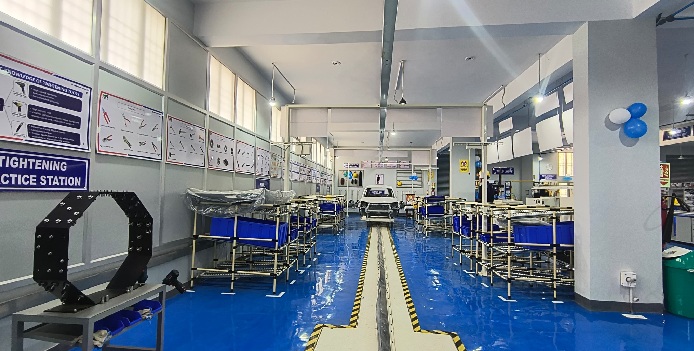
    The initiative, rooted in the native village of Kanohar Electricals Limited founder Shri Kanohar Lal Singhal, will offer structured courses including Phlebotomy, General Duty Assistant, OT Assistance, Customer Care, and Microfinance. Participants will also receive soft skills, IT training, on-the-job training, work readiness, financial literacy, and occupational health and safety modules.

    “With the growing demand for a skilled workforce, this Skill Development Institute in Modinagar will bridge the skills gap and equip youth with industry-relevant capabilities,” said Pearl Tiwari, CEO, Ambuja Foundation. “Through this partnership with Kanohar Electricals Limited, we aim to empower rural youth with the confidence and opportunities needed for sustainable careers.”

    Dinesh Singhal, Chairman and Managing Director of Kanohar Electricals Limited, added: “Investing in skills development is essential for inclusive economic growth. This collaboration will transform livelihood prospects for young people in rural Uttar Pradesh.”

    The three-year programme is expected to connect trainees with job opportunities across the NCR region, supporting reduced unemployment, higher household incomes, and greater economic mobility.

  • Standard Chartered launches breakthrough Rs 540 Cr SLTF

    Standard Chartered launches breakthrough Rs 540 Cr SLTF

    Standard Chartered Bank has extended a breakthrough Sustainability-Linked Trade Facility (SLTF) worth Rs 540 crore to Indorama India Private Limited, the bank announced on Wednesday, in a move that deepens its push to embed environmental, social, and governance (ESG) principles into corporate financing across South Asia.

    The facility, structured as a sustainability-linked trade and working capital arrangement, ties its financing terms directly to Indorama India’s achievement of clearly defined Sustainability Performance Targets (SPTs) aligned with the company’s broader ESG framework. The structure is designed to financially incentivise measurable progress on sustainability, rather than treating ESG commitments as aspirational.

    “We are pleased to partner with Indorama India in supporting its sustainability journey through this tailored SLTF,” said Angel Sivan, Regional Head of Transaction Banking Corporate Sales, India and South Asia, Standard Chartered. “By integrating ESG-linked targets into the deal structure, we are enabling our clients to align their growth with more responsible business practices.”

    Manish Kumar Agarwal, Chief Financial Officer of Indorama India, called the deal a reflection of the company’s resolve to mainstream sustainability into its core financing activities. “This strengthens our liquidity position and reinforces our dedication to ESG principles,” he said, adding that the company intends to build on the momentum toward a broader sustainable finance agenda.

    The transaction adds to a growing pipeline of sustainability-linked financing deals in India, as corporates and lenders seek to operationalise ESG commitments through binding financial mechanisms rather than voluntary pledges.

    Standard Chartered, which has maintained a continuous presence in India for over 165 years, operates across Corporate and Investment Banking and Wealth and Retail Banking segments through an extensive branch network covering major cities.
    Globally, the London- and Hong Kong-listed bank operates in 54 markets.

  • MakeMyTrip to transform Dilli Haat INA renovation with DTTDC pact

    MakeMyTrip to transform Dilli Haat INA renovation with DTTDC pact

    MakeMyTrip Foundation, the social impact arm of India’s largest online travel company, has signed a Memorandum of Understanding with the Delhi Tourism and Transportation Development Corporation (DTTDC) to transform the Dilli Haat INA renovation — upgrading infrastructure at one of the capital’s most iconic open-air cultural markets.

    The partnership targets three key areas at the 30-year-old craft bazaar: greener landscaping, upgraded promenade lighting to extend evening footfall, and hygiene improvements to washroom facilities — changes designed to serve the hundreds of artisans from across India who depend on the haat as a primary marketplace.

    The announcement aligns with Delhi’s broader push to develop a night-time tourism economy.

    “Dilli Haat-INA is a perfect example of an evening destination that supports our vision,” said Rekha Gupta, Chief Minister of Delhi, adding that the government is committed to positioning Delhi as a leading global destination.

    “We are also focused on building a strong night tourism economy that allows visitors to experience the city well beyond sundown.”

    Art, Culture and Tourism Minister Kapil Mishra described the market as a meeting point between artisans who bring crafts from across the country and visitors who come to experience India’s heritage.

    “Collaborations like this one with MakeMyTrip Foundation help us deliver tangible improvements on the ground,” Mishra said.

    DTTDC Managing Director Suneel Anchipaka, IAS, said improved lighting would be critical as Delhi scales its evening tourism offering, making the haat more inviting for families well into the night.

    For MakeMyTrip Foundation, the Dilli Haat INA renovation marks a first step into urban cultural tourism, following a decade of work in afforestation, mangrove plantation along the Gujarat coast, and community-based tourism in the Himalayas.

    “Our aim here is not only to enhance the visitor experience but also to contribute to making this space more sustainable,” said Rajesh Magow, Co-Founder and Group CEO of MakeMyTrip and Managing Trustee of the Foundation.

    Dilli Haat-INA, located in south Delhi’s INA colony, has operated for over three decades as a permanent crafts fair hosting artisans from every state, from Kashmir to Kanyakumari.

  • Lava deploys 20,941 MDM-enabled smartphones for anganwadi digital empowerment in UP

    Lava deploys 20,941 MDM-enabled smartphones for anganwadi digital empowerment in UP

    Lava International Limited has partnered with the Government of Uttar Pradesh to deliver Lava smartphones to 20,941 Anganwadi workers statewide, a transforming rollout under the Integrated Child Development Services (ICDS) framework aimed at replacing manual record-keeping with real-time, data-driven service delivery at the grassroots level.

    The handover ceremony was held at Lok Bhavan, Lucknow in March 2026, under the theme “Suposhit Uttar Pradesh, Sashakt Bharat” — Nourished Uttar Pradesh, Empowered India.

    UP Chief Minister Yogi Adityanath presided over the event alongside Women’s Welfare Minister Baby Rani Maurya, Additional Chief Secretary Leena Johri, and WCD Director Sarneet Kaur Broca. Approximately 1,000 Anganwadi workers attended in person.

    Lava supplied handsets from its Storm Play series, factory-configured for field deployment with Mobile Device Management (MDM) capabilities, a supervisor monitoring application, and state-specific interface integrations aligned to WCD and ICDS digital systems.

    The Anganwadi digital empowerment initiative enables workers to record maternal and child health data in real time, track attendance digitally, monitor nutrition distribution for newborns and lactating mothers, and feed information directly into centralised dashboards.

    “Digital transformation at the grassroots is not just about access to devices, but about building systems that work reliably at scale for those delivering essential services on a day-to-day basis. This initiative is a testament of our ability to design and deliver technology solutions tailored for real-world public sector needs,” said Llyod D’souza, Chief Business Officer, Enterprise Business, Lava International Limited.

    The deployment directly addresses longstanding bottlenecks in welfare delivery. Supervisors can now remotely monitor field activity, track stock availability of food packets for at-risk households, and receive early alerts on potential health and nutrition risks — capabilities previously dependent on paper-based reporting cycles.

    Officials said the initiative supports the UP government’s broader ambition to bridge the digital divide through scalable, technology-led interventions and strengthen last-mile delivery of public welfare programmes.

    For Lava, the contract extends a record of enterprise public-sector deployments as the company positions itself as a domestic alternative in India’s government mobility procurement market.

  • Toyota Kirloskar’s CSR hygiene programme did what Swachh Bharat couldn’t

    Toyota Kirloskar’s CSR hygiene programme did what Swachh Bharat couldn’t

    When Toyota Kirloskar Motor (TKM) built toilets in Karnataka village schools nearly a decade ago, it discovered a problem it had not anticipated: nobody was using them.

    Root cause analysis revealed why communities held a deeply ingrained belief that an in-compound toilet was unclean. Going outdoors, they maintained, was the healthier option.

    The finding prompted TKM to stop further construction and redirect its corporate social responsibility effort toward behavioural change, launching what would become the ABCD — A Behavioural Change Demonstration — programme in 2015-16.

    The initiative has since reached 6,69,322 students, teachers and community members across 1,300 government schools in Karnataka and drawn recognition from Harvard Business School, which has featured it as a case study.

    The programme’s early breakthrough came from an unexpected quarter, TKM Country Head and Executive Vice President (corporate affairs and governance) Vikram Gulati told PTI.

    In one Ramanagara village, two girls aged approximately 11 and 12 organised a classmate hunger strike, refusing to eat until their families built home toilets. The strike succeeded.

    “This actually led to the first breakthrough,” Gulati said.

    The programme trained children in handwashing technique, toilet use and personal hygiene, positioning them as agents of behavioural change within their households and wider communities. Schools competed on hygiene standards. Children carried lessons home. The ripple effect — by design — travelled from classroom to household to community.

    When the programme expanded to Raichur, one of India’s government-designated Aspirational Districts, the company said a baseline survey across 500 schools in December 2023 exposed how deep the crisis ran.

    Only 48 per cent of required toilets existed. Of those, just 20 per cent were usable. Twelve per cent of schools lacked a single functional handwashing unit. Ninety per cent of students depended on open tap water. One in four children still practised open defecation.

    At home, the picture was no better: 44 per cent of students had no toilet at all.

    India’s Swachh Bharat, or Clean India, Mission has constructed tens of millions of toilets since its launch in 2014 under Prime Minister Narendra Modi. Independent researchers and government field assessments have repeatedly flagged the gap between construction targets and actual usage, citing behavioural barriers, poor maintenance and water scarcity as persistent obstacles.

    Over two years of implementation in Raichur and neighbouring Lingasuguru, toilet usage among students rose from 76 per cent to 95 per cent, according to TKM data.

    Handwashing compliance increased from 20.5 per cent to 100 per cent.

    Seventy-five toilets and 30 urinals were constructed. Fifty-eight handwash taps were installed or repaired. Twenty-eight schools received safe drinking water access. Menstrual hygiene sessions were conducted for 3,546 adolescent girls.

    At the community level, 1,382 parents were motivated to construct home toilets during the programme period; 38 completed construction.

    Harvard Business School has recognised ABCD as a case study. The Ivey Business School has published it — rare international acknowledgment for a sanitation initiative rooted in rural India, the TKM Said.

    The ABCD programme sits within a broader corporate social responsibility architecture that TKM has been expanding rapidly.

    Since 2001, the company’s CSR work has spanned education, health, environment, skill development, road safety and disaster management, guided by what it describes as a “Child to Community” approach. TKM spent Rs. 104.7 crore on CSR activities in FY 2025-26, reflecting the scale of its social investment commitments.

    In the 2025-26 financial year, TKM significantly widened its geographic footprint, extending its reach from communities around its manufacturing base to 12 states — among them Uttarakhand, Nagaland, Andhra Pradesh, Tamil Nadu, West Bengal and Odisha.

    The company plans to expand further to 22 states in 2026-27, framing the ambition under a stated vision of “Grow India, Grow with India.”

    “TKM is strengthening health infrastructure through preventive and curative interventions, enhancing the quality of education, and improving employability,” Gulati said, describing the overall mission as creating “Mass Happiness for All.”

    The Raichur intervention is ongoing. The earlier Ramanagara phase has stabilised, he added.

    Source: PTI

  • TTK Prestige wins CII greenco certification with 70% renewable energy

    TTK Prestige wins CII greenco certification with 70% renewable energy

    TTK Prestige, India’s largest kitchen appliances company, has earned the CII GreenCo Certification across all its manufacturing plants, capping nearly three years of focused sustainability investment that has driven a 51% reduction in CO₂ emissions and lifted renewable energy usage to 70% of total consumption.

    The certification, awarded by the CII–Sohrabji Godrej Green Business Centre under its nationally recognised Green Company Rating System, validates a sustainability journey that began in August 2023.

    It covers the company’s full manufacturing footprint and encompasses energy and carbon management, water conservation, material resource optimisation, green supply chain practices, product stewardship and waste reduction.

    “Sustainability for us is not an initiative — it is a fundamental part of how we design, manufacture, and innovate. Achieving the CII GreenCo Certification is a significant milestone in this journey and a validation of the consistent progress we have made over the past few years,” said Venkatesh Vijayraghavan, MD and CEO, TTK Prestige

    Beyond the headline renewable energy figure, the company reported a 24% reduction in water usage and measurable improvements in material yield across aluminium, stainless steel, plastic, paper and hazardous materials. Specific power consumption has also been reduced, with focused initiatives delivering waste cutbacks across product categories.

    Vijayraghavan said the gains were directly linked to the company’s broader product strategy. “Today, with 70% of our energy coming from renewable sources and a substantial reduction in our carbon footprint, we are building a manufacturing ecosystem that is both efficient and responsible. This enables us to deliver well-designed, superior quality products that are not only innovative and high-performing, but also aligned with environmentally conscious choices.”

    TTK Prestige said the certification reinforces its commitment to green manufacturing practices across its own production facilities, ensuring operations remain aligned with environmentally responsible standards while continuing to deliver consumer products. The company added that its forward focus would be on accelerating momentum and strengthening sustainable practices across operations as it positions itself as a future-ready, responsible brand.

    Part of the TTK Group, TTK Prestige has operated for over six decades and serves millions of Indian households through its Prestige brand, built on the pillars of safety, innovation, durability and trust. The company also owns UK-based Horwood Homewares, acquired in April 2016, and markets the Judge brand in India.

  • EBG Foundation launches Sambhav Hai to build carbon-neutral villages across India

    EBG Foundation launches Sambhav Hai to build carbon-neutral villages across India

    EBG Foundation launched Sambhav Hai on Earth Day, a nationwide rural sustainability programme spearheaded by EBG Group Founder and Chairman Dr Irfan Khan, targeting carbon-neutral villages across India through a phased, data-driven framework that begins with the adoption of Charla Thanda village in Telangana’s Nalgonda district.

    The initiative marks one of the most ambitious grassroots climate programmes announced in India this year, with a Rs 30 crore allocation for its first phase covering 50 villages, expanding to 150 villages in Year 2 and scaling to 750 villages in Year 3 with government institutional support. The programme aims to reduce carbon emissions by 10 to 20 percent within the first year, progressing toward full carbon neutrality within three years.

    “Real change cannot come from isolated interventions. With Sambhav Hai, we are building a model where environmental sustainability, economic progress, and community ownership go hand in hand. Our aim is to empower villages with the tools, data, and accountability systems they need to lead their own transformation and contribute meaningfully to India’s climate goals,” said Dr Irfan Khan, Founder and Chairman, EBG Group

    At Charla Thanda, on-ground interventions have already begun with household-level data mapping to establish a comprehensive climate and resource baseline. The programme will focus on improving access to safe drinking water, strengthening groundwater recharge systems and implementing structured waste segregation and composting solutions. Afforestation drives and regenerative land practices will run in parallel, with local volunteers trained to sustain efforts over the long term.

    The village is being developed as a live demonstration of the Foundation’s Minus One Village model — a replicable blueprint designed to be scaled across regions and geographies.

    “Sambhav Hai’s success will be tracked through a robust framework that integrates water, energy, waste, food and land systems, along with carbon footprint metrics under the Minus One Village model. This ensures that the impact is measurable, accountable, and scalable across geographies.” — Suresh Goyal, Additional Director, EBG Foundation

    “What began as a simple idea has evolved into a powerful movement for large-scale transformation. By placing villages at the centre of climate action and bridging the gap between policy and on-ground implementation, Sambhav Hai creates a pathway for communities to actively lead India’s journey towards environmental resilience.” — Ranjitha M, Additional Director, EBG Foundation

    In parallel with its phased village rollout, the Foundation said it would initiate work across multiple states as part of a broader national expansion, extending the programme’s footprint beyond Telangana into a pan-India rural sustainability movement.

  • Bharti Real Estate launches Abhigyan to bridge industry-academia gap

    Bharti Real Estate launches Abhigyan to bridge industry-academia gap

    Bharti Real Estate, the property arm of Bharti Enterprises, has launched Abhigyan, a structured industry-academia engagement programme designed to give engineering students hands-on exposure to large-scale real estate and infrastructure development, as the sector grows in scale and complexity across India’s urban centres.

    The initiative kicked off with its first field visit, hosting civil engineering undergraduates from the Indian Institute of Technology Delhi at Worldmark, Aerocity — a sprawling commercial development adjacent to Indira Gandhi International Airport that is being positioned as one of India’s most ambitious global business districts.

    “Abhigyan reflects our commitment to fostering industry understanding and nurturing future talent through real-world exposure. As infrastructure and real estate continue to evolve in scale and complexity, it is important for young professionals to understand how such developments are brought to life beyond textbooks.” — S. K. Sayal, MD & CEO, Bharti Real Estate

    During the immersive walkthrough, students gained first-hand insight into integrated design, construction management, project planning and the execution challenges inherent in delivering premium commercial developments at scale.

    The session concluded with an interactive discussion with Sayal and senior leadership, including Vice President of Operations Kamal Kumar Dua, Project Leaders Amit Tyagi and Ajay Kalia, Chief Marketing Officer Cherryn Dogra and Projects Planning Lead Pankaj Garg. Industry consultants Raja Raja Menon of Arcop and Amrit Pal of TPCL also participated in the engagement.

    “Bharti Real Estate has provided the undergraduate students of Civil and Environmental Engineering IIT Delhi with a valuable opportunity to explore various aspects of planning, construction, on-site execution and ground coordination.

    Such hands-on experiences play a crucial role in inspiring and shaping the next generation of engineers in the country.” — Prof. Allan L Marbaniang, Assistant Professor, Civil and Environmental Engineering, IIT Delhi

    Bharti Real Estate said Abhigyan is envisioned as an ongoing platform, with curated field visits and expert-led discussions planned across leading academic institutions nationwide. The company described the programme as a direct response to the widening gap between classroom learning and the realities of executing world-class, large-scale development projects.

    Worldmark, the company’s flagship portfolio at Aerocity, spans approximately 17 million square feet across multiple phases. Worldmark 1.0 is fully operational and home to multinational corporations, global financial institutions and Fortune 500 companies.

    Worldmark 2.0, currently under advanced development, covers around 7 million square feet including nearly 3 million square feet of premium office space already holding an occupancy certificate, and close to 3 million square feet of destination retail targeted for operationalisation in 2027–28. Worldmark 3.0 and 4.0 will add a further 5 million-plus square feet to the district in subsequent phases.

  • Hitachi Vantara cuts client energy use with sustainable data infrastructure

    Hitachi Vantara cuts client energy use with sustainable data infrastructure

    Hitachi Vantara, the data storage and hybrid cloud subsidiary of Hitachi Ltd, published its FY2025 Sustainability Report on Thursday, outlining measurable energy and cost reductions achieved by clients using its latest sustainable data infrastructure platforms, as surging AI workloads reshape the economics of enterprise computing.

    The report arrives as the International Energy Agency warns that global data center electricity consumption could surpass 1,000 terawatt-hours by 2026 — roughly equivalent to a major industrialized nation’s annual usage — driven in large part by artificial intelligence workloads that demand constant, high-performance storage and processing.

    “Sustainability is increasingly tied to operational performance and business outcomes. In FY2025, we focused on helping customers manage the growth of AI and data while improving efficiency and reducing environmental impact,” said Akinobu Shimada, CEO, Hitachi Vantara in a statement.

    Among the report’s most striking findings: Turkish retail bank DestekBank achieved a 25% reduction in data center energy consumption after deploying Hitachi Vantara’s VSP One Block platform, alongside a 35% jump in application performance and a 20% drop in total cost of ownership. Belgian water utility Aquiris, which processes more than 110 million cubic meters of wastewater annually, credited the same platform with lowering its carbon footprint while collecting over one million data points per day for process monitoring.

    Indian media company Malayala Manorama reported the sharpest operational gains, cutting data center rack space by 66% and achieving 70% savings in power and cooling costs after modernising its infrastructure to support round-the-clock print, broadcast and digital operations.

    On the product side, the company introduced the VSP One Block High End, engineered to reduce power and cooling requirements for enterprise and AI-driven workloads. Hitachi Vantara also expanded lifecycle assessments across its VSP One Block, File and Object portfolios and launched its Clear Sight dashboard, giving customers direct visibility into energy consumption and carbon usage. The firm reported that up to 50% recycled content now appears in key components, and that less than 0.3% of materials were sent to landfill.

    Governance improvements included strengthened emissions tracking across Scope 1, Scope 2 and key Scope 3 categories, aligned with science-based reduction targets and evolving ESG reporting standards.

  • Elan Group powers World Earth Day run 2026 in Gurugram

    Elan Group powers World Earth Day run 2026 in Gurugram

    Elan Group brought the World Earth Day Run 2026 to life at Elan Mercado, Sector 80, Gurugram on April 19, 2026, flagging off at 5:30 AM in a powerful display of community-driven environmental commitment. Organised in partnership with PikuSports, the event drew enthusiastic participation from runners spanning diverse age groups and fitness levels.

    The run, positioned as an immersive outdoor fitness experience, featured four race categories — a 10 km timed run, a 5 km timed run, and 5 km and 3 km non-timed fun runs — ensuring the event was accessible to first-time participants and seasoned athletes alike. Top male and female finishers in each timed segment, alongside age-category winners, were recognised, reflecting the event’s dual emphasis on competitive performance and broad inclusivity.

    Participants received event T-shirts, hydration and energy support, finisher medals, and digital certificates, complemented by post-run refreshments. On-ground medical assistance was deployed throughout, with photography and videography teams documenting key moments across the course.

    “World Earth Day serves as a powerful reminder of our shared responsibility towards the environment. At Elan Group, we are committed to building not just developments, but experiences that reflect a forward-looking and conscious way of living,” said Vidhi Attri, Head of Marketing, Elan Group.

    The event drew substantial corporate backing across specialised categories. Fortis Memorial Research Institute provided healthcare support; Red FM 93.5 served as radio partner; while Vault, Fast&Up, Bikano, Bagrry’s, Whatr, Recovery Room, Agnishila, BlissClub, Xplurger, Sirona and Spinex covered fitness, energy, gifting, breakfast, hydration, recovery, outfit, social media, hygiene and physiotherapy respectively.

    Elan Mercado’s location in Sector 80 provided a strategically positioned and well-planned environment suited for an early morning large-format run. The event concluded on a high note, underlining Elan Group’s broader strategy of experience-led engagement that integrates lifestyle, wellness and purpose-driven community initiatives.