Blog

  • HCLTech dominates Hurun India Sustainability Rankings 2026

    HCLTech dominates Hurun India Sustainability Rankings 2026

    HCLTech has secured the No. 2 overall position in the Perpetual Capital–Hurun India Impact 50 2026 report, reinforcing the technology major’s standing as a leader in corporate sustainability across global markets.

    The Hurun India Impact 50 report evaluates companies based on visible and measurable contributions toward the United Nations’ 17 Sustainable Development Goals (SDGs).

    HCLTech’s dominant HCLTech sustainability rankings reflect top-tier placements across multiple categories, with the company claiming No. 1 in Gender Equality and Affordable & Clean Energy, and No. 2 in Sustainable Cities and Communities and Responsible Consumption and Production.

    “These recognitions from globally renowned forums validate our efforts to embed sustainability-led positive impact across our operations,” said Vipul Arora, Global Head of Sustainability at HCLTech. “HCLTech will continue to enable clients and communities to reap the benefits of new technologies responsibly and sustainably.”

    The recognition builds on a broader series of ESG milestones. For the fourth consecutive year, HCLTech has been included in the S&P Global Sustainability Yearbook, a benchmark index tracking companies with strong environmental, social, and governance performance.

    HCLTech also holds a Gold rating from EcoVadis, placing it among the top 4% of rated IT companies globally. TIME magazine further recognised the company among the top 15 firms in the Professional Services category in its World’s Most Sustainable Companies 2025 list.

    The results signal growing investor and institutional confidence in HCLTech’s long-term ESG strategy, as the company continues to align technology deployment with sustainable development imperatives across its global operations.

  • RBL Bank’s UMEED empowers 800 Delhi girls with bicycles in CSR Initiative to curb school dropouts

    RBL Bank’s UMEED empowers 800 Delhi girls with bicycles in CSR Initiative to curb school dropouts

    RBL Bank, one of India’s leading private sector banks, distributed 800 bicycles and school kits to underprivileged girl students in New Delhi on March 26, under its corporate social responsibility programme UMEED — a bold move to empower vulnerable communities through accessible education.

    The girl student bicycles CSR initiative was held at Sarvodaya Vidyalaya, Pitampura, and attended by Delhi Chief Minister Rekha Gupta, Education Minister Ashish Sood, and senior officials from the bank. The event marks one of the largest single-day bicycle donation drives by a private bank in the national capital.

    Long distances between homes and schools remain one of the primary drivers of dropout rates among girls from low-income households in India. RBL Bank said the initiative directly targets that barrier by providing reliable, sustainable transportation — reducing travel time and safety concerns that often lead families to keep girls out of school.

    “Education is the cornerstone of a bright future. By providing bicycles and school kits, we aim to empower young girls to overcome obstacles and pursue their dreams.” — R. Subramaniakumar, MD & CEO, RBL Bank

    The UMEED programme, which focuses on enabling education and widening opportunity for marginalised communities across India, continues to scale its outreach. Officials said the CSR initiative is designed to offer not just immediate support but a sustainable, environmentally friendly solution to a systemic problem.

    No financial details of the programme were disclosed.

  • ITC’s women-led water groups transform rural India

    ITC’s women-led water groups transform rural India

    In Molga village in Madhya Pradesh’s Sehore district, a six-acre lake that once ran dry now brims with water, feeding acres of soybean fields through sluice gates. The turnaround is the work of women — dozens of them — organised into a community water user group under Indian conglomerate ITC Ltd’s watershed initiative.

    The company’s integrated water stewardship programme has established over 5,800 women-led water user groups spanning 17 states, covering 1.89 million acres and benefiting more than 500,000 people. The model centres on a straightforward principle: give women governance over local water, and communities thrive.

    “We used to face a lot of difficulty in getting water earlier,” said Vimla Malvi, a water user group member in Sehore. “I had to carry two pots on my head for long distances. After getting involved with ITC’s water user group, there has been a lot of positive change.”

    Women now oversee maintenance of more than 36,900 water structures — ponds, canals, and check dams — built under ITC’s programmes. Their involvement has ensured equitable water access for marginalised households, where scarcity has historically fallen hardest.

    Beyond infrastructure, ITC’s Krishi Sakhi programme has trained thousands of women as agriculture service providers, promoting drip and sprinkler micro-irrigation and climate-resilient farming. Nearly 200,000 women farmers are part of ITC’s agricultural ecosystem. The company said its water-use efficiency drive enabled potential crop water savings of nearly 1,700 million kilolitres in 2025–26 alone.

    “In inclusive water user groups, women play an active role in decision-making on how water is managed, maintained and shared, ensuring ITC’s interventions are not only equitable and sustainable but also scalable,” said Prabhakar Lingareddy, Executive Vice President, Social Investments, ITC Ltd.

    The programme has helped ITC maintain a water-positive status for over 23 consecutive years, while also operating river basin-level interventions across five major sub-basins.

    The initiative aligns with the United Nations’ World Water Day 2026 theme — “Water and Gender” — carrying the message: “Where water flows, equality grows.” Advocates say ITC’s model demonstrates that empowering women is inseparable from solving the global water crisis.

    Time freed from water collection has flowed into income-generating activities, with women joining micro-enterprises and self-help groups supported by ITC — compounding the social return on what began as an environmental intervention.

  • Ambuja Cements Drives Women Empowerment, Hands E-Autos to 10 SHG Women in Gujarat

    Ambuja Cements Drives Women Empowerment, Hands E-Autos to 10 SHG Women in Gujarat

    Ambuja Cements, the ninth-largest building materials solutions provider globally and part of the Adani Portfolio, has handed over electric auto-rickshaws to 10 women from Self-Help Groups (SHGs) in the Kodinar region of Gujarat, opening a new chapter in rural women empowerment and self-employment on International Women’s Day.

    The handover ceremony was held at Ambujanagar, marking the culmination of a structured skilling and financing initiative designed to equip women with both the capability and capital to operate independent transport businesses.

    Women associated with Sorath Mahila Vikas Sahakari Mandali and local SHGs underwent two months of specialised e-auto driving training at the Skill and Entrepreneurship Development Institute (SEDI), Ambujanagar. The programme focused on building safe driving skills and operational confidence among participants.

    Following training, participants purchased the e-autos with extended loan support from Sorath Mahila Vikas Sahakari Mandali, ensuring financial access remained no barrier to ownership.

    The trained women will operate e-autos in and around Kodinar, providing passenger transport services and ferrying school-going children — addressing a critical rural mobility gap while generating sustainable household income.

    Ambuja Cements officials, present at the handover, encouraged the women to embrace their self-employment journey, reaffirming the company’s commitment to income-generating opportunities for women in underserved rural communities.

    The initiative reflects Ambuja Cements’ wider strategy of linking skill development with livelihood creation, particularly for women in regions surrounding its plant operations. The company’s SEDI centres across India have trained thousands of rural youth and women in vocational skills since inception.

    The e-auto programme aligns with India’s broader push for electric mobility adoption in rural areas and dovetails with national priorities around women-led development and the SHG movement under the National Rural Livelihoods Mission.

  • DS Group achieves landmark water positive certification, joins elite corporate circle

    DS Group achieves landmark water positive certification, joins elite corporate circle

    Dharampal Satyapal Group (DS Group), one of India’s leading FMCG conglomerates, has earned Water Positive Certification from GRIHA (Green Rating for Integrated Habitat Assessment), recording a Water Positivity Index of 1.80 — placing the company among a select few Indian corporations to achieve such a high score.

    The certification, awarded under GRIHA’s Decarbonizing Habitat Programme, follows a two-and-a-half-year assessment across 30 business locations in India, covering divisions spanning food and beverage, mouth freshener, hospitality, and agriculture.

    Scale of Impact

    Conservation interventions by DS Group have created a cumulative water storage potential of 66 lakh kilolitres. The programme integrates rainwater harvesting structures, wastewater reuse systems, recharge wells, water-efficient fixtures, and ecological restoration measures. Projects in Rajasthan and Madhya Pradesh contributed significantly to groundwater recharge outcomes.

    “The whole world is moving rapidly towards sustainability, with global water demand projected to exceed supply by 40% by 2030,” said Rajiv Kumar, Vice Chairman of DS Group.

    “By embedding water-positive practices into our business and community initiatives, DS Group contributes meaningfully to the larger sustainability agenda that India is aiming for.”

    Kumar added that the Group views sustainability “not as a project but as a permanent responsibility,” guided by its philosophy of ‘Create What is Worth Creating.’

    Sanjay Seth, VP and CEO of GRIHA Council and Senior Director at TERI, called the certification “a statement of intent of responsibility and vision,” adding that DS Group had demonstrated that “sustainability, productivity and profitability can go hand in hand.”

    Broader Sustainability Context

    The Water Positive Certification adds to a wider sustainability programme at DS Group that spans water conservation, livelihood development, agricultural initiatives, and energy efficiency. The company’s headquarters holds both LEED Platinum and LEED Zero Carbon certifications from the U.S. Green Building Council.

    The achievement comes ahead of COP30, where water security and climate resilience are expected to be central agenda items.

    Founded in 1929, DS Group markets brands including Rajnigandha, Catch, Pulse, Pass Pass, LuvIt, and L’Opera across domestic and international markets.

    Established in 2007 as a joint initiative between Ministry of New and Renewable Energy and TERI, GRIHA operates as India’s nationally recognised green building rating system and is referenced in India’s Nationally Determined Contributions to the UNFCCC.

  • DBS Sustainable Financing surges past SGD 102 billion; India leads breakthrough growth

    DBS Sustainable Financing surges past SGD 102 billion; India leads breakthrough growth

    DBS Bank’s sustainable financing commitments surged 14 per cent year-on-year to cross SGD 102 billion at end-2025, the lender said in its latest report, as India emerged as its fastest-growing and third-largest sustainable finance market across Asia.

    The Singapore-based bank, one of Asia’s largest lenders, facilitated SGD 41 billion of environmental, social and governance (ESG) bond issuances during 2025 as an active bookrunner, channelling capital into renewable energy, sustainable infrastructure, green real estate and social-sector projects.

    “As Asia continues to grow, businesses are continuing to invest in low-carbon technologies, electrification and resilient infrastructure,” said Helge Muenkel, Group Chief Sustainability Officer at DBS Bank. “It was very encouraging that DBS Group crossed SGD 100 billion in sustainable financing commitments in 2025.”

    India Drives Breakthrough Momentum

    India’s rapid ascent within DBS’s sustainable finance portfolio reflects strong domestic appetite for green capital aligned with the country’s ongoing energy and infrastructure transformation.

    In a notable deal, DBS extended a Rs. 670 crore sustainability-linked trade facility to Indorama India Pvt Ltd, tying the financing to measurable improvements in emissions intensity, water use and energy efficiency.

    The bank also acted as arranger and sustainability coordinator for a multi-bank USD 350 million sustainability-linked revolving credit facility for ChrysCapital X LLC — marking the first sustainability-linked loan raised by an India-focused private equity fund.

    Expanding Beyond Climate

    DBS said it is broadening its sustainability mandate beyond climate mitigation to encompass nature-related risks and climate adaptation — a shift that signals the bank’s intent to align with evolving global biodiversity and resilience frameworks.

    Community Impact

    Beyond financing, DBS said it reached more than one million vulnerable individuals across Asia through community programmes in 2025. The DBS Foundation has committed over SGD 160 million since 2024 toward initiatives targeting essential needs, financial inclusion and community resilience.

    The results were disclosed in DBS’s Sustainability Report 2025.

  • RBL Bank UMEED empowers 300 girls with bicycles in Raipur

    RBL Bank UMEED empowers 300 girls with bicycles in Raipur

    RBL Bank, under its CSR initiative UMEED, distributed 300 bicycles and school kits to underprivileged girl students in Raipur, Chhattisgarh, to address school dropout caused by long commutes.

    The drive was held at Shri Balaji Vidya Mandir in the presence of Rajya Sabha MP Laxmi Verma and other dignitaries.

    MD & CEO R. Subramaniakumar said the initiative aims to empower girls to pursue education and build an inclusive society. UMEED continues to drive impactful outreach across marginalised communities in India.

  • Maruti Suzuki commissions Automated Driving Test Tracks in Tamil Nadu for road safety

    Maruti Suzuki commissions Automated Driving Test Tracks in Tamil Nadu for road safety

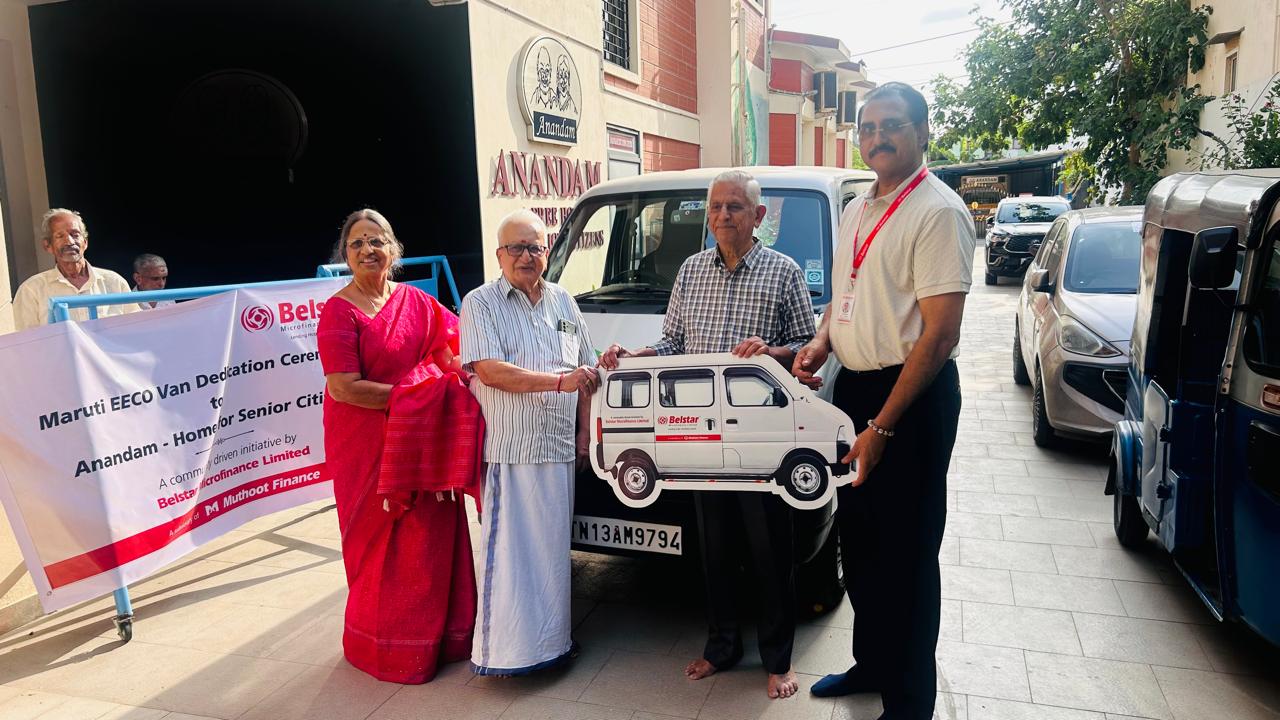
    Maruti Suzuki India has commissioned seven Automated Driving Test Tracks (ADTTs) in Tamil Nadu, partnering with the state Transport Department to strengthen road safety and driver licensing.

    Tamil Nadu Chief Minister M K Stalin inaugurated the tracks last week via video conferencing at Regional Transport Offices in Coimbatore (Central), Tiruvannamalai, Krishnagiri, Madurai (North), Sivagangai, Dindigul, and Tiruchirappalli (West).

    This forms part of a Memorandum of Agreement to automate ten ADTTs statewide. Maruti Suzuki achieved the record feat of completing all ten within 150 days, with the remaining three in Tirunelveli, Tuticorin, and Marthandam nearing operational status.

    Rahul Bharti, Senior Executive Officer for Corporate Affairs at Maruti Suzuki, stated: “These Automated Driving Test Tracks, fitted with high-definition cameras, RFID sensors, real-time analytics, and integrated IT systems, deliver a transparent and unbiased evaluation process with zero human intervention.”

    He highlighted India’s 1.77 lakh road accident deaths in 2024 (per Ministry of Road Transport & Highways data), stressing the vital role of rigorous testing in promoting disciplined driving and reducing fatalities.

    The ADTTs support testing for two-wheelers (TW) and light motor vehicles (LMV), ensuring compliance with Central Motor Vehicle Rules through automated, objective assessments.

    Maruti Suzuki‘s road safety push aligns with its 5Es approach (Engineering, Education, Evaluation, Enforcement, Emergency Care). The company has now automated 56 ADTTs across eight states, with expansions planned in Rajasthan (21) and Andhra Pradesh (4), targeting 81 nationwide.

    It also operates 8 Institutes of Driving and Traffic Research and 23 Road Safety Knowledge Centres, plus ITMS surveillance and First Responder training programs.

  • Jindal Stainless deploys Sanjeevanair purification to cleanse smoke-laden skies above Manikarnika ghat

    Jindal Stainless deploys Sanjeevanair purification to cleanse smoke-laden skies above Manikarnika ghat

    Jindal Stainless Limited, India’s leading stainless steel manufacturer, has launched Sanjeevan air purification at the Shri Kashi Vishwanath Dham (SKVD) complex in Varanasi, marking the company’s single largest corporate social responsibility initiative to date.

    The breakthrough project targets the dense particulate haze generated by burning funeral pyres at the adjacent Manikarnika Ghat, one of Hinduism’s most sacred cremation sites.

    The programme is being executed in partnership with Amida Cleantech Private Limited (AMIDA), whose proprietary ACE+ technology — independently verified by NITI Aayog — forms the operational backbone of the system. Fifty-eight stainless-steel purification units, installed on the SKVD Ramp Building that flanks Manikarnika Ghat, collectively process more than 3,00,000 cubic metres of ambient air per hour.

    How ACE+ Works

    The acronym ACE stands for Attract, Capture, and Eliminate. The system is engineered to neutralise a broad spectrum of airborne contaminants: nano-black carbon, pollens, organic particulate matter ranging from 100 nanometres to 50 microns, sulphur oxides (SOx), nitrogen oxides (NOx) from vehicular traffic, and microbial pathogens including viruses and bacteria. The technology’s multi-pollutant capability addresses the compounded burden of cremation smoke, temple-corridor exhaust fumes, and biological aerosols — all converging at one of India’s most densely visited religious sites.

    “By improving air quality at Shri Kashi Vishwanath Dham, we aim to enhance the environment for both local residents and the millions of devotees who visit this revered landmark. Our collaboration with Amida Cleantech showcases our support for innovative Indian technology while driving meaningful change.” Jindal Stainless said in a statement.

    Alignment With National Policy

    The Sanjeevan air purification initiative is formally aligned with the National Clean Air Programme (NCAP) launched by India’s Ministry of Environment, Forest and Climate Change, which mandates measurable reductions in particulate pollution at the city, regional, and national level. SKVD authorities have formally approved the installation, a sanction that both companies regard as a critical enabling step for future rollouts at similarly congested heritage sites.

    Amida Cleantech said the system is designed to capture a significant portion of cremation emissions at their source, and to reduce measured PM concentrations along the temple corridor — protecting pilgrims, resident priests, and the ornate stone façades of the SKVD’s historic buildings from accelerated chemical weathering caused by acidic smoke deposits.

    Broader Significance

    Analysts note that Manikarnika Ghat conducts cremations around the clock, 365 days a year, meaning continuous emission loads uncommon at most pollution hotspots. Deploying a validated, scalable ambient purification system in such a demanding environment could serve as a proof-of-concept for other heritage and high-density religious sites across India. Sanjeevan air purification, if it meets its stated targets, would represent a replicable model bridging cultural heritage preservation, public health, and clean-tech commercialisation.

    Both Jindal Stainless and AMIDA were commended by local authorities for their commitment to the project. Amida Cleantech, whose guiding principle is “The Air You Breathe,” said ACE+ innovations are being positioned to address escalating ambient pollution across diverse high-exposure sectors — from industrial corridors to dense urban precincts.

  • HCLFoundation boosts pediatric heart care in UP

    HCLFoundation boosts pediatric heart care in UP

    HCLFoundation, the corporate social responsibility arm of Indian technology giant HCLTech, on Tuesday donated a suite of advanced intensive care equipment to the Saloni Heart Center at Sanjay Gandhi Postgraduate Institute of Medical Sciences (SGPGIMS) in Lucknow — marking a breakthrough in pediatric heart care access for millions of children across Uttar Pradesh.

    Uttar Pradesh records an estimated 75,000 congenital heart disease (CHD) births annually, yet the state until recently lacked a dedicated pediatric cardiac facility. The Saloni Heart Center, established within SGPGIMS as Uttar Pradesh’s first such institution, aims to address that critical gap — and Monday’s donation directly strengthens its post-operative and neonatal intensive care capabilities.

    Life-Saving Equipment Delivered

    The donated equipment includes a Panda ResusView Warmer with Resuscitation Trolley to ensure safe thermal regulation and integrated resuscitation support during critical cardiac episodes; an SLE 6000 Paediatric Neonatal Ventilator, a high-precision device designed for newborns and infants requiring controlled respiratory support; and a GE Bilisoft Fibre Optic Phototherapy System for treating neonatal jaundice — a complication particularly hazardous for CHD infants who cannot be routinely transferred to other wards.

    The initiative was attended by senior government officials including Shri Amit Kumar Ghosh, IAS, Additional Chief Secretary for Medical Health and Family Welfare, Government of Uttar Pradesh, and Awanish Kumar Avasthi, IAS, Senior Advisor to the Chief Minister of Uttar Pradesh.

    Also present were Prof. Radha K Dhiman, Director, SGPGIMS; Prof. S.K. Agarwal, Head, Cardiovascular & Thoracic Surgery, SGPGIMS; Shri Himanshu Seth, Executive Chairman, Saloni Heart Foundation; and Rishi Kumar, Senior Vice President, HCLTech.