Blog

  • Signify illuminates 100 Indo-Nepal border villages to boost safety, livelihoods

    Signify illuminates 100 Indo-Nepal border villages to boost safety, livelihoods

    Lighting company Signify on Monday launched an initiative to install energy-efficient LED streetlights in 100 villages along the 1,700-km Indo-Nepal border, aiming to enhance nighttime safety and support local economies.

    The project, part of Signify’s “Har Gaon Roshan” corporate social responsibility (CSR) programme, targets communities facing mobility and security challenges after dusk. Each village was selected based on local input regarding footfall, safety risks and evening activities such as markets and school commutes.

    “At Signify, we believe in bringing the best of innovations to communities across India,” said Nikhil Gupta, head of marketing, strategy, government affairs and CSR for Greater India. “Through this initiative, we aim to bring long-term safety, sustainability and confidence to border communities. This partnership reflects our commitment to using light to positively impact lives in India, fostering sustainable growth and community empowerment.”

    The effort, developed in collaboration with the Tarq Foundation, addresses practical needs in remote areas where poor illumination hampers women’s safety, children’s education and small-scale trade.

    “Real development starts by listening to the people it is meant to serve,” said Manoviraj Singh, founding partner at Tarq Foundation. “Border communities have their own unique rhythms: evening markets, long walks home from school, and the daily movement of women whose sense of safety is directly shaped by how well-lit their surroundings are. This initiative responds to these lived realities. In these villages, light is not symbolic; it is practical, protective and deeply empowering.”

    The Indo-Nepal border lighting project marks a milestone in rural infrastructure, with installations expected to reduce energy use while promoting stronger social networks. Signify, a global leader in sustainable lighting solutions, said the rollout will continue monitoring community feedback for future expansions.

  • Ambuja Foundation hosts dialogue on empowering skill building for Viksit Bharat

    Ambuja Foundation hosts dialogue on empowering skill building for Viksit Bharat

    Ambuja Foundation, an independent pan-India social development group focused on rural transformation, convened an open dialogue on empowering skill building for Viksit Bharat at Bharat Mandapam here on Thursday.

    The event drew over 150 stakeholders, including government officials, global academics, industry leaders and on-ground practitioners, to explore how skill building can reshape tomorrow’s workforce and boost India’s economic trajectory.

    Keynote speakers, among them Dr Rashmi Singh, secretary for women and child development and art, culture and languages in the New Delhi government; Raman Wadhwa, deputy director of the Deendayal Antyodaya Yojana under India’s National Rural Livelihoods Mission; and Col Gunjan Chowdhary, director of the National Council for Vocational Education and Training, outlined national skilling initiatives, access to opportunities and the need for cross-sector collaboration to realise Viksit Bharat.

    Swiss vocational education expert Urs Keller highlighted his country’s dual system, where two-thirds of training occurs on the job and nearly 66% of youth pursue vocational paths, backed by strong parental support and career guidance.

    Two panel discussions followed: one on corporate, agency and academic investments in skill building strategies; the other on industry leaders’ views of evolving sector needs and partnerships between government, business and academia.

    Attendees heard success stories from two graduates of Ambuja’s Skill and Entrepreneurship Development Institutes (SEDI), which have trained 1.34 million rural youth across 51 centres in 13 states for sustainable livelihoods. The event also launched a report on SEDI’s impact.

    “These discussions reaffirm our conviction that skill building will lead the path to Viksit Bharat,” said Pearl Tiwari, CEO of Ambuja Foundation. “Empowering individuals from disadvantaged backgrounds demands collaboration among social organisations, corporates and government for systemic change.”

  • ICSI launches pioneering CCGRT Manesar facility

    ICSI launches pioneering CCGRT Manesar facility

    The Institute of Company Secretaries of India (ICSI) on Thursday inaugurated its fourth Centre for Corporate Governance, Research and Training (CCGRT Manesar) at IMT Manesar in Haryana, aiming to bolster research, training and consultancy amid rising global needs for ethical business practices.

    The 31,049 sq ft facility, spanning basement plus ground and four floors, features classrooms, a library, multipurpose rooms, hostel, IT lab, dining hall and recreation areas to foster world-class incubation and capacity building.

    “This pioneering CCGRT Manesar will integrate governance seamlessly into corporate functions, serving as a hub for holistic stakeholder programs,” ICSI President CS Dhananjay Shukla said at the launch.

    Former ICSI President CS Ranjeet Pandey, chairman of the ESG and Sustainability Board, added: “True governance transcends compliance—it’s a culture CCGRT Manesar is designed to nurture for ethical leadership across students, members and employees.”

    ICSI Council Member and government nominee Shri Inder Deep Singh Dhariwal emphasised: “This strategic investment in CCGRT Manesar highlights robust governance as vital to India’s dynamic business landscape.”

    The event drew ICSI Vice President CS Pawan G Chandak, former President CS Manish Gupta and other council members. ICSI Secretary CS Asish Mohan delivered the vote of thanks.

    The ICSI, a global body under the Company Secretaries Act, uses its network of CCGRTs—including prior centres—to promote transparency, accountability and streamlined processes in Indian corporates, supporting regulators, statutory bodies and industry.

  • Revolutionary Accessibility in India: Sminu Jindal’s Inclusive Vision

    Revolutionary Accessibility in India: Sminu Jindal’s Inclusive Vision

    When Sminu Jindal’s wheelchair was damaged on an IndiGo flight, it wasn’t just about broken equipment—it was about a year of lost mobility. “A custom wheelchair takes about a year to remake,” she says. “No compensation can replace that.”

    The incident sparked outrage, but for Jindal, founder and chairperson of Svayam, India’s leading accessibility organisation, it highlighted a systemic gap in how the country treats people with reduced mobility. As managing director of Jindal SAW Limited and chair of CII’s India Business Disability Network, Jindal is uniquely positioned to drive change—and she’s not holding back.

    In an exclusive interview to a news agency, Jindal spoke about the urgent need for aviation reforms, how India can leverage accessibility for economic growth, and why the 2036 Olympics bid is a make-or-break moment. Edited excerpts:

    After your wheelchair was damaged, what specific changes do you want to see in aviation industry?

    First, we need to create awareness about what an assistive device actually means to someone with reduced mobility. A wheelchair is almost like a body extension—it’s as integral as your legs or arms. Most devices are custom-made for a person’s particular disability. When you damage it, you’re essentially making someone unable to live a regular life for however long it takes to remake it.

    The aviation industry has very high attrition rates. So once-a-month training should be mandatory. If despite that, assistive devices are still mishandled, there should be bigger penalties and deeper inquiry. Financial impact is the only thing that hurts us all deeply—that’s reality.

    Have you received any assurances from the government?

    Our ministers and educated people around us are quite sensitive. They just don’t realise how important training is because turnover is so high in this industry. I feel monthly training is critical, and private airlines as well as ground staff need to become more conscious.

    This year’s Pandara Road Durga Puja in Delhi was made fully inclusive through Svayam’s collaboration with UN India and UNESCO. Can this model be scaled?

    Absolutely. We always hear that when there’s greater footfall, things can’t be made accessible. I feel if America can do it for 10 people, India can definitely do it for a thousand.

    In Kolkata also, we’ve started conversations about making puja pandals accessible. You start with a role model, and when that becomes successful, people have the courage to follow through. Whatever we’re doing, we hope people see it can be emulated and carried forward at a bigger scale.

    India is bidding for the 2030 Commonwealth Games and 2036 Olympics. How should accessibility be built into these projects?

    We don’t see accessibility as a money-spinner, but we should. We’ve all seen the power para-athletes bring to the nation, the pride they carry when they win medals. When India hosts these games, para-games will follow. Every human being wants to enjoy these games as a family—elderly parents, someone with a temporary setback.

    When people from around the world come to India, they want to see more of the country. When transport is accessible, when tourism sites and hotels are accessible, India has a great opportunity to earn foreign exchange. Hotels, transport, ICT should not miss out on this opportunity.

    But we don’t create awareness about how we’re making things accessible. Communication, information and technology should be used to our advantage—only then will this opportunity bear fruit.

    You’ve argued that accessibility is an economic catalyst, not just a social duty. What’s the business case?

    Look around—we all benefit from accessibility right from when we become independent to go out. We want good education where parents don’t have to give up jobs to drop children to school. As we grow into college, into jobs, even women with stilettos have difficulty on roads because some jobs require that footwear. Pregnant women, parents with small children—all need accessibility for better quality of life.

    As we grow older, we don’t become a burden to our country because we worked 60 years to make the country productive. When we’re older, we have a right to have accessibility in banks so we can withdraw our own money, at archaeological sites we want to visit with grandchildren.

    It’s how you view the world. I want it to be a place where each one of us can live up to our desires, make our dreams come true, and be truly full of freedom and happiness.

    As chair of CII’s India Business Disability Network, where do corporate accessibility standards stand? Should they be part of ESG or CSR reporting?

    People are realising human potential is far greater than we imagine. The problem comes when schools aren’t accessible, children with reduced mobility can’t go there, adults can’t access colleges or skill centres because transport isn’t available, buildings aren’t accessible.

    It should definitely be part of ESG. I’d want it to become part of reportable figures eventually. But there’s a risk—people will just start reporting numbers, make someone a lift operator or tell them to serve water to fulfill quotas. To truly create employment opportunities where they become decision-makers and get important skilled jobs, we need accessible education systems first. That’s foundational.

    With India’s ageing population set to double by mid-century, how must cities redesign infrastructure?

    The question has the answer in it—because life is so vulnerable, taking care of it today will lead to a better tomorrow, not just for us but for generations that follow.

    You prefer the term “reduced mobility” over “disability.” Why does language matter?

    Being disabled myself, sometimes it can be hurtful terminology. As I become older, I may have reduced mobility but it still doesn’t make me disabled. There’s nothing wrong with a body that ages—we should be proud of it because we gather experience. It’s beautiful, and we should embrace it without the sting of disability.

    Disability benefits from accessibility, but so do different people—anyone with reduced mobility. It gives us the dignity of leading a life. By shifting to “reduced mobility,” people can see wider.

    From your audits of airports and monuments, what’s the biggest barrier—attitude, infrastructure or regulation?

    Definitely infrastructure, and with infrastructure comes regulation and mindset. They’re all linked. Last-mile connectivity—the more we stress about it, I don’t think we can stress enough.

    You’ve been recognised in Fortune India’s Most Powerful Women 2025 and received the Mahatma Award. How has visibility helped?

    Every little thing that brings me out in public gives me an opportunity to talk about creating awareness around accessibility. It’s not a disability topic—it’s about creating safety and dignity for anyone to travel to their place of choice without hazard.

    How do you balance being MD of Jindal SAW and running Svayam?

    We all learn to wear many hats. As women, we juggle a lot. I’m also a mother of two—it’s in our genes to take care of multiple things. I’ve had many role models in my family who’ve done it, and they’re not all women.

    You work with UNESCO and the Paralympic Committee. Which international practices could India adapt?

    I want my India to create best practices. There are things we have in India where we can beat the world and become a superpower, a Viksit Bharat by 2047.

    Which emerging technologies—AI, IoT, digital mapping—excite you most for accessibility?

    Nothing can replace physical infrastructure, despite technology adding to it. Physical infrastructure needs to be altered to make a difference in every human being’s life. Right now we’re just talking about cities. We need to look at rural India where 70% of our population lives—physical infrastructure will play an extremely important role there.

    Looking ahead to 2030, what would a truly accessible India look like?

    I don’t talk about my leadership—I really would implore everybody to chip in. This needs to be a revolution. A revolution called accessibility that will make not just India but a better world for each one of us, no matter what circumstances life brings.

    Accessibility is like that hidden substance called salt in our food. If it’s there, it makes it tastier. If it’s not, we all miss it.


    Svayam is one of the CSR implementing agencies of Jindal SAW Ltd.

  • ACC Healthcare Outreach Transforms Life in Remote Tribal Village

    ACC Healthcare Outreach Transforms Life in Remote Tribal Village

    In the heart of a remote tribal hamlet in Gulitand village, Jharkhand where access to basic healthcare often feels like a distant dream, ACC—part of the diversified Adani Portfolio and India’s fastest-growing building materials powerhouse—is scripting stories of hope and renewal through its robust grassroots interventions.

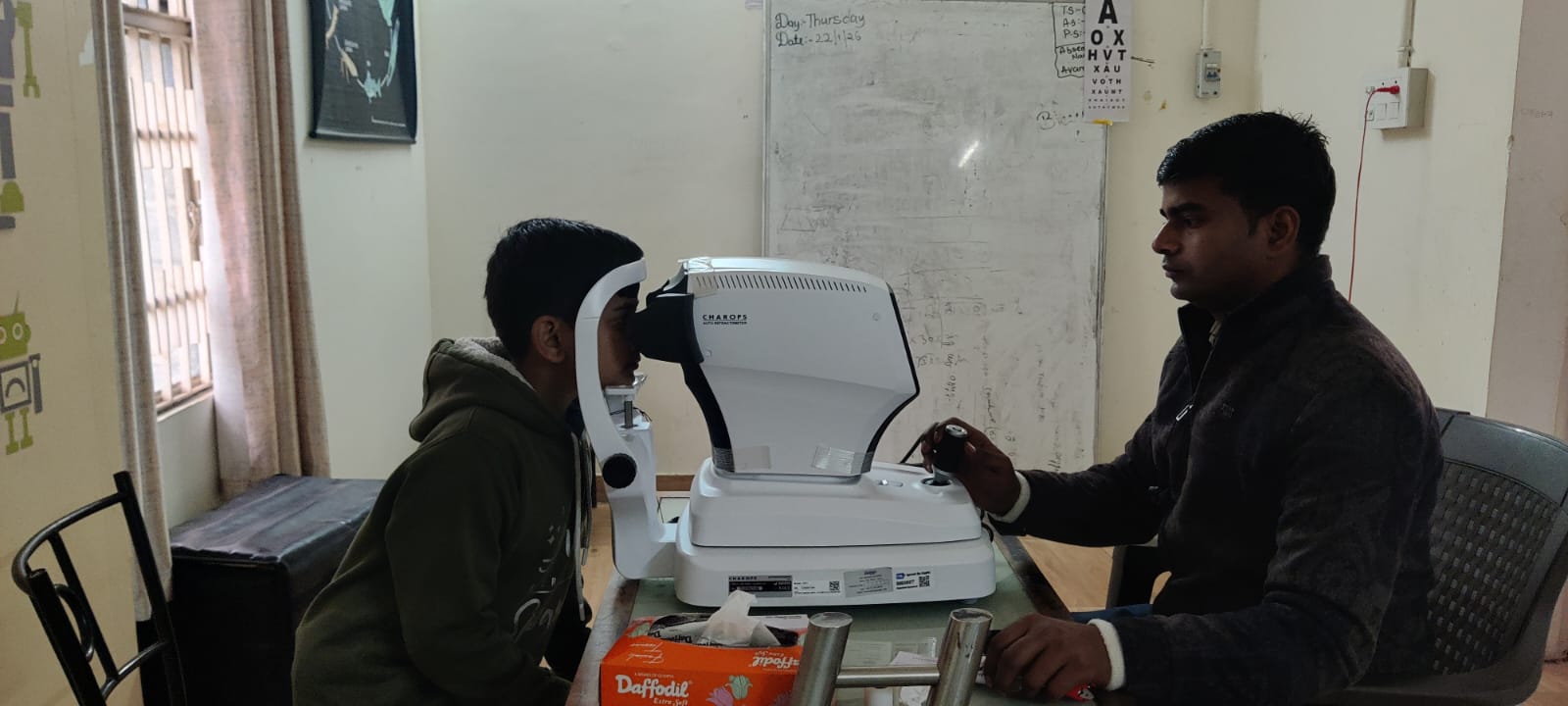
    Community outreach efforts by ACC, in tandem with the Adani Foundation, have spotlighted the silent scourge of preventable blindness plaguing vulnerable families. Among those touched by this lifeline is 59-year-old Bhamuni Devi, whose world had faded into shadows due to untreated cataracts.

    Enter the unsung hero: a trained community volunteer, or “Sangini,” who became Bhamuni’s bridge to salvation. With unwavering support, the volunteer guided her through the process of securing an Ayushman Bharat card under the Pradhan Mantri Jan Arogya Yojana (PM-JAY), India’s flagship health assurance scheme. This paved the way for seamless connection to an empanelled hospital, where free cataract surgery awaited—treatment that was once an insurmountable barrier for her modest means.

    The procedure proved a resounding success, shattering the veil of darkness that had confined Bhamuni. Today, she navigates her daily chores with renewed vigor, from tending to her home to cherishing moments with loved ones. This transformation isn’t just about restored vision; it’s a profound reclaiming of confidence, self-reliance, and dignity.

    ACC’s commitment to such ACC healthcare outreach underscores a broader mission: bridging healthcare gaps in underserved corners of India. By empowering local volunteers and leveraging government schemes like PM-JAY, the initiative is not merely treating ailments but fostering resilient communities. As Bhamuni’s story illustrates, every intervention ripples outward, illuminating paths to a healthier, more equitable future.

    For more on ACC’s social impact, visit Adani Foundation. Learn about PM-JAY at official PM-JAY portal.

  • ICSI unveils Stewardship Principles after COP30

    ICSI unveils Stewardship Principles after COP30

    Institute of Company Secretaries (ICSI) has launched guiding principles on stewardship to embed environmental, social and governance (ESG) practices in corporate strategies, building on commitments from the COP30 climate summit in Brazil.

    The ICSI Guiding Principles on Stewardship (IGPS) promote responsible asset management for long-term value, with adoption mandated by the International Financial Services Centres Authority (IFSCA) for fund managers and institutional investors in India’s financial hubs. The principles shift focus from short-term gains to sustainable growth, urging stewards to demand robust ESG frameworks.

    Complementing the IGPS, ICSI released a Stakeholder Engagement Toolkit on ESG this year to help company secretaries and boards craft comprehensive policies. It also introduced the ICSI Principles on Climate Change Governance (IPCG), offering metrics and targets for transparent climate disclosures.

    “Integrating climate considerations into business requires well-crafted principles, detailed guidance and equipped professionals,” ICSI President CS Dhananjay Shukla said. “As a leader in best practices, ICSI delivers through these initiatives.”

    ICSI Secretary CS Asish Mohan added: “In a climate-challenged world, we leverage investors and stewards for principles-based governance supporting sustainable development.”

    The moves align with global pushes for climate finance and multilateral action, as nations at COP30 pledged new tools to combat warming.

  • Vrutti, HSBC India launch FPO Shakti to aid farmer groups

    Vrutti, HSBC India launch FPO Shakti to aid farmer groups

    Vrutti, a livelihoods catalyst under the Catalyst Platform, partnered with HSBC India on Thursday to unveil FPO Shakti, a blended finance facility aimed at empowering early-stage Farmer Producer Organisations (FPOs) with timely capital.

    The stage-based programme, managed by Friends of Women’s World Banking (FWWB) India, targets a financing gap that hampers more than two-thirds of India’s 44,000 registered FPOs from scaling beyond incubation. It combines revolving funds, guarantees and revenue-linked loans with technical support on governance, business planning and digital tools, offering a 24-month acceleration path for participants.

    An initial 15 FPOs will benefit, with expansion planned to over 100, fostering bankable farmer-owned enterprises amid seasonal agricultural risks.

    “Structured interventions to build FPO capacity and governance are essential to unlock investment-ready pipelines,” HSBC India Managing Director and Head of Sustainability Aloka Majumdar said.

    Vrutti CEO Raghini Badhrinarayanan described the facility as a “shift to long-term institutional strengthening” with patient capital tailored to rural realities.

    The initiative integrates diagnostics, business support organisations and real-time digital tracking to align finance with FPO growth stages, promoting resilient value chains and higher smallholder incomes.

  • Empowering women through Ambuja Cements turmeric cultivation

    Empowering women through Ambuja Cements turmeric cultivation

    In the sun-baked villages of Chhattisgarh, where the earth cracks under the weight of relentless summers, a quiet revolution is blooming in shades of yellow. For Sunita Yadav, a 38-year-old mother of three, the spice that once dusted her kitchen shelves has become the key to unlocking a future her family never dreamed possible—thanks to the transformative Ambuja Cements turmeric cultivation initiative.

    Two years ago, Yadav was among 151 women from 11 remote hamlets, huddled in self-help groups (SHGs) that scraped by on subsistence farming. “We grew what the soil gave us—barely enough to eat,” she recalls, her calloused hands cradling a fistful of vibrant turmeric rhizomes. That changed in 2022-23, when Ambuja Cements—the ninth-largest global building materials giant and a pillar of the Adani Portfolio—launched its groundbreaking Ambuja Cements turmeric cultivation program as part of its CSR efforts to bolster rural livelihoods through sustainable agriculture.

    With hands-on training in scientific methods tailored for Ambuja Cements turmeric cultivation, the women chose the hardy Salem variety and sowed 20 quintals of seeds across four acres. Raised-bed planting, organic manuring, and mulching weren’t just techniques; they were lifelines under the Ambuja Cements turmeric cultivation framework. The harvest? A staggering 3.7-fold yield surge, netting over Rs 2.66 lakh in their debut season. “It was like the gods smiled on our fields,” Yadav says, eyes lighting up. “For the first time, I had money to send my daughters to school without borrowing—all from embracing Ambuja Cements turmeric cultivation.”

    Word spread faster than monsoon rains. By 2023-24, the Ambuja Cements turmeric cultivation initiative swelled to 261 SHG women, who tilled eight acres and birthed a community seed bank—a grassroots exchange ensuring quality rhizomes stayed local and affordable. They reaped 10,100 kilograms of turmeric, pocketing a collective Rs 5.05 lakh . “We weren’t just farmers anymore,” adds Rukmini Sahu, a 42-year-old group leader. “We were entrepreneurs, trading our sweat for seeds of tomorrow, powered by Ambuja Cements turmeric cultivation.”

    This year, in 2024-25, the Ambuja Cements turmeric cultivation tide has crested with 313 women on board, fortified by better organic inputs and expert guidance from Ambuja’s teams. Their coffers now brim with over 3,100 kilograms of seeds—2,100 kilograms earmarked for sale to lure newcomers into the fold, while 7,500 kilograms sustain households through lean times. It’s a self-reinforcing cycle: Ambuja Cements turmeric cultivation fueling financial independence, one rhizome at a time.

    Ambuja Cements’ Ambuja Cements turmeric cultivation push underscores a broader vow to women-led entrepreneurship in Chhattisgarh, blending continuous training with enterprise development to weave inclusive rural growth into the fabric of Adani’s diversified empire. For these SHG trailblazers, the golden root isn’t just a crop—it’s a testament to resilience, turning parched plots into plots of prosperity through Ambuja Cements turmeric cultivation.

  • PepsiCo India expands water security initiative

    PepsiCo India expands water security initiative

    PepsiCo India, via the PepsiCo Foundation and partner Pandit Jagat Ram Memorial FORCE Trust, will extend its water security and sanitation efforts from 13 villages in Mathura to 17 more, doubling reach to 100,000 people under the Water & WASH Secure Villages Initiative.

    The expansion builds on achievements in safe drinking water, sanitation, hygiene and groundwater management, implemented with local panchayats, administrations, communities and schools. It aligns with PepsiCo’s “Partnership of Progress” ethos, emphasizing multi-stakeholder collaboration for rural India’s water security, the company said in a statement.

    Announced at the Convergence for Water and WASH Secure Rural Communities conference in New Delhi, the event drew India’s Jal Shakti Minister of State Raj Bhushan Choudhary, officials from national missions, CSR executives, panchayat leaders and Uttar Pradesh community figures. Highlights included unveiling “Pathways to Effective Rural Water Sustainability & WASH Interventions,” a compilation of program success stories.

    Choudhary praised the initiative, quoting Prime Minister Narendra Modi: “Catch the rain where it falls, when it falls,” and lauded PepsiCo and FORCE for generational water security benefits.

    Yashika Singh, PepsiCo India and South Asia’s chief corporate affairs and sustainability officer, said: “True progress comes from communities, partners and institutions advancing together. Our Water & WASH Secure Villages Initiative’s success in 13 villages proves collective action’s power, now extending water security to 17 more for resilient futures.”

    Globally, the PepsiCo Foundation’s 2024 water access programs aided 1.2 million people, totaling over 96 million since 2010, prioritizing infrastructure and stewardship in high-risk zones. India’s expansion is a key focus.

    FORCE founder Jyoti Sharma noted: “Community-driven solutions ensure lasting water security. Partnering with PepsiCo India, we’ve boosted sanitation, health and resilience in Mathura, leveraging conference insights for greater impact.”

    The project has deployed 11 community and 12 school reverse osmosis units, rainwater harvesting, pond rejuvenation, hygiene drives and training for water committees, backed by hydrogeological studies and behavior change campaigns. It supports Jal Jeevan Mission, Swachh Bharat Mission and climate goals.

    PepsiCo India advances water security through watershed projects, recharge, regenerative farming and community access, fostering resilient agriculture and national agendas.

  • No proposal for centralised CSR monitoring platform: Govt

    No proposal for centralised CSR monitoring platform: Govt

    There is no proposal to create a centralised CSR monitoring platform for oversight and evaluation, Minister of State for Corporate Affairs Harsh Malhotra stated on Tuesday.

    In his written reply to the Rajya Sabha, the minister further disclosed that the government has penalised 30 companies with a total penalty of Rs 19.94 crore for non-compliance.

    “Whenever violation of CSR provisions is reported, action against such non-compliant companies is initiated as per provisions of the Act after due examination of records and following due process of law,” he added.

    As per the latest data, companies spent Rs 34,908.75 crore on CSR activities in the 2023-24 financial year, marking an increase from Rs 30,932.07 crore in the previous year.

    This underscores growing corporate commitment to social responsibility amid ongoing discussions on enhancing CSR monitoring platforms for transparency.

    All data related to CSR filed by companies in the MCA21 registry is available in the public domain and can be accessed at www.csr.gov.in.

    Stakeholders and researchers can leverage this portal to track compliance and impact without the need for a new centralised CSR monitoring platform.