Category: Education

  • HP Futures launches transformative education roadmap in Himachal Pradesh

    HP Futures launches transformative education roadmap in Himachal Pradesh

    UNESCO and the Government of Himachal Pradesh on Saturday unveiled a transformative education roadmap marking the second year of the HP FUTURES project, as the initiative shifts from research and pilots into sustained classroom reform across all 12 districts of the state.

    The roadmap was presented at the Third Steering Committee Meeting of the HP FUTURES project, accompanied by new teacher resources including competency-based learning guides, green education toolkits, and a localized Hindi edition of UNESCO’s Sport Values in Every Classroom Toolkit.

    The HP FUTURES education roadmap builds on a first year in which the initiative reached more than 10,000 students, 500 teachers, and nearly 200 schools while engaging over 750 education stakeholders statewide, an official statement said.

    “The HP FUTURES project is not meant to be an activity or even an annual calendar — this is actually meant to be a cultural shift in the way we know and see education in our schools,” said Shri Rakesh Kanwar, Secretary of Education, Government of Himachal Pradesh.

    Himachal Pradesh has risen from 21st to 5th place in national school learning outcome rankings, even as officials acknowledge that the primary challenge has shifted from awareness to implementation. A survey of 2,527 teachers across 199 schools found that 78 percent were familiar with the National Education Policy 2020, yet translating that policy into daily classroom practice remains the central task ahead.

    A review of 34 national and state policy documents confirmed that the state’s education framework is closely aligned with India’s National Education Policy 2020 and the National Curriculum Framework 2023. Two scoping missions conducted between October 2025 and February 2026 visited ten districts, gathering firsthand accounts from teachers and students.

    Under a values education initiative, 200 teachers from 56 PM SHRI schools participated in workshops held in Shimla, Mandi, and Kangra. A classroom activity called “Paper Toss,” introduced in approximately 25 schools for students in Grades 3 to 5, generated early reports of improved peer interaction and social-emotional learning.

    Climate education has also gained traction. In November 2025, more than 8,500 students participated in a statewide climate awareness quiz during SWACHHOTSAV 2025. Twenty-two PM SHRI schools across 11 districts joined the Climate Detective pilot programme, which guides students to investigate local environmental challenges using Traditional Ecological Knowledge. The effort draws on a broader base of more than 14,000 Eco Clubs operating across the state under the Mission LiFE initiative.

    In year two, the HP FUTURES education roadmap will target six core competencies outlined in the National Curriculum Framework — critical thinking, problem-solving, communication, and digital literacy — while piloting a new teacher professional development model combining workshops, classroom mentoring, and peer-learning networks across 12 schools in 12 districts.

    Curriculum, textbooks, and assessments reviewed in the first phase will be more closely aligned with competency-based learning goals, while Eco Clubs and the Value Education through Sport pillar will be expanded and connected to local ecosystems and community knowledge.

    “HP FUTURES represents a holistic vision for education — anchored in competency-based learning, value education through sport, and greening education,” said Joyce Poan, Chief of Education, UNESCO Regional Office for South Asia. “What makes this initiative truly significant is how it brings global evidence, national priorities and state-level leadership into one coherent agenda for transformation.”

    The HP FUTURES — Foundation for Upskilling, Teacher Excellence, Understanding, Readiness, Equity, and Sustainability — project is jointly led by the Government of Himachal Pradesh and UNESCO, with the Pratham Education Foundation serving as coordinating agency.

  • India’s transformative para shooting push begins

    India’s transformative para shooting push begins

    A corporate-backed initiative to build India’s next generation of Paralympic shooting champions is now fully operational, with funds deployed and training underway across the country.

    The Wheeling Happiness Foundation (WHF), led by India’s first woman Paralympic medalist Dr. Deepa Malik, has launched the “Shaping Future Paralympic Shooting Champions” program under a CSR partnership with Asset Care and Reconstruction Enterprise (ACRE). The alliance, signed earlier this year, represents one of the most structured private-sector commitments to para-shooting development in the country.

    “We are not just building champions; we are building a more inclusive India,” said Dr. Malik, a Padma Shri awardee. “This collaboration is proving to be a game-changer for countless aspiring para-shooters.”

    The program targets the identification and training of more than 300 new para-shooters nationwide. It also seeks to certify 30 national coaches and 15 classifiers and referees to World Shooting Para Sports (WSPS) standards — a technical gap that has long constrained India’s competitive depth in the discipline.

    Equipment procurement is a central plank of the effort, with adaptive wheelchairs, specialized shooting tables, and accessible training infrastructure to be provided to participants. At least 30 percent of all supported athletes will be women, a target WHF says is non-negotiable.

    The Para Shooting Association of India (PSAI), the national governing body, is the technical implementing partner. PSAI Chairperson and Dronacharya Awardee J.P. Nautiyal is overseeing execution alongside WHF.

    Mohd Shariq Malik of the ACRE CSR Committee said the program aligned with the company’s core social mandate. “We are incredibly proud to support these inspiring athletes and believe in their potential to bring glory to our nation,” he said.

    The Rotary Club of Delhi South, under District 3011 of Rotary International, has also facilitated the partnership. Kriti Makhija of the club was acknowledged by WHF for her coordination role.

    India has emerged as a dominant force in para shooting internationally. At the 2025 World Shooting Para Sport World Cup in Changwon, India topped the medal table with 15 gold, 13 silver, and four bronze medals — ahead of South Korea and Iran. The WHF-ACRE initiative is aimed at broadening the talent pipeline that feeds that competitive success.

    Dr. Malik said the program embodied the foundation’s motto — “Ability Beyond Disability” — and was designed to be sustainable rather than episodic.

    “With ACRE’s support, we are strengthening our Paralympic legacy and fostering national pride on the global stage,” she said.

  • Ambuja Foundation launches skill development institute in Modinagar

    Ambuja Foundation launches skill development institute in Modinagar

    Ambuja Foundation and Kanohar Electricals Limited have partnered to launch a Skill Development Institute in Modinagar, Uttar Pradesh, aiming to empower more than 1,000 rural youth over the next three years with employment-oriented training.

    Located in Ghaziabad district and strategically close to the expanding Delhi NCR economic hub, the institute targets villages around Saunda where educated youth face high unemployment and underemployment despite completing secondary school or graduation. A field assessment by Ambuja Foundation highlighted a critical gap in industry-relevant technical skills and practical exposure.

    The initiative, rooted in the native village of Kanohar Electricals Limited founder Shri Kanohar Lal Singhal, will offer structured courses including Phlebotomy, General Duty Assistant, OT Assistance, Customer Care, and Microfinance. Participants will also receive soft skills, IT training, on-the-job training, work readiness, financial literacy, and occupational health and safety modules.

    “With the growing demand for a skilled workforce, this Skill Development Institute in Modinagar will bridge the skills gap and equip youth with industry-relevant capabilities,” said Pearl Tiwari, CEO, Ambuja Foundation. “Through this partnership with Kanohar Electricals Limited, we aim to empower rural youth with the confidence and opportunities needed for sustainable careers.”

    Dinesh Singhal, Chairman and Managing Director of Kanohar Electricals Limited, added: “Investing in skills development is essential for inclusive economic growth. This collaboration will transform livelihood prospects for young people in rural Uttar Pradesh.”

    The three-year programme is expected to connect trainees with job opportunities across the NCR region, supporting reduced unemployment, higher household incomes, and greater economic mobility.

  • Bharti Real Estate launches Abhigyan to bridge industry-academia gap

    Bharti Real Estate launches Abhigyan to bridge industry-academia gap

    Bharti Real Estate, the property arm of Bharti Enterprises, has launched Abhigyan, a structured industry-academia engagement programme designed to give engineering students hands-on exposure to large-scale real estate and infrastructure development, as the sector grows in scale and complexity across India’s urban centres.

    The initiative kicked off with its first field visit, hosting civil engineering undergraduates from the Indian Institute of Technology Delhi at Worldmark, Aerocity — a sprawling commercial development adjacent to Indira Gandhi International Airport that is being positioned as one of India’s most ambitious global business districts.

    “Abhigyan reflects our commitment to fostering industry understanding and nurturing future talent through real-world exposure. As infrastructure and real estate continue to evolve in scale and complexity, it is important for young professionals to understand how such developments are brought to life beyond textbooks.” — S. K. Sayal, MD & CEO, Bharti Real Estate

    During the immersive walkthrough, students gained first-hand insight into integrated design, construction management, project planning and the execution challenges inherent in delivering premium commercial developments at scale.

    The session concluded with an interactive discussion with Sayal and senior leadership, including Vice President of Operations Kamal Kumar Dua, Project Leaders Amit Tyagi and Ajay Kalia, Chief Marketing Officer Cherryn Dogra and Projects Planning Lead Pankaj Garg. Industry consultants Raja Raja Menon of Arcop and Amrit Pal of TPCL also participated in the engagement.

    “Bharti Real Estate has provided the undergraduate students of Civil and Environmental Engineering IIT Delhi with a valuable opportunity to explore various aspects of planning, construction, on-site execution and ground coordination.

    Such hands-on experiences play a crucial role in inspiring and shaping the next generation of engineers in the country.” — Prof. Allan L Marbaniang, Assistant Professor, Civil and Environmental Engineering, IIT Delhi

    Bharti Real Estate said Abhigyan is envisioned as an ongoing platform, with curated field visits and expert-led discussions planned across leading academic institutions nationwide. The company described the programme as a direct response to the widening gap between classroom learning and the realities of executing world-class, large-scale development projects.

    Worldmark, the company’s flagship portfolio at Aerocity, spans approximately 17 million square feet across multiple phases. Worldmark 1.0 is fully operational and home to multinational corporations, global financial institutions and Fortune 500 companies.

    Worldmark 2.0, currently under advanced development, covers around 7 million square feet including nearly 3 million square feet of premium office space already holding an occupancy certificate, and close to 3 million square feet of destination retail targeted for operationalisation in 2027–28. Worldmark 3.0 and 4.0 will add a further 5 million-plus square feet to the district in subsequent phases.

  • Signify Khel Jyoti illuminates Haryana’s sports future

    Signify Khel Jyoti illuminates Haryana’s sports future


    Signify, the world leader in lighting, has illuminated four Kabaddi and Kho-Kho training centers across rural Haryana under its flagship CSR initiative, Signify Khel Jyoti, in a move designed to transform grassroots sports development across one of India’s most sports-rich states.

    The intervention, timed ahead of the International Day of Sport for Development and Peace, deploys industry-leading energy-efficient LED sports lighting to extend usable training hours beyond sunset, improve athlete safety, and drive inclusive participation — particularly among women and youth.

    “Sport has the power to bring communities together and create opportunities for young talent, especially in underserved regions,” said Nikhil Gupta, Head of Strategy & Marketing, Signify, Greater India.

    “Through Signify Khel Jyoti, we are enabling access to safe and inclusive sporting spaces by improving infrastructure at the grassroots level.”

    The centers were identified through a structured selection process in partnership with JSW Sports and Haryana Steelers, prioritizing active training ecosystems, coaching support, and long-term community impact. Ground-level execution was managed by Pro Sport Development.

    Divyanshu Singh, CEO of JSW Sports and Haryana Steelers, said the initiative unlocks significant potential at the grassroots level. “In a state like Haryana, where Kabaddi is part of everyday life, extending training hours and improving safety can directly influence participation and performance,” he said.

    The newly illuminated centers have historically produced athletes who have gone on to represent India at the highest levels, including the Pro Kabaddi League. Officials report increased enrollment across age groups, with a notable early rise in girls’ participation.

    The Haryana project forms part of a broader national effort: Signify Khel Jyoti has now illuminated over 200 grassroots sports centers across India, reinforcing the company’s commitment to building an inclusive and sustainable sports ecosystem through the power of light.

  • Adani Foundation empowers Gangavaram youth through sports initiative

    Adani Foundation empowers Gangavaram youth through sports initiative

    The Adani Foundation is empowering youth in Gangavaram, Andhra Pradesh, by nurturing sporting talent via the Adani Coaching & Fitness Centre, a transformative initiative launched in 2022.

    The centre offers structured training in Kabaddi, Kho-Kho, Shuttle Badminton, and fitness programmes, enabling aspiring athletes from fisher folk communities to pursue sports ambitions alongside education.

    Success stories highlight the programme’s impact. Sixteen-year-old Yeripalli Komali and Badi Divya, both from fisher folk families, have progressed from school-level to representing Andhra Pradesh in national Kabaddi tournaments. Similarly, 20-year-old Perla Divya has competed for Andhra University in the All-India Kabaddi tournament and now serves as a Physical Education teacher, earning ₹7,000 monthly.

    The Adani Foundation provides professional kits, mentorship, and competitive exposure. Leading the centre is 23-year-old Nolli Theja, a national-level Kabaddi player from Gangavaram who has participated in 14 national tournaments. Having overcome financial challenges himself, Theja now coaches and inspires the next generation.

    To date, the centre has trained over 72 players, including 30 girls, turning sports into a pathway for empowerment, confidence, and community pride in Gangavaram.

  • HDFC Bank boosts Parivartan Startup Grants with Rs 20 crore

    HDFC Bank boosts Parivartan Startup Grants with Rs 20 crore

    HDFC Bank, India’s largest private sector lender, on Monday announced the launch of the FY26 edition of its Parivartan Startup Grants programme, committing Rs 20 crore in non-dilutive grants to boost social impact-driven innovations.

    The initiative will support 10 strategic programmes across key sectors including climate innovation, agriculture and sustainable livelihoods, manufacturing and MSME innovation, financial inclusion, gender diversity and inclusion, as well as emerging fields such as AI and deep technology.

    Grants will primarily fund pilots, validation and early-stage scale-up for selected startups.

    The programme operates on an incubator-led model, with partners handling outreach, evaluation, mentoring and impact reporting. FY26 emphasises deeper sector focus, with collaborations including IIT Madras Incubation Cell for deep-tech, IIM Bangalore-NSRCEL for financial inclusion, and BITS Pilani for climate innovation.

    It also includes ecosystem-building efforts in Punjab and a nationwide incubator capacity programme in partnership with the Indian STEP and Business Incubator Association (ISBA).

    “Parivartan Startup Grants has evolved as a benchmark in the industry that works closely with institutions to support innovation addressing clearly identified social and environmental challenges,” said Kaizad Bharucha, Deputy Managing Director, HDFC Bank.

    Arup Rakshit, Group Head – Treasury, added that the programme provides structured institutional support through leading incubators.

    Since 2017, Parivartan Startup Grants has backed over 500 startups via more than 130 incubators, deploying over Rs 85 crore. Nearly 40% of supported startups are from Tier II and III cities, with supported ventures raising over Rs 900 crore externally.

    Applications will be handled through partner incubators.

  • Mankind Pharma unveils Digital Smart Classrooms in Ghaziabad

    Mankind Pharma unveils Digital Smart Classrooms in Ghaziabad

    Mankind Pharma Limited has launched transformative digital smart classrooms in Ghaziabad as part of its flagship CSR platform KindCare, underscoring its dedication to empowering technology-driven education in government schools.

    The initiative, implemented in partnership with SEEDS Impact, was inaugurated by Sunil Kumar Sharma, Uttar Pradesh Cabinet Minister for Information Technology and Electronics, alongside Sheetal Arora, Promoter and CEO of Mankind Pharma Limited.

    This marks a significant step in Mankind Pharma’s Digital Smart Classroom Initiative, which aims to enhance access to quality education via interactive digital environments. With a community-first strategy, the program targets district-level rollout for lasting grassroots impact.

    The broader effort covers 400 schools in Uttar Pradesh, with 460 digital smart classrooms now operational. These use tools like the K-Yan device for audio-visual teaching, boosting student engagement in resource-limited settings.

    Teacher empowerment is central to sustainability. Over 2,400 educators have received training, including hands-on sessions, simulations, and ongoing support via helplines and digital networks.

    Sharma praised the effort: “Mankind Pharma’s Digital Smart Classroom Initiative addresses key gaps in digital literacy and access, with a sustainable focus on teacher empowerment.”

    Arora added: “Through KindCare, we adopt a community-first approach to empowering underserved students and teachers in a digital world, ensuring dignity and opportunity.”

    R Purushotham, CEO of SEEDS Impact, said the partnership nurtures India’s youth and could scale further with continued commitment.

    The Digital Smart Classroom Initiative anchors KindCare’s focus on education, alongside health, hygiene, environment, and livelihoods.

    Mankind Pharma, a leading Indian pharmaceutical firm, emphasizes affordable quality products across formulations and consumer healthcare.

    SEEDS is a non-profit advancing inclusive development in education, skills, farming, and health.

  • Empowering Youth: ACC’s skill development transforms lives

    Empowering Youth: ACC’s skill development transforms lives

    In the rural hamlet of Gagal in Himachal Pradesh, ACC, a unit of the Adani Group’s diversified portfolio and India’s fastest-growing building materials firm, is bolstering youth livelihoods via targeted, community-driven skill development programs.

    Sakshi, 22, hails from a humble family in Gagal village, where early tragedy struck: her father died young, leaving her mother and elder brother to shoulder the financial load. Her sibling, a heavy machinery operator, toiled long hours to fund the household and Sakshi’s schooling amid mounting pressures.

    Eager to ease the strain, Sakshi turned to the Adani Skill Development Centre (ASDC), a joint initiative of ACC and the Adani Foundation. She joined the Retail Sales Associate program, honing key competencies in communication, customer interaction and sales techniques. The rigorous curriculum fortified her self-assurance and primed her for the competitive retail job market.

    Upon graduation, Sakshi landed a position at Royal Signet, a Bhatinda-based retailer, drawing a monthly salary of Rs 12,000 plus meals and lodging. Her ascent underscores the potent ripple effects of ACC‘s skill development efforts, which arm disadvantaged youth with tools to surmount barriers and forge stable prospects.

  • Amara Raja Skill Centre in Mahabubnagar achieves 98.85% placement rate for first batch

    Amara Raja Skill Centre in Mahabubnagar achieves 98.85% placement rate for first batch

    The Amara Raja Skill Development Centre (ARSDC), a joint initiative of Amara Raja Advanced Cell Technologies and the Rajanna Foundation, marked a significant achievement on Tuesday with the valedictory of its inaugural batch, where 98 trainees from local villages secured placements in key industries at a near-perfect rate of 98.85%.

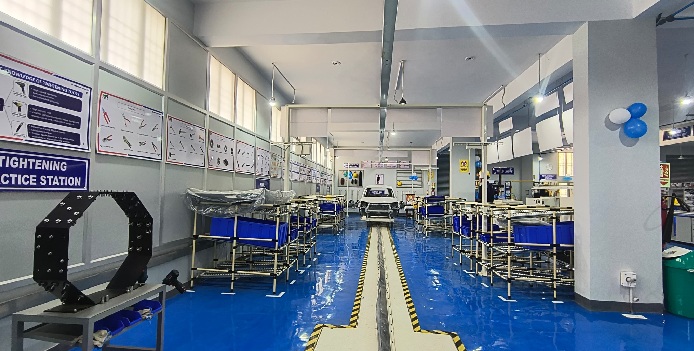
    Inaugurated on August 10 this year in partnership with the Electronics Sector Skills Council of India (ESSCI), the centre targeted underprivileged youth who had completed Class 10 or 12, selecting the cohort through a competitive screening process.

    The three-month programme offered free vocational training in high-growth areas such as heating, ventilation and air conditioning (HVAC), domestic and industrial electricals, electric vehicle service and repair (EVSR), and EV battery pack assembly. It combined theoretical classes, lab sessions and on-site practicals, culminating in NCVET-recognised certifications that enhance employability.

    The event drew prominent attendees, including Devarakadra MLA Madhusudan Reddy, District Collector Viziendira Boyi and TGIIC Vice-Chairman and Managing Director K Shashanka, alongside Amara Raja Group’s senior leadership.

    For many graduates from low-income families, the placements—offering stable salaries in leading firms—represent their first formal jobs, alleviating economic distress and stemming rural-to-urban migration.

    The centre’s model, which included complimentary transport and meals, addressed longstanding barriers to skill acquisition in Mahabubnagar, a district poised for industrial expansion with the upcoming Giga Corridor. Officials highlighted how such interventions could catalyse local development, with the second batch slated to commence on December 15.

    As India’s push for skilling gains momentum amid the green energy transition, ARSDC exemplifies the potential of targeted CSR efforts to build a resilient workforce, one certification at a time.