Category: Home Latest Stories

  • Indus Towers Digital Van trains 136,525 in seven states

    Indus Towers, one of the world’s largest telecom infrastructure companies, said its Digital Transformation Van (DTV) has provided digital literacy training to 136,525 people from underserved communities across seven states as the country marks 10 years of its Digital India initiative.

    The mobile Digital Transformation Van, part of Indus Towers’ flagship Corporate Social Responsibility program ‘Saksham’, has reached rural and urban slum communities in Delhi, Uttarakhand, Madhya Pradesh, Maharashtra, Jharkhand, Chhattisgarh and Odisha, the company said in a statement.

    Launched in 2018 as the DigiShiksha initiative, the Digital Transformation Van program empowers youth, women, senior citizens and farmers with digital literacy, IT skills, cybersecurity awareness and financial education, aligning with the government’s Digital India Mission, according to the announcement.

    “Indus Towers’ DTV is a commitment to inclusive growth and a belief that technology can be a powerful equalizer,” said Neeti Wahi, Chief Digital and Information Officer at Indus Towers. “It is heartening to see over half of our beneficiaries are women.”

    The solar-powered Digital Transformation Van provides free doorstep digital education and public services through a 21-seater mobile classroom equipped with high-speed internet, modern computers, printers and e-learning tools, the company said.

    The Digital Transformation Van initiative is implemented by NIIT Foundation, with expert trainers conducting community awareness sessions on digital safety, environmental conservation and waste management for school children aged 12 and above, women, farmers and senior citizens, according to the statement.

    The Digital Transformation Van program represents Indus Towers’ approach to reaching communities where digital infrastructure and literacy gaps are most pronounced, customizing offerings based on local needs rather than relying on static training centers, the company said.

    Indus Towers operates 256,074 telecom towers across all 22 telecom circles in India, making it one of the country’s largest tower infrastructure providers, according to company information.
  • Bharti Airtel Foundation launches multi-year scholarship program at Indian School of Business

    Bharti Airtel Foundation launches multi-year scholarship program at Indian School of Business

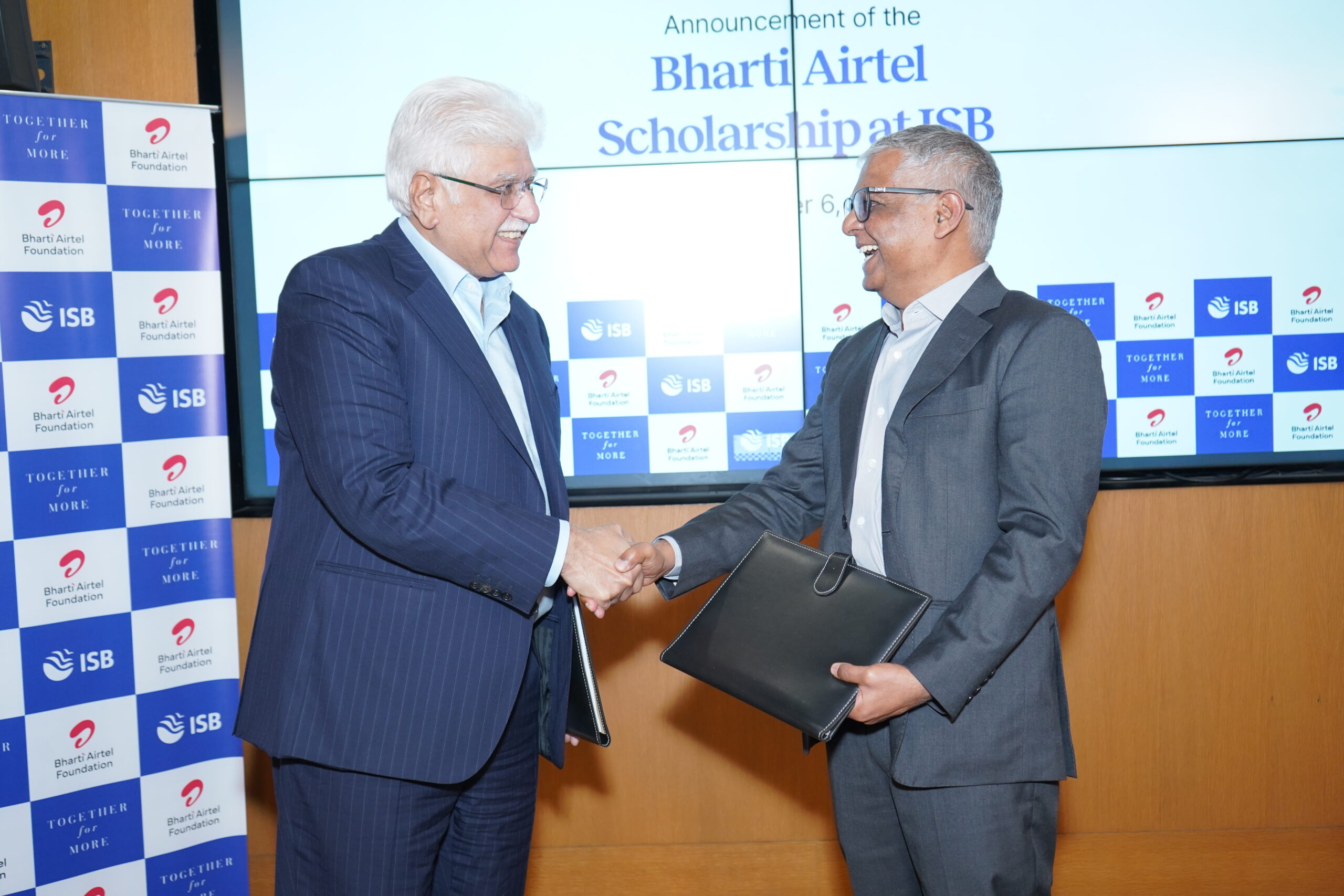
    The Bharti Airtel Foundation has established a multi-year scholarship initiative with the Indian School of Business (ISB), offering financial support to students in the institution’s Post Graduate Programme in Management for Young Leaders, the foundation announced.

    The program will provide five students from each cohort with full or partial waivers covering tuition, accommodation and meal expenses through a need-cum-merit based selection process, the foundation said in a statement.

    The scholarship recipients, designated as “Bharti Scholars,” will be chosen based on both financial need and academic merit, according to the announcement.

    “Education is the cornerstone of progress and empowerment,” said Rakesh Bharti Mittal, Co-Chairman of the Bharti Airtel Foundation and Vice Chairman of Bharti Enterprises. “When talent meets opportunity, extraordinary things happen.”

    The memorandum of understanding was signed in the presence of Mittal, Madan Pillutla, Dean of ISB, and DNV Kumara Guru, Senior Director of Advancement, Alumni Engagement and External Relations at ISB.

    The foundation has supported over 2,000 scholars since its inception, with 44% of recipients being female students, according to the statement. The initiative focuses on creating higher education opportunities for children from underserved communities.

    ISB said the partnership advances its commitment to ensuring financial constraints do not limit access to management education for qualified candidates.
    The Post Graduate Programme in Management for Young Leaders is designed for early-career professionals seeking business education.

  • HCL Foundation donates medical equipment to UP hospital

    HCL Foundation donates medical equipment to UP hospital

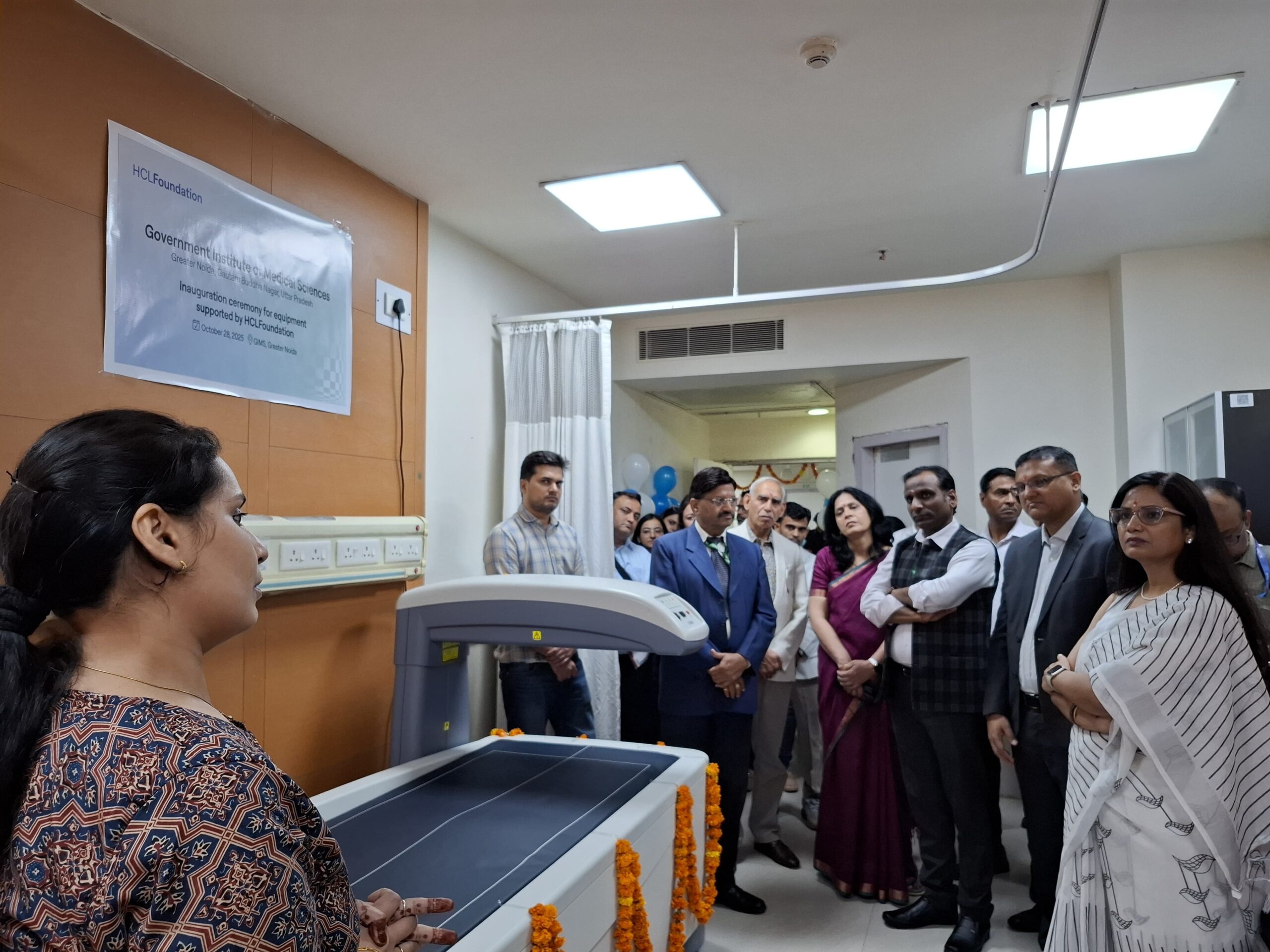
    HCL Foundation, the corporate social responsibility arm of technology firm HCLTech, has donated advanced medical equipment to a government hospital in Uttar Pradesh state, the foundation said on Tuesday, as part of efforts to improve healthcare infrastructure in the region.

    HCL Foundation provided the equipment to the Government Institute of Medical Sciences (GIMS) in Greater Noida, including a 3 Tesla high energy inductive therapy system for deep tissue healing, an intermittent compression therapy unit, a computerized balance evaluation system, a high power laser therapy unit, and a DEXA scan machine for bone health assessment.

    The new equipment is expected to benefit more than 30,000 patients annually from Noida, Greater Noida, the Delhi National Capital Region and surrounding areas, HCL Foundation said.

    “At HCL Foundation, we believe that quality healthcare should be accessible to everyone,” said Dr Nidhi Pundhir, Senior Vice President for Global CSR at HCLTech and Director at HCL Foundation.

    The donation by HCL Foundation supports the Uttar Pradesh state government’s efforts to strengthen medical infrastructure and expand healthcare access in the region.

    Brig. (Dr.) Rakesh Gupta, Director of GIMS, said the support from HCL Foundation would “significantly strengthen” the institute’s healthcare infrastructure and patient care capacity.

  • Empowering Climate-Resilient Farming: ACC’s Solar Boost

    Empowering Climate-Resilient Farming: ACC’s Solar Boost

    In the hot, dry lands of Chhatatand village in rural India, farmers like Bhagywati Devi used to worry every day about rain. No rain meant no crops, no food, and no money. But now, things are different. ACC, a big company in cement and building materials from the Adani group, is working with the Adani Foundation to bring climate-resilient farming to places like this. They use smart ways to save water and grow food better, even when weather is bad. This helps farmers fight low crop yields and crazy rain patterns through climate-resilient farming practices.

    Bhagywati is 47 years old. She has three kids and a husband who works hard as a daily labourer. Life was tough. School fees piled up, and food was always short. “We waited for rain like kids wait for sweets,” she says. When it didn’t come, her fields turned brown. She had to use diesel pumps for water, but they cost too much money and made dirty smoke. Crops failed often, and her family went hungry.

    In 2024, everything changed for Bhagywati. She was one of 20 farmers picked for the Adani Foundation’s solar irrigation project. ACC helped make it happen. Now, a solar pump sits in her small half-acre field. It uses free sunshine to pull water from the ground and send it straight to her plants. No more waiting for rain or paying for diesel. “It’s like a magic machine from the sky,” Bhagywati laughs, her face lighting up.

    With steady water, her crops grow strong all year. She plants rice and veggies without fear. Yields doubled fast. Before, she earned just enough to scrape by. Now, she makes an extra Rs 6,000 each month. That’s big money here—it pays for better food, fixes the house roof, and saves for her youngest girl’s college dreams. “I used to work sun-up to sun-down just to eat. Now, I have time for my family,” she says. She cooks hot meals, helps kids with homework, and chats with neighbors. Her tired hands still work the soil, but her heart feels lighter.

    ACC didn’t stop at water. They taught her trellis farming too. It’s a simple trick: Grow climbing veggies like beans and gourds on tall frames made from sticks or wire. This saves space on her tiny plot. Plants grow up, not out, so she fits more in. “My land was too small before. Now, veggies climb high like happy kids on a swing,” she jokes. Extra harvest means more to sell at the market. Buyers pay good prices for fresh, clean produce. Her income grew again, and people in the village notice. Once, folks saw her only as a wife helping out. Now, they call her for advice on farming. She speaks up in meetings, proud and strong.

    Bhagywati’s story shows the power of climate-resilient farming. ACC brings easy tools like solar pumps and trellis setups to far-off villages. These aren’t fancy gadgets—they’re helpers that fit real life. Farmers learn to use less water, grow more food, and earn steady cash through climate-resilient farming methods. No more chasing rain or burning fuel. Instead, they build safe futures.

    Take Bhagywati’s family: The extra money bought new clothes for festivals. Her middle son dreams of being a teacher, not a labourer. The little girl studies without worry. “ACC gave us more than tools. They gave us hope,” Bhagywati says, watching her kids play under the green vines.

    Across India, thousands like her face the same fights—hotter days, less rain from climate change. But with ACC and Adani Foundation’s work, rural spots like Chhatatand are turning green again. One farmer, one field at a time, they’re proving small changes make big waves. Solar power waters the land. Smart farming lifts spirits. And stories like Bhagywati’s spread, inspiring others to try climate-resilient farming.

    In the end, it’s not just about crops. It’s about families thriving, kids learning, and villages growing strong. ACC builds more than cement—they build lives that last, rain or shine.

  • Empower CSR Careers in India: 2025 Prosperity Surge

    Empower CSR Careers in India: 2025 Prosperity Surge

    By Eldee

    Within the busy corridors of India’s corporate world, CSR careers in India are not a specialty field, but an exciting ecosystem with plenty of opportunities. With the national mandated CSR spend exceeding Rs 25,000 crore in FY 2024-25, young professionals have taken to these career paths, blending ethical impact with enviable paychecks.

    Consider a graduate from an underprivileged background finding a way into a CSR careers in India job description, entering as an officer in a fintech space in Mumbai at Rs 4-6 lakh per year, making it to manager in 5 years at Rs 15 lakh. This is not aspirational marketing; this is a real opportunity in CSR careers in India, when purpose and profit create options with 15-20 % job growth annually.

    However, as climate considerations and the demands for social equity ramps up, one insists, can CSR careers in India democratize access or remain locked in privilege, only the urban elite create value from?

    The magnetic pull of CSR careers in India stems from regulatory firepower and market evolution. The Companies Act 2013’s 2% profit directive has morphed into a strategic imperative, with education gobbling 30% of funds, healthcare 25%, and sustainability initiatives claiming 20%. This fuels diverse CSR careers in India, from impact analysts crunching data for SEBI’s BRSR reports to coordinators spearheading rural skilling programs in Gujarat’s arid belts.

    Salaries for CSR careers in India are better than in many traditional sectors: entry-level CSR careers in India are between Rs 3-6 lakh, mid-management salaries are at Rs 8-15 lakh, and C-suite management salaries in the tech corridors of Bengaluru are Rs 25-40 lakh, with raises at 9.5% that are substantially over the national average. When reviewing LinkedIn’s job pulse report for CSR careers in India, over 600 live opportunities exist for a wide range of matters, including renewable energy in Chennai to community outreach in Delhi, catering for Gen Z’s quest for SDG careers.

    What makes CSR careers in India must have? Digital disruption – we are no longer phenomenon-driven philanthropy, nor CSR careers in India. CSR careers in India require full fluency in the use of technology for social change whether it is estimating community change outcomes using artificial intelligence or engaging in blockchain interaction with NGOs towards accomplishing a transparency agenda to raise aid. In this hybrid, new CSR careers begin to appear: ESG specialists auditing supply chains, or sustainability leads on circled economy initiatives.

    Salaries in CSR careers in India are superior to that of many more traditional career sectors: starting salaries for beginners in CSR careers in India range from Rs 3-6 lakh; mid-career salaries for managers are Rs 8-15 lakh; and senior executives or C-suite roles in tech hotspots in Bengaluru can make Rs 25-40 lakh with annual raises of 9.5% that outpace national averages. LinkedIn’s data shows there are over 600 live resumes in the CSR careers in India field of practice—ranging from renewables in Chennai to community outreach programs in Delhi—symbolizing some of the most exciting employment opportunities for Gen Z students looking to advance careers in CSR and the SDGs.

    What makes CSR careers in India exciting? The answer is digital disruption. Gone are the days of executing passive philanthropy. CSR careers in India today require a level of fluency in technology—using AI to track outcomes in communities or employing blockchain to work with NGOs. This technical fusion is creating exciting and innovative CSR careers in India, such as ESG (environmental, social, governance) specialists working to assess supply chains of products or sustainability lead working with companies on circular economy projects in Maharashtra.

    Further, CSR careers in India that focus on climate action will continue to be a growth area due to India’s goal of net-zero by 2070—everything from training in renewable energy to community drive for water conservation, all straddling corporate priorities with national goals. Newly emerging locations like Bihar offer a wide-open frontier for students seeking CSR careers in India, and the potential of jobs that shape policy and increase mobility and world exposure is very exciting.

    Although CSR careers in India are seen as exciting, there are important factors that take away from the experience. There are not enough qualified people for CSR careers. Seventy percent of the CSR jobs are in the Rs 15-50 lakh salary category. Barriers for entry also prevent many people from Tier-3 towns or non-elite institutions from getting CSR jobs. Examples of barriers include extensive certifications like GRI and field experience with NGOs.

    While women dominate social change work at the grassroots level, many get stuck in glass ceilings in senior CSR jobs in India. Regulatory hurdles can lead to long decisions that help organizations accomplish their CSR goals. Corporations express the need for more analytical and engagement skills, yet underinvest in training initiatives, leading to underwhelming outcomes from well-intentioned plans.

    Reforms are necessary to strengthen CSR careers in India. Governments should finance the establishment of CSR academies within public colleges that will provide ample education, combining analytical frameworks with hands-on programs, improving both the number of people in the CSR pipeline and knowledge. Companies should establish and uphold diversity of talent mandates, shifting gaps in CSR talent to a workforce pipeline of diverse talent.

    For prospective pioneers yearning for CSR careers in India, the formula is straight forward: Start with an internship from Tata Trusts or an initiative with HUL on sanitation; take examples from free Coursera modules on ESG frameworks, and include data informed wins like “I orchestrated a Rs 5 crore initiative that impacted 10,000 lives” in your CV. The compassion and execution in the context of CSR careers in India is not replaceable in a world shape by AI.

    With CSR spending expected to reach Rs 50,000 crore by 2030, India is gearing up to create lakhs of CSR careers that will connect urban prosperity with rural resilience. And this green-collar transformation is not only economic; it’s cultural, changing the notion of work toward the lens of equity. For India’s youth, CSR careers in India beckon not as a sideline, but as the main event: Wear the mantle, and lead the legacy.

  • Western Financial, Wawanesa Donate $100,000 to Boost Manitoba Healthcare

    Western Financial, Wawanesa Donate $100,000 to Boost Manitoba Healthcare

    In a significant boost to Manitoba healthcare, the Western Communities Foundation, the charitable arm of Western Financial Group, and Wawanesa Insurance have jointly donated USD 100,000 to the Health Sciences Centre (HSC) Foundation’s Operation Excellence Campaign.

    Announced on Wednesday, this contribution will fund state-of-the-art surgical equipment at Manitoba’s largest hospital, aiming to enhance patient outcomes and advance surgical innovation.

    The donation reflects a shared commitment by both organizations to foster healthier, stronger communities across Canada, ensuring that Manitobans have access to top-tier medical care when they need it most, the company said in a statement.

    The Health Sciences Centre in Winnipeg is a cornerstone of Manitoba healthcare, serving countless families, friends, and neighbours across the province.

    Evan Johnston, President and CEO of Wawanesa, emphasized the personal connection many feel to the hospital. “As a company that calls Manitoba home, we all know someone who has relied on HSC’s care, whether it be a family member, friend, or neighbour,” Johnston said.

    “This donation continues our 129-year tradition of supporting Manitobans. By partnering with Western Financial Group, we’re helping ensure our community benefits from cutting-edge healthcare that saves lives and improves wellbeing.”

    Grant Ostir, CEO of Western Financial Group, echoed this sentiment, highlighting the human impact of the donation. “At the Western Communities Foundation, we’re dedicated to standing by Canadians in moments that matter,” Ostir said.

    “This $100,000 gift will support HSC’s investment in advanced surgical tools, leading to better patient care, higher survival rates, and stronger communities. We’re proud to work alongside Wawanesa to support the frontline healthcare teams who make excellence in Manitoba healthcare possible every day.”

    The donation is part of the broader mission of the Western Communities Foundation, established in 2001, to build safer and stronger communities across Canada.

    In 2025, the Foundation has continued its impactful work, from aiding wildfire recovery efforts to funding youth education through bursaries and supporting vital infrastructure projects nationwide.

    Since its inception, the Foundation has donated over USD 9 million to community initiatives, creating spaces where Canadians can thrive. For more details on their efforts, visit www.westerncares.ca.

    Wawanesa Insurance, a mutual insurer founded in 1896, also plays a significant role in community support, investing USD 3.5 million annually through its community impact program. This includes initiatives like Wawanesa Climate Champions, which funds projects to build climate resiliency, as well as other programs that strengthen the communities where their members, employees, and broker partners live and work.

    With over USD 4 billion in annual revenue and USD 11.5 billion in assets, Wawanesa serves 1.87 million members across Canada through its subsidiaries, Wawanesa Life and Western Financial Group. Learn more about their community efforts at www.wawanesa.com/canada/community-impact.

    The USD 100,000 donation to HSC’s Operation Excellence Campaign is a lifeline for Manitoba healthcare, ensuring that patients receive world-class treatment during critical moments.

    The campaign focuses on equipping the hospital with advanced technology to improve surgical precision and patient recovery, directly impacting lives across the province. For more information about the campaign and its goals, visit https://www.operationexcellence.ca.

    This partnership between Wawanesa and the Western Communities Foundation underscores the power of collaboration in addressing community needs. By investing in Manitoba healthcare, these organizations are not only enhancing medical care but also reinforcing their commitment to the people of Manitoba. Whether it’s a life-saving surgery or a routine procedure, this donation ensures that HSC remains a beacon of hope and healing for all Manitobans.

  • Automated Driving Test Tracks: Maruti Suzuki signs MoA in Tamil Nadu

    Automated Driving Test Tracks: Maruti Suzuki signs MoA in Tamil Nadu

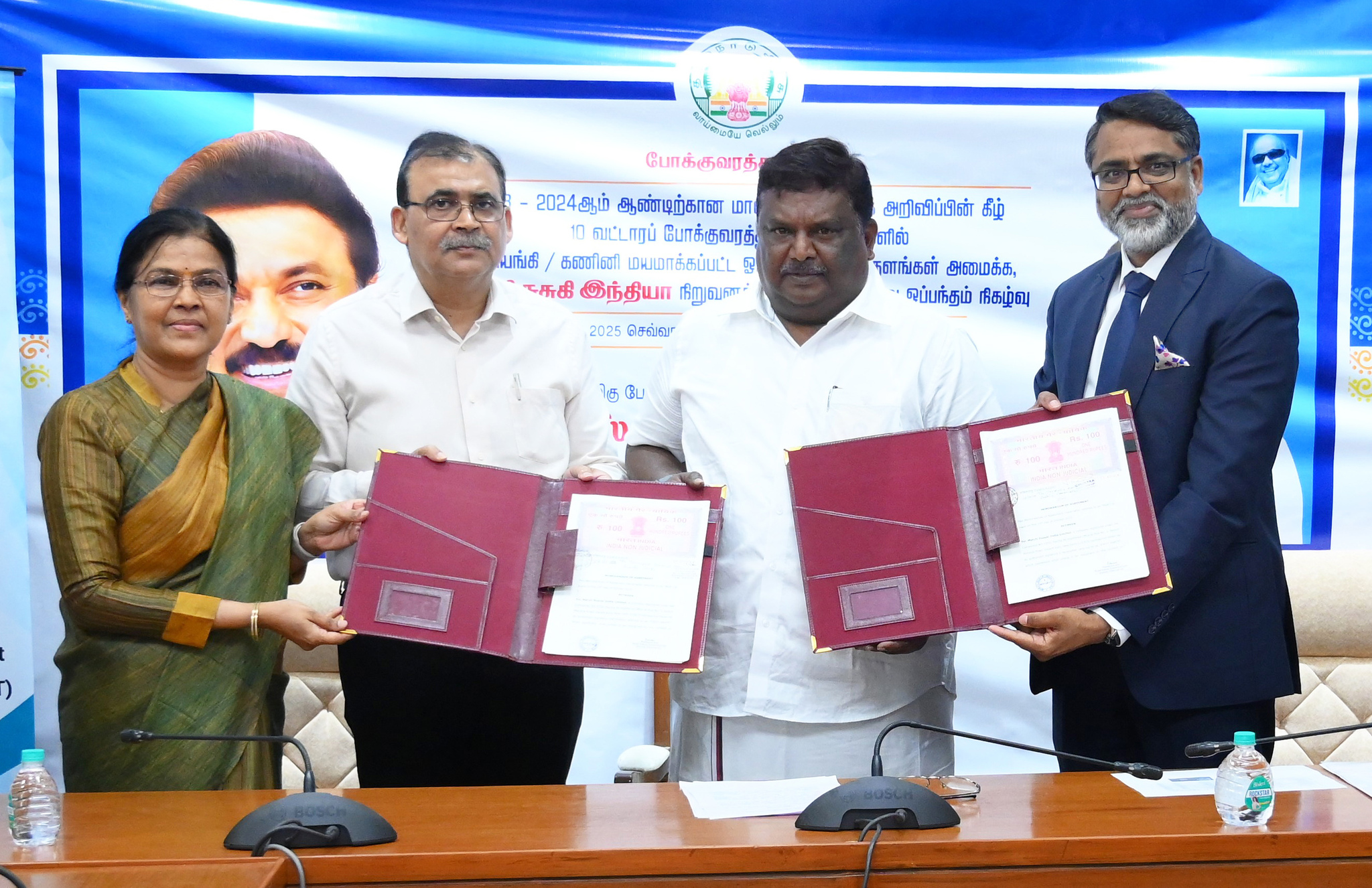
    Maruti Suzuki India has signed a Memorandum of Agreement (MoA) with the Transport Department, Government of Tamil Nadu, to establish 10 Automated Driving Test Tracks (ADTTs) across the state, reinforcing its commitment to road safety.

    The initiative, formalized in a ceremony attended by Transport and Electricity Minister S S Sivasankar and Home Secretary Dheeraj Kumar, aims to revolutionize driving license testing with cutting-edge technology.

    The ADTTs, to be set up in Marthandam, Tirunelveli, Coimbatore (Central), Madurai (North), Tuticorin, Krishnagiri, Dindigul, Tiruvannamalai, Sivagangai, and Trichy (West), were strategically chosen based on high license issuance volumes and connectivity to nearby cities.

    These tracks will leverage video analytics, Radio Frequency Identification (RFID), and Harnessing Automobiles for Safety (HAMS) technologies to ensure a transparent, standardized, and objective testing process with zero human intervention, aligning with Central Motor Vehicle Rules.

    Maruti Suzuki’s road safety initiatives span the 5Es: Education, Evaluation, Enforcement, Engineering, and Emergency Care.

    “Maruti Suzuki’s commitment to road safety is commendable,” said Minister S S Sivasankar. “This collaboration to establish automated driving test tracks will promote disciplined driving and elevate road safety standards across Tamil Nadu.”

    Rahul Bharti, Senior Executive Officer, Corporate Affairs at Maruti Suzuki, added, “Automated driving test tracks ensure a rigorous and transparent assessment of driver skills. This initiative is a significant step toward safer roads in Tamil Nadu.”

    Maruti Suzuki’s road safety initiatives span the 5Es: Education, Evaluation, Enforcement, Engineering, and Emergency Care.

    The company has already established 45 ADTTs nationwide, including 17 in Uttar Pradesh, 14 in Delhi, 7 in Bihar, 4 in Uttarakhand, 2 in Haryana, and 1 in Jammu & Kashmir. With a recent MoA for 21 ADTTs in Rajasthan and the new Tamil Nadu project, the total will reach 76 ADTTs across India.

    Additionally, Maruti Suzuki operates 8 Institutes of Driving and Traffic Research (IDTRs) and 23 Road Safety Knowledge Centres (RSKCs) to enhance driver education. Its Integrated Traffic Safety Management System (ITMS) supports real-time monitoring, while First Responder training strengthens emergency care.

    The MoA was signed by R Gajalakshmi, Transport and Road Safety Commissioner, and Tarun Agarwal, Senior Vice President, CSR, Maruti Suzuki, marking a milestone in the company’s mission to foster safer roads through innovation and collaboration.

  • Empowering SUTRA 2025 Sustainable Trade Summit: India’s resilient future

    Empowering SUTRA 2025 Sustainable Trade Summit: India’s resilient future

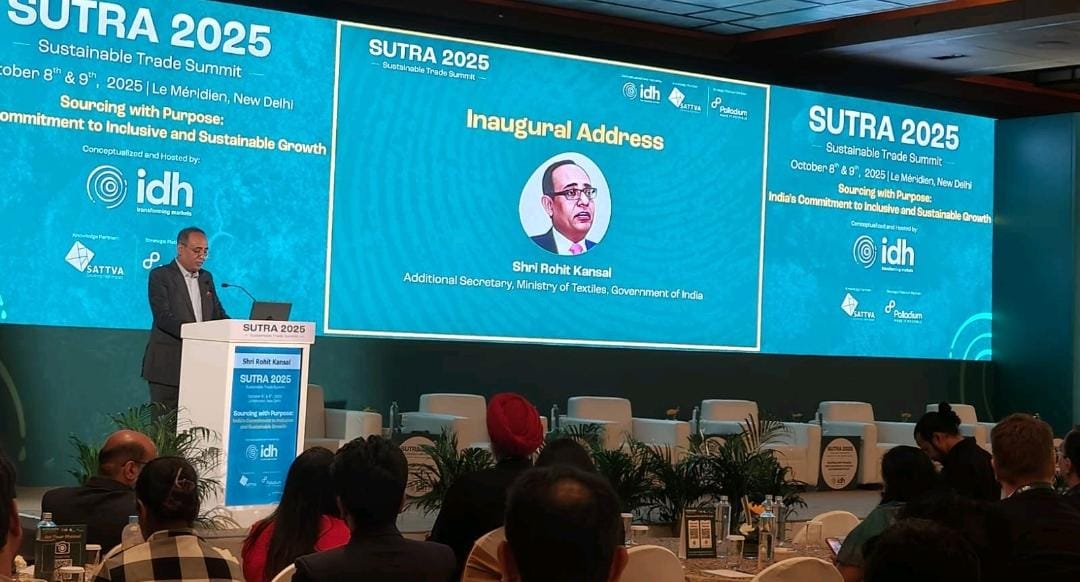
    India is committed to advancing circularity and strengthening farm-to-factory linkages to position its textiles as a global model of responsibility and resilience, a senior Ministry of Textiles official said on Thursday.

    “With the right partnerships, investments, and innovations, we can weave a future that is not only equitable and climate-resilient but also defines India’s leadership in sustainable growth,” Rohit Kansal, Additional Secretary in the Ministry of Textiles, said at the SUTRA 2025 sustainable trade summit in New Delhi.

    Kansal said the IDH SUTRA 2025 platform brings together farmers, farmer producer organizations (FPOs), financiers, innovators, and industry stakeholders, embodying the meaning of SUTRA—the thread that connects them all.

    “Collaboration is the cornerstone of transformation, and through initiatives like this, India is demonstrating how sustainability can move from compliance to competitiveness, from intent to impact,” he added.

    The SUTRA 2025 sustainable trade summit brought together over 400 delegates and 35 speakers from government, industry, development institutions, academia, and farmer organizations to explore how purpose-led sourcing can accelerate India’s transition to climate-resilient and socially equitable trade systems.

    The summit highlighted India’s growing leadership in embedding sustainability and inclusion into its trade and agricultural systems.

    This year’s edition featured a Sustainability Experience Centre showcasing innovations in traceability, regenerative farming, and circular production. Interactive demonstrations and solution pitches enabled participants to explore how emerging technologies and data-driven systems can enhance transparency and accountability across supply chains, aligning with principles of responsible sourcing.

    Industry leaders including Sougata Niyogi of Godrej Agrovet, Sudhakar Desai of Emami Agrotech and IVPA, and executives from SAP, ITC Limited, Hindustan Unilever, and ICRIER shared perspectives on aligning business competitiveness with climate action and social responsibility. These empowering discussions at the SUTRA 2025 sustainable trade summit underscored the potential for scalable, inclusive solutions in sustainable trade.

  • Coffee Board Seeks Feedback on Sustainability Scheme to Boost Recognition for Indian Producers

    Coffee Board Seeks Feedback on Sustainability Scheme to Boost Recognition for Indian Producers

    The Coffee Board has invited public consultation on its draft sustainability certification framework, aiming to address a critical gap in recognition for India’s coffee sector despite the country’s adherence to sustainable practices across over 400,000 small and marginal holdings.

    The Indian Coffee Board Sustainability Certification Scheme (INDICOFS), developed by a Core Technical Committee comprising domain experts, introduces a voluntary three-tier compliance system designed to progressively align Indian coffee producers with international sustainability standards.

    Bridging the Recognition Gap

    The sector is integral to the livelihoods of approximately two million individuals, with farms situated in high biodiversity regions, notably the Western and Eastern Ghats. These regions provide essential ecosystem services and are home to numerous major rivers, underscoring the critical role that coffee cultivation plays in environmental stewardship.

    Despite adherence to sustainable agricultural practices integrating social, economic and environmental dimensions, the Indian coffee industry has not achieved recognition commensurate with its quality and production methods. While global demand for sustainably certified coffee has increased, only approximately 15% of India’s total coffee output is currently certified under sustainable certification criteria.

    INDICOFS Framework

    In response to the need for a coherent sustainability framework, the Coffee Board has developed INDICOFS—a set of sustainability standards tailored to the Indian context. The standards acknowledge best practices implemented by Indian coffee farms and facilitate a structured approach for continual improvement, ensuring sustainability across the coffee value chain.

    The scheme covers two phases. The first phase addresses “Sustainability Standards for Indian Coffee Plantations,” while the second phase focuses on “Chain of Custody Standards.” The framework encompasses sustainability standards, inspection procedures and certification protocols.

    The certification system defines three compliance levels:

    Level 1 (Basic/Self-Assessment): Provides foundational requirements for growers to evaluate practices and identify improvement opportunities, overseen by Coffee Board inspections

    Level 2 (Aspiring/Auditing): Outlines criteria for third-party verification, ensuring compliance and facilitating progression beyond basic practices

    Level 3 (Benchmarked Best Practices): Delineates advanced sustainability benchmarks assessed by recognized auditing bodies, signifying alignment with international standards

    Implementation and Oversight

    Implementation of INDICOFS will be managed by the Central Coffee Research Institute (CCRI), functioning under the administrative control of Coffee Board of India, recognized as one of the oldest public coffee research institutions globally.

    The standards are designed to address the evolving landscape of coffee production, including critical issues related to trade, environmental sustainability and preservation of traditional farming practices. A key innovation is INDICOFS’ holistic integration of responsible production methodologies with practices that enhance climate adaptation and minimize ecological footprints.

    The standard addresses critical Environmental, Social and Governance (ESG) aspects essential for sustainable coffee farming and incorporates general disclosure requirements aimed at providing stakeholders with transparent, relevant and comparable information about production operations.

    Public Consultation Invited

    The Coffee Board has posted the draft INDICOFS scheme along with an overview note on its website for wider consultation. Stakeholders and members of the public are invited to review the documents and share their views, comments and suggestions.

    Comments must be submitted in the prescribed format (Annexure-I) by email to dirresh@gmail.com with a copy to drccri2022@gmail.com on or before October 24, 2025.

    “The Coffee Board values your feedback and cooperation in this important national initiative to position Indian Coffee as a global benchmark for sustainability,” the board stated.

    By adopting this standard, coffee producers can demonstrate compliance with recognized sustainability benchmarks, enhance their marketability and contribute to the global movement toward sustainable agricultural practices. The initiative is expected to foster collaboration among coffee producers and stakeholders to promote a resilient and sustainable Indian coffee industry while improving the long-term viability of coffee farming and quality of life for communities involved in the supply chain.

  • Coal Ministry urges companies to align CSR efforts with local community needs

    Coal Ministry urges companies to align CSR efforts with local community needs

    Ministry of Coal on Tuesday held a stakeholder consultation on strengthening the Corporate Social Responsibility framework for coal companies, with officials calling for better coordination of welfare and sustainability programmes.

    Additional Secretary Rupinder Brar urged coal companies to align their CSR, welfare and sustainability initiatives to maximise community benefits, according to a statement.

    She stressed the need to prioritise local requirements when planning CSR activities.

    Brar emphasised the importance of engaging credible agencies for need and impact assessments to enable more effective CSR programmes, the ministry said.

    Coal public sector undertakings and private sector companies shared experiences on major CSR projects, community engagement and lessons from impact assessments during the New Delhi meeting.

    India is the world’s second-largest coal producer and consumer after China, with coal accounting for about 70% of the country’s power generation.