Author: csr-admin

  • Rajasthan CM launches greening campaigns on World Environment Day

    Rajasthan CM launches greening campaigns on World Environment Day

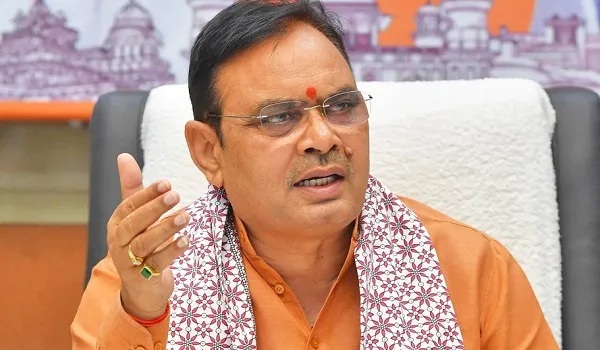
    Rajasthan Chief Minister Bhajanlal Sharma on Friday launched two major greening initiatives — ‘Hariyalo Rajasthan’ and ‘Ek Ped Maa Ke Naam’ — by planting a banyan sapling at the World Forestry Arboretum in Jhalana on World Environment Day.

    Extending greetings on the occasion, Sharma urged citizens across the state to actively participate in plantation drives during the upcoming monsoon season and contribute to environmental conservation.

    The chief minister said the state government is committed to a clean environment and sustainable green development. He emphasised that collective efforts are key to nature conservation, water preservation, afforestation and maintaining ecological balance.

    “We must work together to make Rajasthan environmentally strong and secure a better future for coming generations,” Sharma said.

    He highlighted ongoing initiatives such as ‘Vande Ganga’ for water conservation and ‘Ek Ped Maa Ke Naam’ for widespread tree plantation. The state budget for 2026-27 has set a target to plant and conserve 10 crore saplings to transform Rajasthan into a green state.

    Sharma stressed the importance of public participation in environmental protection, water conservation and increasing green cover.

    Parliamentary Affairs Minister Jogaram Patel, Forest Minister Sanjay Sharma, MP Manju Sharma and senior officials were present on the occasion.

  • Kharge accuses Modi govt of dismantling forests on World Environment Day

    Kharge accuses Modi govt of dismantling forests on World Environment Day

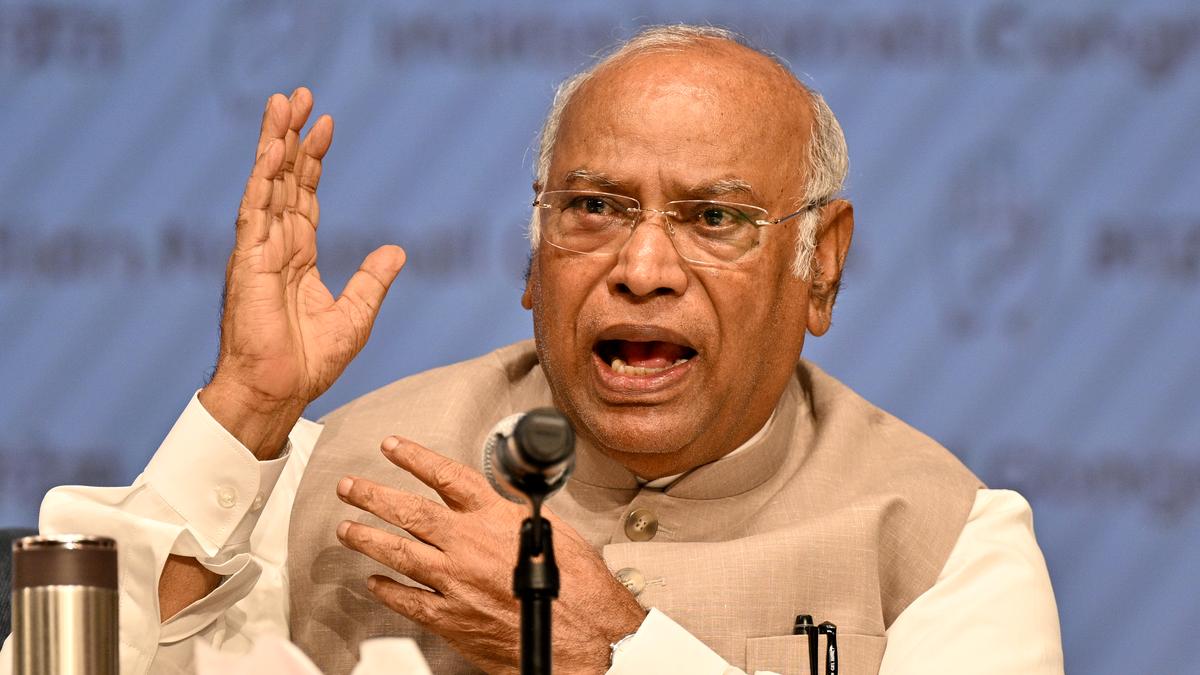
    Congress president Mallikarjun Kharge on Friday used World Environment Day to launch a sharp attack on the Modi government, alleging it is dismantling forests and weakening India’s environmental governance framework.

    In a post on X, Kharge claimed natural forests are being steadily eroded while the government uses “manipulated definitions and selective accounting” to project an illusion of progress.

    He alleged that nearly 1,91,922 hectares of forest have been cleared in the last 11 years and over 1.6 crore trees destroyed since 2014.

    Kharge highlighted specific projects: the Great Nicobar project threatening nearly 10 lakh trees, mining in Madhya Pradesh and Chhattisgarh’s Hasdeo Arand felling lakhs more, and highway expansions in multiple states destroying additional forest cover.

    He criticised the India State of Forest Report for including plantations, orchards and commercial tree cover in “forest cover” figures, arguing this masks the loss of dense, biodiverse natural forests.

    “This government has weakened and dismantled India’s environmental governance framework built over decades,” Kharge said.

    He credited earlier Congress-led governments with creating key laws such as the Wildlife Protection Act, Forest Conservation Act, Forest Rights Act and the National Green Tribunal, which he said the current government has diluted through faster clearances and regulatory relaxations.

    Kharge called for environmental policy based on rule of law, community participation and recognition that ecological protection and development are interconnected.

  • PM Modi highlights India’s green cover expansion on World Environment Day

    PM Modi highlights India’s green cover expansion on World Environment Day

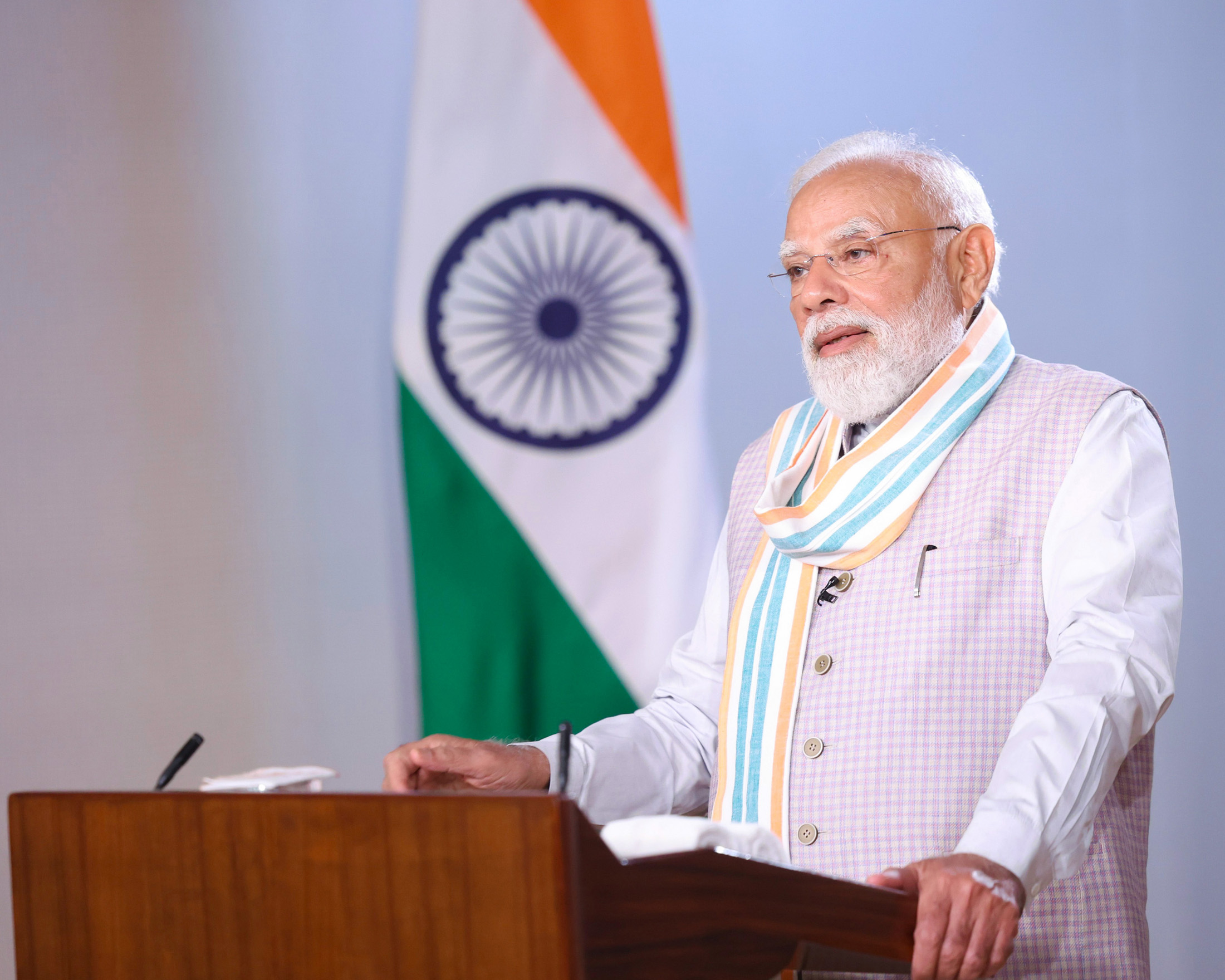
    Prime Minister Narendra Modi on Friday marked World Environment Day by highlighting how his government’s initiatives over the past decade have driven expanding green cover and boosted populations of several animal species across India.

    In a post on X, Modi applauded citizens’ collective efforts, backed by science, innovation and policy, in improving the environment. He described the day as a reminder to reaffirm commitment to sustainable growth and environmental protection.

    “Some of India’s key successes include expanding green cover and a rise in the population of several animals,” Modi said.

    The Prime Minister pointed to notable conservation achievements, including recovery programmes for the Great Indian Bustard, snow leopards, sloth bears and cheetahs. He also credited the ‘Ek Ped Maa Ke Naam’ initiative with adding nearly 119,000 hectares of forest cover annually.

    Guided by the principle of ‘One Earth, One Family, One Future’, the government will continue its Mission LiFE efforts toward a cleaner, greener and more sustainable planet, he added.

    World Environment Day, observed annually on June 5, was established by the United Nations Environment Programme in 1973 and remains one of the largest global platforms for environmental awareness. Azerbaijan is hosting the 2026 celebrations.

  • SOS India launches massive tree plantation for World Environment Day

    SOS India launches massive tree plantation for World Environment Day

    SOS Children’s Villages India has launched a nationwide sapling plantation drive, planting more than 5,000 saplings to mark World Environment Day, engaging children, caregivers, and local communities in environmental conservation efforts.

    The initiative, aligned with this year’s theme “Inspired by Nature. For Climate. For Our Future,” spans 32 SOS Children’s Villages and multiple Family Strengthening Programme locations from Jammu & Kashmir to Tamil Nadu and Gujarat to Assam.

    The plantations include a mix of fruit-bearing, medicinal, native, and climate-resilient species such as neem, moringa, mango, gooseberry, guava, lemon, jackfruit, and custard apple.

    “Environmental sustainability is closely linked to child well-being and community resilience. Through this plantation drive, we aim to contribute to a greener future,” said Sumanta Kar, CEO, SOS Children’s Villages India.

    He added that every sapling planted represents a commitment to future generations and a healthier planet.

    Latur recorded the highest number with over 2,000 saplings, while Shillong focused on medicinal and wild edible species through partnerships with local stakeholders. Several locations prioritised fruit-bearing and indigenous varieties to support both ecological restoration and community well-being.

    SOS Children’s Villages India has partnered with local institutions and government bodies to enhance community participation in this World Environment Day initiative.

  • Marico calls for boosting India’s circular economy via waste innovation

    Marico calls for boosting India’s circular economy via waste innovation

    Environmental challenges spanning waste management, agriculture, and clean technology are creating significant opportunities for India’s circular economy, according to Suranjana Ghosh, Head of Marico Innovation Foundation.

    India generates an estimated 350 million tonnes of agricultural waste annually, much of which holds substantial industrial and economic potential if converted into valuable resources rather than discarded.

    “Environmental challenges today are increasingly interconnected… Across sectors, we are seeing growing evidence that environmental challenges can be addressed through practical solutions,” Ghosh said.

    She emphasised that sustainability is now viewed as an opportunity to create economic value, citing innovations that convert crop residue into sustainable materials, fuels, and industrial inputs, alongside waste-to-value technologies that strengthen recycling ecosystems.

    “More than innovation itself, the challenge today is creating the right conditions for adoption. Access to markets, industry partnerships and implementation support will be critical,” Ghosh added.

    As World Environment Day 2026 focuses on climate action, Ghosh called for translating innovation into measurable outcomes to build a USD 2 trillion circular economy that could generate 10 million jobs by 2050.

    “India does not lack innovative solutions… the focus must be on translating innovation into measurable outcomes that strengthen circularity, improve resource efficiency, and create long-term impact,” she said.

  • Why India’s finance ministry must unlock ZCZP tax benefit now

    Why India’s finance ministry must unlock ZCZP tax benefit now

    By Eldee

    India’s Social Stock Exchange was conceived as an audacious idea: a marketplace where social impact, not profit, would be the currency of exchange. Three years since its conceptual birth and two years since its first listing, the experiment is showing tentative but real promise. Yet it remains trapped at the threshold of its own potential — held back, ironically, not by a lack of vision or legislation, but by one pending signature from the Finance Ministry on a Section 80G notification.

    The recent MCA amendment of May 27, 2026 is a meaningful step forward. By formally recognising Zero Coupon Zero Principal — ZCZP — instruments as eligible CSR expenditure under Schedule VII of the Companies Act, 2013, the government has given India Inc. a structured, regulated pathway to channel mandatory social spending through verified, listed non-profit organisations on the SSE. Companies may now route up to 10 per cent of their annual CSR expenditure through ZCZP instruments. That is not a trivial number.

    For India’s top 1,000 companies collectively spending over Rs 25,000 crore annually on CSR, 10 per cent represents a potential market of Rs 2,500 crore flowing through a transparent, accountable exchange mechanism. And yet, the number that tells the real story of the SSE today is grimmer: only 10 organisations from a registered pool of over 100 NPOs have successfully raised capital.

    Total capital mobilised, approximately Rs 10,687 crore, sounds large until you recognise how concentrated and slow that mobilisation has been. The Swades Foundation’s landmark Rs 100 crore raise in 2024 was celebrated precisely because it was exceptional — a proof of concept rather than a reflection of the norm.

    The structural reason for this underperformance is not complex. Corporations deploying CSR funds have no tax incentive to route money through ZCZP rather than through direct CSR implementation or conventional Section 80G donations to established charities.

    A ZCZP instrument offers something distinctive — verified social impact reporting, exchange-listed transparency, SEBI oversight, and a cap on project duration of three financial years — but it offers no additional tax benefit over a cheque written to a Prime Minister’s Relief Fund. Until SEBI’s June 2024 proposal to the Finance Ministry is formally notified, the transformative power of the ZCZP architecture remains inert.

    The case for Section 80G parity for ZCZP instruments is not sentimental. It is fiscal and structural. Consider what the instrument actually does. An investing company receives no coupon. It receives no return of principal. The entire invested amount is deployed toward a social project run by a registered, SEBI-supervised, exchange-listed non-profit.

    The company receives, in return, verified impact data — not financial yield. If there was ever an instrument that deserved to be treated as a charitable donation for tax purposes, this is it. The Finance Ministry’s hesitation, nearly two years after SEBI’s formal proposal, is difficult to justify on either revenue or policy grounds.

    Critics might argue that allowing Section 80G deductions for ZCZP purchases could create a loophole — that companies might use the instrument to satisfy both their CSR obligation and claim a separate income tax deduction, effectively double-dipping. This is a legitimate concern and one the Finance Ministry should address through careful drafting, not indefinite delay.

    The solution is straightforward: ZCZP investments can be treated as eligible either for CSR expenditure counting or for Section 80G deduction, but not simultaneously for both.

    SEBI and MCA between them have the regulatory architecture to enforce this distinction. The two regulators have already demonstrated coordination in the May 2026 amendment — extending that coordination to a jointly-drafted Section 80G framework should not be beyond reach.

    What makes the ZCZP architecture genuinely transformative — and worth fighting for — is what it offers beyond tax efficiency.

    Unlike conventional CSR, where impact assessment is often cursory or self-reported, ZCZP instruments come with mandated impact reporting. Any unspent funds at project termination must be transferred to a Schedule VII fund. The NPO must remain listed on the SSE throughout the instrument’s life. These are not trivial compliance conditions; they are the architecture of accountability that India’s CSR ecosystem has long lacked.

    India spends more on mandatory CSR than almost any other country in the world. The 2013 amendment to the Companies Act created a legal obligation that, a decade later, generates tens of thousands of crores in annual social expenditure. But the quality of that expenditure — its traceability, its impact rigour, its freedom from cronyism and tokenism — remains deeply uneven.

    The SSE, and ZCZP specifically, represent the most serious institutional attempt yet to bring capital markets discipline to social spending.

    The 10-organisation statistic is not a failure of the model. It is a market waiting for a signal. Corporate treasury teams, CSR committees, and impact investors are sophisticated actors. They respond to incentives.

    When the Finance Ministry formally notifies Section 80G eligibility for ZCZP instruments — not if, but when — the effect on SSE fundraising activity will be immediate and measurable.

    NPOs registered on the exchange but unable to attract corporate capital will suddenly find themselves competitive. The Swades Foundation story will stop being an outlier and start being a template.

    The MCA’s May 2026 notification has lit the fuse. The Finance Ministry holds the match. The transformative potential of India’s Social Stock Exchange depends on what it decides to do next.
  • A market for good: why the ZCZP instrument could be CSR’s most important reform

    A market for good: why the ZCZP instrument could be CSR’s most important reform

    By Eldee

    For over a decade since the Companies Act of 2013 made Corporate Social Responsibility mandatory, India Inc has wrestled with the same uncomfortable truth: writing a cheque is easy; ensuring it actually changes lives is not. Project selection, implementation partners, monitoring mechanisms, third-party impact assessments — the compliance apparatus around CSR has grown so elaborate that the overhead sometimes rivals the impact. The Ministry of Corporate Affairs’ amendment of May 27, 2026, quietly addresses this problem. It deserves far more attention than it has received.

    The amendment permits companies to deploy up to 10 per cent of their CSR funds into Zero Coupon Zero Principal (ZCZP) instruments issued by eligible Not-for-Profit Organisations listed on the Social Stock Exchange (SSE). The instrument’s name is its entire architecture: no interest, no principal repayment. What a company invests is what a cause receives — in full, with no financial return expected and no capital clawed back at maturity. It is, in economic substance, a structured grant. But in regulatory form, it is a listed, exchange-monitored, disclosure-bound security. That distinction matters enormously.

    Why Companies Should Pay Attention

    India Inc’s annual CSR obligation now hovers around Rs 35,000 crore. A significant portion of that is spent well. But a meaningful share is lost to friction — to the labour of vetting NGOs, negotiating project scopes, commissioning assessments, and managing reputational exposure when a partner underdelivers. For mid-sized companies without dedicated CSR cells, this friction is particularly punishing.

    The ZCZP route offers a regulated alternative. Companies subscribing to SSE-listed instruments are exempt from independent impact assessments — a concession that reflects the exchange’s own disclosure architecture doing the heavy lifting. Due diligence is front-loaded at the listing stage, not replicated by every corporate subscriber. The investment counts toward mandatory CSR obligations. Governance is handled by a platform, not a project manager. For a finance director staring at an unspent CSR balance in the third quarter, this is not a small relief.

    Crucially, the mechanism does not displace the 90 per cent that continues to flow through direct project implementation. It supplements it. Companies retain their flagship programmes, their employee volunteering, their community partnerships. The ZCZP window adds optionality — a credible, market-based channel for funds that might otherwise be rushed out the door in the fourth quarter with insufficient diligence.

    Why NPOs Stand to Gain the Most

    The instrument’s more transformative potential lies on the other side of the transaction. India’s non-profit sector is vast, diverse, and chronically undercapitalised at scale. Organisations doing serious work in education, healthcare, livelihoods, and climate adaptation routinely spend more time fundraising than delivering. Donor cycles are unpredictable. Government grants arrive late and lapse on technicalities. Individual philanthropy, while growing, remains concentrated in a handful of large foundations.

    Corporate CSR, directed through the SSE, offers something different: predictable, programme-linked capital with a defined horizon — typically up to three years per instrument — allowing NPOs to plan, hire, and execute with a discipline that annual grant cycles rarely permit. The absence of repayment obligation removes the distortion that debt introduces into social sector organisations, which are not structured to generate financial surpluses. And listing on the SSE — which requires disclosure norms, due diligence, and outcome reporting — is itself an institutional upgrade. An NPO that has passed exchange scrutiny carries a signal of credibility that opens doors beyond the ZCZP window.

    The SSE’s Second Chance

    The Social Stock Exchange was conceived with ambition and launched with fanfare. Its early years have been, by most candid assessments, underwhelming. Liquidity has been thin. Corporate participation has been tentative. The ZCZP instrument has existed in the regulatory framework, but without the CSR linkage, the demand side was always going to be shallow.

    The MCA amendment changes the incentive structure. Companies now have a compliance-valid, governance-sound reason to engage with the SSE. If even five per cent of India Inc’s CSR spend — roughly Rs 1,750 crore annually — is channelled through the exchange over the next three years, it would transform the SSE from an interesting experiment into a functioning market. That, in turn, would attract more NPOs to list, more investors to participate, and more intermediaries to build the infrastructure that a mature social capital market requires.

    A Note of Caution

    None of this is automatic. The 10 per cent cap is deliberately conservative — a sensible calibration for a first iteration. The risk of NPOs gaming listing requirements to access corporate capital without genuine accountability is real, and the SSE’s supervisory capacity will be tested. The exemption from independent impact assessments, while administratively convenient, should not become a licence for outcome-blindness. Companies must resist the temptation to treat ZCZP subscriptions as a CSR box to check rather than a cause to support.

    The amendment’s logic, however, is sound. It meets companies where they are — seeking compliance efficiency — and nudges them toward a more transparent, outcome-linked model. It meets NPOs where they are — seeking capital at scale — and gives them a platform that demands accountability in return. It meets the SSE where it is — searching for relevance — and gives it a demand-side catalyst it has long lacked.

    Good policy does not need to be grand. Sometimes it simply removes a friction, aligns an incentive, and trusts the market to do the rest. This amendment is that kind of policy. Quiet, well-targeted, and overdue.

  • CSR Social Stock Exchange: India opens 10% investment window for firms

    CSR Social Stock Exchange: India opens 10% investment window for firms

    The corporate affairs ministry has opened a new funding channel for nonprofits, allowing companies to direct up to 10 per cent of their mandatory corporate social responsibility spending into zero coupon zero principal instruments listed on the Social Stock Exchange, in a move aimed at deepening transparency in social sector financing.

    The amendment, effective immediately, inserts the subscription to such instruments into Schedule VII of the Companies Act, 2013 — the schedule that governs permissible CSR activities for profit-making companies required to spend at least 2 per cent of their three-year average net profit annually on social causes.

    Under the revised CSR Policy Rules, 2014, definitions for both not-for-profit organisations and zero coupon zero principal instruments have been formally introduced for the first time, providing regulatory clarity to companies seeking to deploy funds through the Social Stock Exchange.

    Not-for-profit organisations will be able to issue these instruments through the Social Stock Exchange in accordance with regulations set by the Securities and Exchange Board of India, the ministry said in a statement on Friday.

    Unlike conventional bonds, zero coupon zero principal instruments carry no interest payments and no repayment of principal, functioning instead as a regulated grant or social investment vehicle designed to fund public welfare projects.

    “It helps in furtherance of a transparent and credible mode of funding CSR projects by companies and enables social enterprises to access a wider pool of capital,” said Anshul Jain, Partner Regulatory at PwC India.

    The 10 per cent cap on CSR Social Stock Exchange investments per financial year is intended to balance innovation with fiscal discipline, ensuring core CSR commitments remain intact while creating fresh pathways for social capital mobilisation.

    The Social Stock Exchange, established under SEBI oversight, is designed to bring market discipline and disclosure standards to social sector funding — a segment historically dominated by opaque grant-making and bilateral philanthropy.

  • McDonald’s for youth empowerment program creates 1500 jobs in Delhi NCR

    McDonald’s for youth empowerment program creates 1500 jobs in Delhi NCR

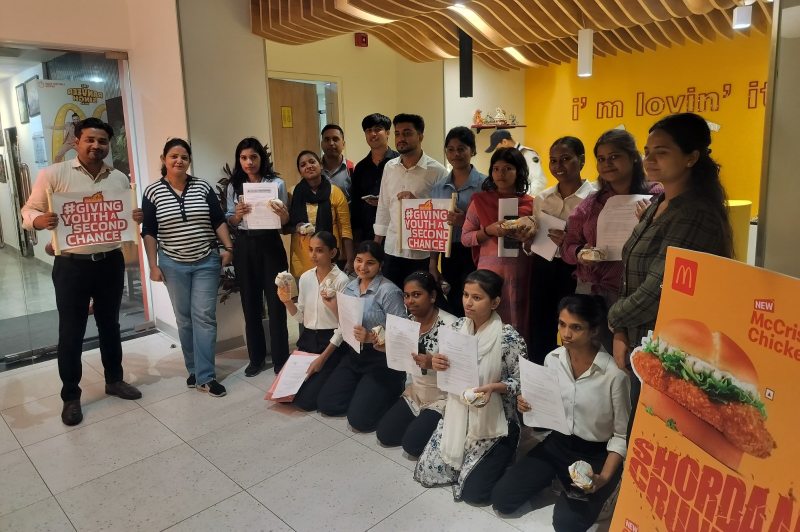
    McDonald’s India – North and East has achieved a major milestone in McDonald’s for Youth Empowerment program, creating meaningful employment opportunities for over 1500 young individuals across Delhi NCR.

    Implemented in partnership with local NGOs and community organisations, the flagship McDonald’s for Youth Empowerment initiative has provided first-job opportunities to youth from less privileged backgrounds in Delhi, Gurugram, Noida, Ghaziabad and Faridabad.

    The program delivers structured training through McDonald’s global curriculum, covering customer service, communication, restaurant operations, food safety, teamwork, and professional development – equipping participants with transferable skills for long-term career growth.

    Rajeev Ranjan, Managing Director, McDonald’s India – North and East, said, “Through McDonald’s for Youth Empowerment, we have supported over 2,500 young individuals in taking their first steps into the workforce. This powerful initiative transforms lives and builds stronger communities.”

    Rajesh Soundararajan, Director, Katha, added, “Our partnership with McDonald’s has successfully connected youth with meaningful employment, fostering confidence and financial independence.”

    The McDonald’s for Youth Empowerment program has expanded across multiple states including Punjab, Rajasthan, Haryana, Uttarakhand, Himachal Pradesh, Jammu, Bihar and Uttar Pradesh. McDonald’s now plans to scale the initiative further and invites interested NGOs to collaborate by reaching out at hiring.ngo@del.in.mcd.com.

  • NEEV Summer relief deploys 60 vans for heat relief

    NEEV Summer relief deploys 60 vans for heat relief

    NEEV Foundation has launched a powerful NEEV Summer Relief campaign, deploying 60 relief vans across six states to combat extreme heat conditions affecting millions of outdoor workers.

    The initiative provides clean, cold drinking water at high-footfall public areas and directly to frontline workers including traffic police personnel, delivery executives, construction workers, street vendors and autorickshaw drivers. Alongside water, the vans distribute ORS pouches and protective caps to help replenish minerals and counter heat exposure.

    Recognising the impact on all living beings, NEEV Foundation has also installed water tanks for stray animals and placed bird feeders and water trays across multiple locations.

    “The thirsty always come to the well. This summer, we decided to take the well to the thirsty,” the Foundation stated.

    Mr. Vivek Patni, Director – Wonder Cement and Founder of NEEV Foundation, said, “India’s summers are becoming increasingly harsh for people who spend most of their day outdoors. Through this NEEV Summer Relief campaign, we wanted to create immediate, accessible relief for those who keep our cities functioning despite extreme weather conditions.”

    He added, “Sometimes the most meaningful interventions are the simplest. We hope this campaign encourages citizens to participate in small acts of care and collective compassion.”

    The NEEV Summer Relief drive, titled “Iss Garmi, Farq Nazar Aayega,” is being implemented across Rajasthan, Gujarat, Madhya Pradesh, Uttar Pradesh, Haryana and Maharashtra.

    The seasonal campaign forms part of NEEV Foundation’s broader development mandate, which includes women skill development under Hunar, community infrastructure through Sanrachna, education under Udaan, healthcare via Arogyam, and sustainability under Eco Green.