Author: csr-admin

  • Agropak wins Big Pi grant to boost climate innovation

    Agropak wins Big Pi grant to boost climate innovation

    Agropak, a biotech startup building a natural fibre materials platform for bio-based packaging, has won the Big Pi Grant, India’s largest non-dilutive grant for early-stage climate startups, organisers The Sustainability Mafia (SusMafia) said.

    The Rs 31.4 lakh Big Pi Grant, presented at the third edition of SusCrunch 2026, is designed to boost climate startups through innovation support, commercial validation and market adoption without diluting founder equity, SusMafia said in a statement.

    Agropak’s win adds to a growing set of resources for the company, including mentorship, strategic guidance and access to incubators and government programmes through SusMafia’s investor, fellowship and grant network.

    The grant’s name draws on the mathematical constant pi (3.14), a nod meant to symbolise bold thinking and breakthrough innovation, according to the organisers.

    SusCrunch 2026 drew investors including Zerodha and 3one4 Capital, along with corporates such as Reliance, Biocon, Zomato and Apollo Hospitals, underscoring rising industry interest in climate-focused startups.

    The Big Pi Grant announcement comes as India’s climate-tech sector has drawn nearly USD 12.8 billion in funding across 1,583 startups between 2008 and June 2026, according to the Tracxn India Climate Tech 2026 Report.

    Global early-stage climate funding, however, has slipped to a five-year low, the State of Climate Tech 2025 report found, a trend organisers say makes non-dilutive grants like the Big Pi Grant increasingly critical to bridging the gap between research and commercial scale.

    Backed jointly by SusMafia and the BITS Pilani PIEDS Accelerator, the Big Pi Grant drew more than 50 applications from founders across BITS Pilani, IIT and the wider SusVentures network. Five startups spanning water and waste management, climate intelligence, sustainable materials and the built environment were shortlisted before Agropak was named the winner.

    Past recipients have used the grant as a springboard. BioCompute, the 2024 winner, has since built laboratory infrastructure, expanded into the Bay Area and raised more than Rs 5 crore from investors including WTF Fund, Grad Capital and 1517 Fund. Bisket Labs, the 2025 recipient, went on to secure Karnataka’s ELEVATE Grant.

    “Every founder needs access to business, capital and talent. No founder can build all three alone,” said Ganesh Shankar, co-founder of The Sustainability Mafia and founder of FluxGen.

    SusMafia, a founder-led climate community, says its network of 84 active climate founders and more than 700 “Climate Ninjas” has collectively raised over $350 million, employs more than 3,000 people and generates Rs 2,100 crore in annual revenue, while diverting over 363,000 tonnes of waste from landfills and mitigating roughly 1.56 million tonnes of CO2 equivalent annually.

    At a separate “Climate Sitdown” session, Neeraj Jain, co-founder of Solar Square, a Series C rooftop solar company that has raised over USD 100 million, said the SusMafia community “feels like the start of a movement,” speaking alongside Ashish Goel, founder of Urban Ladder and an investor in more than 30 startups.

    Organisers say initiatives like the Big Pi Grant will remain central to India’s climate innovation push as the country works toward its net-zero goals, with early-stage grants, founder communities and industry partnerships seen as key complements to venture capital.

  • Muthoot Finance hikes CSR spend to Rs 174 crore for FY27

    Muthoot Finance hikes CSR spend to Rs 174 crore for FY27

    Muthoot Finance, India’s largest gold loan non-banking financial company, said on Monday it will boost its Corporate Social Responsibility (CSR) spending to Rs 174.03 crore for fiscal year 2027, extending programmes in healthcare, education and housing to underserved communities nationwide.

    The Muthoot Finance CSR outlay follows FY26 spending of Rs 106.42 crore, which the company said reached approximately 3.37 million beneficiaries through initiatives spanning education, healthcare, livelihood support, community development and sports promotion.

    “At Muthoot Finance, we believe sustainable growth must go hand in hand with meaningful social impact,” Managing Director George Alexander Muthoot said in a statement.

    He said the FY26 results reflected the company’s commitment to underserved communities through healthcare, education, housing and social inclusion programmes.

    Education remained a central focus of the Muthoot Finance CSR strategy, with flagship programmes including the Muthoot M. George Excellence Awards, higher education scholarships and the Muthoot Shiksha Jyothi initiative supporting nearly 11,900 students, including first-generation learners, the company said.

    Muthoot Finance has also established several educational institutions, including Sanskara School in Kochi, the Muthoot Institute of Technology and Science, and the newly launched Kalaivani School in Tamil Nadu.

    On healthcare, the company said its Muthoot Snehasraya programme and related interventions benefited more than 100,000 people in FY26 through medical outreach, rehabilitation support and community healthcare services.

    The company’s housing initiative, Muthoot Aashiyana, has built more than 270 homes for vulnerable and disaster-affected families since its 2018 launch, providing shelter and stability to underserved households, Muthoot Finance said.

    Muthoot Finance also expanded its Soundscape Project, which provides digital hearing aids to children with hearing impairments, reaching 267 beneficiaries across Kerala, Hyderabad and Mumbai.

    Separately, the company’s prison rehabilitation programme, Radio Parvaaz, supports emotional wellbeing and informal learning among inmates, alongside initiatives for children of incarcerated parents.

    Other community programmes included Box of Hope for fisherwomen’s livelihoods, a maritime safety programme for coastal communities in Tamil Nadu, and Pedal for Progress, which distributes bicycles to tribal students.

    Deputy Managing Director George Muthoot George said the company aims to move beyond addressing immediate needs toward empowering communities for long-term self-reliance.

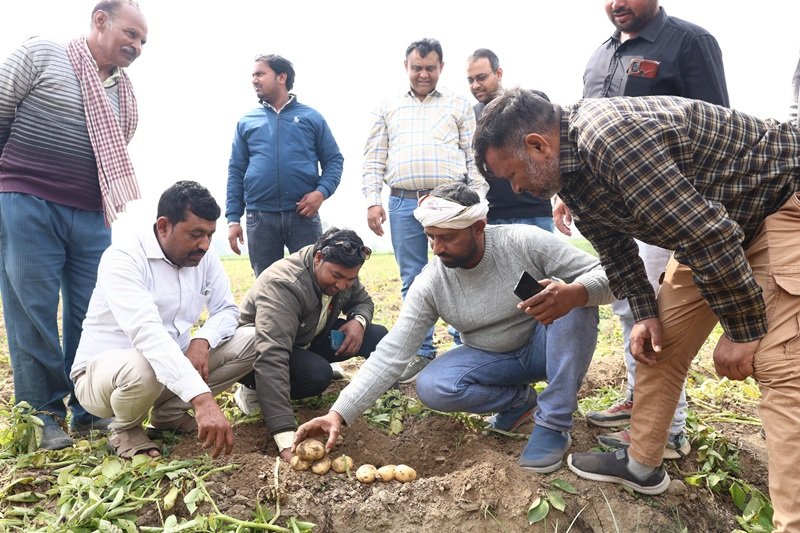
  • Dr Reddy’s Foundation soil testing lab set to hit 1-lakh sample mark ahead of 2026 rabi season

    Dr Reddy’s Foundation soil testing lab set to hit 1-lakh sample mark ahead of 2026 rabi season

    Dr Reddy’s Foundation — a family-owned trust and one of the key beneficiaries of the CSR funds of pharma major Dr Reddy’s Laboratories — is scaling up operations at its Hyderabad soil testing facility with the lab targeting between 75,000 and 1,00,000 samples ahead of the next Rabi season — more than double what it processed in its first full year of operations.

    The move comes amid growing concern over depleting soil health and implementation gaps in the Centre’s Soil Health Card scheme rolled out nationally in 2015. “Though the government’s soil testing ecosystem exists, the scale of the problem is huge. So we decided to address this issue in our own way,” said Suman Saraswathibatla, Director (Rural Livelihoods and Climate Action) at the foundation.

    This soil testing facility is central to the Foundation’s broader soil health and regenerative agriculture programme, under which assessing soil condition is treated as the starting point for any intervention.

    The push for an in-house facility followed nearly seven years of the Foundation’s own effort to find a reliable soil-testing solution, Saraswathibatla told PTI.  

    It approached Krishi Vigyan Kendras, agricultural universities, the Indian Council of Agricultural Research (ICAR), CGIAR institutions, and private players offering portable soil-testing devices — but found none of them adequate.

    “If accuracy is there, then consistency is an issue. If consistency is there, accuracy is an issue,” he said, adding that the wet chemistry-based lab infrastructure needed for reliable analysis was “so broken and so under-equipped” that proper soil sample analysis at scale was simply not possible.

    A 2023 experience proved to be the turning point. The Foundation sent 5,000 soil samples to one of the global research institutes for analysis — and waited a full year for results, by which time two cropping seasons had already passed.

    “Two seasons are over. I am talking about 5,000 soil samples,” Saraswathibatla said. “If I need to develop a digital soil map, 5,000 is sufficient for four villages — one block. We are talking about so many lakhs of blocks. So where is the solution?”

    With no institutional option delivering at the scale or speed required, the Foundation decided to build its own facility.

    FROM PILOT TO SCALE
    The Hyderabad lab became operational in January 2025. In its first year, it processed 20,000 soil samples as the Foundation validated its standard operating procedures. This year, the facility has already analysed more than 40,000 samples across India, with the Foundation targeting between 75,000 and 1 lakh samples ahead of the next Rabi season.

    The facility is not restricted to the Foundation’s own project villages — external users like researchers and government, can also access its services, Saraswathibatla said.

    The testing facility examines three categories of soil properties — physical, chemical, and biological — each requiring different reassessment cycles.

    Physical properties like texture stay stable for 10–20 years, though bulk density and aggregation shift with management. Chemical properties like pH and organic carbon —need reassessment every 2–3 years under intensive cultivation. Biological properties rre most management-sensitive, annual or seasonal (6–12 month) testing usually suffices under stable cropping systems.

    Most testing programs, including government ones, focus on 12–14 chemical indicators: N, P, K, secondary nutrients (S, Ca, Mg), micronutrients (Zn, Fe, Mn, Cu, B), plus pH, EC, and organic carbon. “These parameters underpin site-specific nutrient management (SSNM) but often miss biological functioning and physical resilience,” Saraswathibatla said.

    The push to scale up soil sampling this year has been driven partly by a combination of El Nino conditions and a fertiliser shortage, which has heightened the need for precise, data-backed fertiliser recommendations, according to Saraswathibatla.

    While government advisories typically provide General Recommended Dosage (GRD) at the district level, there is a growing shift toward finer-scale recommendations. Saraswathibatla said the Foundation is developing village-level nutrient advisories based on stratified sampling (e.g., 20–50 representative samples per village, depending on soil heterogeneity) that can significantly improve recommendation accuracy for clusters of farms.

    Farmers also receive extension support—training in balanced fertilization, integrated nutrient management, and climate-smart practices—which Saraswathibatla said is key to converting soil data into better soil health, carbon sequestration, and resilience.

    A BIOLOGICAL FIX FOR FERTILISER RESIDUE
    The Foundation is separately partnering with a biological startup to introduce an NPK-soluble bacterium consortium — a packaged or bottled formulation designed to mobilise residual nitrogen, phosphorus and potassium that has built up in soil from years of fertiliser application, making these nutrients available to plants again.

    “It is not like we have done it. It is there — it is a proven science solution,” Saraswathibatla said. “But it is more about we have to really, really pack it and take it to the farmer.”

    The intervention, he said, is aimed at both risk mitigation and farmer safety — helping ensure balanced fertiliser use while recovering value from nutrients already present in the soil.

    MOU WITH ICAR-IISS
    Last month, ICAR-Indian Institute of Soil Science, Bhopal signed an MoU with the Foundation to deepen collaboration on soil health research and technology transfer.

    The partnership will focus on building a Digital Soil Health Repository, high-resolution soil maps, nutrient management tools, cropping system modelling, and climate-smart advisories, combining ICAR’s scientific expertise with the Foundation’s field experience to advance data-driven soil management and precise fertiliser use — with a particular focus on supporting small and marginal farmers.

    Source: PTI

  • River lift irrigation empowers 5,700 farmers in Bengal

    River lift irrigation empowers 5,700 farmers in Bengal

    A River Lift Irrigation initiative led by Ambuja Foundation has transformed farming livelihoods for more than 5,700 farmers across 23 villages in Farakka, Murshidabad district, West Bengal.

    The foundation, working with partners, installed 25 River Lift Irrigation systems covering nearly 747 hectares of farmland, addressing chronic water scarcity that had confined local agriculture to a single crop cycle, the Foundation said in a statement.

    The River Lift Irrigation systems draw water from a nearby river, lift it to higher elevations and distribute it through an underground pipeline network, minimizing land loss and reducing maintenance costs compared with conventional irrigation infrastructure, according to the foundation.

    To sustain the project, Ambuja Foundation established Water User Groups in all 23 villages to manage operations, finances and maintenance, while engaging local pump operators to keep the systems running. The community-led model generates enough revenue to cover operational costs and wages, while building surplus funds for future upkeep, the foundation said.

    The River Lift Irrigation project has lifted cropping intensity in the region from 100% to 250%, while irrigation efficiency has improved by nearly 30%, the foundation said. Farmers who previously grew a single paddy crop are now cultivating Rabi crops such as mustard, wheat and maize, alongside vegetables including cabbage, cauliflower, potato and tomato, enabling two to three harvests a year.

    The economic impact has been significant. Average annual income per acre in the project area has risen to between 80,000 rupees and 150,000 rupees, from 25,000-30,000 rupees before the systems were installed, marking more than a twofold increase, the foundation said. Agricultural land values in the area have also climbed by nearly 20%, strengthening household assets.

    “Ambuja Foundation is committed to bring a meaningful change in rural India. Therefore, we supported rural communities in Farakka with River Lift Irrigation systems which allow families to secure sustainable livelihoods within their own villages,” said Chandrakant Kumbhani, CEO of Ambuja Foundation.

    “We look forward to collaborating on more projects under our sustainable agriculture program to strengthen and support rural communities on their journey toward economic resilience.”

    The initiative forms part of Ambuja Foundation’s broader sustainable agriculture program aimed at improving rural incomes and water resource management across India.

  • Chouhan urges industry to boost CSR in agriculture

    Chouhan urges industry to boost CSR in agriculture

    Union Agriculture Minister Shivraj Singh Chouhan on Wednesday urged Indian corporations to expand CSR in agriculture, calling on industry leaders to channel a share of their profits into farmer welfare, rural development and agricultural research.

    Speaking at the CSR Conclave 2026, organised by the Indian Council of Agricultural Research (ICAR) in New Delhi, Chouhan said companies have a duty to act as “trustees” of national wealth rather than mere profit-makers, invoking Mahatma Gandhi’s philosophy of trusteeship.

    “While the nation provides opportunities for growth, it is the responsibility of industry to become an active partner in nation-building,” Chouhan said, adding that research must move beyond laboratories to directly benefit farmers.

    The minister strongly urged companies to prioritise climate-resilient farming, soil health, nutrition-secure food systems, and skill development for rural youth and women. He cited jute-processing technology as an example of innovation that needs faster commercialisation with private-sector backing.

    Chouhan also urged support for agri-tech startups, drone-pilot training, and women-led initiatives such as “Drone Didi,” describing rural women’s self-help groups as central to the next wave of agricultural entrepreneurship.

    While Indian law mandates that companies spend 2% of profits on CSR, Chouhan said the obligation should be viewed as a moral commitment rather than a legal formality. “True life belongs to the one who gives life to others,” he said.

    The event at the Bharat Ratna C. Subramaniam Auditorium was also attended by Ministers of State Ramnath Thakur and Bhagirath Choudhary, alongside senior ICAR officials and corporate representatives.

  • Coromandel achieves Responsible Care Certification from ICC

    Coromandel achieves Responsible Care Certification from ICC

    Coromandel International Limited, one of India’s leading agri-solutions providers, said it has received the Coromandel Responsible Care Certification from the Indian Chemical Council (ICC), placing it among a select group of companies globally to achieve the recognition.

    The certification, valid from April 2026 to March 2029, covers all 18 manufacturing facilities across the company’s Nutrients, Crop Protection Chemicals, Specialty Nutrients and Bio businesses, Coromandel said.

    Responsible Care is a globally recognized chemical industry initiative that promotes safety, health, environmental protection, product stewardship and security across the value chain.

    The framework is administered worldwide by the International Council of Chemical Associations and implemented in more than 70 countries, helping companies strengthen manufacturing practices and meet stakeholder expectations, the company said.

    Coromandel said it earned the certification after a comprehensive assessment and verification process led by the ICC, having undertaken a structured improvement programme across its manufacturing operations, business functions and supplier ecosystem.

    The programme included interventions in process safety, employee wellbeing, environmental performance, product responsibility, distribution safety and community engagement.

    “This certification is a testament to Coromandel’s consistent focus on responsible manufacturing and high safety standards,” said S. Sankarasubramanian, Managing Director and Chief Executive Officer of Coromandel International Limited.

    “We are making significant investments to strengthen our safety systems and environmental practices and remain committed to upholding the highest standards across all our operations.”

    Coromandel is India’s second-largest manufacturer and marketer of phosphatic fertiliser, and operates across fertilizers, crop protection, bio products, specialty nutrients and organic businesses.

    The company runs more than 1,200 rural retail outlets across Andhra Pradesh, Telangana, Karnataka, Tamil Nadu and Maharashtra, offering agri inputs and farming services including crop advisory, soil testing and farm mechanisation to around 3 million farmers.

    The company operates eight R&D centres and 21 manufacturing facilities across India. Coromandel reported turnover of 31,827 crore rupees in fiscal year 2025-26. It has been recognised by the UNDP for its environmental efforts and was named among the ten greenest companies in India by TERI.

    Coromandel is part of the Murugappa Group, which posted turnover of 90,178 crore rupees in fiscal year 2024-25.

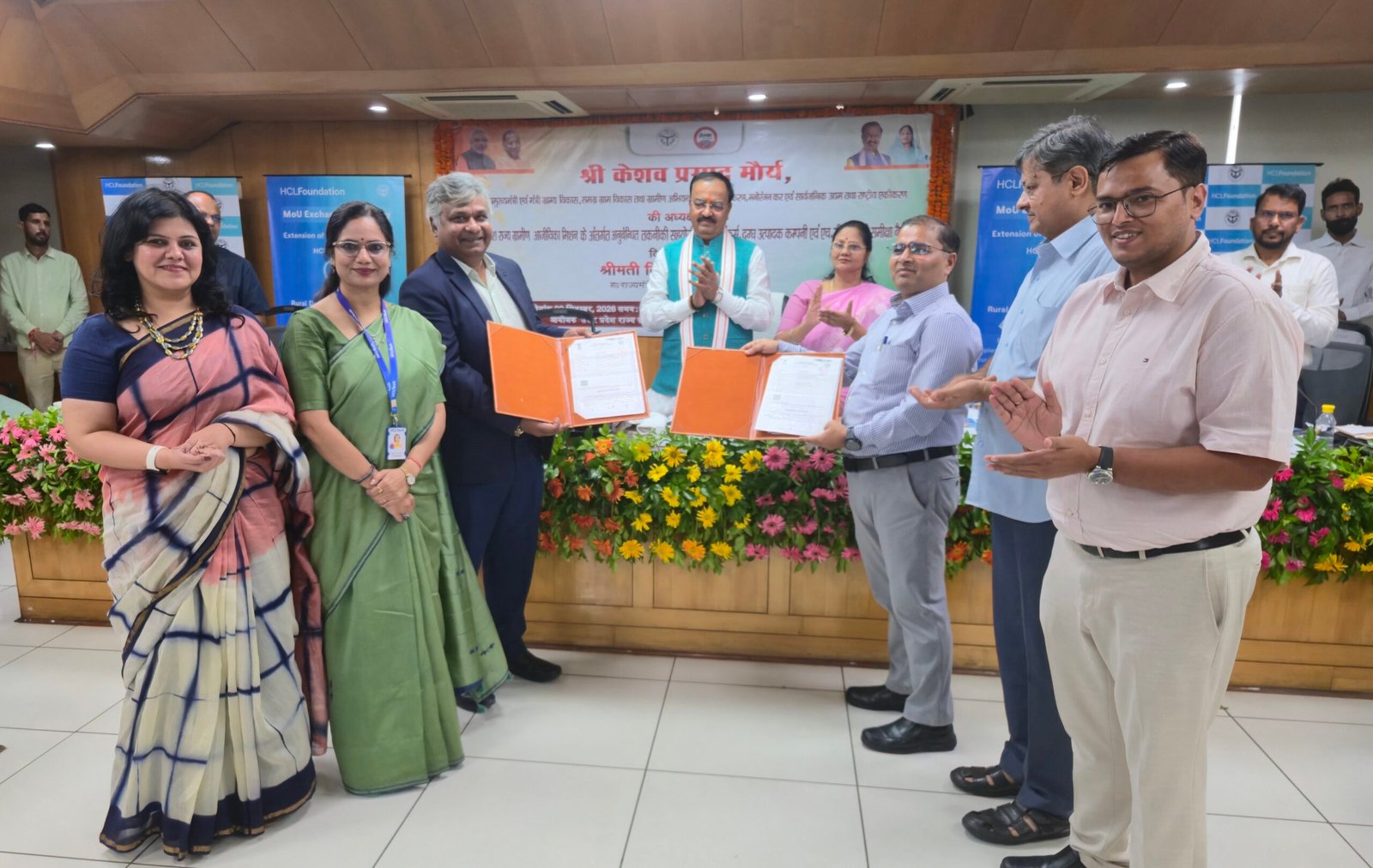
  • HCLFoundation’s Sports for Change National Finals empower 600 athletes

    HCLFoundation’s Sports for Change National Finals empower 600 athletes

    HCLFoundation, the corporate social responsibility arm of HCLTech, on Tuesday said it hosted the eighth edition of the Sports for Change National Finals 2026 at Gautam Buddha University, bringing together 600 young athletes from 15 states over three days.

    The Sports for Change National Finals empower grassroots talent by giving underserved children a platform to compete at the national level, the foundation said in a statement.

    The three-day event featured 300 boys and 300 girls who had qualified through district, state and zonal competitions in football, kabaddi, volleyball, kho kho, archery, badminton and table tennis.

    Participants represented states and union territories including Uttar Pradesh, Ladakh, Tamil Nadu, Andhra Pradesh, Telangana, Kerala, Maharashtra, Madhya Pradesh, Chhattisgarh, Rajasthan, Karnataka, West Bengal, Assam, Sikkim and Nagaland, the foundation said.

    “At HCLFoundation, we believe every child, regardless of their socio-economic background, deserves the opportunity to discover their potential and pursue their aspirations,” said Dr. Nidhi Pundhir, Senior Vice President, Global CSR at HCLTech and Director of HCLFoundation.

    “By nurturing grassroots talent and fostering an environment where young athletes are encouraged to dream bigger, build resilience and strive for excellence, we hope the National Finals inspire every participant to realize that their circumstances need not define their future.”

    The Sports for Change programme has reached more than 74,000 children and youth across India since inception, including 474 para-athletes, the foundation said.

    More than 12,000 young athletes took part in this year’s competitions, and over 30 sports scholarships covering coaching, equipment, nutrition and training access will be awarded to top performers.

    The initiative has enabled more than 490 athletes to advance to national-level competitions, with 38 going on to represent India internationally, the foundation said.

    Notable alumni include badminton player Jerlin Anika, sprinter Preeti Pal, rugby player Akshaya, powerlifter Rajkumari and chess player Kanishri.

    HCLFoundation said it has positively impacted more than 8.5 million lives to date through programmes focused on education, grassroots sports, health, sanitation, skill development, livelihood and environmental initiatives.

    HCLTech, its parent company, employs more than 223,000 people across 60 countries and reported consolidated revenues of USD 14.8 billion for the 12 months ended June 2026.

  • VISL skilling initiatives transform 1 lakh lives in India

    VISL skilling initiatives transform 1 lakh lives in India

    Vedanta Iron and Steel Limited (VISL) said on World Youth Skills Day that its skilling programmes have reached more than 100,000 people across India, as part of a broader push to build a future-ready workforce through technical education, digital learning, entrepreneurship and sports development.

    The VISL Skilling Initiatives, aligned with this year’s World Youth Skills Day theme of “Skills for a Shared Future,” span operations in Goa, Jharkhand, Maharashtra, Karnataka and Odisha, the company said.

    In Goa, the Sesa Technical School has trained more than 2,100 youth over three decades with a near 100% placement record, the company said, adding that the programme places particular emphasis on encouraging girls to pursue technical training. In Bokaro, the Vedanta ESL Skill School has trained over 700 youth since 2022 in trades including solar photovoltaic installation and home appliance repair, with more than 400 placed in formal sector jobs.

    The company also operates 25 Vedanta Computer Centres and Computer Labs across Goa, Maharashtra and Karnataka, alongside learning hubs under Project AAS Vidyalaya in rural Jharkhand. Combined, the digital literacy initiatives have benefited more than 80,000 students and young people, the company said.

    “The youth of our Nation are the driving force behind India’s growth story, and investing in their skills is an investment in the nation’s future,” said Pankaj Kumar Sharma, Chief Executive Officer of VISL.

    “At VISL, our approach to skilling goes beyond employment by enabling aspiration, nurturing potential and creating pathways to long-term socio-economic progress,” he said in a statement.

    Sports development remains a core pillar of the company’s youth outreach. The Sesa Football Academy in Goa has produced over 230 graduates through its residential training programme, including 14 international players, while engaging more than 8,000 young footballers through grassroots initiatives.

    Its men’s and women’s teams compete in national leagues including I-League3 and the Indian Women’s League. Separately, the Vedanta ESL Archery Academy in Bokaro has trained more than 50 young archers who have collectively won over 200 medals at district, state and national competitions.

    On women’s economic empowerment, the company’s Project JIVIKA has supported more than 280 self-help groups and benefited nearly 4,000 women across five states through vocational training in tailoring, handicrafts, mushroom farming and footwear manufacturing.

    VISL operates iron ore and steelmaking assets across India and Liberia, including Sesa Iron Ore, ESL Steel Limited and Western Cluster Limited, alongside associated industrial businesses.

  • Belstar Microfinance empowers Anandam Trust with van

    Belstar Microfinance empowers Anandam Trust with van

    Belstar Microfinance Limited, a subsidiary of Muthoot Finance Limited, had donated a Maruti Eeco van to Anandam Trust, a home for senior citizens, as part of a community outreach programme aimed at improving emergency healthcare access for elderly residents.

    The Belstar Microfinance Van Donation will help more than 110 elderly residents at the trust reach nearby hospitals quickly during medical emergencies, the company said in a statement.

    Anandam Trust also runs daily tuition classes for underprivileged schoolchildren with learning difficulties, and the vehicle will additionally be used to transport students between locations.

    Company executives said timely access to transport can be critical for elderly residents without family support or independent income, and that the initiative reflects Belstar’s broader focus on community welfare beyond its core lending business.

    “At Belstar, we believe that meaningful progress extends beyond financial services and is reflected in the positive difference we create in the communities around us,” said J. Balakrishnan, Whole Time Director and Chief Executive Officer of Belstar Microfinance Limited.

    “Supporting initiatives that address essential needs, especially for senior citizens, is a step towards building stronger and more caring communities.”

    Bhageerathy Ramamoorthy, Managing Trustee of Anandam Trust, thanked Belstar Microfinance and its leadership for the contribution, saying the van would directly support the healthcare and emergency transportation needs of residents at Anandam Old Age Home.

    Belstar Microfinance, ranked among India’s top 10 NBFC-MFIs, holds an “AA/Stable” credit rating from CRISIL and operates across 19 states and two union territories, offering micro-enterprise, education, consumer and emergency loans, along with gold loans in select southern states.

    The company said its business model follows a double bottom line approach, balancing financial performance with social impact, particularly through women’s economic empowerment.

  • Uttar Pradesh CM Yogi Adityanath leads 35cr tree plantation drive

    Uttar Pradesh CM Yogi Adityanath leads 35cr tree plantation drive

    Uttar Pradesh Chief Minister Yogi Adityanath on Sunday stressed the critical importance of tree plantation, warning that indiscriminate felling could trigger water shortages and food grain crises.

    “A single tree absorbs and retains thousands of litres of water. Rivers remain perennial only where there are forests or a large number of trees,” Adityanath said after planting a Maulsari sapling along the Tal Ring Road near RKBK as part of the Paudharopan Mahayagya 2026 campaign themed ‘Ek Ped Maa Ke Naam’.

    He noted that environmental imbalance disrupts rainfall patterns, harming farmers, and called on every citizen to not only plant but also protect saplings to restore ecological balance.

    The state government has set an ambitious target of planting 35 crore saplings in a single day, supported by over 57 lakh nurseries. Adityanath said robust protection measures have already led to visible increases in forest cover.

    “Expressing gratitude is a hallmark of Indian culture. Through large-scale tree plantation, we can secure a brighter future for generations to come,” he added.

    Adityanath also admired the scenic beauty of Ramgarh Tal and took a selfie at the site.

    Present on the occasion were MP Ravi Kishan Shukla, Mayor Dr. Manglesh Srivastava, MLC Dr. Dharmendra Singh, and other BJP leaders and councillors.