Tag: #CSR

  • CSR Social Stock Exchange: India opens 10% investment window for firms

    CSR Social Stock Exchange: India opens 10% investment window for firms

    The corporate affairs ministry has opened a new funding channel for nonprofits, allowing companies to direct up to 10 per cent of their mandatory corporate social responsibility spending into zero coupon zero principal instruments listed on the Social Stock Exchange, in a move aimed at deepening transparency in social sector financing.

    The amendment, effective immediately, inserts the subscription to such instruments into Schedule VII of the Companies Act, 2013 — the schedule that governs permissible CSR activities for profit-making companies required to spend at least 2 per cent of their three-year average net profit annually on social causes.

    Under the revised CSR Policy Rules, 2014, definitions for both not-for-profit organisations and zero coupon zero principal instruments have been formally introduced for the first time, providing regulatory clarity to companies seeking to deploy funds through the Social Stock Exchange.

    Not-for-profit organisations will be able to issue these instruments through the Social Stock Exchange in accordance with regulations set by the Securities and Exchange Board of India, the ministry said in a statement on Friday.

    Unlike conventional bonds, zero coupon zero principal instruments carry no interest payments and no repayment of principal, functioning instead as a regulated grant or social investment vehicle designed to fund public welfare projects.

    “It helps in furtherance of a transparent and credible mode of funding CSR projects by companies and enables social enterprises to access a wider pool of capital,” said Anshul Jain, Partner Regulatory at PwC India.

    The 10 per cent cap on CSR Social Stock Exchange investments per financial year is intended to balance innovation with fiscal discipline, ensuring core CSR commitments remain intact while creating fresh pathways for social capital mobilisation.

    The Social Stock Exchange, established under SEBI oversight, is designed to bring market discipline and disclosure standards to social sector funding — a segment historically dominated by opaque grant-making and bilateral philanthropy.

  • Toyota Kirloskar’s CSR hygiene programme did what Swachh Bharat couldn’t

    Toyota Kirloskar’s CSR hygiene programme did what Swachh Bharat couldn’t

    When Toyota Kirloskar Motor (TKM) built toilets in Karnataka village schools nearly a decade ago, it discovered a problem it had not anticipated: nobody was using them.

    Root cause analysis revealed why communities held a deeply ingrained belief that an in-compound toilet was unclean. Going outdoors, they maintained, was the healthier option.

    The finding prompted TKM to stop further construction and redirect its corporate social responsibility effort toward behavioural change, launching what would become the ABCD — A Behavioural Change Demonstration — programme in 2015-16.

    The initiative has since reached 6,69,322 students, teachers and community members across 1,300 government schools in Karnataka and drawn recognition from Harvard Business School, which has featured it as a case study.

    The programme’s early breakthrough came from an unexpected quarter, TKM Country Head and Executive Vice President (corporate affairs and governance) Vikram Gulati told PTI.

    In one Ramanagara village, two girls aged approximately 11 and 12 organised a classmate hunger strike, refusing to eat until their families built home toilets. The strike succeeded.

    “This actually led to the first breakthrough,” Gulati said.

    The programme trained children in handwashing technique, toilet use and personal hygiene, positioning them as agents of behavioural change within their households and wider communities. Schools competed on hygiene standards. Children carried lessons home. The ripple effect — by design — travelled from classroom to household to community.

    When the programme expanded to Raichur, one of India’s government-designated Aspirational Districts, the company said a baseline survey across 500 schools in December 2023 exposed how deep the crisis ran.

    Only 48 per cent of required toilets existed. Of those, just 20 per cent were usable. Twelve per cent of schools lacked a single functional handwashing unit. Ninety per cent of students depended on open tap water. One in four children still practised open defecation.

    At home, the picture was no better: 44 per cent of students had no toilet at all.

    India’s Swachh Bharat, or Clean India, Mission has constructed tens of millions of toilets since its launch in 2014 under Prime Minister Narendra Modi. Independent researchers and government field assessments have repeatedly flagged the gap between construction targets and actual usage, citing behavioural barriers, poor maintenance and water scarcity as persistent obstacles.

    Over two years of implementation in Raichur and neighbouring Lingasuguru, toilet usage among students rose from 76 per cent to 95 per cent, according to TKM data.

    Handwashing compliance increased from 20.5 per cent to 100 per cent.

    Seventy-five toilets and 30 urinals were constructed. Fifty-eight handwash taps were installed or repaired. Twenty-eight schools received safe drinking water access. Menstrual hygiene sessions were conducted for 3,546 adolescent girls.

    At the community level, 1,382 parents were motivated to construct home toilets during the programme period; 38 completed construction.

    Harvard Business School has recognised ABCD as a case study. The Ivey Business School has published it — rare international acknowledgment for a sanitation initiative rooted in rural India, the TKM Said.

    The ABCD programme sits within a broader corporate social responsibility architecture that TKM has been expanding rapidly.

    Since 2001, the company’s CSR work has spanned education, health, environment, skill development, road safety and disaster management, guided by what it describes as a “Child to Community” approach. TKM spent Rs. 104.7 crore on CSR activities in FY 2025-26, reflecting the scale of its social investment commitments.

    In the 2025-26 financial year, TKM significantly widened its geographic footprint, extending its reach from communities around its manufacturing base to 12 states — among them Uttarakhand, Nagaland, Andhra Pradesh, Tamil Nadu, West Bengal and Odisha.

    The company plans to expand further to 22 states in 2026-27, framing the ambition under a stated vision of “Grow India, Grow with India.”

    “TKM is strengthening health infrastructure through preventive and curative interventions, enhancing the quality of education, and improving employability,” Gulati said, describing the overall mission as creating “Mass Happiness for All.”

    The Raichur intervention is ongoing. The earlier Ramanagara phase has stabilised, he added.

    Source: PTI

  • Syngenta India sponsors 650 motorised tricycles to empower specially abled citizens in Madhya Pradesh

    Syngenta India sponsors 650 motorised tricycles to empower specially abled citizens in Madhya Pradesh

    Agro-innovation company Syngenta India has launched what it called a first-of-its-kind corporate social responsibility initiative, committing to sponsor 650 motorised tricycles for specially abled individuals in Madhya Pradesh, in a move that links agricultural enterprise with disability inclusion.

    The first batch of vehicles was handed over on Sunday by Union Agriculture Minister Shivraj Singh Chouhan at the Unnat Krishi Mahotsav 2026, an agriculture exhibition and conference held in Raisen, Madhya Pradesh, on April 12.

    “Empowering them with mobility is a critical step towards ensuring dignity, inclusion, and self-reliance,” Chouhan said, adding that the government remained committed to addressing the needs of marginalised communities, including the Divyangjan — a Hindi term for persons with disabilities. He singled out the Vidisha region, his parliamentary constituency, as a focus area for broader mobility initiatives.

    Chouhan framed the distribution of motorised tricycles not merely as a mobility intervention but as a pathway to economic participation, saying recipients could use the vehicles as livelihood tools and engage in local rural economies.

    Vivek Sharma, officiating Managing Director and Head of Marketing at Syngenta India, said the initiative was anchored in the company’s sustainability priorities, integrating social inclusion with agricultural advancement. He said the programme aimed to support last-mile connectivity, on-farm engagement and participation in rural enterprises across the agricultural value chain.

    Sharma said Syngenta planned to complement the mobility support with skill development and improved market access, with the stated aim of enabling “long-term transformation at the grassroots.”

    Syngenta India has operated in Madhya Pradesh through several community development programmes, including I RISE, a rural skilling initiative; I CLEAN, a market-access and hygiene awareness programme; and I SAFE, which promotes responsible use of agricultural inputs. At the Raisen exhibition, the company showcased new products and technologies for farmers.

  • HCLFoundation expands My Clean City program to Agra, donates Sanitation fleet to Nagar Nigam

    HCLFoundation expands My Clean City program to Agra, donates Sanitation fleet to Nagar Nigam

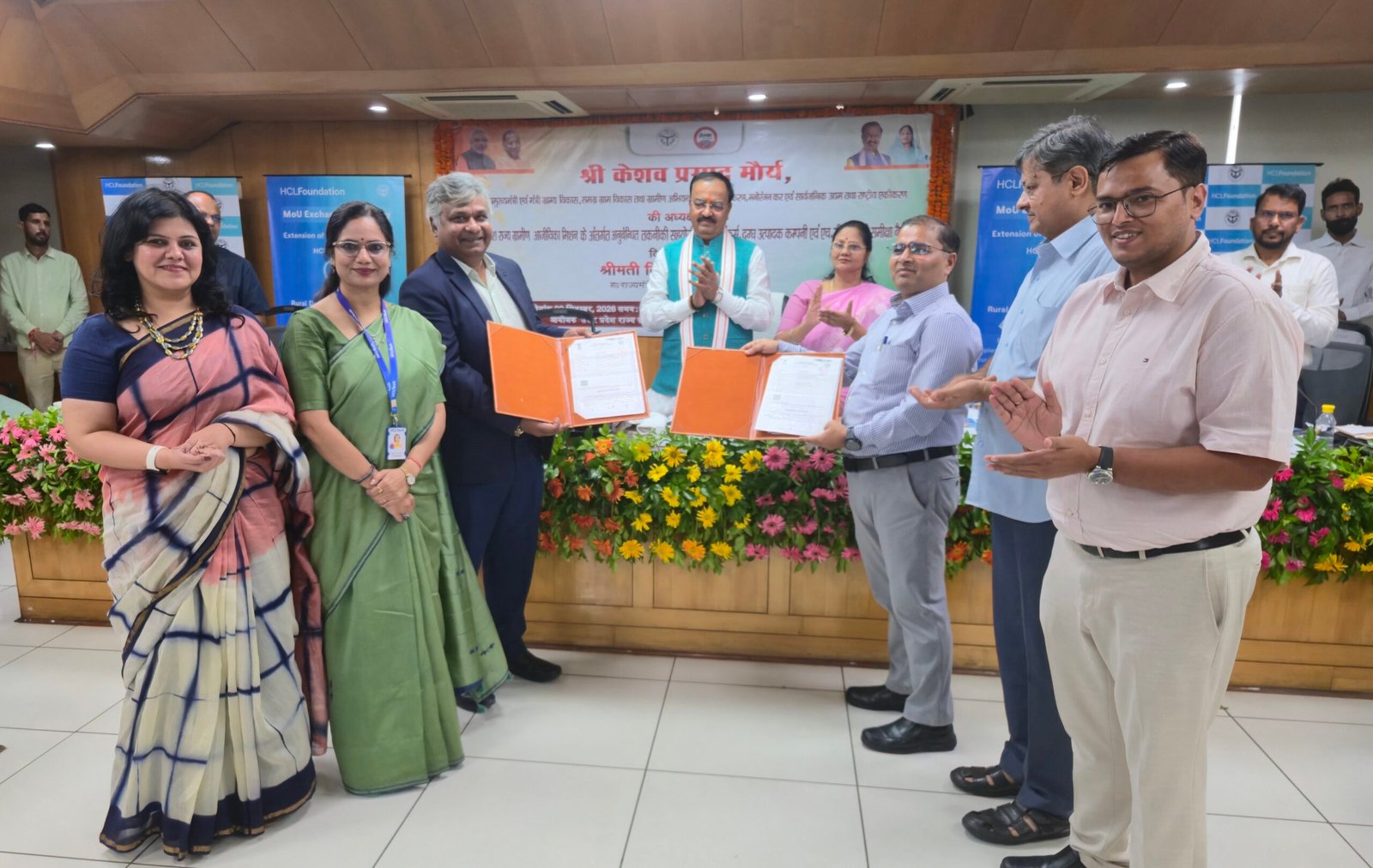
    HCLFoundation, which drives the corporate social responsibility agenda of HCLTech in India, announced on Monday the expansion of its My Clean City program to Agra, Uttar Pradesh — the first city outside the Noida–Greater Noida belt to receive the initiative since its 2019 launch.

    As part of the rollout, the foundation donated 10 e-drain carts, two e-street sweeping machines and one HomoSep robot — a mechanised septic tank cleaning device — to Agra Nagar Nigam, the city’s municipal body. The equipment is intended to reduce hazardous manual work while improving the scale and consistency of urban waste management.

    The HomoSep robot, already deployed in Gautam Buddha Nagar, has cleared more than 100,000 litres of sludge across 452 manholes and sewer sites — removing sanitation workers from direct exposure to toxic conditions. The device represents a broader pivot within the program toward mechanisation as a tool for worker safety.

    Since its launch, My Clean City has engaged nearly 750,000 citizens through behavioural sensitisation drives and trained more than 61,000 stakeholders on waste management practices. The program has managed over 17,000 tonnes of waste in Noida and Greater Noida, and runs a Waste Champions Club involving more than 2,400 school students.

    The initiative also carries a social welfare component. Under its Social Inclusion of Sanitation Workers program, 200 sanitation worker families in Gautam Buddha Nagar receive support across health, education, financial literacy and skill development — a recognition that sustainable sanitation reform extends beyond infrastructure.

    Five biogas plants, each processing between 1,500 and 1,800 kg of cow dung daily, have been established in the region as part of complementary clean energy efforts, generating fuel from waste material.

    HCLFoundation said the Agra expansion reflects a strategy of replicating proven urban sanitation models in new municipal geographies. The foundation, which reported having positively impacted over 7.5 million lives to date, focuses thematically on education, health and sanitation, skill development, environment, and disaster risk reduction.

  • Ambuja Cements Drives Women Empowerment, Hands E-Autos to 10 SHG Women in Gujarat

    Ambuja Cements Drives Women Empowerment, Hands E-Autos to 10 SHG Women in Gujarat

    Ambuja Cements, the ninth-largest building materials solutions provider globally and part of the Adani Portfolio, has handed over electric auto-rickshaws to 10 women from Self-Help Groups (SHGs) in the Kodinar region of Gujarat, opening a new chapter in rural women empowerment and self-employment on International Women’s Day.

    The handover ceremony was held at Ambujanagar, marking the culmination of a structured skilling and financing initiative designed to equip women with both the capability and capital to operate independent transport businesses.

    Women associated with Sorath Mahila Vikas Sahakari Mandali and local SHGs underwent two months of specialised e-auto driving training at the Skill and Entrepreneurship Development Institute (SEDI), Ambujanagar. The programme focused on building safe driving skills and operational confidence among participants.

    Following training, participants purchased the e-autos with extended loan support from Sorath Mahila Vikas Sahakari Mandali, ensuring financial access remained no barrier to ownership.

    The trained women will operate e-autos in and around Kodinar, providing passenger transport services and ferrying school-going children — addressing a critical rural mobility gap while generating sustainable household income.

    Ambuja Cements officials, present at the handover, encouraged the women to embrace their self-employment journey, reaffirming the company’s commitment to income-generating opportunities for women in underserved rural communities.

    The initiative reflects Ambuja Cements’ wider strategy of linking skill development with livelihood creation, particularly for women in regions surrounding its plant operations. The company’s SEDI centres across India have trained thousands of rural youth and women in vocational skills since inception.

    The e-auto programme aligns with India’s broader push for electric mobility adoption in rural areas and dovetails with national priorities around women-led development and the SHG movement under the National Rural Livelihoods Mission.

  • RBL Bank UMEED empowers 300 girls with bicycles in Raipur

    RBL Bank UMEED empowers 300 girls with bicycles in Raipur

    RBL Bank, under its CSR initiative UMEED, distributed 300 bicycles and school kits to underprivileged girl students in Raipur, Chhattisgarh, to address school dropout caused by long commutes.

    The drive was held at Shri Balaji Vidya Mandir in the presence of Rajya Sabha MP Laxmi Verma and other dignitaries.

    MD & CEO R. Subramaniakumar said the initiative aims to empower girls to pursue education and build an inclusive society. UMEED continues to drive impactful outreach across marginalised communities in India.

  • HCLFoundation boosts pediatric heart care in UP

    HCLFoundation boosts pediatric heart care in UP

    HCLFoundation, the corporate social responsibility arm of Indian technology giant HCLTech, on Tuesday donated a suite of advanced intensive care equipment to the Saloni Heart Center at Sanjay Gandhi Postgraduate Institute of Medical Sciences (SGPGIMS) in Lucknow — marking a breakthrough in pediatric heart care access for millions of children across Uttar Pradesh.

    Uttar Pradesh records an estimated 75,000 congenital heart disease (CHD) births annually, yet the state until recently lacked a dedicated pediatric cardiac facility. The Saloni Heart Center, established within SGPGIMS as Uttar Pradesh’s first such institution, aims to address that critical gap — and Monday’s donation directly strengthens its post-operative and neonatal intensive care capabilities.

    Life-Saving Equipment Delivered

    The donated equipment includes a Panda ResusView Warmer with Resuscitation Trolley to ensure safe thermal regulation and integrated resuscitation support during critical cardiac episodes; an SLE 6000 Paediatric Neonatal Ventilator, a high-precision device designed for newborns and infants requiring controlled respiratory support; and a GE Bilisoft Fibre Optic Phototherapy System for treating neonatal jaundice — a complication particularly hazardous for CHD infants who cannot be routinely transferred to other wards.

    The initiative was attended by senior government officials including Shri Amit Kumar Ghosh, IAS, Additional Chief Secretary for Medical Health and Family Welfare, Government of Uttar Pradesh, and Awanish Kumar Avasthi, IAS, Senior Advisor to the Chief Minister of Uttar Pradesh.

    Also present were Prof. Radha K Dhiman, Director, SGPGIMS; Prof. S.K. Agarwal, Head, Cardiovascular & Thoracic Surgery, SGPGIMS; Shri Himanshu Seth, Executive Chairman, Saloni Heart Foundation; and Rishi Kumar, Senior Vice President, HCLTech.