Category: Agri & Food

  • India among 11 countries to receive grants for regenerative agri projects under PAO fund: PepsiCo

    India among 11 countries to receive grants for regenerative agri projects under PAO fund: PepsiCo

    Launched in August 2021, the PAO Fund offers PepsiCo market teams co-investment to accelerate diverse and innovative Positive Agriculture projects.

    PepsiCo has announced the continuation of its global agriculture accelerator, the Positive Agriculture Outcomes (PAO) Fund, by granting funding to 14 business projects in India and 10 other countries to address some of the most intractable challenges facing agriculture today.

      Projects from the PAO Fund’s inaugural investment are the focus of PepsiCo’s latest, four-part digital video series, “Growing Our Future.”

      The series looks at how PepsiCo is working with farmers in Thailand to help them adapt to climate change, how farmers in Greece are adopting more efficient irrigation systems to adapt to increased drought, and how PepsiCo is supporting research in Brazil to help potato farmers improve soil health.

      For India, the series elaborates on how PepsiCo has partnered with farmers in Punjab to develop kilns that can turn their agricultural waste into fertilizer known as biochar.

      In recent years, PepsiCo India’s Pep+ (Pep Positive) agenda in the supply chain of potatoes have created awareness and impact in Punjab and West Bengal helping farmers manage paddy crop residue by ploughing back into soils and conversion of paddy straw into “biochar ” through the process of pyrolysis. PepsiCo India is also funding the infrastructure (retort kilns) to help growers in these states.

      This includes carbon farming under regenerative agriculture through: Moldboarding of crop residue into the soil and conversion of crop residues through pyrolysis process into biochar with 40 percent carbon.

      These two initiatives have helped improve the soil health and reducing practices such as stubble burning that release carbon dioxide in the atmosphere.

      Launched in August 2021, the PAO Fund offers PepsiCo market teams co-investment to accelerate diverse and innovative Positive Agriculture projects. The investments are designed to “de-risk” promising initiatives while accelerating the development of innovative technologies and approaches that can help scale the adoption of regenerative agriculture practices.

      In 2022, the PAO Fund is making investments in projects that span a range of commodities, supply chains, time horizons and PepsiCo business units, but all are focused on either testing a new regenerative technology or approach, helping farmers build climate resilience, or developing new sustainable “landscapes”.

      In total, the PAO Fund is providing ongoing support to over 20 different projects around the world through grants totaling more than USD 7.4 million awarded in 2021 and 2022.

      We’re in a race to reach the world’s 1.5 degree target and, to do our part, PepsiCo has set a range of ambitious PepsiCo Positive goals, including expanding regenerative agriculture practices and building the resilience of those in our agricultural supply chain by preparing them for a changing climate,” said Rob Meyers, Vice President of Global Sustainable Agriculture.

      “Reaching PepsiCo’s – and our planet’s – goals will require fresh thinking and innovation from our agriculture teams and partners all over the world, which is why the PAO Fund was created to make it a bit easier for good ideas to get off the ground,” he added.

  • PEPSICO Foundation aims to build global food security

    PEPSICO Foundation aims to build global food security

    PEPSICO to respond to the growing hunger crisis by boosting its food security initiatives

    The PEPSICO Foundation hopes to respond to the growing hunger crisis by boosting its food security initiatives. The Foundation will double its effort to increase equitable access to nutritious food by increasing its investments and offering three new ways to engage people in fighting hunger.

    This will directly or indirectly help many of the 345 million people globally who face severe hunger. This number is expected to rise due to climate change, the COVID-19 pandemic, and global conflicts impacting the food chain.

    In response to the growing hunger crisis, in 2021, PepsiCo and the Foundation announced Food for Good’s expansion to 28 countries worldwide to provide access to nutritious food to 50 million people by 2030 (against a 2021 baseline). Through Food for Good, PepsiCo has delivered more than 245 million meals since 2009, reached 41 million people worldwide since 2016, and partnered with more than 60 non-profits across 28 countries to ensure the company implements local solutions that meet the unique challenges of each community.

    PepsiCo Food for Good has committed more than $35 million since 2021 to increase access to nutritious food and increase the productivity and incomes of small-scale farmers. This year, it’s directing investments to interventions that have shown can build long-term solutions while it continues to address immediate hunger needs.

    Increasing productivity and incomes of small-scale farmers

    With global partners, including World Food Program USA in support of the United Nations (U.N.) World Food Programme and CARE, along with leading local organisations, Food for Good, focus on economically empowering women through regenerative agriculture. To stave off the food crisis, it’s mobilising multiple initiatives in communities with a substantial vulnerability within Africa, the Middle East, Latin America, and Asia. Through these efforts, it aims to support 3.5 million farmers and their families between 2022 and 2024.

    Increasing access to nutritious food

    Food for Good provides students with increased access to the nutrition needed to learn and grow in multiple countries, including the U.S., and through the Pioneer School Breakfast Nutrition Programme in South Africa, while working to ensure the most vulnerable can access food with dignity through malnutrition interventions in Mexico and Guatemala.

    As part of its Nutrition Enhancement Programme, PepsiCo in India is working to improve the nutritional status of pregnant & lactating women and children in the age group 0-6 years in Sangrur, Punjab, I n partnership with Smile Foundation. PepsiCo also launched the ‘Bowl of Hope’ initiative in India in 2021 with its brand Quaker and Smile Foundation to provide over one lakh nutritious bowls of whole grains to underserved communities across the country. In addition, PepsiCo is inviting corporations, organisations and community members to take action on global hunger.

    C.D. Glin, Vice President, PepsiCo Foundation and Global Head of Philanthropy, PepsiCo, says, “As one of the largest convenient food companies in the world, PepsiCo plays a critical role in leveraging our resources and capabilities to create and inspire local impact on hunger,”

    “We’re answering the call to address escalating global food insecurity, and we plan to continue with our significant investments. But to make a meaningful impact, everyone with a role to play in our global food systems must be a part of the solution to address the immediate need and work on approaches to prevent us from landing in this place of crisis again.” Glin said.

    Lauren Bush Lauren, Founder of FEED, has collaborated with PepsiCo Food for Good: “The fight against hunger is an issue that knows no borders. In the past few years, the already overwhelming global issue has been exacerbated further. Often people aren’t sure where to begin or how to make a difference, which was my inspiration for founding FEED in 2007″.

  • IIFL Foundation launches Rajasthan’s first agri drone

    IIFL Foundation launches Rajasthan’s first agri drone

    This is IIFL Foundation’s second drone initiative after the successful launch of Maharashtra’s first drone-based last mile vaccine delivery in Palghar district.

    IIFL Foundation has launched an agricultural drone at Maharana Pratap University of Agriculture and Technology (MPUAT), Rajasthan in order to boost research work.

      “This is also one of India’s first agricultural drone initiatives by a CSR foundation,” the IIFL Foundation claimed in a statement.

      The custom built agricultural drone has been given to MPUAT for research and educational purpose, it said.

      The custom made 2 meter wide, battery powered drone can spray over an area of 1 acre in less than 3 minutes. An android phone is mounted to its wireless remote that allows easy navigation. The structure comprises of 6 arms, 6 propellers and 4 spraying nozzles which can easily cover large farm areas in few hours that takes a day or 2 for manual spraying, it said.

      The drone was launched by MPAUT Vice Chancellor Narendra Singh Rathod, IIFL Foundation Director Madhu Jain, RNT Medical College (Udaipur) Principal Lakhan Poswal, at the instructional farm in MPUAT’s campus, Udaipur, in presence of Farmers.

      MPUAT Vice Chancellor said, “We are highly grateful to IIFL Foundation for choosing our University to grant such an innovation. Of all the technological innovations that have been made in agriculture, drone based services is definitely the next best step.”

      Currently, the drone will be used to spray insecticides, pesticides and other liquid based supplementary nutrition to the crops. In coming time we shall certainly enhance the technology with research and contribution of our students, he said.

      IIFL Foundation Director Madhu Jain said the agricultural drone is an innovation that shall allow farmers to save time spent on manual spraying, avoid over exertion in the extreme hot climate & also safeguard them against any illness arising out from over-exposure to pesticides and insecticides.

      This is IIFL Foundation’s second drone initiative after the successful launch of Maharashtra’s first drone-based last mile vaccine delivery in Palghar district. The project was done in partnership with Ministry of Health and Government of Maharashtra. It became India’s first such innovation with a payload capacity of 5 kg and operating within a radius of 25 km, delivering life saving vaccines at the earliest.

  • HCL Foundation jointly with UP govt launches training center for farmers

    HCL Foundation jointly with UP govt launches training center for farmers

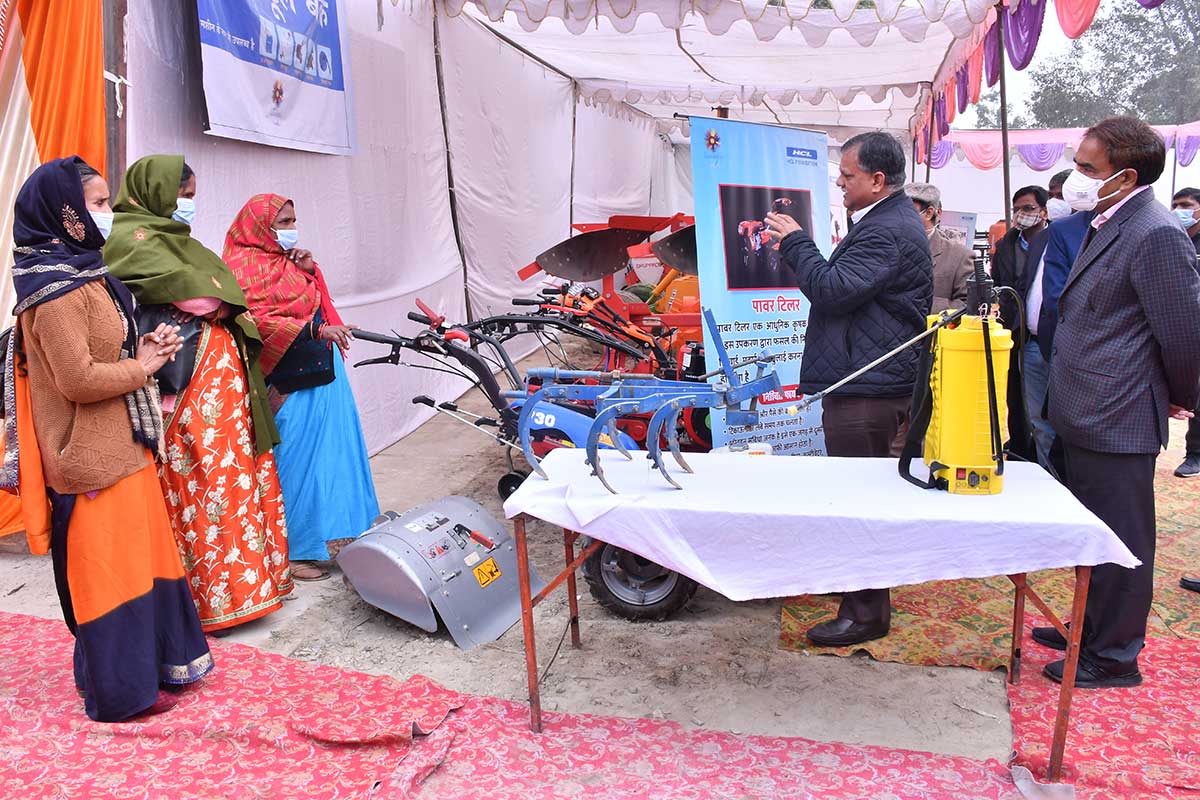
    HCL Foundation on Tuesday said in a joint initiative with the Uttar Pradesh government it has launched a “Center for Agriculture and Technology Transfer (CATT)” for training and income augmentation of farmers in Hardoi district. This initiative is part of HCL Samuday

    HCL Foundation on Tuesday said in a joint initiative with the Uttar Pradesh government it has launched a “Center for Agriculture and Technology Transfer (CATT)” for training and income augmentation of farmers in Hardoi district.

    This initiative is part of HCL Samuday – an ambitious program of HCL Foundation working towards creating a scalable and replicable development model for rural India.

    The CATT will provide training to farmers on modern farming techniques and technologies, to help improve crop yield, eventually supporting their income augmentation, HCL Foundation said in a statement.

    The Center was inaugurated by Manoj Kumar Singh, Additional Chief Secretary, Rural Development, Uttar Pradesh, and Nand Kishore, Deputy Director Agriculture, Hardoi, UP, along with Alok Varma, Project Director, HCL Foundation.

    The CATT, spread across five acres of land, has been established on the basis an MoU signed by HCL Foundation and the Hardoi District Agriculture Department, Uttar Pradesh in 2020.

    HCL Foundation will manage the CATT till 2023, and thereafter, it will be operated by the Agriculture Department of the Uttar Pradesh government.

    Currently, nearly 6,000 farmers from 11 blocks of Hardoi district have been selected for the various training sessions. The program will be expanded further to include all farmers of the district.

    The Center will offer:

    • A fully functional soil-testing laboratory cum crop protection advisory center with the capacity to test more than 30,000 samples per year.
    • Effective management and utilization of farm machinery at a nominal price
    • Classroom training modules about modern crop practices, pesticides and insect management, and usage of new farm machinery for land development
    • Other services including farmers’ training center, customized farm machinery bank, solar-based drip irrigation system, low tunnel polyhouse, and green shade net, herbal garden, and integrated nutrient and pest management

    Speaking on the occasion, Manoj Kumar Singh, Additional Chief Secretary, Rural Development, UP said the practice of traditional cropping has a long history in the region. But HCL Foundation has played a role in providing the latest agricultural technologies to farmers in the project area. The newly established CATT can help improve the lives of farmers.

    “I do hope that many farmers are able to utilize its services to the fullest. I would like to thank the HCL Foundation and Deputy Director of Agriculture for transforming an under-utilized land as a training and knowledge dissemination center,” he added.

    HCL Foundation Project Director Alok Varma said, “The way farming is done directly impacts the nutrition of the food we consume. Therefore, it is essential that farmers receive education around modern farm technologies and innovative techniques.”

    HCL Samuday has been working since 2015 towards implementing various innovative programs in this direction. Some of these include sensitizing farmers about scientific farming practices, modern farming equipment and institutionalization of farmer clubs to make agriculture less burdensome and more market-linked.

    “As a result of our efforts, marginal farmers (from the group that we have worked with) have been able to enhance their farm income by up to 25 percent,” he said and added that the CATT is another step in our overall efforts to transform the agriculture sector in this region.

    The HCL Samuday team will scale up the Center as the focal point of training a group of selected farmers, who will become the anchor for further proliferation of agricultural practices in their respective villages and Gram Panchayats.

    HCL Samuday has been supporting farmers with sustainable, innovative, and cost-effective farming techniques. So far, over 66,000 farmers have benefited from HCL Samuday’s efforts in improving agricultural practices.

    In 2017, Samuday helped set-up Hardoi Kisan Producer Company Limited (HKPCL), a farmer producer organization which has 2,350 shareholders and a turnover of over ₹7.6 crores for 2020-21 financial year. All farming related activities like input distribution, farm mechanization, food processing etc., are being done by the farmers (members of HKPCL) with support of HCL Samuday.

    To help marginal farmers further enhance their income, HCL Samuday has helped set-up 3400 nutrition gardens within the farmers’ homes. These have helped more than 18,000 villagers help realize savings given that they are now able to use fresh and nutritious produce from their own backyards.

    So far, HCL Samuday has positively impacted over 9 lakh individuals in more than 165,000 households from 284 Gram Panchayats in Hardoi district of Uttar Pradesh, it added.

  • RAHI supporting 5 FPOs in Odisha to create end-to-end value chain for millet farmers

    RAHI supporting 5 FPOs in Odisha to create end-to-end value chain for millet farmers

    NGO Rise Against Hunger India (RAHI) today said it has launched a project for creating end-to-end value chain for millet farmers in Bargarh district, Odisha and is supporting five Farmer Producer Organisations (FPOs)

    NGO Rise Against Hunger India (RAHI) today said it has launched a project for creating end-to-end value chain for millet farmers in Bargarh district, Odisha and is supporting five Farmer Producer Organisations (FPOs).

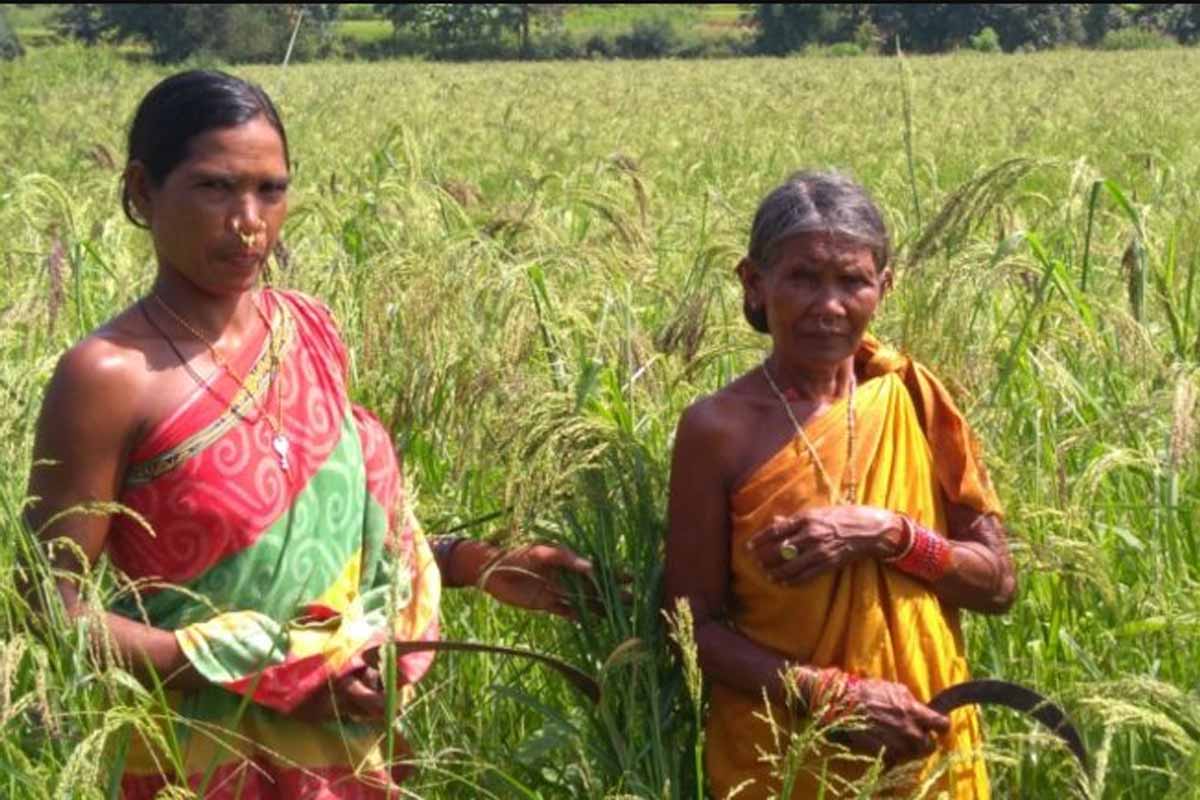
    Bengaluru-based RAHI is supporting 800 farmers under these five FPOs to improve yield through agri-tools, equipments and other inputs, it said.

    This kind of rural projects will bring resilience in the rural farmers who are now left with no option but to migrate to the cities, it added.

    “Hunger and lack of income is the biggest enemy for the rural poor. We are trying to make the vulnerable people in the villages self-sufficient and self-reliant. With adequate income available in villages, the need for migration can be stopped and the cycle of poverty reversed,” RAHI Executive Directr Dola Mohapatra said in a statement.

    As part of its COVID-19 response, few projects have been launched. One of the projects, focused on creating end to end value chain for millets, has been initiated in Bargarh, Odisha, the NGO said.

    For the past few years, some farmers have shifted from paddy to finger-millet cultivation and it is now receiving wider acceptance in the area, it said.

    RAHI said that FPOs have become a common vehicle to share resources and inputs and they also provide an assured market platform in the absence of which an individual farmer would be subject to whims and fancies of private vendors.

    Farmers are expecting 80-100 per cent growth in production and 100 per cent increase their income per acre of land. With an assured income, these farmers will have better resilience with less dependence on migrant income, it added.

    In the past, RAHI programmes were carried out in Ri-Bhoi district of Meghalaya to create value chains for pineapple and banana farmers.

    Currently, RAHI is working in four tribal villages of Bhil tribes in Dhar, Madhya Pradesh to create end-to-end value chain for goat farmers.

    While the immediate short-term goal of such rural projects is to support the migrant labourers from the cities and towns to cultivate their lands, the broad objective is to enable farmers generate enough income in villages so that distress migration is minimal, RAHI said. PTI LUX

  • Timely support for mkt access helped 14 FPOs in Andhra offset COVID-19 impact

    Timely support for mkt access helped 14 FPOs in Andhra offset COVID-19 impact

    About 17,500 farmers of 14 Farmer Producer Organisations (FPOs) in three districts of Andhra Pradesh could sail through the COVID-19 crisis and find new buyers for their produce because of the timely support for market access, according to non-profit body TechnoServe India

    About 17,500 farmers of 14 Farmer Producer Organisations (FPOs) in three districts of Andhra Pradesh could sail through the COVID-19 crisis and find new buyers for their produce because of the timely support for market access, according to non-profit body TechnoServe India.

    Gradually, the 14 FPOs — located in Visakhapatnam, Vizianagaram and Srikakulam districts and engaged in turmeric coffee, cashew, black pepper, coconut and pineapple farming — were able to turn the ongoing COVID-19 crisis into an opportunity and scaled up operations, it said.

    TechnoServe India has been working with 17,500 farmers under the Sustainable Livelihoods for Smallholder Farmers programme with the support of Walmart Foundation.

    “COVID-19 has presented many challenges for small farmers from disrupted and shorter supply chains, to communications breakdowns, and a scarcity of available services. The need for timely and accurate information and secure market channels is paramount to support farmer livelihoods,” Walmart Foundation Spokesperson Sherry-Lee Singh said.

    The Foundation works with partner NGOs in India with an aim to improve farmers’ incomes and promote sustainable farm practices. During the COVID-19 crisis, the Foundation is extending support to the NGO partners to help with necessary interventions to sustain farmer livelihoods in this challenging time, he said.

    TechnoServe and the FPOs are supporting the farmers during this period not only to help them secure their market access and sustain their livelihoods but also to rapidly learn, adapt and make adjustments in support of future resilience,he added.

    “Supply chain saw huge disruptions amid the pandemic, which broke down the conventional linkages on which the producers relied to access markets. However, this presented as an opportunity to build the capacity of community embedded resources for FPOs,” TechnoServe India Country Director Punit Gupta said.

    During the COVID-19 lockdown, TechnoServe continued to support farmers by shifting their operating model to digital means and formalising existing digital systems of support. Timely support was provided to ensure liquidity and incomes during the crisis, he said.

    “…We explored linkages with buyers in local markets within the state as well as other states to market produce of varying qualities. Post this, we helped finalise terms of trade as well as assist the FPOs with quality control and in raising purchase orders from different buyers,” he noted.

    Through on-ground presence of TechnoServe’s resources and 24/7 virtual guidance, Gupta said the FPOs not only strengthened their own operations but also filled the procurement gap.

    To help smallholder farmers navigate through the COVID-19 impact, TechnoServe facilitated fortnightly virtual board meetings to continue the training and encourage social distancing measures, he said.

    It also disseminated market price information for cashew farmers via WhatsApp groups to ensure greater transparency and reduce information asymmetries besides introducing post-harvest management support on drying, sorting and processing for cashew and turmeric farmers through community-embedded resource people.

    The NGO also supported FPOs and farmers market linkages for crops like turmeric, black pepper and cashew during the lockdown to prevent farmers from distressed sale. It also supported the FPOs in securing working capital loans from various financial institutions.

    “We also assisted individuals to find labour work in farm fields to ensure they have some revenue source, amid the crisis. For example, individuals engaged in polishing, sorting and grading the turmeric were able to earn daily wages in the absence of other regular work activities,” Gupta said.

    That apart, all training programmes for farmers were shifted to online and trainers visited individual farmers, on request, in nearby villages to provide guidance when the lockdown was relaxed. Farmers were also encouraged to grow organic kitchen gardens to meet their food needs.

    As a result, Gupta said, “They (FPOs) successfully sailed through the COVID-19 crisis and scaled up their operations.”

    TechnoServe is now working towards enhancing the usage of digital tools as well as other farm technologies to support FPOs and make the entire process more transparent and efficient, he added.
    Source: Agency

  • Jindal – NABARD to help boost farmers income

    Jindal – NABARD to help boost farmers income

    Jindal Stainless Foundation has partnered with NABARD to help boost incomes of 4 lakh farmers in the next five years. A Memorandum of Understanding (MoU) was signed between the two partners recently. The MoU seeks to intensify the ongoing

    Jindal Stainless Foundation has partnered with NABARD to help boost incomes of 4 lakh farmers in the next five years.

    A Memorandum of Understanding (MoU) was signed between the two partners recently.

    The MoU seeks to intensify the ongoing CSR programme ‘Project Krishi Unnati’ for having a positive impact on 4 lakh farmers in two phases, spread over 5 years.

    Jindal Stainless Foundation will partially fund and support the operations of NABARD and other implementing partners towards this end.

    It will also help in setting upmarket and financial linkages for farmers.

    Deepika Jindal, Chairperson, Jindal Stainless Foundation, said, “The collaboration with NABARD is an extension of our MoU signed with the Odisha government last year. So far, in Odisha, we have already reached out to over 20,000 farmers through this intervention.”

    The foundation is providing farmers in soil testing, crop management, market linkages and promoting climate-resilient technologies.

    It will help Farmer Producer Organizations, Farmers’ Clubs and Self-Help-Groups promoted by NABARD, which in turn will extend complimentary support to initiatives run by the foundation.

  • Andhra farmers get Rs 5510 crore assistance from the government

    Andhra farmers get Rs 5510 crore assistance from the government

    Ahead of Diwali, the Andhra Pradesh Government has given farmers good news by hiking the to the farmers Raithu Bharosa Scheme assistance to Rs 13500. Chief Minister Jagan Mohan Reddy announced this after a review meeting today

    Ahead of Diwali, the Andhra Pradesh Government has given farmers good news by hiking the to the farmers Raithu Bharosa Scheme assistance to Rs 13500. Chief Minister Jagan Mohan Reddy announced this after a review meeting today. This amount will be transferred to the farmers in three instalments. The chief minister acceded to the request of the farmers who attended the review meeting. The budget of Rs 5510 crores for the scheme has already been released by the government.