Category: Home Lead Story

  • DEVI Sansthan to list on Social Stock Exchange to scale foundational learning

    DEVI Sansthan to list on Social Stock Exchange to scale foundational learning

    DEVI Sansthan (Dignity Education Vision International), a 33-year-old not-for-profit organisation focused on foundational literacy and numeracy, is set to make a landmark entry onto the Bombay Stock Exchange’s Social Stock Exchange (SSE), with its public issue scheduled to open on June 29, 2026.

    The Social Stock Exchange listing marks a significant milestone for the Ranchi-based organisation, positioning it among a small group of social enterprises to access transparent, impact-aligned public funding through India’s regulated capital markets framework.

    Funds raised through the issue will be channelled into foundational literacy and numeracy programmes, teacher training, learning outcome assessments, accelerated learning interventions, and school-based education models aimed at improving learning outcomes at scale across underserved communities.

    Founded in 1992 by educationist and former World Bank economist Dr. Sunita Gandhi — who also serves as Chief Academic Advisor of City Montessori School, recognised as the world’s largest school — DEVI Sansthan operates through its proprietary ALfA (Accelerating Learning for All) methodology. The model deploys peer-learning-based approaches to help children acquire foundational reading, writing, and arithmetic skills in a significantly compressed timeframe.

    “For decades, we have seen millions of children move through education systems without acquiring basic reading and arithmetic skills,” Gandhi, Founder and CEO of DEVI Sansthan said in a statement.

    “The Social Stock Exchange listing is an important step towards strengthening transparency, expanding collaborations, and taking foundational learning interventions to communities that need them the most.”

    Nixon Joseph, Group Executive Director of DEVI Sansthan and former President of SBI Foundation, said foundational literacy and numeracy represented one of the most critical challenges within the education ecosystem today.

    “The Social Stock Exchange listing reflects our commitment towards transparency, accountability, and long-term impact,” Joseph said. “It will help us strengthen our outreach, deepen collaborations, and expand access to quality foundational learning for underserved communities across geographies.”

    The organisation’s work currently spans foundational learning interventions, educator capacity-building programmes, learning outcome assessments, and large-scale literacy campaigns targeting children, youth, and adults across the Ranchi district. DEVI Sansthan collaborates with government agencies, schools, and private stakeholders to build what it describes as sustainable learning ecosystems at scale.

    The BSE Social Stock Exchange was established to connect social enterprises with mainstream capital markets investors seeking measurable social impact alongside financial accountability.

  • PM Modi highlights India’s green cover expansion on World Environment Day

    PM Modi highlights India’s green cover expansion on World Environment Day

    Prime Minister Narendra Modi on Friday marked World Environment Day by highlighting how his government’s initiatives over the past decade have driven expanding green cover and boosted populations of several animal species across India.

    In a post on X, Modi applauded citizens’ collective efforts, backed by science, innovation and policy, in improving the environment. He described the day as a reminder to reaffirm commitment to sustainable growth and environmental protection.

    “Some of India’s key successes include expanding green cover and a rise in the population of several animals,” Modi said.

    The Prime Minister pointed to notable conservation achievements, including recovery programmes for the Great Indian Bustard, snow leopards, sloth bears and cheetahs. He also credited the ‘Ek Ped Maa Ke Naam’ initiative with adding nearly 119,000 hectares of forest cover annually.

    Guided by the principle of ‘One Earth, One Family, One Future’, the government will continue its Mission LiFE efforts toward a cleaner, greener and more sustainable planet, he added.

    World Environment Day, observed annually on June 5, was established by the United Nations Environment Programme in 1973 and remains one of the largest global platforms for environmental awareness. Azerbaijan is hosting the 2026 celebrations.

  • India’s transformative para shooting push begins

    India’s transformative para shooting push begins

    A corporate-backed initiative to build India’s next generation of Paralympic shooting champions is now fully operational, with funds deployed and training underway across the country.

    The Wheeling Happiness Foundation (WHF), led by India’s first woman Paralympic medalist Dr. Deepa Malik, has launched the “Shaping Future Paralympic Shooting Champions” program under a CSR partnership with Asset Care and Reconstruction Enterprise (ACRE). The alliance, signed earlier this year, represents one of the most structured private-sector commitments to para-shooting development in the country.

    “We are not just building champions; we are building a more inclusive India,” said Dr. Malik, a Padma Shri awardee. “This collaboration is proving to be a game-changer for countless aspiring para-shooters.”

    The program targets the identification and training of more than 300 new para-shooters nationwide. It also seeks to certify 30 national coaches and 15 classifiers and referees to World Shooting Para Sports (WSPS) standards — a technical gap that has long constrained India’s competitive depth in the discipline.

    Equipment procurement is a central plank of the effort, with adaptive wheelchairs, specialized shooting tables, and accessible training infrastructure to be provided to participants. At least 30 percent of all supported athletes will be women, a target WHF says is non-negotiable.

    The Para Shooting Association of India (PSAI), the national governing body, is the technical implementing partner. PSAI Chairperson and Dronacharya Awardee J.P. Nautiyal is overseeing execution alongside WHF.

    Mohd Shariq Malik of the ACRE CSR Committee said the program aligned with the company’s core social mandate. “We are incredibly proud to support these inspiring athletes and believe in their potential to bring glory to our nation,” he said.

    The Rotary Club of Delhi South, under District 3011 of Rotary International, has also facilitated the partnership. Kriti Makhija of the club was acknowledged by WHF for her coordination role.

    India has emerged as a dominant force in para shooting internationally. At the 2025 World Shooting Para Sport World Cup in Changwon, India topped the medal table with 15 gold, 13 silver, and four bronze medals — ahead of South Korea and Iran. The WHF-ACRE initiative is aimed at broadening the talent pipeline that feeds that competitive success.

    Dr. Malik said the program embodied the foundation’s motto — “Ability Beyond Disability” — and was designed to be sustainable rather than episodic.

    “With ACRE’s support, we are strengthening our Paralympic legacy and fostering national pride on the global stage,” she said.

  • Bharti Real Estate launches Abhigyan to bridge industry-academia gap

    Bharti Real Estate launches Abhigyan to bridge industry-academia gap

    Bharti Real Estate, the property arm of Bharti Enterprises, has launched Abhigyan, a structured industry-academia engagement programme designed to give engineering students hands-on exposure to large-scale real estate and infrastructure development, as the sector grows in scale and complexity across India’s urban centres.

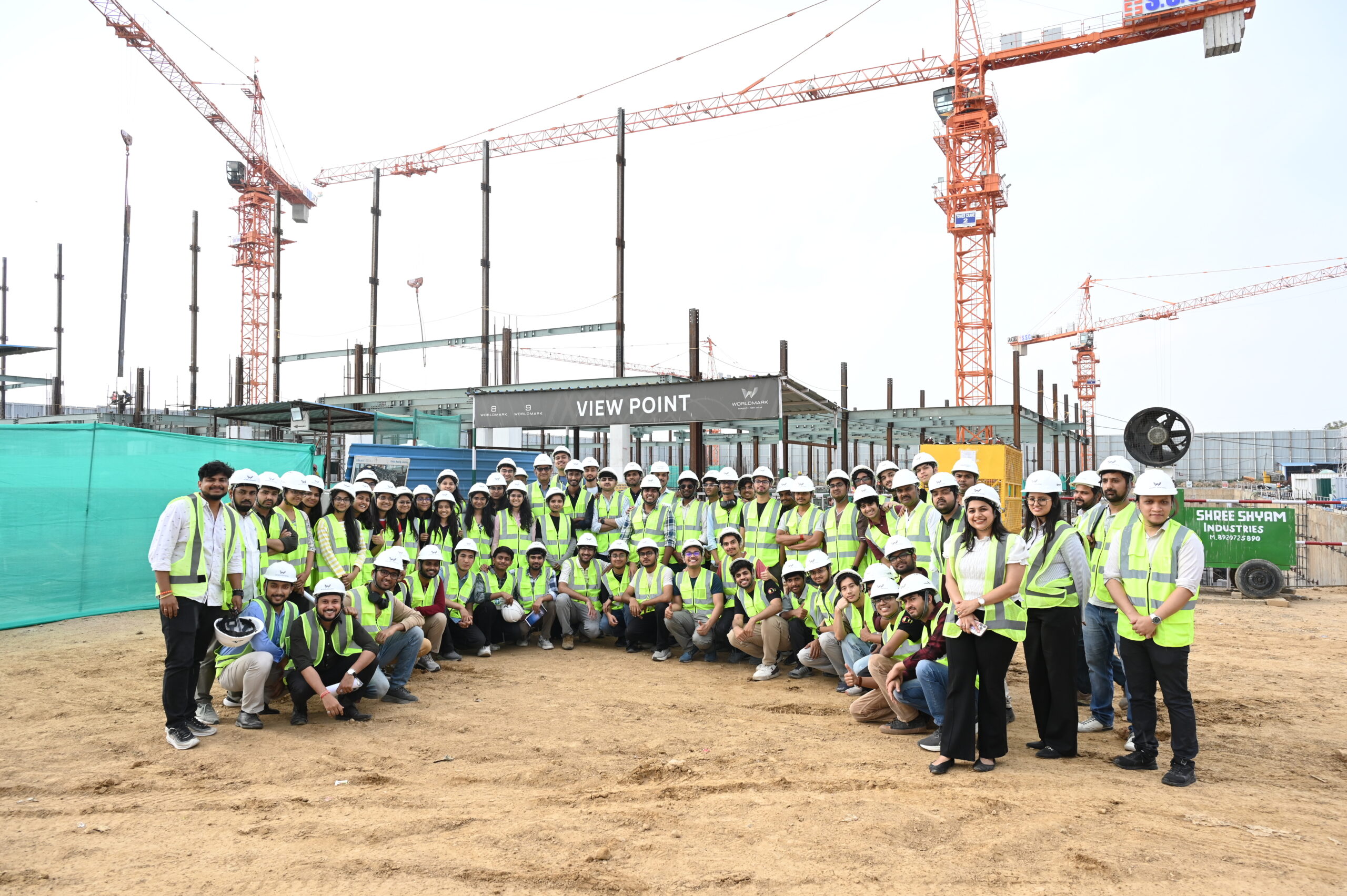
    The initiative kicked off with its first field visit, hosting civil engineering undergraduates from the Indian Institute of Technology Delhi at Worldmark, Aerocity — a sprawling commercial development adjacent to Indira Gandhi International Airport that is being positioned as one of India’s most ambitious global business districts.

    “Abhigyan reflects our commitment to fostering industry understanding and nurturing future talent through real-world exposure. As infrastructure and real estate continue to evolve in scale and complexity, it is important for young professionals to understand how such developments are brought to life beyond textbooks.” — S. K. Sayal, MD & CEO, Bharti Real Estate

    During the immersive walkthrough, students gained first-hand insight into integrated design, construction management, project planning and the execution challenges inherent in delivering premium commercial developments at scale.

    The session concluded with an interactive discussion with Sayal and senior leadership, including Vice President of Operations Kamal Kumar Dua, Project Leaders Amit Tyagi and Ajay Kalia, Chief Marketing Officer Cherryn Dogra and Projects Planning Lead Pankaj Garg. Industry consultants Raja Raja Menon of Arcop and Amrit Pal of TPCL also participated in the engagement.

    “Bharti Real Estate has provided the undergraduate students of Civil and Environmental Engineering IIT Delhi with a valuable opportunity to explore various aspects of planning, construction, on-site execution and ground coordination.

    Such hands-on experiences play a crucial role in inspiring and shaping the next generation of engineers in the country.” — Prof. Allan L Marbaniang, Assistant Professor, Civil and Environmental Engineering, IIT Delhi

    Bharti Real Estate said Abhigyan is envisioned as an ongoing platform, with curated field visits and expert-led discussions planned across leading academic institutions nationwide. The company described the programme as a direct response to the widening gap between classroom learning and the realities of executing world-class, large-scale development projects.

    Worldmark, the company’s flagship portfolio at Aerocity, spans approximately 17 million square feet across multiple phases. Worldmark 1.0 is fully operational and home to multinational corporations, global financial institutions and Fortune 500 companies.

    Worldmark 2.0, currently under advanced development, covers around 7 million square feet including nearly 3 million square feet of premium office space already holding an occupancy certificate, and close to 3 million square feet of destination retail targeted for operationalisation in 2027–28. Worldmark 3.0 and 4.0 will add a further 5 million-plus square feet to the district in subsequent phases.

  • Sebi boosts Social Stock Exchange with NPO registration relief

    Sebi boosts Social Stock Exchange with NPO registration relief

    Securities and Exchange Board (Sebi) has boosted key rules for not-for-profit organisations on the Social Stock Exchange (SSE), extending the period during which NPO registration remains valid without fund-raising to three years from two, as it seeks to widen the fledgling platform’s reach.

    The regulator issued a circular on Wednesday outlining measures it said were aimed at promoting the SSE and facilitating fundraising for non-profits facing practical hurdles, including delays in statutory and regulatory approvals.

    Under the revised framework, an NPO may remain enrolled on an SSE for two years without raising capital through it. That window can be extended by a further year, subject to SSE approval — giving social-sector organisations more runway to ready themselves before tapping investors.

    “A NPO may register on a SSE and not raise funds through it for a period of two years from the date of registration. Such period of two years may be further extended by one additional year subject to approval by the SSE,” Sebi said.

    Sebi also slashed the minimum subscription threshold for Zero Coupon Zero Principal (ZCZP) instruments — the primary debt-like tool available to NPOs on the SSE — to 50 per cent from 75 per cent. The relaxation applies only to projects where costs and outcomes can be tracked on a clearly identifiable per-unit basis, ensuring that a partial fund-raise does not undermine project viability.

    SSEs will be required to conduct due diligence before granting in-principle approval for such partial fundraising, satisfying themselves that proceeds can be deployed meaningfully toward the stated objectives. Funds will be refunded to investors if the minimum subscription threshold is not met.

    The moves come weeks after Sebi’s board in March eased the minimum investment required from individual investors in social impact funds to Rs 1,000 from Rs 200,000, a step aimed at broadening retail participation on the SSE.

    The SSE, launched in 2022, has struggled to attract widespread participation. Analysts have cited high compliance costs and rigid fundraising conditions as barriers for smaller NPOs. Wednesday’s circular signals continued regulatory effort to unlock the platform’s potential as a mainstream social-financing channel.

  • RBL Bank’s UMEED empowers 800 Delhi girls with bicycles in CSR Initiative to curb school dropouts

    RBL Bank’s UMEED empowers 800 Delhi girls with bicycles in CSR Initiative to curb school dropouts

    RBL Bank, one of India’s leading private sector banks, distributed 800 bicycles and school kits to underprivileged girl students in New Delhi on March 26, under its corporate social responsibility programme UMEED — a bold move to empower vulnerable communities through accessible education.

    The girl student bicycles CSR initiative was held at Sarvodaya Vidyalaya, Pitampura, and attended by Delhi Chief Minister Rekha Gupta, Education Minister Ashish Sood, and senior officials from the bank. The event marks one of the largest single-day bicycle donation drives by a private bank in the national capital.

    Long distances between homes and schools remain one of the primary drivers of dropout rates among girls from low-income households in India. RBL Bank said the initiative directly targets that barrier by providing reliable, sustainable transportation — reducing travel time and safety concerns that often lead families to keep girls out of school.

    “Education is the cornerstone of a bright future. By providing bicycles and school kits, we aim to empower young girls to overcome obstacles and pursue their dreams.” — R. Subramaniakumar, MD & CEO, RBL Bank

    The UMEED programme, which focuses on enabling education and widening opportunity for marginalised communities across India, continues to scale its outreach. Officials said the CSR initiative is designed to offer not just immediate support but a sustainable, environmentally friendly solution to a systemic problem.

    No financial details of the programme were disclosed.

  • DBS Sustainable Financing surges past SGD 102 billion; India leads breakthrough growth

    DBS Sustainable Financing surges past SGD 102 billion; India leads breakthrough growth

    DBS Bank’s sustainable financing commitments surged 14 per cent year-on-year to cross SGD 102 billion at end-2025, the lender said in its latest report, as India emerged as its fastest-growing and third-largest sustainable finance market across Asia.

    The Singapore-based bank, one of Asia’s largest lenders, facilitated SGD 41 billion of environmental, social and governance (ESG) bond issuances during 2025 as an active bookrunner, channelling capital into renewable energy, sustainable infrastructure, green real estate and social-sector projects.

    “As Asia continues to grow, businesses are continuing to invest in low-carbon technologies, electrification and resilient infrastructure,” said Helge Muenkel, Group Chief Sustainability Officer at DBS Bank. “It was very encouraging that DBS Group crossed SGD 100 billion in sustainable financing commitments in 2025.”

    India Drives Breakthrough Momentum

    India’s rapid ascent within DBS’s sustainable finance portfolio reflects strong domestic appetite for green capital aligned with the country’s ongoing energy and infrastructure transformation.

    In a notable deal, DBS extended a Rs. 670 crore sustainability-linked trade facility to Indorama India Pvt Ltd, tying the financing to measurable improvements in emissions intensity, water use and energy efficiency.

    The bank also acted as arranger and sustainability coordinator for a multi-bank USD 350 million sustainability-linked revolving credit facility for ChrysCapital X LLC — marking the first sustainability-linked loan raised by an India-focused private equity fund.

    Expanding Beyond Climate

    DBS said it is broadening its sustainability mandate beyond climate mitigation to encompass nature-related risks and climate adaptation — a shift that signals the bank’s intent to align with evolving global biodiversity and resilience frameworks.

    Community Impact

    Beyond financing, DBS said it reached more than one million vulnerable individuals across Asia through community programmes in 2025. The DBS Foundation has committed over SGD 160 million since 2024 toward initiatives targeting essential needs, financial inclusion and community resilience.

    The results were disclosed in DBS’s Sustainability Report 2025.

  • Eco Survey 2025-26: No Capital shortage, but huge climate finance gap

    Eco Survey 2025-26: No Capital shortage, but huge climate finance gap

    There is no shortage of money in the world for fighting climate change — the real problem is that this cash is simply not reaching the countries that need it most, the Economic Survey 2025-26 has warned.

    Tabled in Parliament by Finance Minister Nirmala Sitharaman on Thursday, the pre-Budget document says the core issue is not lack of capital but a deep structural misalignment between huge pools of global liquidity and extremely low risk appetite among lenders and investors when it comes to projects in developing nations.

    “Global capital markets are flush with funds, yet flows to sustainable development and climate action in the Global South remain badly constrained by entrenched risk aversion built into the global financial system,” the Survey notes.

    This blockage shows up most clearly in two places: the conservative lending models of Multilateral Development Banks (MDBs) and tough prudential rules in rich countries.

    MDBs still prefer safe, sovereign-guaranteed loans to protect their AAA ratings. This limits their ability to recycle balance sheets and pull in large-scale private money. High capital charges under Basel III and Solvency II make long-term infrastructure bets in emerging markets unattractive for banks and insurers in developed nations.

    On top of that, big institutional investors want standardised, easy-to-trade securities — while climate projects in poorer countries are usually custom-made, small and illiquid.

    The Survey calls the situation urgent and demands big-ticket reforms to fix it:

    • Recapitalisation of MDBs
    • Shift to “originate-to-share” model using guarantees, insurance and blended finance
    • Recalibration of global regulations
    • Strong governance to protect public money

    It points to a recent game-changer example: In 2025, the Inter-American Development Bank and Brazil’s Central Bank set up a mechanism that unlocked up to $3.4 billion in long-term forex hedging. This tackles currency risk without piling more debt on governments — making projects far more attractive to private investors.

    Without such active risk-sharing and a move away from pure risk avoidance, the Survey warns, energy poverty and climate vulnerability will keep rising in the developing world despite trillions sitting idle in global markets.

  • HCLTech Grant adds water, biodiversity themes in second decade

    HCLTech Grant adds water, biodiversity themes in second decade

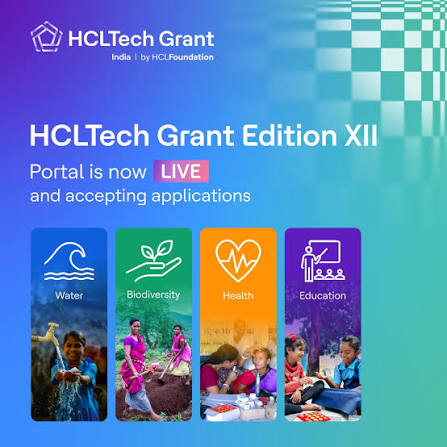
    HCLTech‘s grant program will expand its focus to include water and biodiversity as it enters its second decade, building on initiatives that have impacted over 300,000 individuals across India, the company said.

    The HCLTech Grant, which has supported community-driven development projects over the past 10 years, will add the new themes in its 11th edition alongside existing areas of health and education, according to a statement.

    The grant program has aligned interventions with 12 of the 17 United Nations Sustainable Development Goals, addressing challenges in government and rural schools, maternal and child health in remote regions, and ecological restoration in forest-dependent communities, the company said.


    “Sustainable change is not achieved by charity alone, but by coupling research with empathy, technology with trust, and resources with measurable results,” the HCLTech Grant statement said.

    The grant program’s strategic roadmap through 2030 includes three phases: consolidation and scaling through 2027, deepening impact and diversification until 2029, and institutionalization and sustainability by 2030.

    The HCLTech Grant will strengthen its research framework by implementing Social Return on Investment (SROI) methodologies to quantify outcomes and expand digital monitoring tools for real-time impact tracking, according to the announcement.

    Technology integration within the grant program will include satellite-based water mapping, AI-enabled health diagnostics and digital learning platforms to scale community solutions, the company said.


    The water theme under the HCLTech Grant will align with India’s Jal Jeevan Mission and SDG 6, developing a national model for integrated water resource management, the statement added.

    HCLTech plans to establish a Centre for Social Research and Innovation through the grant program to synthesize learnings and contribute to sectoral policy dialogues, while creating an alumni network of grantees for peer learning and mentoring.

    The grant program has collaborated with state health departments and the National Health Mission to strengthen public health systems across multiple states, impacting thousands of students and educators across districts.

    In environment interventions, the HCLTech Grant has worked with rural and forest-dependent populations to restore degraded ecosystems, revive water bodies, and promote biodiversity-friendly livelihoods, contributing to climate adaptation and ecological resilience.

  • Empowering Indian women farmers: Walmart-backed FPCs boost incomes 51%, plan expansion

    Empowering Indian women farmers: Walmart-backed FPCs boost incomes 51%, plan expansion

    Maya Ghosh rises before dawn each day to oversee a network of collection centers that have transformed how women farmers in rural India sell their crops, cutting out middlemen who long controlled prices and profits.

    “We used to sell our produce to middlemen who would decide the price. We had no voice, no choice,” said Ghosh, a director at Ken Betwa Mahila Farmer Producer Company Limited.

    “Today, through our network of 34 collection centers, we’ve procured 448 metric tonnes directly from women farmers.” Ghosh is among thousands of women farmers whose livelihoods have improved through farmer producer companies (FPCs) – agricultural collectives that pool resources, share knowledge, and negotiate better prices for members.

    The initiative, run by non-profit SRIJAN with funding from the Walmart Foundation, expanded its shareholder base nearly fourfold to 24,328 women farmers between November 2022 and November 2024, with women comprising 88% of members.

    Average annual incomes for shareholders rose by 30,000 rupees (USD357), a 51% increase, while collective turnover across 12 FPCs grew more than 190% during the two-year period, SRIJAN said.

    BREAKING BARRIERS

    In villages where women farmers traditionally had limited say in agricultural decisions, they now occupy leadership positions and negotiate directly with buyers.

    “The first time I stood up in a meeting to speak, my hands were shaking,” said Savitri Yadav, who serves on the management committee of her FPC in the eastern state of Bihar. “Today, when traders come, they negotiate with us on our terms.”

    The model has proven particularly effective in eliminating intermediaries. Some 88% of shareholders now purchase farming inputs through their FPCs, while 39% sell produce directly through the collectives, according to project data.

    For Kamla Devi, a smallholder farmer in Uttar Pradesh state who joined her local FPC in 2023, the benefits were immediate. “My children can now go to school without me worrying about fees,” Devi said.

    “I bought quality seeds through our FPC and learned new farming techniques. My yield doubled, and I got a fair price when I sold through our collective.”

    WALMART FOUNDATION EXPANDS SUPPORT

    Building on initial success, SRIJAN is launching a second phase with new grant support from the Walmart Foundation that will expand the program to 38,000 women farmers across 19 FPCs.

    “We are committed to fostering a more inclusive, efficient, and profitable FPC ecosystem – one centered around agricultural production and greater participation of women farmers in the value chain,” said Prasanna Khemariya, chief executive officer of SRIJAN.

    The expansion focuses on ensuring FPCs can operate independently without external support, with all 19 companies expected to achieve self-sufficiency. Training programs aim to help 70% of participating women farmers adopt improved crop management practices.

    “Empowering women farmers is central to building resilient agricultural economies,” said Nishant Gupta, social and environmental impact advisor to Walmart.org, the Walmart Foundation’s philanthropic arm.

    “We are pleased to support SRIJAN’s efforts to enhance market access, boost capacity building, and increase women farmers’ participation in the agri-value chain.”

    CHANGING PERCEPTIONS

    The program’s impact extends beyond economics, reshaping how younger generations view agriculture as a career. Priya Sharma, 23, recently completed her university degree and returned to her village to join her mother’s FPC rather than seeking urban employment – a decision that would have been unusual just years earlier.

    “I saw what my mother achieved – the respect she earned, the income she generated,” Sharma said. “Agriculture doesn’t mean poverty anymore. It means opportunity.”

    At Ghosh’s collection center in Madhya Pradesh state, younger women farmers now weigh produce, negotiate prices, and manage accounts on tablets – tasks that were once dominated entirely by men and middlemen.

    “We’re not just growing crops,” Ghosh said. “We’re growing confidence. We’re growing communities. We’re growing a future where our daughters won’t have to leave their villages to find dignity and success.”

    India has approximately 146 million farmers, with women farmers comprising a significant portion of the agricultural workforce though often lacking formal recognition or direct market access, according to government data.