Category: Home Lead Story

  • Global CSR best practices for Indian firms to adopt now

    Global CSR best practices for Indian firms to adopt now

    By Eldee

    Indian Corporate Social Responsibility (CSR) stands at a crossroads. While mandatory spending under Section 135 of the Companies Act has mobilized over Rs 15,500 crore annually, the decline to 1.87% of net profit—a six-year low—signals that compliance isn’t enough. The answer lies abroad: global best practices that transform CSR from obligation to competitive advantage.

    As Indian firms eye international markets and global talent, adopting world-class CSR strategies isn’t optional—it’s imperative. Here’s the blueprint that’s revolutionizing corporate citizenship worldwide.

    Strategic Alignment: Making CSR Core, Not Peripheral

    The first global CSR best practice Indian firms must embrace: integrate CSR with core business strategy, not treat it as a separate charitable wing.

    Technology giants like Microsoft don’t just donate computers—they build digital literacy programs that create future customers and skilled workers. Pharmaceutical companies like Novartis don’t simply fund clinics—they develop healthcare infrastructure that strengthens entire supply chain ecosystems.

    Indian companies can mirror this approach. Technology firms should champion digital literacy initiatives, healthcare companies prioritize public health systems, manufacturing units drive circular economy models. When Tata’s multi-year village development programs align industrial growth with community prosperity, they exemplify this integration—creating shared value, not one-way charity.

    Long-Term Impact Over Short-Term Optics

    Global leaders have abandoned the photo-opportunity approach. Instead of ribbon-cutting ceremonies, they commit to multi-year programs with measurable, lasting outcomes.

    Indian firms currently average project durations under 18 months. International best practice demands 3-5 year commitments minimum—time horizons that allow education programs to graduate students, healthcare initiatives to reduce disease burden, environmental projects to restore ecosystems.

    Unilever’s Sustainable Living Plan spans decades. Patagonia’s environmental commitments are generational. Indian corporations must shift from annual CSR budgets to sustained campaigns that compound impact over time, particularly in education, environmental restoration, and economic empowerment.

    Stakeholder Co-Creation: Community as Partner, Not Recipient

    Perhaps the most critical global best practice: genuine stakeholder engagement throughout the CSR lifecycle.

    Leading international corporations involve local communities, employees, customers, NGOs, and government bodies from initial design through implementation and evaluation. Communities aren’t beneficiaries—they’re co-creators.

    Indian CSR often suffers from top-down imposition: urban corporate offices deciding rural priorities without consultation. Global best practice demands listening tours, community needs assessments, participatory design workshops, and local advisory boards. When stakeholders shape programs, success rates multiply—needs are accurately addressed, cultural contexts respected, sustainability ensured.

    Collaboration Ecosystems: Leverage Expert Networks

    No corporation possesses all expertise needed for complex social challenges. Global leaders build collaboration ecosystems.

    They partner with specialized NGOs for on-ground execution, academic institutions for research and evaluation, government agencies for scale and policy alignment, other corporations for collective impact initiatives.

    Indian firms can dramatically enhance CSR effectiveness through strategic partnerships. Rather than building parallel systems, leverage existing NGO networks with decades of community relationships. Rather than proprietary programs, join industry coalitions addressing systemic issues—child nutrition, water conservation, skill development—where collective action produces exponential results.

    Innovation and Digital Integration: Technology as Force Multiplier

    Global CSR increasingly deploys cutting-edge technology for reach, efficiency, and impact measurement.

    Digital platforms extend education to remote villages through mobile learning. Telemedicine connects rural patients with specialist doctors. Blockchain ensures transparent fund tracking. AI analyzes program data to optimize interventions in real-time. IoT sensors monitor environmental restoration projects continuously.

    Indian firms, particularly in technology sectors, must leverage innovation for social good. The Ministry’s new web-based CSR-1 registration system effective July 2025 signals this direction—demanding digital tracking, transparent reporting, real-time monitoring. Companies should exceed these requirements, building sophisticated impact measurement systems that demonstrate return on social investment.

    ESG Integration: From CSR to Holistic Sustainability

    The global frontier: integrating Environmental, Social, and Governance (ESG) frameworks that encompass but transcend traditional CSR.

    International leaders adopt Science Based Targets initiative (SBTi) for climate commitments, join RE100 for renewable energy transition, pursue EV100 for electric vehicle fleets. They establish dedicated ESG committees at board level, integrate sustainability into executive compensation, publish comprehensive sustainability reports aligned with Global Reporting Initiative (GRI) standards.

    Indian firms must recognize ESG as business imperative, not compliance burden. Climate action reduces operational risks. Supply chain sustainability ensures resilience. Diversity and inclusion attract global talent. Robust governance mechanisms build investor confidence.

    Maharashtra, Gujarat, Uttar Pradesh, Rajasthan, Karnataka, and Tamil Nadu currently dominate CSR fund receipt—but ESG integration demands geographic equity, ensuring underserved regions receive proportionate investment.

    Transparency and Rigorous Impact Measurement

    Global best practice demands obsessive transparency and data-driven impact assessment.

    Leading corporations publish detailed CSR reports with specific metrics: students educated, patients treated, carbon sequestered, women entrepreneurs trained. They conduct third-party evaluations, randomized controlled trials, longitudinal studies measuring sustained impact years after program completion.

    Indian companies must move beyond anecdotal success stories and input metrics (money spent, events conducted) to outcome metrics (lives improved, behaviors changed, systems strengthened). Rigorous documentation, digital tracking, independent audits, and public disclosure build credibility and enable continuous improvement.

    Governance Architecture: Institutional Commitment

    Global leaders establish robust governance structures ensuring CSR isn’t dependent on individual champions but embedded institutionally.

    Board-level CSR/ESG committees provide strategic oversight. Chief Sustainability Officers hold executive authority. Cross-functional teams integrate social impact across business units. Employee volunteer programs democratize participation. Supplier codes mandate responsible practices throughout value chains.

    Indian firms should elevate CSR from compliance function to strategic capability, with dedicated leadership, adequate resourcing, and clear accountability mechanisms that survive leadership transitions and market fluctuations.

    The Competitive Advantage

    Why should Indian firms urgently adopt these global best practices? Because CSR excellence drives competitive advantage in increasingly conscious markets.

    Consumers prefer purpose-driven brands. Investors demand ESG performance. Employees choose companies with authentic social commitments. Communities welcome businesses that contribute meaningfully. Governments partner with corporations demonstrating responsibility.

    As India aspires toward developed nation status, Corporate Social Responsibility must evolve from defensive compliance to offensive strategy—where social impact and business success reinforce each other, where doing good and doing well become indistinguishable.

    The Rs 15,524 crore currently deployed annually represents immense potential. Channeled through global best practices—strategic alignment, long-term commitment, stakeholder engagement, collaborative ecosystems, technological innovation, ESG integration, rigorous measurement, and institutional governance—Indian CSR can transform from regulatory obligation to national competitive advantage.

    The global playbook exists. The question isn’t whether Indian firms can adopt these practices. It’s whether they can afford not to.

  • India’s USD 120 mln e-Waste Management Plan for Circular Economy

    India’s USD 120 mln e-Waste Management Plan for Circular Economy

    India’s e-waste management initiative: A step toward sustainability

    India has launched a USD 120 million initiative to tackle e-waste management through a circular economy approach in its electronics sector, supported by the Global Environment Facility and United Nations Development Programme in partnership with the Ministry of Electronics and Information Technology.

    The five-year e-waste management project aims to address unsafe recycling practices in the world’s third-largest generator of electronic waste, where more than 80% of discarded electronics are processed informally using methods that release toxic chemicals.

    “The project comes at an important time when the Indian electronics sector is seeing rapid growth and development,” said S. Krishnan, Secretary at the Ministry of Electronics and Information Technology.

    “The initiative will help us drive innovation in eco-design, recycling and circular business models.” The GEF approved USD 15 million in financing, unlocking over USD 105 million in co-financing from the Government of India and industry stakeholders for comprehensive e-waste management reforms.

    Addressing Informal Sector Risks

    Formal recycling infrastructure remains limited in India, exposing workers and communities to serious health risks from hazardous materials including mercury, lead, cadmium and persistent organic pollutants that do not break down easily.

    “Environmental and health risks from unsafe e-waste recycling practices are rising,” said Angela Lusigi, UNDP Resident Representative in India. “We are working with government and industry partners to ensure resources are used efficiently, workers are protected, and the sector grows sustainably.”

    The e-waste management initiative will strengthen institutional mechanisms and enforcement of regulations, support innovation in eco-design with manufacturers, pilot safe recycling and battery management systems, and improve infrastructure for valuable material recovery.

    A Global E-Waste Challenge

    Electronic waste now exceeds 60 million tonnes globally each year, growing five times faster than recycling rates, according to UNDP data.

    “This flood of discarded devices contains toxic chemicals which cause long-term damage to ecosystems and people’s health,” said Xiaofang Zhou, UNDP Chemicals and Waste Hub Director. “Addressing e-waste is central to building the circular economy we need for a healthier planet.”

    Carlos Manuel Rodriguez, GEF Chief Executive Officer, said the project could serve as a model demonstrating how toxic chemicals can be designed out of production and safely managed when products are discarded.

    Project Scope and Impact

    The e-waste management project will build India’s capacity to advance objectives of the National Policy on Electronics and implement E-Waste (Management) Rules, 2022.

    “This project will strengthen Extended Producer Responsibility and Resource Efficiency to meet critical minerals requirement of the Electronics Sector,” said Amitesh Kumar Sinha, Additional Secretary at the Ministry of Electronics and Information Technology.

    The initiative will strengthen collection and recycling systems, pilot eco-design and valuable material extraction technologies, test replacement-rebate business models, and implement gender-responsive schemes for upgrading the informal sector.

    The project expects to benefit 6,400 people directly while preventing release of 8,000 tonnes of toxic heavy metals, eliminating 25 tonnes of hazardous flame retardants, and cutting 600,000 tonnes of carbon dioxide-equivalent emissions.

    India’s electronics market is expanding rapidly, making effective e-waste management critical for sustainable growth and protecting public health and the environment from hazardous recycling practices.

  • Inspiring Bathinda Nutrition Centres empower rural health

    Inspiring Bathinda Nutrition Centres empower rural health

    When 45-year-old Kulwinder Kaur first heard about a Bathinda nutrition centre opening in her village, Mehma Sawai, she was skeptical. “Another government scheme,” she thought, accustomed to promises that rarely reached her doorstep in rural Bathinda.

    But when a local health volunteer knocked on her door with seeds for a kitchen garden and advice on managing her borderline diabetes, something shifted. “She spoke in our language, understood our kitchens, our budget,” recalls Kulwinder. “For the first time, health advice didn’t feel like it was meant for city people.”

    A Trusted Face in a Medical Desert

    In Mehma Sawai, like many villages across Bathinda, the nearest proper healthcare facility is miles away. For women managing households on tight budgets, taking time off to travel to a clinic—let alone affording consultation fees—remains a luxury. Non-communicable diseases like diabetes and hypertension quietly creep into families, often undiagnosed until complications arise.

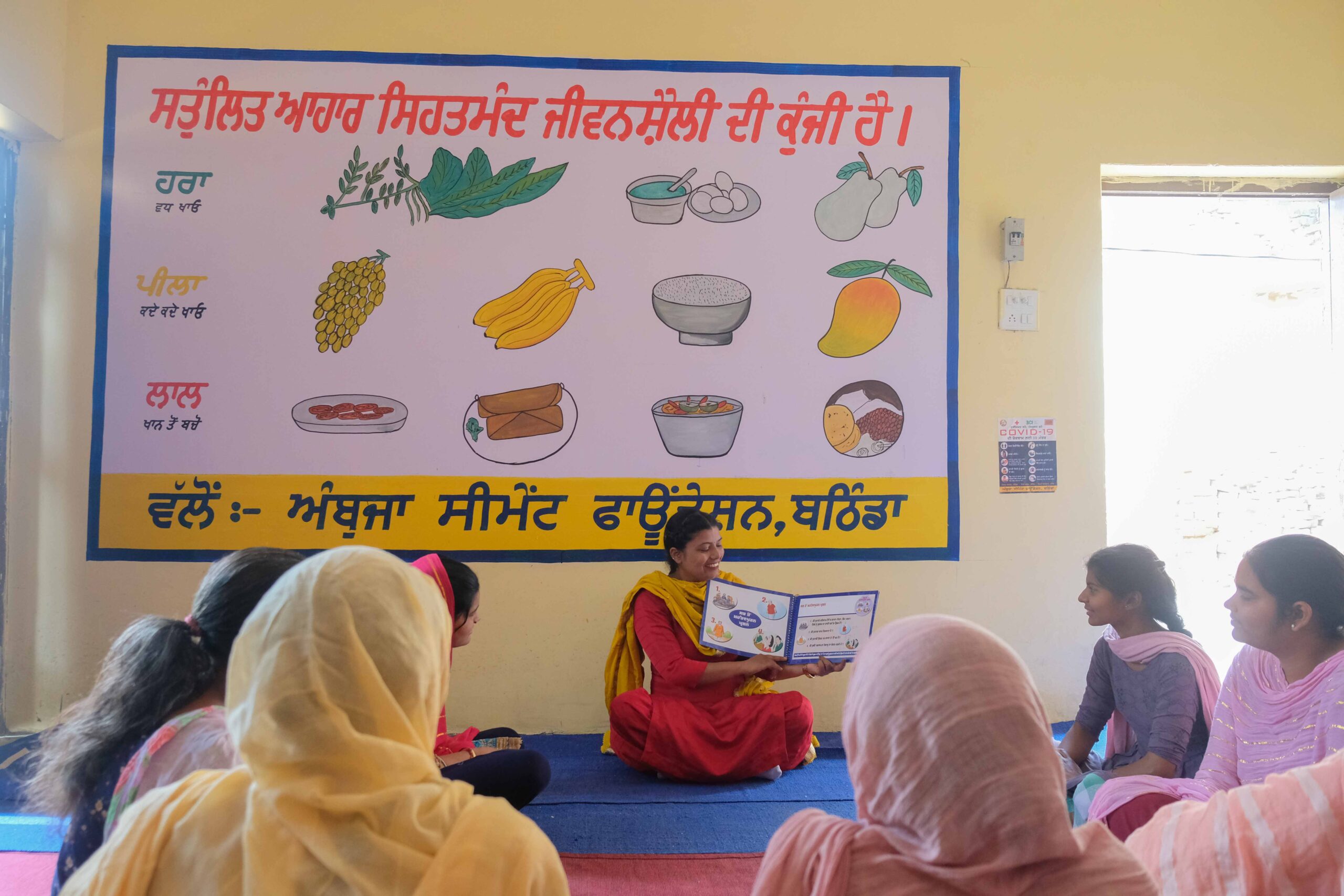
    Recognizing this gap, Ambuja Cement established a community Bathinda nutrition centre in the village as part of its CSR health initiative. But the real transformation came through people like Savita, a trained health volunteer from the village itself, who became the centre’s beating heart.

    Where Street Plays Meet Diabetes Awareness

    Savita’s approach was refreshingly simple: meet people where they are. She organized street plays featuring local talent dramatizing the consequences of ignoring health warnings. She distributed vegetable seeds door-to-door, turning kitchen gardens into practical nutrition lessons. During harvest season, she held cooking demonstrations showing how to prepare diabetic-friendly meals without abandoning traditional recipes—focusing on diabetes prevention tips like balanced Punjabi staples.

    “I tell them: you don’t need fancy diets or expensive medicines to start,” says Savita. “Just add more greens, walk after dinner, check your blood pressure once a month. Small changes, big impact.”

    Slowly, the Bathinda nutrition centre became more than a health outpost—it became a gathering place where women shared recipes, compared blood sugar readings, and held each other accountable. Mehma Sawai’s women, many of whom had never learned to read warning signs of hypertension, now confidently discuss symptoms and prevention.

    Nine Villages, One Mission

    The success of Mehma Sawai’s Bathinda nutrition centre caught attention. Ambuja Cements has now replicated the model across nine villages in Bathinda, each anchored by a trained community volunteer who understands local barriers and speaks the language of lived experience. These empowering efforts are fostering sustainable health habits, one village at a time.

    For Kulwinder, the impact is deeply personal. Her blood sugar levels have stabilized. Her kitchen garden now supplies fresh vegetables year-round. But more importantly, she has knowledge—and that has given her agency.

    “Earlier, illness felt like fate. Now I know I have choices,” she says, tending to her thriving spinach patch. “And I’m teaching my daughters the same.”

    In villages where healthcare often arrives too late, these Bathinda nutrition centres are proving that prevention, rooted in community trust and practical wisdom, can be the most powerful medicine of all.

  • Govt calls on firms to focus CSR efforts on tribal communities

    Govt calls on firms to focus CSR efforts on tribal communities

    Government officials urged corporations to direct their corporate social responsibility spending toward tribal communities, emphasizing measurable impact over large-scale investments at a national conference in New Delhi.

    Chanchal Kumar, Secretary of the Ministry of Development of North Eastern Region, called for companies to focus on “small, impactful projects” targeting healthcare, education and agriculture in underserved tribal and rural areas during his keynote address on October 6.

    “CSR efforts should reach every part of society, fostering inclusivity and equitable development,” Kumar said, highlighting artificial intelligence as a tool to improve efficiency and create jobs in tribal regions.

    The two-day National Conference & Exhibition on Leveraging CSR Excellence for Tribal Development, organized by the Indian Institute of Corporate Affairs, drew over 300 delegates from government, industry and civil society.

    Gyaneshwar Kumar Singh, Director General of IICA, noted Indian companies are now spending more than the mandated 2% of profits on CSR, reflecting “a deeper commitment to social welfare.” He urged firms to move beyond financial contributions toward technology transfer and knowledge sharing with local communities.

    The conference, timed to mark India’s second annual CSR Day on Mahatma Gandhi’s birth anniversary, featured three panel discussions on tribal livelihoods, entrepreneurship and health.

    M. Raja Murugan emphasized value addition and digital market access for tribal artisans, while Shombi Sharp praised India’s CSR framework as “a global model of corporate accountability and social innovation.”

    The event showcased CSR projects by corporations, public sector units and foundations focused on tribal entrepreneurship, education, healthcare and environmental conservation.

    Kumar said the North East Region is ready to attract greater investment with improved infrastructure and implementation capabilities, positioning it as “a model for balanced growth” by 2047.

  • India’s Rs 30,000 cr CSR funds: Why It’s Pouring Billions into the Wrong Places!

    India’s Rs 30,000 cr CSR funds: Why It’s Pouring Billions into the Wrong Places!

    According to the Development Intelligence Unit’s (DIU) August report, “Investing in Tomorrow: Need for Realigning CSR Spends with Status of Development in Districts,” in FY 2022–23, India’s CSR spending hit Rs 29,989.92 crore, up 12.8% from the prior year, signaling post-pandemic recovery. Yet, deep flaws undermine its impact: geographical skews, poor evaluations, sectoral biases, opacity, overlap with government efforts, and minimal community involvement.

    Despite CSR being a statutory obligation for over five years, 70% of companies still lack a structured strategy for implementation, raising concerns about the CSR fund allocation and its lack of convergence with India’s commitment towards meeting SDG targets by 2030.

    Geographical Imbalance

    CSR funds chase corporate footprints—headquarters and operations—favoring industrialized states like Maharashtra (Rs 2,250 crore in FY 2021–22, 15% of total), Karnataka, Gujarat, Tamil Nadu, Andhra Pradesh, Telangana, and Delhi. In contrast, high-need areas like Jharkhand, Chhattisgarh, Bihar, Odisha, Madhya Pradesh, and Northeast states—home to >60% of NITI Aayog’s Aspirational Districts—get <20% of funds. This starves underserved regions, eroding CSR’s equity role.

    Sectoral Skew and Lack of Impact Assessment

    Spending clusters in familiar areas (e.g., education, health), ignoring broader gaps. Worse, few projects face rigorous evaluation—relying on outputs (e.g., toilets built) over outcomes (e.g., sustained hygiene). This breeds unaccountable, inefficient choices, blocking data-driven tweaks and long-term value.

    Duplication and Coordination Gaps

    CSR often echoes government schemes (mid-day meals, sanitation, skills training), with multiple firms redundantly funding classrooms or health camps sans local sync. Resources waste on overlaps, bypassing critical “last-mile” needs like maintenance, tribal outreach, or supply chains for vulnerable groups (e.g., single-woman households).

    Top-Down Design Lacking Innovation

    Projects roll out via corporate templates, sidelining community input or deprivation data—turning CSR into branding over real change (e.g., flashy classrooms amid unchecked dropouts).

    Rare innovations like multi-year, place-based partnerships or outcome financing foster short-term fragmentation, missing systemic wins.

  • SEBI’s ESG Reforms Usher in Transparency, Face Teething Issues

    SEBI’s ESG Reforms Usher in Transparency, Face Teething Issues

    The Securities and Exchange Board of India’s (SEBI) April 29, 2025, circular on ESG Rating Providers (ERPs) has reshaped India’s capital markets, with its key provisions now in full swing, as per the July 11 Master Circular (SEBI, April 29, 2025; SEBI, July 11, 2025).

    By mandating public disclosure of ESG scores on stock exchanges and company websites, requiring ERP registration, and enforcing strict rating withdrawal rules—such as bondholder consent or minimum three-year coverage—SEBI is driving unprecedented transparency (SEBI, April 29, 2025).

    This empowers investors, particularly retail ones, to weigh sustainability alongside profits, while pushing companies to prioritise environmental, social, and governance (ESG) standards.

    The rules are clear: subscriber-pays ratings can only be withdrawn if there are no active subscribers or if firms skip their Business Responsibility and Sustainability Report (BRSR).

    Index-linked ratings, like those tied to the Nifty 50, remain in place as long as the index has subscribers. For issuer-pays bond ratings, withdrawal requires 75% bondholder approval or coverage for half the bond’s tenure. Mergers or repaid bonds allow withdrawals, but only with proper documentation (SEBI, April 29, 2025).

    Yet, challenges loom large. SEBI has flagged inconsistent data quality and a shortage of assurance providers for ESG/BRSR reports, raising concerns about the reliability of ratings (SEBI, September 2025).

    Some ERPs are still refining their methodology disclosures, though efforts to standardise are ongoing (SEBI, July 2025). Smaller companies, in particular, struggle with BRSR compliance, which could undermine the system’s effectiveness.

    Looking ahead, SEBI is eyeing alignment with global frameworks like ISSB and TCFD by 2026, aiming to make ESG a strategic cornerstone rather than a compliance burden (SEBI, July 2025).

    These reforms position India’s markets as a hub for sustainability-focused investors, but addressing capacity gaps and data inconsistencies is critical to sustaining this momentum.

    For now, SEBI’s bold push is setting a new benchmark for transparency, even as it navigates early hurdles.

  • UNESCO Designates Cold Desert as India’s First High-Altitude Biosphere Reserve

    UNESCO Designates Cold Desert as India’s First High-Altitude Biosphere Reserve

    Spanning 7,770 square kilometers across the trans-Himalayan region at altitudes of 3,300 to 6,600 meters, the reserve includes Pin Valley National Park, Chandratal, Sarchu, and Kibber Wildlife Sanctuary.

    UNESCO has added India’s Cold Desert Biosphere Reserve to its World Network of Biosphere Reserves (WNBR), marking the country’s first high-altitude cold desert reserve and its 13th UNESCO biosphere site, the organization announced at the 5th World Congress of Biosphere Reserves in Hangzhou, China.

    Spanning 7,770 square kilometers across the trans-Himalayan region at altitudes of 3,300 to 6,600 meters, the reserve includes Pin Valley National Park, Chandratal, Sarchu, and Kibber Wildlife Sanctuary. It features glacial valleys, alpine lakes, and one of the world’s coldest, driest ecosystems, hosting 732 vascular plant species, including 30 endemics, and iconic fauna like the snow leopard, Himalayan ibex, and golden eagle.

    Home to 12,000 people in scattered villages, the region sustains traditional practices such as yak herding, barley farming, and Tibetan herbal medicine, guided by Buddhist monastic traditions and community resource management.

    “This designation highlights India’s commitment to balancing conservation with sustainable development in fragile, culturally rich ecosystems,” said Tim Curtis, Director of UNESCO’s Regional Office for South Asia. “Biosphere reserves are learning hubs for fostering harmony between people and nature.”

    Announced during the 50th anniversary of UNESCO’s Man and the Biosphere (MAB) Programme, the Cold Desert joins 26 new sites in the WNBR, now totaling 785 globally. The MAB promotes interdisciplinary approaches to biodiversity conservation, sustainable economic development, and research, with biosphere reserves serving as models for local solutions to global challenges.

    The 5th World Congress, attended by over 3,000 participants from more than 100 countries, marks the first time the event has been held in Asia, underscoring the MAB’s growing global inclusivity.

  • APOA, CPOPC, Solidaridad Sign MoU to Boost Sustainable Palm Oil in South Asia

    APOA, CPOPC, Solidaridad Sign MoU to Boost Sustainable Palm Oil in South Asia

    The Asian Palm Oil Alliance (APOA), the Council of Palm Oil Producing Countries (CPOPC), and Solidaridad have signed a Memorandum of Understanding (MoU) to enhance collaboration between palm oil producers and consumers, aiming to advance sustainability and stabilize supply chains across South Asia.

    The agreement, signed in Mumbai, establishes a framework to align national sustainability standards, address market volatility, and promote smallholder inclusion, with a focus on India, a key market serving over 1.5 billion consumers.

    “This partnership provides a platform for producers and consumers to tackle shared challenges like food security and price stability,” said Atul Chaturvedi, chairman of APOA.

    The MoU commits the parties to harmonize frameworks such as Indonesia Sustainable Palm Oil (ISPO), Malaysian Sustainable Palm Oil (MSPO), and the Indian Palm Oil Sustainability (IPOS) Framework, while respecting national regulations.

    It also emphasizes traceable, No Deforestation, No Peat, and No Exploitation (NDPE)-compliant sourcing, using tools like Solidaridad’s SoliTrace and remote-sensing technology for supply chain transparency.

    A Joint Working Group, co-chaired by APOA and CPOPC with Solidaridad as the Technical Secretariat, will oversee implementation, monitor progress, and coordinate advocacy efforts.

    Focus on Resilience and Inclusion

    The initiative aims to ensure a stable supply of affordable edible oils amid price fluctuations and logistical challenges. Pilot projects will introduce digital traceability and importer-facing dashboards tailored for Indian buyers, alongside training for smallholders on regenerative farming practices.

    “Indian consumers deserve clear information on palm oil’s affordability and sustainability,” said Dr. B. V. Mehta, executive director of the Solvent Extractors’ Association of India, which hosts APOA’s secretariat.

    CPOPC’s Secretary General Izzana Salleh highlighted the role of fair trade and evidence-based dialogue in building market confidence, with smallholder livelihoods as a priority. Solidaridad Asia’s Managing Director, Dr. Shatadru Chattopadhayay, stressed delivering “practical sustainability” for producers and buyers.

    Broader Implications

    The partnership will advocate for fair recognition of national sustainability standards in global trade discussions and explore minimum sustainability criteria for Indian public procurement. By addressing policy risks and promoting climate-smart practices, the MoU seeks to enhance economic resilience and environmental stewardship across the region.

    APOA represents vegetable oil associations from India, Bangladesh, Pakistan, Sri Lanka, and Nepal. CPOPC, founded by Indonesia and Malaysia, advocates for producer nations. Solidaridad provides technical expertise in traceability and smallholder support.

  • INOX India unveils FY25 sustainability report: growth and green pledges in focus

    INOX India unveils FY25 sustainability report: growth and green pledges in focus

    INOX India Ltd, a leader in cryogenic equipment, launched its Sustainability Report 2024-2025, spotlighting environmental strides and robust financial growth amid a global push for clean energy solutions.

    The report, overing April 2024 to March 2025 and aligned with Global Reporting Initiative standards, highlights a 19 percent renewable energy uptake, mitigating 1,808 tonnes of CO2 equivalent with new solar and wind installations.

    Scope 1 emissions dropped to 716 tonnes CO2e from 724, though Scope 2 rose to 9,550 tonnes due to expansion, with intensity improving 12 percent to 0.00000079 tonnes per rupee turnover.

    Chairman Pavan Kumar Jain called FY25 a “turning point,” with revenue up 16.2 to Rs 1,354 crore (USD 161.8 million), EBITDA rising 18.3 percent to Rs 330 crore, and PAT increasing 15.4 percent to Rs 224 crore.

    Exports hit Rs 692 crore (53 percent of total), boosted by a Bahamas LNG terminal and the world’s first liquid air energy storage project in Manchester, UK.

    Energy use climbed 28.7 percent to 65,397 GJ (intensity up 7.9 percent), while water fell 5.3 percent to 109,243 KL (intensity down 20.5 percent) with zero liquid discharge at Savli. Waste rose 6.3 percent to 3,406 tonnes (intensity down 10.3 percent), with 2.8 million litres of rainwater harvested.

    CSR efforts invested RS 4.5 crore in girls’ education and healthcare for 5,200 elderly. The 1,332-strong workforce includes 6 percent women (up from 5.7 percent), with 9,689 training hours and a lost time injury frequency rate of 0.23.

    Governance features a diverse eight-member board (25 percent women) and sustainability committees. Lacking Scope 3 data, it focuses on India operations.

    INOX targets 30 percent renewables by FY27 and net-zero by 2040, aligning with its ISO 14001-certified eco-strategy.

  • From darkness to dignity: Murlidhar’s journey of hope with ACC’s MSMM Program

    From darkness to dignity: Murlidhar’s journey of hope with ACC’s MSMM Program

    In the quiet village of Parmadoh, Chandrapur, Maharashtra, Murlidhar Waralu There — a farmer from an economically weaker family — faced a fading world due to an eye disease. Surgery was the only solution, but financial barriers stood in the way—until ACC, a leader in the Adani Portfolio, and the Adani Foundation brought hope through their Meri Sangini Meri Margdarshika (MSMM) program.

    A Champion for Change

    Mamatai Vabhitkar, a dedicated Sangini under the MSMM initiative, discovered Murlidhar’s struggle during a village meeting. With compassion and determination, she introduced him to the Ayushman Bharat Yojana, guiding him through enrollment and documentation. Thanks to her efforts, Murlidhar’s surgery was fully funded, saving him Rs 20,000 and restoring his vision.

    With his eyesight back, Murlidhar resumed his work and regained his independence. His story inspired over 160 villagers in Parmadoh to enroll in the scheme, unlocking access to vital healthcare.

    Building Stronger Communities

    The MSMM program empowers women like Mamatai to bridge the gap between rural communities and government welfare schemes. Through ACC and the Adani Foundation’s efforts, families in Chandrapur are gaining access to healthcare, financial stability, and a brighter future.