Blog
-

Apraava Energy’s solar power drive benefits 60,000 in rural India
The move helped reduce over 130 tonnes of carbon dioxide emissions annually, equivalent to planting 6,500 trees per year.
Apraava Energy, India’s leading integrated energy solutions provider, has impacted nearly 60,000 people from disadvantaged communities across the country through a five-year solar development program, the company said on Thursday.
In partnership with SELCO, Apraava implemented solar power initiatives in close to 40 villages across five states – Maharashtra, Madhya Pradesh, Karnataka, Haryana and Telangana. The move helped reduce over 130 tonnes of carbon dioxide emissions annually, equivalent to planting 6,500 trees per year.
The community interventions focused on enhancing safety through solar lighting in villages and schools, electrifying healthcare centres, creating jobs for differently-abled individuals and women, and improving access to quality education.
“Solar lighting installations have provided a sense of safety and security…Solar electrification in primary health centres has ensured uninterrupted functionality of essential facilities,” Apraava said in a statement.
It added that solar-powered appliances like fridges and roti-rolling machines created employment for differently-abled people and women, while digital education kits improved the quality of learning in rural areas.
“These interventions have not only focused on all-round community development but also helped reduce significant greenhouse emissions,” said Priyesh Modi, head of corporate social responsibility at Apraava Energy.
“Apraava remains committed to working with the communities to address their needs and contribute to building a sustainable future for India,” he added.
Apraava Energy did not disclose the investment made in the solar development program.
-

LG Electronics India celebrates sustainability on Global Volunteer Day
LG employees took part in a tree plantation drive in Greater Noida and Pune.
LG Electronics India, a major consumer durables brand, marked Global Volunteer Day on June 5 by organizing a series of environmental initiatives to promote sustainability, the company said on Thursday.
On June 4, the company held an e-waste collection drive at its corporate office in New Delhi, allowing employees to bring in old gadgets for proper disposal. Experts conducted an awareness session on e-waste management.
The following day, LG employees took part in a tree plantation drive in Greater Noida and Pune. They were also encouraged to plant trees at home with their families, with many sharing photos on social media.
“At LG Electronics, we believe in leading by example when it comes to environmental sustainability,” said Hong Ju Jeon, managing director of LG Electronics India.
“Our Global Volunteer Day activities reflect our dedication to creating a sustainable future and our commitment to the communities we serve.”
LG said it has partnered with 16 major recyclers across India and has so far collected 850,000 kg of e-waste as part of its extended producer responsibility obligations.
Since 2021, the company has developed and maintained a 3.1 km (1.9 mile) green area in Greater Noida, including a Miyawaki Forest with 12,000 plants.
-

Coca-Cola installs benches from recycled plastic waste to promote sustainability
The soft drinks giant repurposed about 19,000 kg of plastic waste collected during last year’s ICC Cricket World Cup in India to create the eco-friendly benches.
Coca-Cola India on Wednesday launched a campaign called “#BenchPeBaat” to promote sustainability and meaningful conversations, installing 380 benches made from recycled plastic waste across 10 cities in the country.
The soft drinks giant, through its philanthropic arm Anandana and in partnership with United Way Mumbai, repurposed about 19,000 kg of plastic waste collected during last year’s ICC Cricket World Cup in India to create the eco-friendly benches.
Each bench is made from approximately 50 kg of recycled plastic waste, Coca-Cola said, adding the benches have been installed in schools, colleges, public parks and municipal corporation offices in cities including Delhi, Mumbai, Kolkata and Bangalore.
“Our #BenchPeBaat campaign is a testament to our dedication towards sustainability, as we transform waste into meaningful community assets,” said Rajesh Ayapilla, senior director for corporate social responsibility and sustainability at Coca-Cola India and Southwest Asia.
Coca-Cola conceptualised the campaign in line with its global “World Without Waste” strategy aimed at driving a circular economy for packaging, he added.
The campaign film was created by Havas People India, the talent communication and employer branding agency of Havas Group India.
“We are proud to partner with Coca-Cola India on the groundbreaking #BenchPeBaat campaign, which ignites awareness and dedication to sustainability,” said Arindam Sengupta, managing director of Havas People India.
Last year, Coca-Cola India deployed reverse vending machines and collection bins at stadiums and hospitality zones in 10 host cities during the cricket World Cup to collect plastic waste that was later repurposed into the benches.
George Aikara, CEO of United Way Mumbai, said the initiative exemplified sustainable practices while enriching communities with innovative street furniture and vibrant social spaces.
-

India’s bioenergy initiatives can play role in land restoration: Tomar
More than 2 billion hectares of land are degraded worldwide, nearly the size of India and Russia combined, impacting global food and water supplies.
India’s bioenergy initiatives can play a crucial role in achieving land restoration, halting desertification and building drought resilience by providing sustainable energy solutions, Madhya Pradesh state assembly speaker Narendra Singh Tomar said on Wednesday.
Tomar said more than 2 billion hectares of land are degraded worldwide, nearly the size of India and Russia combined, impacting global food and water supplies.
“One of the key challenges of land restoration is the effective utilization of biomass, which significantly impacts the flora and biodiversity of the region,” Tomar said at an event organised by Confederation of NGOs of Rural India.
He said India’s consumption of energy and electricity is less than one-third of the global average despite having about 17% of the world’s population.
The government has implemented various schemes to promote bioenergy including the National Bioenergy Programme, the Sustainable Alternative Towards Affordable Transportation scheme, and the GOBAR Dhan scheme, Tomar said.
Global Cooperation Economic Forum Chairman Dileep Shanghani said the cooperative economic framework has a major role in tackling climate change and bio-economy can provide livelihood solutions.
India is taking a leading role through campaigns like LiFE (Lifestyle for Environment) that encourages responsible living in harmony with nature, said Binod Anand, secretary general of the NGO confederation.
Land degradation affects about 3.2 billion people worldwide and could reduce global food productivity by 12% by 2040, leading to food price hikes of up to 30%, according to speakers at the event.
-

Adani’s Ambuja Cements bags top green awards for water, energy conservation
Over 85% of the product portfolio comprises blended green cement, aligning with their sustainable manufacturing practices.
In a boost to its green credentials, Ambuja Cements, part of billionaire Gautam Adani’s diversified portfolio, has won prestigious environmental awards for its plants in Chhattisgarh and Uttarakhand.
The company’s Bhatapara plant in Chhattisgarh clinched the Platinum Award at the 8th Apex India Excellence Awards for its innovative use of green energy.
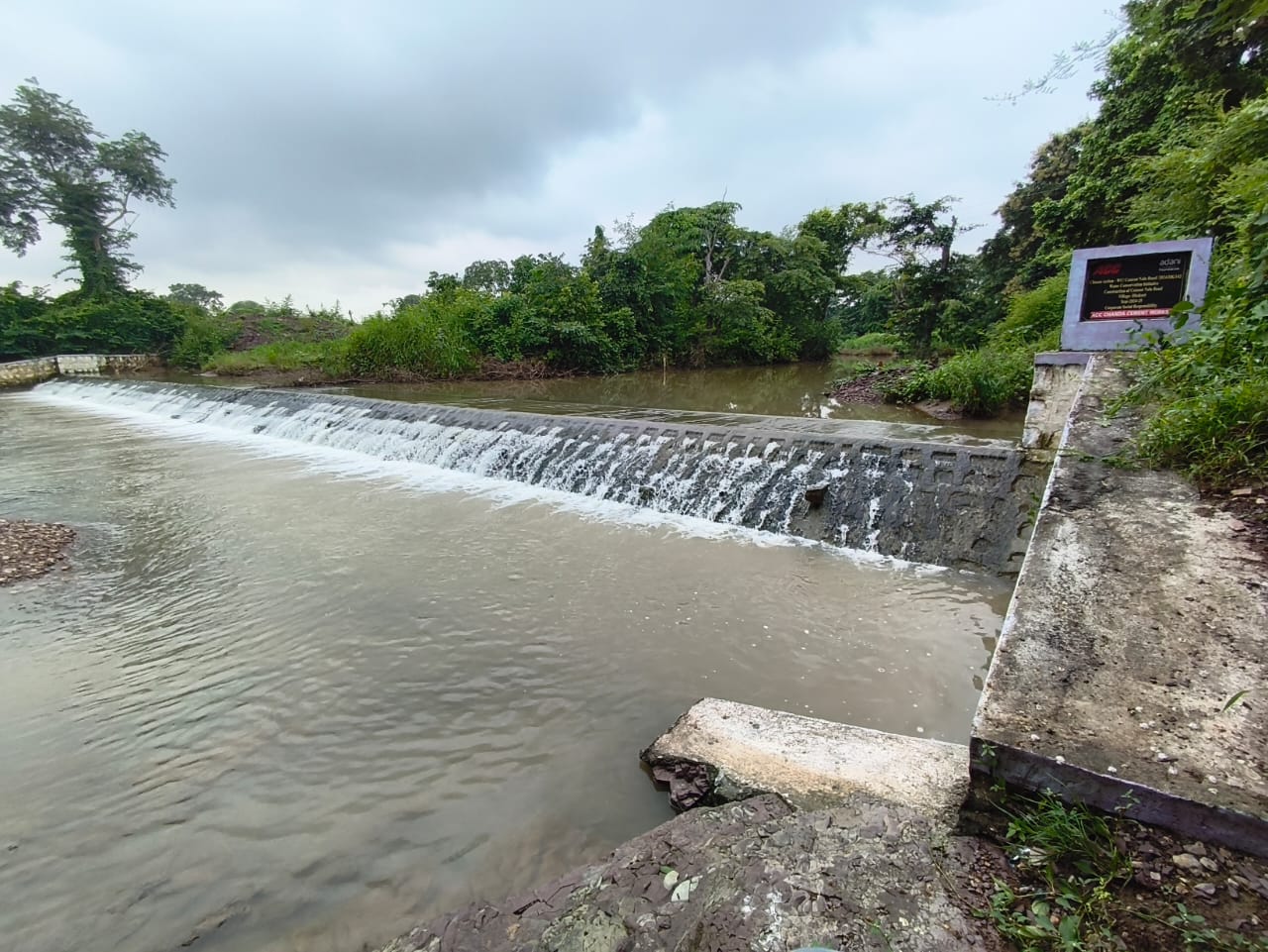
Nearly 30%of the plant’s power needs are met through solar energy and a Waste Heat Recovery System (WHRS). The plant also stands out for its water conservation efforts, achieving an impressive 8-times water positivity.
Similarly, the Roorkee plant in Uttarakhand bagged the Gold Award for its exemplary water management practices. The unit has slashed its water consumption by a substantial 33%, setting a new industry benchmark.
“These accolades reflect our unwavering commitment to operational excellence and environmental stewardship,” said Ajay Kapur, CEO of Adani Group’s cement business.
He added that over 85% of their product portfolio comprises blended green cement, aligning with their sustainable manufacturing practices.
The accolades come at a time when corporate India is under increasing pressure to adopt eco-friendly practices. Ambuja Cements has been leading this charge, becoming 11 times water positive and 8 times plastic negative.
As climate change concerns mount, such initiatives by major industrial players are seen as critical. Industry experts believe that Adani’s green push in its cement business could set a precedent for other sectors to follow.