Category: News

  • Govt calls on firms to focus CSR efforts on tribal communities

    Govt calls on firms to focus CSR efforts on tribal communities

    Government officials urged corporations to direct their corporate social responsibility spending toward tribal communities, emphasizing measurable impact over large-scale investments at a national conference in New Delhi.

    Chanchal Kumar, Secretary of the Ministry of Development of North Eastern Region, called for companies to focus on “small, impactful projects” targeting healthcare, education and agriculture in underserved tribal and rural areas during his keynote address on October 6.

    “CSR efforts should reach every part of society, fostering inclusivity and equitable development,” Kumar said, highlighting artificial intelligence as a tool to improve efficiency and create jobs in tribal regions.

    The two-day National Conference & Exhibition on Leveraging CSR Excellence for Tribal Development, organized by the Indian Institute of Corporate Affairs, drew over 300 delegates from government, industry and civil society.

    Gyaneshwar Kumar Singh, Director General of IICA, noted Indian companies are now spending more than the mandated 2% of profits on CSR, reflecting “a deeper commitment to social welfare.” He urged firms to move beyond financial contributions toward technology transfer and knowledge sharing with local communities.

    The conference, timed to mark India’s second annual CSR Day on Mahatma Gandhi’s birth anniversary, featured three panel discussions on tribal livelihoods, entrepreneurship and health.

    M. Raja Murugan emphasized value addition and digital market access for tribal artisans, while Shombi Sharp praised India’s CSR framework as “a global model of corporate accountability and social innovation.”

    The event showcased CSR projects by corporations, public sector units and foundations focused on tribal entrepreneurship, education, healthcare and environmental conservation.

    Kumar said the North East Region is ready to attract greater investment with improved infrastructure and implementation capabilities, positioning it as “a model for balanced growth” by 2047.

  • India’s Rs 30,000 cr CSR funds: Why It’s Pouring Billions into the Wrong Places!

    India’s Rs 30,000 cr CSR funds: Why It’s Pouring Billions into the Wrong Places!

    According to the Development Intelligence Unit’s (DIU) August report, “Investing in Tomorrow: Need for Realigning CSR Spends with Status of Development in Districts,” in FY 2022–23, India’s CSR spending hit Rs 29,989.92 crore, up 12.8% from the prior year, signaling post-pandemic recovery. Yet, deep flaws undermine its impact: geographical skews, poor evaluations, sectoral biases, opacity, overlap with government efforts, and minimal community involvement.

    Despite CSR being a statutory obligation for over five years, 70% of companies still lack a structured strategy for implementation, raising concerns about the CSR fund allocation and its lack of convergence with India’s commitment towards meeting SDG targets by 2030.

    Geographical Imbalance

    CSR funds chase corporate footprints—headquarters and operations—favoring industrialized states like Maharashtra (Rs 2,250 crore in FY 2021–22, 15% of total), Karnataka, Gujarat, Tamil Nadu, Andhra Pradesh, Telangana, and Delhi. In contrast, high-need areas like Jharkhand, Chhattisgarh, Bihar, Odisha, Madhya Pradesh, and Northeast states—home to >60% of NITI Aayog’s Aspirational Districts—get <20% of funds. This starves underserved regions, eroding CSR’s equity role.

    Sectoral Skew and Lack of Impact Assessment

    Spending clusters in familiar areas (e.g., education, health), ignoring broader gaps. Worse, few projects face rigorous evaluation—relying on outputs (e.g., toilets built) over outcomes (e.g., sustained hygiene). This breeds unaccountable, inefficient choices, blocking data-driven tweaks and long-term value.

    Duplication and Coordination Gaps

    CSR often echoes government schemes (mid-day meals, sanitation, skills training), with multiple firms redundantly funding classrooms or health camps sans local sync. Resources waste on overlaps, bypassing critical “last-mile” needs like maintenance, tribal outreach, or supply chains for vulnerable groups (e.g., single-woman households).

    Top-Down Design Lacking Innovation

    Projects roll out via corporate templates, sidelining community input or deprivation data—turning CSR into branding over real change (e.g., flashy classrooms amid unchecked dropouts).

    Rare innovations like multi-year, place-based partnerships or outcome financing foster short-term fragmentation, missing systemic wins.

  • Matix Fertilisers wins Mahatma Award for CSR work in Bengal

    Matix Fertilisers wins Mahatma Award for CSR work in Bengal

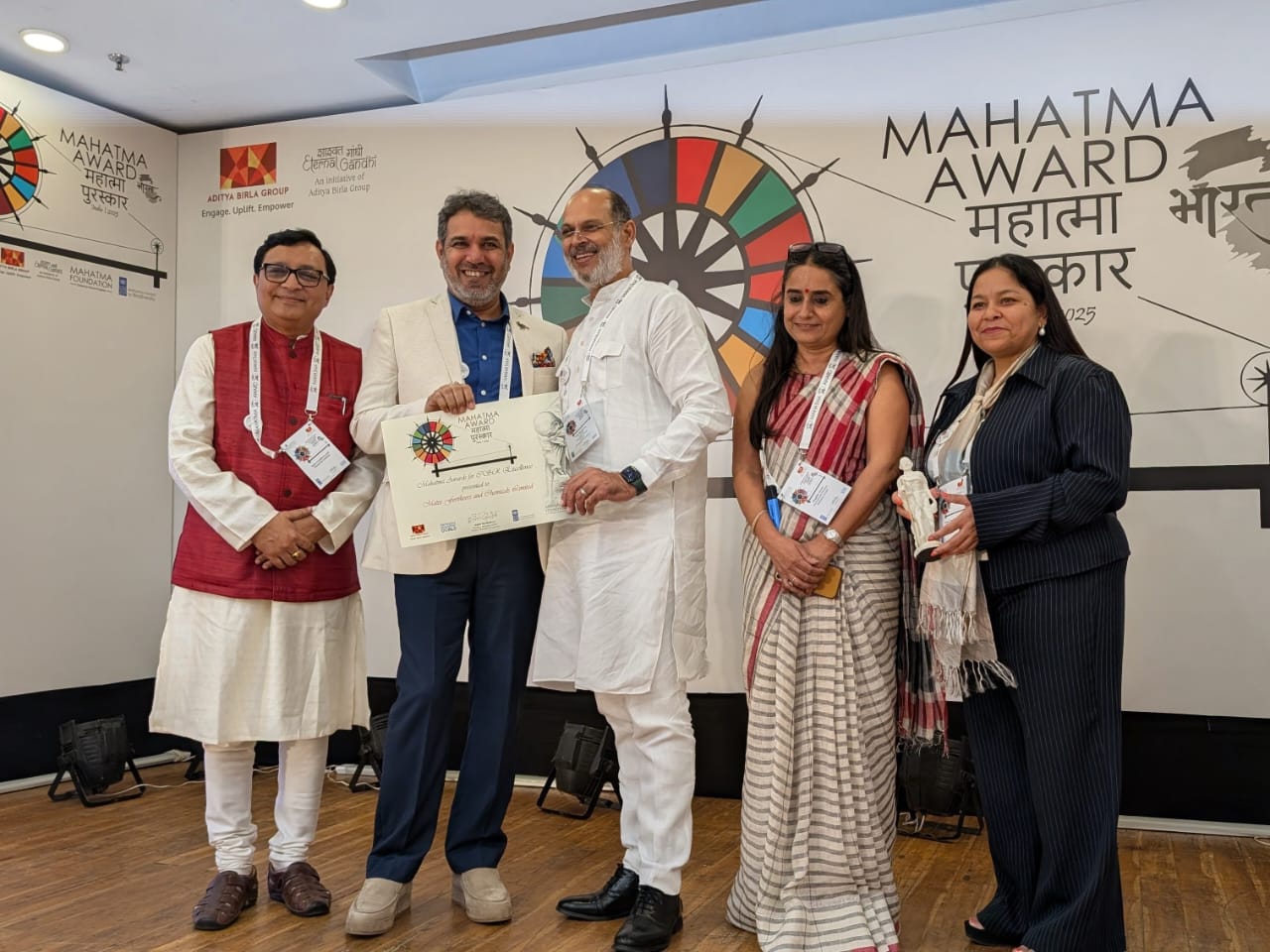
    Matix Fertilisers and Chemicals Limited, promoted by Nishant Kanodia, has been awarded the Mahatma Award for CSR Excellence, becoming the only recipient from West Bengal this year. ‘

    The company was selected from over 2,100 entries for its community development initiatives around its Panagarh manufacturing facility.

    The crop nutrition company’s CSR programmes, aligned with UN Sustainable Development Goals, have impacted over 52,000 beneficiaries across health, education and livelihood sectors.

    Under Project Dhadkan and Project Suraksha, the company has provided free medical treatment to 49,000 people.

    Its education initiatives, including a Mini Science Centre and Digital Education Project, have reached 3,265 students, while Project Shakti has trained 565 women in animal husbandry and other skills.

    The company’s Mobile Soil Testing Van has analysed over 9,500 soil samples across five states, supporting farmers with scientific guidance.

    “This recognition validates our belief that our responsibility extends beyond business to the communities we serve,” said Nishant Kanodia, Chairman of Matix.

    “Our CSR initiatives are a voluntary and heartfelt commitment to making a lasting difference.”

    Managing Director Manoj Mishra said the award would inspire the team to expand their community-focused work further.

  • Modi’s Independence Day Announcements: 8 Big Takeaways

    Modi’s Independence Day Announcements: 8 Big Takeaways

    In his longest Red Fort address yet, Prime Minister Narendra Modi on Friday turned India’s 79th Independence Day into a bold blueprint for the nation’s future, announcing a slew of ambitious initiatives ranging from homegrown semiconductor chips to a Rs 1 lakh crore employment scheme.

    1. India’s First Semiconductor Chip by 2025

    Modi announced India will produce its first ‘Made-in-India’ semiconductor chip by end of 2025. He said attempts to set up chip factories 50-60 years ago were “killed at birth” but India is now on “mission mode.”

    2. GST Reforms Coming on Diwali

    Next-generation GST reforms will be announced on Diwali 2025. These will reduce taxes on essential goods and provide relief to MSMEs, local vendors, and consumers.

    3. Nuclear Power Capacity to Increase 10x

    Work is underway on 10 new nuclear reactors. India aims to increase nuclear power generation capacity by over 10 times by 2047 as part of energy independence goals.

    4. Rs 1 Lakh Crore Employment Scheme

    The PM Viksit Bharat Rozgar Yojana will provide Rs 15,000 monthly to newly employed youth. The scheme targets 3 crore young Indians.

    5. Reform Task Force for $10 Trillion Economy

    A dedicated task force will drive reforms to accelerate growth, cut red tape, and prepare India for a $10 trillion economy by 2047.

    6. Challenge to Build Jet Engines

    Modi asked scientists and youth to develop indigenous jet engines, comparing it to India’s success with COVID vaccines and UPI payments.

    7. Demography Mission for Border Security

    A High-Powered Demography Mission will address demographic imbalances caused by infiltration and illegal migration in border areas.

    8. Ocean Resource Exploration

    The National Deepwater Exploration Mission will tap ocean resources while expanding solar, hydrogen, hydro and nuclear power to reduce dependence on fuel imports.

  • Beyond on size fits all: Industry-specific CSR takes root in India

    Beyond on size fits all: Industry-specific CSR takes root in India

    In a significant shift from one-size-fits-all approaches, Indian companies are increasingly adopting industry-specific Corporate Social Responsibility (CSR) strategies.

    This sector-wise adaptation has emerged as companies recognise that effective social responsibility must address unique industrial challenges while meeting stakeholder expectations.

    Leading the charge is the manufacturing sector, where giants like Hindalco and Tata Steel have made environmental sustainability their cornerstone. At its Belagavi plant, Hindalco has implemented zero-liquid discharge systems while supporting 200 local schools. Tata Steel’s CSR initiatives in Jharkhand and Odisha have become a blueprint for community development in industrial belts.

    The technology sector presents a contrasting picture. While global tech majors like Microsoft operate in India with carbon-neutral commitments, homegrown firms like TCS and Infosys have pioneered digital literacy programmes. TCS’ Adult Literacy Programme has reached over 5 lakh beneficiaries across 12 states.

    In retail, Future Group and DMart have prioritised sustainable sourcing and waste management. Future Group’s skills training programme has empowered over 10,000 youth from underprivileged backgrounds, while DMart focuses on supporting local vendor ecosystems.

    The pharmaceutical sector’s approach reflects unique healthcare challenges. Dr. Reddy’s Foundation works extensively on healthcare accessibility in rural areas, while Cipla Foundation’s ‘Caring for Life’ initiative provides palliative care support across multiple states.

    Energy sector players like ONGC and Indian Oil Corporation have embraced renewable energy investments alongside traditional CSR. ONGC’s solar chulha initiative has impacted 1,000 households in remote areas, while Indian Oil’s Smokeless Village programme has transformed rural cooking practices.

    In the food and beverage sector, companies like ITC and Britannia have focused on sustainable agriculture. ITC’s e-Choupal initiative has reached 4 million farmers, while Britannia’s dairy development programme has enhanced rural livelihoods in Maharashtra and Tamil Nadu.

    The banking sector, led by State Bank of India and HDFC Bank, emphasises financial inclusion. SBI’s youth skill development programmes have trained over 1 lakh candidates, while HDFC Bank’s Sustainable Livelihood Initiative has created 2 million sustainable livelihoods.

    Industry experts note that this sectoral approach has enhanced CSR impact.

    The success of these targeted initiatives suggests that the future of CSR lies in industry-specific solutions rather than generic approaches. As India pushes towards its sustainable development goals, such tailored strategies may prove crucial in addressing sector-specific challenges while contributing to national development objectives.

  • Ferrero excels in sustainability, Indian operations lead the way

    Ferrero excels in sustainability, Indian operations lead the way

    Ferrero India has emerged as a shining exemplar of sustainability, with 97.95 percent of its packaging now designed to be recyclable, reusable, or compostable.

    In a sweet boost to its sustainability endeavours, the Ferrero Group, the Italian confectionery behemoth, has rolled out its 15th Sustainability Report, unveiling remarkable progress across its green agenda.

    From bolstering supply chain transparency to nurturing eco-friendly packaging and community upliftment initiatives, the maker of beloved treats like Nutella and Ferrero Rocher has left no stone unturned.

    The report, encompassing the 2022-23 fiscal, bears testimony to Ferrero’s unwavering commitment to safeguarding the environment and fostering responsible business practices.

    A noteworthy feat is the 90 percent traceability achieved in its hazelnut supply chain, marking a significant stride from the previous year’s 79 percent. This triumph was orchestrated through collaborations with farmers, suppliers, and research institutions, championing sustainable agricultural methods.

    Leveraging cutting-edge satellite mapping technology, Ferrero has also elevated its cocoa traceability to an impressive 93 percent, ensuring transparency from farm to factory. Tackling intricate challenges like deforestation and unethical labor practices, the confectionery titan has joined forces with global organizations like Save the Children and the International Labor Organization (ILO), extending support to communities in cocoa-producing regions like Ivory Coast.

    Giovanni Ferrero, the Executive Chairman, underscored the company’s deep-rooted commitment to sustainability, stating, “Ferrero recognizes the critical role it plays in safeguarding nature for future generations. Sustainability is embedded in our long-term strategy, guiding every strategic decision we take.

    “Further cementing its eco-conscious stride, Ferrero has elevated the proportion of its recyclable, reusable, or compostable packaging to 90.7 percent, up from 88.5 percent in the previous year. Additionally, the company has achieved a remarkable 20 percent reduction in water intensity across its plants since the 2017-18 base year.

    Closer to home, Ferrero India has emerged as a shining exemplar of sustainability, with 97.95 percent of its packaging now designed to be recyclable, reusable, or compostable. The Indian arm has also orchestrated a 15 percent reduction in its plastic footprint compared to 2020-21 levels and slashed carbon emissions by an impressive 3,455 tons in 2023-24.

    Moreover, Ferrero India has installed solar panels spanning 30,000 square meters, catering to 13 percent of its factory’s energy needs and mitigating 3,000 tons of carbon emissions annually. The company’s water conservation efforts have yielded a 23% reduction in water intensity at its plant since the 2017-18 base year.

    Through its ‘Kinder Joy of Moving’ initiative, Ferrero India has engaged over 10,000 children in  Maharashtra, fostering active lifestyles and promoting physical well-being.

    As the world grapples with environmental challenges, Ferrero’s steadfast sustainability journey serves as a beacon of hope, inspiring businesses to embrace eco-conscious practices and create a greener, more responsible future.

  • Smriti Irani launches Boeings’ Room to Read literacy program in Amethi

    Smriti Irani launches Boeings’ Room to Read literacy program in Amethi

    Boeing will support ‘Room to Read’, a globally renowned not-for-profit organization, to implement the literacy program in 60 select primary schools for the next four years in Amethi.

    Union Minister for Women and Child Development Smriti Irani, today announced the launch of Boeing’s ‘Room to Read literacy program’ and a ‘Doctors for You (DFY)’ medical diagnostic center in the Amethi district of Uttar Pradesh.

    As part of the programs, Boeing will support ‘Room to Read’, a globally renowned not-for-profit organization, to implement the literacy program in 60 select primary schools for the next four years in Amethi to help nurture independent readers and lifelong learners, Boeing said in a statement.

    The Boeing-funded medical diagnostic center will feature advanced medical equipment including CT scan, digital X-ray, and ultrasound machines that will enable DFY to offer free medical tests to those in need for the next three years. In addition, the center will also offer training to medical technicians and paramedics.

    Irani was accompanied by senior government and district officials, Boeing India’s Chief of Staff and Boeing Global Engagement lead Praveena Yagnambhat, Room to Read India’s Country Director Poornima Garg.

    “It is the prime focus of the government to provide access to quality education and healthcare facilities to the people at the grassroots level in Amethi. Boeing’s community engagement initiatives in partnership with Room to Read and Doctors For You will make a remarkable contribution to the lives of the people of Amethi both in primary education and in providing them access to quality healthcare. I applaud Boeing’s commitment to partnering with the people of Amethi to help build a better future for all,” Irani said.

    Boeing India President Salil Gupte said, “Our longstanding partnerships with Room to Read and Doctors for You, underscore our continued commitment to provide resources that make literacy, education, and healthcare available to all.”

    As part of the Room to Read program, the library rooms will be set up in the selected 60 schools and will offer modern amenities and resources including books, reading tables, open bookshelves, display units, and other educational materials.

    In addition, the program will drive family and community engagement and awareness through community meetings, events, summer camps, parental orientation, school management committee training, and reading campaigns.

    The program will also enable professional development training for educators and faculty. The initiatives will help create awareness among families, communities, and educators about the right ways to support children at home and in school.

    Geetha Murali, CEO of Room to Read, shared, “When children learn, they create waves of change that extend throughout their families, communities, and future generations. The strong partnership between Boeing and Room to Read exemplifies the power of collaboration in addressing childhood illiteracy and creating positive change.”

    Founded in 2000 on the belief that World Change Starts with Educated Children, Room to Read’s innovative model focuses on deep, systemic transformation within schools during two critical time periods – early primary school and secondary school.

    The organization helps develop literacy skills and a habit of reading among primary school children and ensures girls can complete secondary school with the necessary life skills. Across 49,000 plus communities in 23 countries, Room to Read has benefited more than 39 million children.

    Inaugurating the Boeing-funded DFY medical diagnostic center, Dr. Ravikant Singh, Founder, Doctors for You said, “It’s a proud moment to extend our partnership with Boeing on the milestone project in Amethi today. We continue to bring quality, free healthcare services to the people of the district, providing access to cutting-edge diagnostic services to the communities.”

    DFY is a pan-Indian humanitarian organization that was established in 2007 by doctors, medical students, and like-minded people with a vision of “Health for all”. The organization has been demonstrating pioneering work in community-based disaster risk reduction, public health, training, and disaster emergency response, and has been involved extensively with vulnerable communities in the six states of India providing an efficient, effective, and equitable distribution of health care for all.

    As a socially responsible business leader, Boeing is committed to improving the quality of life in the communities among which it operates. Through focused programs in skilling, education and nutrition, healthcare and sanitation, workforce development, and veterans’ welfare, Boeing has positively impacted more than 5 lakh lives in India over the years.

  • JSW to restore Shiv Khori shrine under CSR; J&K Lt Governor lays foundation stone

    JSW to restore Shiv Khori shrine under CSR; J&K Lt Governor lays foundation stone

    The restoration include the renovation of bathing ghats and toilets, the establishment of food kiosks, drinking water points, rest areas, rain shelters along pathways, and the creation of other necessary infrastructure and facilities.

    Jammu and Kashmir, Lt Governor Manoj Sinha today virtually inaugurated the foundation stone laying ceremony for the restoration of the Shri Shiv Khori shrine, a famous cave shrine of Hindus devoted to lord Shiva, situated in the Reasi district.

    “Laid e-foundation stone for the restoration of the Holy Shrine of Shiv Khori by JSW Foundation. I am glad Shri Sajjan Jindal Ji, Chairman and MD of JSW Group, also joined us on this auspicious occasion. New facilities will ease the pilgrimage & increase the influx of devotees,” the LG tweeted.

    Shiv Khori is one of the most important religious sites of the country. Restoration, upgradation and new infra facilities will ensure unique spiritual tourism circuit to devotees. It will provide major fillip to economy and create large employment opportunities for local population, he added.

    The Shiv Khori Shrine will be restored as part of the JSW Group’s CSR initiative. JSW Foundation has signed an MoU with Chairman of Shri Shiv Khori Shrine Board (SSKSB) in this regard.

    As part of the restoration project, the JSW team, alongside a group of experts, conducted a comprehensive scientific survey. The survey identified several key areas for improvement, including the renovation of bathing ghats and toilets, the establishment of food kiosks, drinking water points, rest areas, rain shelters along pathways, installation of benches, dustbins, and the creation of other necessary infrastructure and facilities.

    The foundation will provide necessary funds under its Corporate Social Responsibility (CSR) corpus for the development of facilities and support the Shiv Khori Shrine Board in ensuring public convenience.

  • ITC announces 2nd phase of ‘Balposhan’ project to combat malnutrition in children in Gujarat

    ITC announces 2nd phase of ‘Balposhan’ project to combat malnutrition in children in Gujarat

    This project will be implemented in 85 villages of Valsad district of Gujarat in collaboration with NUTRIHUB, ICAR-Indian Institute of Millets Research, and MAMTA Health Institute for Mother and Child.

    Diversified conglomerate ITC Limited today announced the second phase of its CSR project “Balposhal” in order to address child malnutrition in India with a special focus on children below five years.

    This project will be implemented in 85 villages of Valsad district of Gujarat in collaboration with NUTRIHUB, ICAR-Indian Institute of Millets Research, and MAMTA Health Institute for Mother and Child, the company said in a statement.

    The cornerstone of this effort is the Community-based Management of Acute Malnutrition (CMAM) model, a proven approach that empowers community volunteers to identify and treat malnourished children before their conditions worsen, it said.

    By integrating treatment with comprehensive long-term interventions, Balposhan aims to not only alleviate acute malnutrition but also improve overall public health and food security sustainably. The comprehensive strategy encompasses community mobilisation, nutritional rehabilitation, structured maternal education and innovative tools like ‘Balvikas kits’ for early childhood development.

    The NutriHub team has developed nutrient-dense, millet-based supplementary foods such as Millet Nutri Bar, Millet Khakra Cookies and Millet Khichdi Mix tailored to the specific needs of malnourished children as part of the food-based nutritional intervention. These innovative products will play a crucial role in the holistic approach adopted by Balposhan.

     “We are indeed delighted to launch Phase 2 of Balposhan, our CSR initiative dedicated to combatting child malnutrition. As we celebrate International Year of Millets 2023, we are committed to drive impactful change in the nutritional landscape of the nation in collaboration with NUTRIHUB, ICAR-IIMR and MAMTA,” said Hemant Malik, Divisional Chief Executive – Foods, ITC Ltd.

    In the first phase of Balposhan project, ITC engaged with 1,000 beneficiaries including children under five years, their mothers, as well as pregnant women in Valsad district, Gujarat. The initiative helped raise awareness about the negative impact of malnutrition’s on children under five years of age, particularly within the crucial first 1,000 days of their lives.

     This initiative is a part of ITC’s Mission Millet campaign aimed at contributing to various on-going government initiatives of reducing the risks of nutritional deficiencies and also by encouraging the cultivation and consumption of millets, in India.

  • HCLFoundation plants over 47,000 saplings across India to support sustainable planet

    HCLFoundation plants over 47,000 saplings across India to support sustainable planet

    HCLFoundation has planted over 1.45 million saplings to date across the country in collaboration with various stakeholders and local communities.

    HCLFoundation has planted more than 47,000 saplings of different native species across India to mark the 47th anniversary of the HCL Group.

    The mega plantation drive was organized in Chennai, Madurai, Bengaluru, Coimbatore, Lucknow, Vijayawada, Nagpur, Hyderabad, Hardoi, Thoothukudi, North and South 24 Paraganas and Noida, the company said in a statement.

    “We are committed to supercharging progress towards climate action. We are proud of the active participation from our employees, partners, women groups, students and community members, whose support has been instrumental in making this plantation drive a grand success,” HCLFoundation Vice President (Global CSR) Nidhi Pundhir said.

    HCLTech employees, their family members, NGO partners, community volunteers, school students and women’s groups participated in the planting activities at government schools, forested areas, HCLTech campuses and designated lands dedicated to mass afforestation.

    HCLFoundation has planted over 1.45 million saplings to date across the country in collaboration with various stakeholders and local communities.

    This is in line with HCLTech’s overall CSR objectives of contributing to socio-economic and environmental advancement while adhering to the central government’s National Action Plan for Climate Change and the United Nations Sustainable Development Goals.