Category: Home Lead Story

  • APOA, CPOPC, Solidaridad Sign MoU to Boost Sustainable Palm Oil in South Asia

    APOA, CPOPC, Solidaridad Sign MoU to Boost Sustainable Palm Oil in South Asia

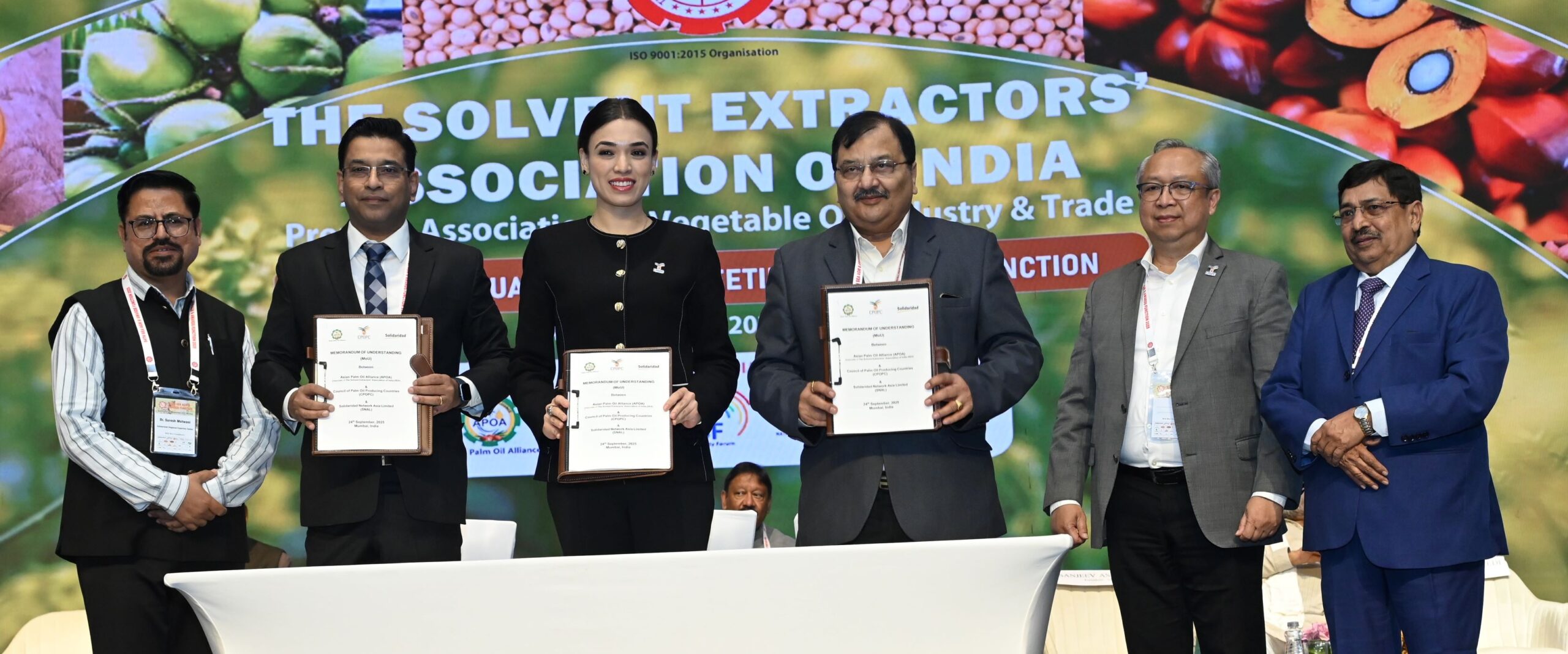
    The Asian Palm Oil Alliance (APOA), the Council of Palm Oil Producing Countries (CPOPC), and Solidaridad have signed a Memorandum of Understanding (MoU) to enhance collaboration between palm oil producers and consumers, aiming to advance sustainability and stabilize supply chains across South Asia.

    The agreement, signed in Mumbai, establishes a framework to align national sustainability standards, address market volatility, and promote smallholder inclusion, with a focus on India, a key market serving over 1.5 billion consumers.

    “This partnership provides a platform for producers and consumers to tackle shared challenges like food security and price stability,” said Atul Chaturvedi, chairman of APOA.

    The MoU commits the parties to harmonize frameworks such as Indonesia Sustainable Palm Oil (ISPO), Malaysian Sustainable Palm Oil (MSPO), and the Indian Palm Oil Sustainability (IPOS) Framework, while respecting national regulations.

    It also emphasizes traceable, No Deforestation, No Peat, and No Exploitation (NDPE)-compliant sourcing, using tools like Solidaridad’s SoliTrace and remote-sensing technology for supply chain transparency.

    A Joint Working Group, co-chaired by APOA and CPOPC with Solidaridad as the Technical Secretariat, will oversee implementation, monitor progress, and coordinate advocacy efforts.

    Focus on Resilience and Inclusion

    The initiative aims to ensure a stable supply of affordable edible oils amid price fluctuations and logistical challenges. Pilot projects will introduce digital traceability and importer-facing dashboards tailored for Indian buyers, alongside training for smallholders on regenerative farming practices.

    “Indian consumers deserve clear information on palm oil’s affordability and sustainability,” said Dr. B. V. Mehta, executive director of the Solvent Extractors’ Association of India, which hosts APOA’s secretariat.

    CPOPC’s Secretary General Izzana Salleh highlighted the role of fair trade and evidence-based dialogue in building market confidence, with smallholder livelihoods as a priority. Solidaridad Asia’s Managing Director, Dr. Shatadru Chattopadhayay, stressed delivering “practical sustainability” for producers and buyers.

    Broader Implications

    The partnership will advocate for fair recognition of national sustainability standards in global trade discussions and explore minimum sustainability criteria for Indian public procurement. By addressing policy risks and promoting climate-smart practices, the MoU seeks to enhance economic resilience and environmental stewardship across the region.

    APOA represents vegetable oil associations from India, Bangladesh, Pakistan, Sri Lanka, and Nepal. CPOPC, founded by Indonesia and Malaysia, advocates for producer nations. Solidaridad provides technical expertise in traceability and smallholder support.

  • INOX India unveils FY25 sustainability report: growth and green pledges in focus

    INOX India unveils FY25 sustainability report: growth and green pledges in focus

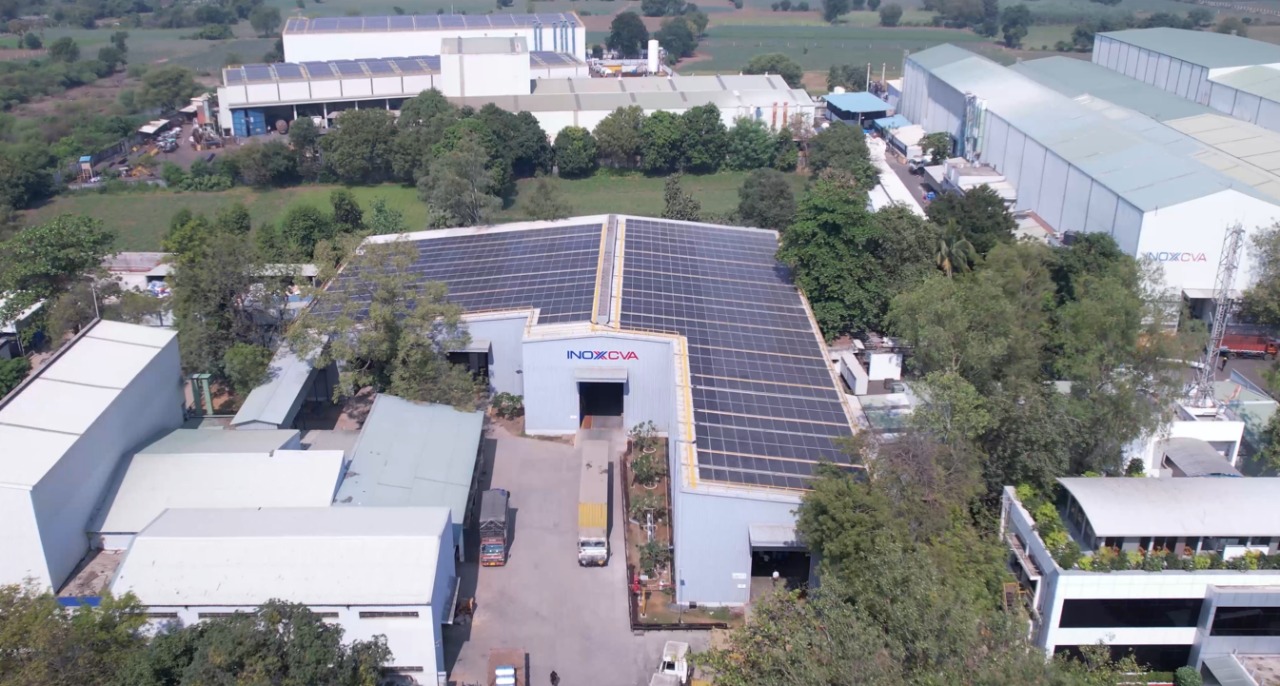
    INOX India Ltd, a leader in cryogenic equipment, launched its Sustainability Report 2024-2025, spotlighting environmental strides and robust financial growth amid a global push for clean energy solutions.

    The report, overing April 2024 to March 2025 and aligned with Global Reporting Initiative standards, highlights a 19 percent renewable energy uptake, mitigating 1,808 tonnes of CO2 equivalent with new solar and wind installations.

    Scope 1 emissions dropped to 716 tonnes CO2e from 724, though Scope 2 rose to 9,550 tonnes due to expansion, with intensity improving 12 percent to 0.00000079 tonnes per rupee turnover.

    Chairman Pavan Kumar Jain called FY25 a “turning point,” with revenue up 16.2 to Rs 1,354 crore (USD 161.8 million), EBITDA rising 18.3 percent to Rs 330 crore, and PAT increasing 15.4 percent to Rs 224 crore.

    Exports hit Rs 692 crore (53 percent of total), boosted by a Bahamas LNG terminal and the world’s first liquid air energy storage project in Manchester, UK.

    Energy use climbed 28.7 percent to 65,397 GJ (intensity up 7.9 percent), while water fell 5.3 percent to 109,243 KL (intensity down 20.5 percent) with zero liquid discharge at Savli. Waste rose 6.3 percent to 3,406 tonnes (intensity down 10.3 percent), with 2.8 million litres of rainwater harvested.

    CSR efforts invested RS 4.5 crore in girls’ education and healthcare for 5,200 elderly. The 1,332-strong workforce includes 6 percent women (up from 5.7 percent), with 9,689 training hours and a lost time injury frequency rate of 0.23.

    Governance features a diverse eight-member board (25 percent women) and sustainability committees. Lacking Scope 3 data, it focuses on India operations.

    INOX targets 30 percent renewables by FY27 and net-zero by 2040, aligning with its ISO 14001-certified eco-strategy.

  • From darkness to dignity: Murlidhar’s journey of hope with ACC’s MSMM Program

    From darkness to dignity: Murlidhar’s journey of hope with ACC’s MSMM Program

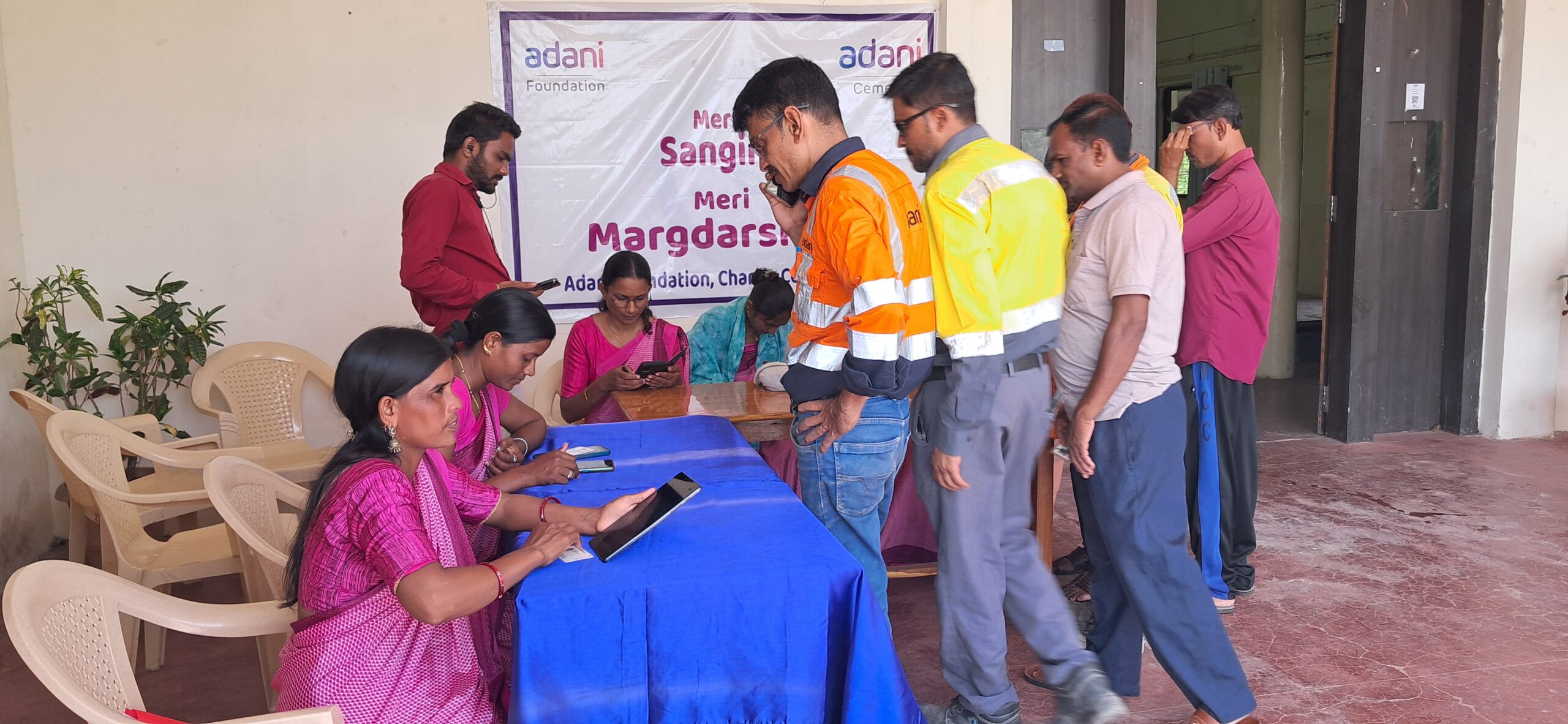
    In the quiet village of Parmadoh, Chandrapur, Maharashtra, Murlidhar Waralu There — a farmer from an economically weaker family — faced a fading world due to an eye disease. Surgery was the only solution, but financial barriers stood in the way—until ACC, a leader in the Adani Portfolio, and the Adani Foundation brought hope through their Meri Sangini Meri Margdarshika (MSMM) program.

    A Champion for Change

    Mamatai Vabhitkar, a dedicated Sangini under the MSMM initiative, discovered Murlidhar’s struggle during a village meeting. With compassion and determination, she introduced him to the Ayushman Bharat Yojana, guiding him through enrollment and documentation. Thanks to her efforts, Murlidhar’s surgery was fully funded, saving him Rs 20,000 and restoring his vision.

    With his eyesight back, Murlidhar resumed his work and regained his independence. His story inspired over 160 villagers in Parmadoh to enroll in the scheme, unlocking access to vital healthcare.

    Building Stronger Communities

    The MSMM program empowers women like Mamatai to bridge the gap between rural communities and government welfare schemes. Through ACC and the Adani Foundation’s efforts, families in Chandrapur are gaining access to healthcare, financial stability, and a brighter future.

  • Modi’s Independence Day Announcements: 8 Big Takeaways

    Modi’s Independence Day Announcements: 8 Big Takeaways

    In his longest Red Fort address yet, Prime Minister Narendra Modi on Friday turned India’s 79th Independence Day into a bold blueprint for the nation’s future, announcing a slew of ambitious initiatives ranging from homegrown semiconductor chips to a Rs 1 lakh crore employment scheme.

    1. India’s First Semiconductor Chip by 2025

    Modi announced India will produce its first ‘Made-in-India’ semiconductor chip by end of 2025. He said attempts to set up chip factories 50-60 years ago were “killed at birth” but India is now on “mission mode.”

    2. GST Reforms Coming on Diwali

    Next-generation GST reforms will be announced on Diwali 2025. These will reduce taxes on essential goods and provide relief to MSMEs, local vendors, and consumers.

    3. Nuclear Power Capacity to Increase 10x

    Work is underway on 10 new nuclear reactors. India aims to increase nuclear power generation capacity by over 10 times by 2047 as part of energy independence goals.

    4. Rs 1 Lakh Crore Employment Scheme

    The PM Viksit Bharat Rozgar Yojana will provide Rs 15,000 monthly to newly employed youth. The scheme targets 3 crore young Indians.

    5. Reform Task Force for $10 Trillion Economy

    A dedicated task force will drive reforms to accelerate growth, cut red tape, and prepare India for a $10 trillion economy by 2047.

    6. Challenge to Build Jet Engines

    Modi asked scientists and youth to develop indigenous jet engines, comparing it to India’s success with COVID vaccines and UPI payments.

    7. Demography Mission for Border Security

    A High-Powered Demography Mission will address demographic imbalances caused by infiltration and illegal migration in border areas.

    8. Ocean Resource Exploration

    The National Deepwater Exploration Mission will tap ocean resources while expanding solar, hydrogen, hydro and nuclear power to reduce dependence on fuel imports.

  • Beyond on size fits all: Industry-specific CSR takes root in India

    Beyond on size fits all: Industry-specific CSR takes root in India

    In a significant shift from one-size-fits-all approaches, Indian companies are increasingly adopting industry-specific Corporate Social Responsibility (CSR) strategies.

    This sector-wise adaptation has emerged as companies recognise that effective social responsibility must address unique industrial challenges while meeting stakeholder expectations.

    Leading the charge is the manufacturing sector, where giants like Hindalco and Tata Steel have made environmental sustainability their cornerstone. At its Belagavi plant, Hindalco has implemented zero-liquid discharge systems while supporting 200 local schools. Tata Steel’s CSR initiatives in Jharkhand and Odisha have become a blueprint for community development in industrial belts.

    The technology sector presents a contrasting picture. While global tech majors like Microsoft operate in India with carbon-neutral commitments, homegrown firms like TCS and Infosys have pioneered digital literacy programmes. TCS’ Adult Literacy Programme has reached over 5 lakh beneficiaries across 12 states.

    In retail, Future Group and DMart have prioritised sustainable sourcing and waste management. Future Group’s skills training programme has empowered over 10,000 youth from underprivileged backgrounds, while DMart focuses on supporting local vendor ecosystems.

    The pharmaceutical sector’s approach reflects unique healthcare challenges. Dr. Reddy’s Foundation works extensively on healthcare accessibility in rural areas, while Cipla Foundation’s ‘Caring for Life’ initiative provides palliative care support across multiple states.

    Energy sector players like ONGC and Indian Oil Corporation have embraced renewable energy investments alongside traditional CSR. ONGC’s solar chulha initiative has impacted 1,000 households in remote areas, while Indian Oil’s Smokeless Village programme has transformed rural cooking practices.

    In the food and beverage sector, companies like ITC and Britannia have focused on sustainable agriculture. ITC’s e-Choupal initiative has reached 4 million farmers, while Britannia’s dairy development programme has enhanced rural livelihoods in Maharashtra and Tamil Nadu.

    The banking sector, led by State Bank of India and HDFC Bank, emphasises financial inclusion. SBI’s youth skill development programmes have trained over 1 lakh candidates, while HDFC Bank’s Sustainable Livelihood Initiative has created 2 million sustainable livelihoods.

    Industry experts note that this sectoral approach has enhanced CSR impact.

    The success of these targeted initiatives suggests that the future of CSR lies in industry-specific solutions rather than generic approaches. As India pushes towards its sustainable development goals, such tailored strategies may prove crucial in addressing sector-specific challenges while contributing to national development objectives.

  • Apraava Energy’s solar power drive benefits 60,000 in rural India

    Apraava Energy’s solar power drive benefits 60,000 in rural India

    The move helped reduce over 130 tonnes of carbon dioxide emissions annually, equivalent to planting 6,500 trees per year.

    Apraava Energy, India’s leading integrated energy solutions provider, has impacted nearly 60,000 people from disadvantaged communities across the country through a five-year solar development program, the company said on Thursday.

    In partnership with SELCO, Apraava implemented solar power initiatives in close to 40 villages across five states – Maharashtra, Madhya Pradesh, Karnataka, Haryana and Telangana. The move helped reduce over 130 tonnes of carbon dioxide emissions annually, equivalent to planting 6,500 trees per year.

    The community interventions focused on enhancing safety through solar lighting in villages and schools, electrifying healthcare centres, creating jobs for differently-abled individuals and women, and improving access to quality education.

    “Solar lighting installations have provided a sense of safety and security…Solar electrification in primary health centres has ensured uninterrupted functionality of essential facilities,” Apraava said in a statement.

    It added that solar-powered appliances like fridges and roti-rolling machines created employment for differently-abled people and women, while digital education kits improved the quality of learning in rural areas.

    “These interventions have not only focused on all-round community development but also helped reduce significant greenhouse emissions,” said Priyesh Modi, head of corporate social responsibility at Apraava Energy.

    “Apraava remains committed to working with the communities to address their needs and contribute to building a sustainable future for India,” he added.

    Apraava Energy did not disclose the investment made in the solar development program.

  • LG Electronics India celebrates sustainability on Global Volunteer Day

    LG Electronics India celebrates sustainability on Global Volunteer Day

    LG employees took part in a tree plantation drive in Greater Noida and Pune.

    LG Electronics India, a major consumer durables brand, marked Global Volunteer Day on June 5 by organizing a series of environmental initiatives to promote sustainability, the company said on Thursday.

    On June 4, the company held an e-waste collection drive at its corporate office in New Delhi, allowing employees to bring in old gadgets for proper disposal. Experts conducted an awareness session on e-waste management.

    The following day, LG employees took part in a tree plantation drive in Greater Noida and Pune. They were also encouraged to plant trees at home with their families, with many sharing photos on social media.

    “At LG Electronics, we believe in leading by example when it comes to environmental sustainability,” said Hong Ju Jeon, managing director of LG Electronics India.

    “Our Global Volunteer Day activities reflect our dedication to creating a sustainable future and our commitment to the communities we serve.”

    LG said it has partnered with 16 major recyclers across India and has so far collected 850,000 kg of e-waste as part of its extended producer responsibility obligations.

    Since 2021, the company has developed and maintained a 3.1 km (1.9 mile) green area in Greater Noida, including a Miyawaki Forest with 12,000 plants.

  • Coca-Cola installs benches from recycled plastic waste to promote sustainability

    Coca-Cola installs benches from recycled plastic waste to promote sustainability

    The soft drinks giant repurposed about 19,000 kg of plastic waste collected during last year’s ICC Cricket World Cup in India to create the eco-friendly benches.

    Coca-Cola India on Wednesday launched a campaign called “#BenchPeBaat” to promote sustainability and meaningful conversations, installing 380 benches made from recycled plastic waste across 10 cities in the country.

    The soft drinks giant, through its philanthropic arm Anandana and in partnership with United Way Mumbai, repurposed about 19,000 kg of plastic waste collected during last year’s ICC Cricket World Cup in India to create the eco-friendly benches.

    Each bench is made from approximately 50 kg of recycled plastic waste, Coca-Cola said, adding the benches have been installed in schools, colleges, public parks and municipal corporation offices in cities including Delhi, Mumbai, Kolkata and Bangalore.

    “Our #BenchPeBaat campaign is a testament to our dedication towards sustainability, as we transform waste into meaningful community assets,” said Rajesh Ayapilla, senior director for corporate social responsibility and sustainability at Coca-Cola India and Southwest Asia.

    Coca-Cola conceptualised the campaign in line with its global “World Without Waste” strategy aimed at driving a circular economy for packaging, he added.

    The campaign film was created by Havas People India, the talent communication and employer branding agency of Havas Group India.

    “We are proud to partner with Coca-Cola India on the groundbreaking #BenchPeBaat campaign, which ignites awareness and dedication to sustainability,” said Arindam Sengupta, managing director of Havas People India.

    Last year, Coca-Cola India deployed reverse vending machines and collection bins at stadiums and hospitality zones in 10 host cities during the cricket World Cup to collect plastic waste that was later repurposed into the benches.

    George Aikara, CEO of United Way Mumbai, said the initiative exemplified sustainable practices while enriching communities with innovative street furniture and vibrant social spaces.

  • India’s bioenergy initiatives can play role in land restoration: Tomar

    India’s bioenergy initiatives can play role in land restoration: Tomar

    More than 2 billion hectares of land are degraded worldwide, nearly the size of India and Russia combined, impacting global food and water supplies.

    India’s bioenergy initiatives can play a crucial role in achieving land restoration, halting desertification and building drought resilience by providing sustainable energy solutions, Madhya Pradesh state assembly speaker Narendra Singh Tomar said on Wednesday.

    Tomar said more than 2 billion hectares of land are degraded worldwide, nearly the size of India and Russia combined, impacting global food and water supplies.

    “One of the key challenges of land restoration is the effective utilization of biomass, which significantly impacts the flora and biodiversity of the region,” Tomar said at an event organised by Confederation of NGOs of Rural India.

    He said India’s consumption of energy and electricity is less than one-third of the global average despite having about 17% of the world’s population.

    The government has implemented various schemes to promote bioenergy including the National Bioenergy Programme, the Sustainable Alternative Towards Affordable Transportation scheme, and the GOBAR Dhan scheme, Tomar said.

    Global Cooperation Economic Forum Chairman Dileep Shanghani said the cooperative economic framework has a major role in tackling climate change and bio-economy can provide livelihood solutions.

      India is taking a leading role through campaigns like LiFE (Lifestyle for Environment) that encourages responsible living in harmony with nature, said Binod Anand, secretary general of the NGO confederation.

      Land degradation affects about 3.2 billion people worldwide and could reduce global food productivity by 12% by 2040, leading to food price hikes of up to 30%, according to speakers at the event.

  • Natural Gas firm Adani Total charts sustainable, low-carbon path

    Natural Gas firm Adani Total charts sustainable, low-carbon path

    As part of its environmental efforts, the company is prioritizing reducing carbon emissions through solarization, curbing methane leaks, promoting renewable energy like bio-compressed natural gas and electric mobility.

    Adani Total Gas Ltd (ATGL), a joint venture between India’s Adani Group and France’s TotalEnergies, said on Thursday that embedding environmental, social and governance (ESG) principles into its business is essential for long-term value creation.

    The natural gas distributor said adhering to ESG helps build resilience, foster a sustainability-focused culture and identify opportunities while managing risks in the interests of all stakeholders.

    “In today’s world, sustainability isn’t just an option; it’s a fundamental requirement,” ATGL said in a regulatory filing.

    “Sustainability is woven into the fabric of our values, emphasising environmental stewardship, social accountability, strong governance, and economic vitality.”

    As part of its environmental efforts, the company is prioritizing reducing carbon emissions through solarization, curbing methane leaks, promoting renewable energy like bio-compressed natural gas and electric mobility.

    ATGL said it has mapped all greenhouse gas emissions and is working continuously to minimize them, including by conducting methane leak detection and repair for its networks to reduce fugitive emissions.

    On the social side, ATGL is committed to promoting health, safety, community engagement, education, diversity and inclusion, the statement said. It highlighted the Greenmosphere tree plantation initiative aimed at creating a low-carbon society.

    The company said it has developed a 10-acre biodiversity park in Ahmedabad, called the ATGL Forest, where more than 200,000 trees have been planted to create an oxygen park for the city.

    With an eye on climate change, ATGL said it is working towards low-carbon gas retail by initiating bio-gas and electric vehicle charging infrastructure, with pilot studies planned for blending green hydrogen.

    “Our overarching goal is to foster lasting economic prosperity while forging a sustainable and equitable future for everyone involved,” the company said.