Tag: #ESG

  • CSR Social Stock Exchange: India opens 10% investment window for firms

    CSR Social Stock Exchange: India opens 10% investment window for firms

    The corporate affairs ministry has opened a new funding channel for nonprofits, allowing companies to direct up to 10 per cent of their mandatory corporate social responsibility spending into zero coupon zero principal instruments listed on the Social Stock Exchange, in a move aimed at deepening transparency in social sector financing.

    The amendment, effective immediately, inserts the subscription to such instruments into Schedule VII of the Companies Act, 2013 — the schedule that governs permissible CSR activities for profit-making companies required to spend at least 2 per cent of their three-year average net profit annually on social causes.

    Under the revised CSR Policy Rules, 2014, definitions for both not-for-profit organisations and zero coupon zero principal instruments have been formally introduced for the first time, providing regulatory clarity to companies seeking to deploy funds through the Social Stock Exchange.

    Not-for-profit organisations will be able to issue these instruments through the Social Stock Exchange in accordance with regulations set by the Securities and Exchange Board of India, the ministry said in a statement on Friday.

    Unlike conventional bonds, zero coupon zero principal instruments carry no interest payments and no repayment of principal, functioning instead as a regulated grant or social investment vehicle designed to fund public welfare projects.

    “It helps in furtherance of a transparent and credible mode of funding CSR projects by companies and enables social enterprises to access a wider pool of capital,” said Anshul Jain, Partner Regulatory at PwC India.

    The 10 per cent cap on CSR Social Stock Exchange investments per financial year is intended to balance innovation with fiscal discipline, ensuring core CSR commitments remain intact while creating fresh pathways for social capital mobilisation.

    The Social Stock Exchange, established under SEBI oversight, is designed to bring market discipline and disclosure standards to social sector funding — a segment historically dominated by opaque grant-making and bilateral philanthropy.

  • Hitachi Vantara cuts client energy use with sustainable data infrastructure

    Hitachi Vantara cuts client energy use with sustainable data infrastructure

    Hitachi Vantara, the data storage and hybrid cloud subsidiary of Hitachi Ltd, published its FY2025 Sustainability Report on Thursday, outlining measurable energy and cost reductions achieved by clients using its latest sustainable data infrastructure platforms, as surging AI workloads reshape the economics of enterprise computing.

    The report arrives as the International Energy Agency warns that global data center electricity consumption could surpass 1,000 terawatt-hours by 2026 — roughly equivalent to a major industrialized nation’s annual usage — driven in large part by artificial intelligence workloads that demand constant, high-performance storage and processing.

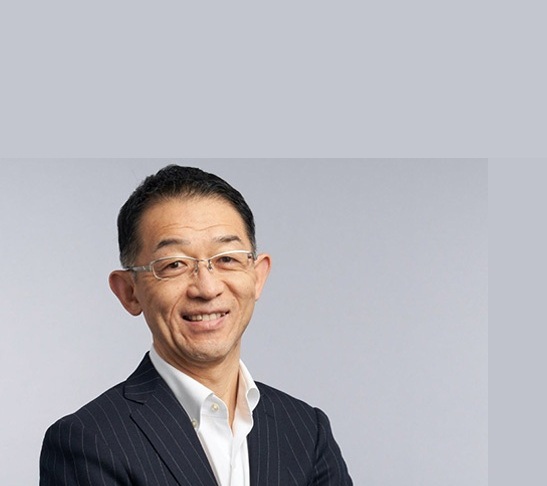
    “Sustainability is increasingly tied to operational performance and business outcomes. In FY2025, we focused on helping customers manage the growth of AI and data while improving efficiency and reducing environmental impact,” said Akinobu Shimada, CEO, Hitachi Vantara in a statement.

    Among the report’s most striking findings: Turkish retail bank DestekBank achieved a 25% reduction in data center energy consumption after deploying Hitachi Vantara’s VSP One Block platform, alongside a 35% jump in application performance and a 20% drop in total cost of ownership. Belgian water utility Aquiris, which processes more than 110 million cubic meters of wastewater annually, credited the same platform with lowering its carbon footprint while collecting over one million data points per day for process monitoring.

    Indian media company Malayala Manorama reported the sharpest operational gains, cutting data center rack space by 66% and achieving 70% savings in power and cooling costs after modernising its infrastructure to support round-the-clock print, broadcast and digital operations.

    On the product side, the company introduced the VSP One Block High End, engineered to reduce power and cooling requirements for enterprise and AI-driven workloads. Hitachi Vantara also expanded lifecycle assessments across its VSP One Block, File and Object portfolios and launched its Clear Sight dashboard, giving customers direct visibility into energy consumption and carbon usage. The firm reported that up to 50% recycled content now appears in key components, and that less than 0.3% of materials were sent to landfill.

    Governance improvements included strengthened emissions tracking across Scope 1, Scope 2 and key Scope 3 categories, aligned with science-based reduction targets and evolving ESG reporting standards.

  • Malabar Gold pledges bold Rs 200 cr CSR push in 2026-27

    Malabar Gold pledges bold Rs 200 cr CSR push in 2026-27

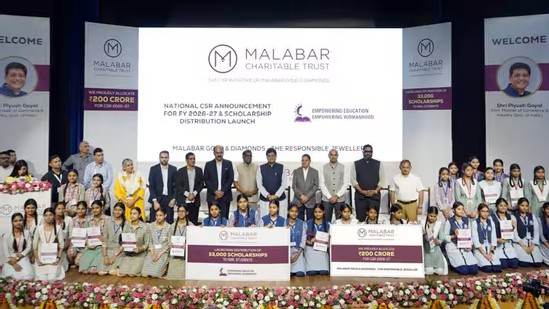
    Malabar Gold & Diamonds has kicked off its most ambitious Corporate Social Responsibility cycle to date, with a bold Rs 200 crore programme for 2026-27 now under way across 19 states.

    The retail jewellery group unveiled the plan earlier this week at the Dr. Ambedkar International Centre in New Delhi, where Union Minister for Commerce and Industry Piyush Goyal inaugurated the distribution of educational scholarships for 33,000 girl students.

    The Malabar Gold CSR 2026-27 initiative spans 15 major programmes at more than 3,000 locations and is designed to benefit over two lakh people by the end of the financial year.

    “Malabar Gold & Diamonds’ decision to allocate INR 200 crore towards CSR will further strengthen the nation’s progress,” Goyal said at the launch event Wednesday. He emphasised that India’s growth is rooted in the empowerment of women and girls.

    Education receives the largest share at Rs 114 crore. Scholarships are now being distributed to students across 284 districts in 18 states — a rollout timed to mark the group’s 33rd anniversary. Micro-learning centres for street children, run in partnership with the Pratham Education Foundation, are also being expanded this year from 1,543 to 2,500 locations across 17 states, with enrolment targets rising from 64,000 to one lakh students.

    Group Chairman M.P. Ahammad said “human resource development is the backbone of national growth,” and added that the scholarship programme gives students the means to contribute to national development. Pratham CEO Rukmini Banerji, who attended the New Delhi launch, called the micro-learning model a proven route to reaching the hardest-to-reach children.

    Food security is the second-largest priority. The Hunger Free World project, allocated Rs 30 crore, already provides daily nutritious meals to 1,15,000 people in India, Zambia, and Ethiopia — a figure the group aims to grow through this cycle. The Grandma Home initiative for destitute mothers anchors the Rs 25 crore housing allocation, while Rs 14.2 crore funds healthcare access, including subsidised medicines through Malabar-Thanal pharmacies.

    Environmental protection receives Rs 10 crore, with the remaining Rs 6.8 crore directed at other humanitarian activities.

    The programmes are administered by the Malabar Charitable Trust, which channels five per cent of the company’s net trading profit into CSR activities annually. The group operates under ESG principles centred on women’s empowerment, healthcare, and education.

    The launch on Wednesday was attended by Malabar Group Managing Director of India Operations Asher Ottamoochikkal, Executive Directors Nishad A.K. and Abdulla Ibrahim, Kerala House Resident Commissioner Puneet Kumar, and Thanal Chairman Idris.

  • HCLTech dominates Hurun India Sustainability Rankings 2026

    HCLTech dominates Hurun India Sustainability Rankings 2026

    HCLTech has secured the No. 2 overall position in the Perpetual Capital–Hurun India Impact 50 2026 report, reinforcing the technology major’s standing as a leader in corporate sustainability across global markets.

    The Hurun India Impact 50 report evaluates companies based on visible and measurable contributions toward the United Nations’ 17 Sustainable Development Goals (SDGs).

    HCLTech’s dominant HCLTech sustainability rankings reflect top-tier placements across multiple categories, with the company claiming No. 1 in Gender Equality and Affordable & Clean Energy, and No. 2 in Sustainable Cities and Communities and Responsible Consumption and Production.

    “These recognitions from globally renowned forums validate our efforts to embed sustainability-led positive impact across our operations,” said Vipul Arora, Global Head of Sustainability at HCLTech. “HCLTech will continue to enable clients and communities to reap the benefits of new technologies responsibly and sustainably.”

    The recognition builds on a broader series of ESG milestones. For the fourth consecutive year, HCLTech has been included in the S&P Global Sustainability Yearbook, a benchmark index tracking companies with strong environmental, social, and governance performance.

    HCLTech also holds a Gold rating from EcoVadis, placing it among the top 4% of rated IT companies globally. TIME magazine further recognised the company among the top 15 firms in the Professional Services category in its World’s Most Sustainable Companies 2025 list.

    The results signal growing investor and institutional confidence in HCLTech’s long-term ESG strategy, as the company continues to align technology deployment with sustainable development imperatives across its global operations.

  • DS Group achieves landmark water positive certification, joins elite corporate circle

    DS Group achieves landmark water positive certification, joins elite corporate circle

    Dharampal Satyapal Group (DS Group), one of India’s leading FMCG conglomerates, has earned Water Positive Certification from GRIHA (Green Rating for Integrated Habitat Assessment), recording a Water Positivity Index of 1.80 — placing the company among a select few Indian corporations to achieve such a high score.

    The certification, awarded under GRIHA’s Decarbonizing Habitat Programme, follows a two-and-a-half-year assessment across 30 business locations in India, covering divisions spanning food and beverage, mouth freshener, hospitality, and agriculture.

    Scale of Impact

    Conservation interventions by DS Group have created a cumulative water storage potential of 66 lakh kilolitres. The programme integrates rainwater harvesting structures, wastewater reuse systems, recharge wells, water-efficient fixtures, and ecological restoration measures. Projects in Rajasthan and Madhya Pradesh contributed significantly to groundwater recharge outcomes.

    “The whole world is moving rapidly towards sustainability, with global water demand projected to exceed supply by 40% by 2030,” said Rajiv Kumar, Vice Chairman of DS Group.

    “By embedding water-positive practices into our business and community initiatives, DS Group contributes meaningfully to the larger sustainability agenda that India is aiming for.”

    Kumar added that the Group views sustainability “not as a project but as a permanent responsibility,” guided by its philosophy of ‘Create What is Worth Creating.’

    Sanjay Seth, VP and CEO of GRIHA Council and Senior Director at TERI, called the certification “a statement of intent of responsibility and vision,” adding that DS Group had demonstrated that “sustainability, productivity and profitability can go hand in hand.”

    Broader Sustainability Context

    The Water Positive Certification adds to a wider sustainability programme at DS Group that spans water conservation, livelihood development, agricultural initiatives, and energy efficiency. The company’s headquarters holds both LEED Platinum and LEED Zero Carbon certifications from the U.S. Green Building Council.

    The achievement comes ahead of COP30, where water security and climate resilience are expected to be central agenda items.

    Founded in 1929, DS Group markets brands including Rajnigandha, Catch, Pulse, Pass Pass, LuvIt, and L’Opera across domestic and international markets.

    Established in 2007 as a joint initiative between Ministry of New and Renewable Energy and TERI, GRIHA operates as India’s nationally recognised green building rating system and is referenced in India’s Nationally Determined Contributions to the UNFCCC.

  • DBS Sustainable Financing surges past SGD 102 billion; India leads breakthrough growth

    DBS Sustainable Financing surges past SGD 102 billion; India leads breakthrough growth

    DBS Bank’s sustainable financing commitments surged 14 per cent year-on-year to cross SGD 102 billion at end-2025, the lender said in its latest report, as India emerged as its fastest-growing and third-largest sustainable finance market across Asia.

    The Singapore-based bank, one of Asia’s largest lenders, facilitated SGD 41 billion of environmental, social and governance (ESG) bond issuances during 2025 as an active bookrunner, channelling capital into renewable energy, sustainable infrastructure, green real estate and social-sector projects.

    “As Asia continues to grow, businesses are continuing to invest in low-carbon technologies, electrification and resilient infrastructure,” said Helge Muenkel, Group Chief Sustainability Officer at DBS Bank. “It was very encouraging that DBS Group crossed SGD 100 billion in sustainable financing commitments in 2025.”

    India Drives Breakthrough Momentum

    India’s rapid ascent within DBS’s sustainable finance portfolio reflects strong domestic appetite for green capital aligned with the country’s ongoing energy and infrastructure transformation.

    In a notable deal, DBS extended a Rs. 670 crore sustainability-linked trade facility to Indorama India Pvt Ltd, tying the financing to measurable improvements in emissions intensity, water use and energy efficiency.

    The bank also acted as arranger and sustainability coordinator for a multi-bank USD 350 million sustainability-linked revolving credit facility for ChrysCapital X LLC — marking the first sustainability-linked loan raised by an India-focused private equity fund.

    Expanding Beyond Climate

    DBS said it is broadening its sustainability mandate beyond climate mitigation to encompass nature-related risks and climate adaptation — a shift that signals the bank’s intent to align with evolving global biodiversity and resilience frameworks.

    Community Impact

    Beyond financing, DBS said it reached more than one million vulnerable individuals across Asia through community programmes in 2025. The DBS Foundation has committed over SGD 160 million since 2024 toward initiatives targeting essential needs, financial inclusion and community resilience.

    The results were disclosed in DBS’s Sustainability Report 2025.