Tag: #CorporateSocialResponsibility

  • Muthoot Finance hikes CSR spend to Rs 174 crore for FY27

    Muthoot Finance hikes CSR spend to Rs 174 crore for FY27

    Muthoot Finance, India’s largest gold loan non-banking financial company, said on Monday it will boost its Corporate Social Responsibility (CSR) spending to Rs 174.03 crore for fiscal year 2027, extending programmes in healthcare, education and housing to underserved communities nationwide.

    The Muthoot Finance CSR outlay follows FY26 spending of Rs 106.42 crore, which the company said reached approximately 3.37 million beneficiaries through initiatives spanning education, healthcare, livelihood support, community development and sports promotion.

    “At Muthoot Finance, we believe sustainable growth must go hand in hand with meaningful social impact,” Managing Director George Alexander Muthoot said in a statement.

    He said the FY26 results reflected the company’s commitment to underserved communities through healthcare, education, housing and social inclusion programmes.

    Education remained a central focus of the Muthoot Finance CSR strategy, with flagship programmes including the Muthoot M. George Excellence Awards, higher education scholarships and the Muthoot Shiksha Jyothi initiative supporting nearly 11,900 students, including first-generation learners, the company said.

    Muthoot Finance has also established several educational institutions, including Sanskara School in Kochi, the Muthoot Institute of Technology and Science, and the newly launched Kalaivani School in Tamil Nadu.

    On healthcare, the company said its Muthoot Snehasraya programme and related interventions benefited more than 100,000 people in FY26 through medical outreach, rehabilitation support and community healthcare services.

    The company’s housing initiative, Muthoot Aashiyana, has built more than 270 homes for vulnerable and disaster-affected families since its 2018 launch, providing shelter and stability to underserved households, Muthoot Finance said.

    Muthoot Finance also expanded its Soundscape Project, which provides digital hearing aids to children with hearing impairments, reaching 267 beneficiaries across Kerala, Hyderabad and Mumbai.

    Separately, the company’s prison rehabilitation programme, Radio Parvaaz, supports emotional wellbeing and informal learning among inmates, alongside initiatives for children of incarcerated parents.

    Other community programmes included Box of Hope for fisherwomen’s livelihoods, a maritime safety programme for coastal communities in Tamil Nadu, and Pedal for Progress, which distributes bicycles to tribal students.

    Deputy Managing Director George Muthoot George said the company aims to move beyond addressing immediate needs toward empowering communities for long-term self-reliance.

  • Visually impaired Cricket CSR: Maruti Suzuki’s eParivartan drive hits the pitch

    Visually impaired Cricket CSR: Maruti Suzuki’s eParivartan drive hits the pitch

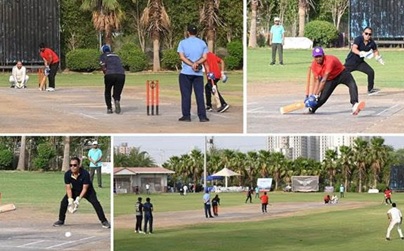
    Maruti Suzuki India Limited hosted a series of cricket matches with visually impaired players under its employee volunteering CSR initiative, ‘eParivartan‘, bringing together corporate employees and athletes from the Cricket Association for the Blind, Delhi (CABD) in a bid to champion social inclusion.

    The matches, held at the fully accessible SportsCube Center for Excellence in Sector 70, Gurgaon, saw two 10-over games played between Maruti Suzuki staff and CABD cricketers. The visually impaired cricket CSR event followed official blind cricket guidelines, incorporating audible balls and adapted rules for batting, bowling, and fielding. CABD won both matches.

    The initiative, part of the company’s broader eParivartan employee volunteering program, is designed to foster empathy, respect, and cross-community teamwork among corporate employees.

    “Playing alongside these remarkable cricketers reminded our team of their incredible talent, determination, and spirit,” said Rahul Bharti, Senior Executive Officer, Corporate Affairs, Maruti Suzuki India in a statement.

    “Such interactions help us nurture empathy, embrace the spirit of equality, and inspire us to grow as more holistic human beings.”

    Maruti Suzuki also presented cricket kits to the CABD as part of the event.

    The visually impaired cricket CSR drive is one of more than 30 community activities logged under eParivartan in FY 2025–26, during which over 1,100 employees volunteered more than 2,600 hours, positively impacting upwards of 8,700 individuals across health, education, and youth engagement programmes.

    The Cricket Association for the Blind in India (CABI), with which CABD is affiliated, governs blind cricket nationally and has been instrumental in expanding opportunities for visually impaired athletes across the country.

  • Toyota Kirloskar’s CSR hygiene programme did what Swachh Bharat couldn’t

    Toyota Kirloskar’s CSR hygiene programme did what Swachh Bharat couldn’t

    When Toyota Kirloskar Motor (TKM) built toilets in Karnataka village schools nearly a decade ago, it discovered a problem it had not anticipated: nobody was using them.

    Root cause analysis revealed why communities held a deeply ingrained belief that an in-compound toilet was unclean. Going outdoors, they maintained, was the healthier option.

    The finding prompted TKM to stop further construction and redirect its corporate social responsibility effort toward behavioural change, launching what would become the ABCD — A Behavioural Change Demonstration — programme in 2015-16.

    The initiative has since reached 6,69,322 students, teachers and community members across 1,300 government schools in Karnataka and drawn recognition from Harvard Business School, which has featured it as a case study.

    The programme’s early breakthrough came from an unexpected quarter, TKM Country Head and Executive Vice President (corporate affairs and governance) Vikram Gulati told PTI.

    In one Ramanagara village, two girls aged approximately 11 and 12 organised a classmate hunger strike, refusing to eat until their families built home toilets. The strike succeeded.

    “This actually led to the first breakthrough,” Gulati said.

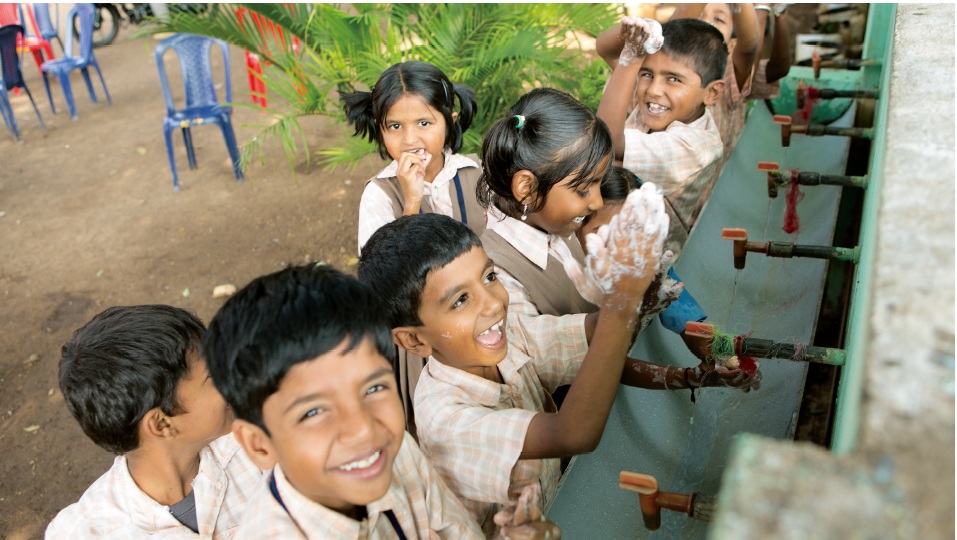
    The programme trained children in handwashing technique, toilet use and personal hygiene, positioning them as agents of behavioural change within their households and wider communities. Schools competed on hygiene standards. Children carried lessons home. The ripple effect — by design — travelled from classroom to household to community.

    When the programme expanded to Raichur, one of India’s government-designated Aspirational Districts, the company said a baseline survey across 500 schools in December 2023 exposed how deep the crisis ran.

    Only 48 per cent of required toilets existed. Of those, just 20 per cent were usable. Twelve per cent of schools lacked a single functional handwashing unit. Ninety per cent of students depended on open tap water. One in four children still practised open defecation.

    At home, the picture was no better: 44 per cent of students had no toilet at all.

    India’s Swachh Bharat, or Clean India, Mission has constructed tens of millions of toilets since its launch in 2014 under Prime Minister Narendra Modi. Independent researchers and government field assessments have repeatedly flagged the gap between construction targets and actual usage, citing behavioural barriers, poor maintenance and water scarcity as persistent obstacles.

    Over two years of implementation in Raichur and neighbouring Lingasuguru, toilet usage among students rose from 76 per cent to 95 per cent, according to TKM data.

    Handwashing compliance increased from 20.5 per cent to 100 per cent.

    Seventy-five toilets and 30 urinals were constructed. Fifty-eight handwash taps were installed or repaired. Twenty-eight schools received safe drinking water access. Menstrual hygiene sessions were conducted for 3,546 adolescent girls.

    At the community level, 1,382 parents were motivated to construct home toilets during the programme period; 38 completed construction.

    Harvard Business School has recognised ABCD as a case study. The Ivey Business School has published it — rare international acknowledgment for a sanitation initiative rooted in rural India, the TKM Said.

    The ABCD programme sits within a broader corporate social responsibility architecture that TKM has been expanding rapidly.

    Since 2001, the company’s CSR work has spanned education, health, environment, skill development, road safety and disaster management, guided by what it describes as a “Child to Community” approach. TKM spent Rs. 104.7 crore on CSR activities in FY 2025-26, reflecting the scale of its social investment commitments.

    In the 2025-26 financial year, TKM significantly widened its geographic footprint, extending its reach from communities around its manufacturing base to 12 states — among them Uttarakhand, Nagaland, Andhra Pradesh, Tamil Nadu, West Bengal and Odisha.

    The company plans to expand further to 22 states in 2026-27, framing the ambition under a stated vision of “Grow India, Grow with India.”

    “TKM is strengthening health infrastructure through preventive and curative interventions, enhancing the quality of education, and improving employability,” Gulati said, describing the overall mission as creating “Mass Happiness for All.”

    The Raichur intervention is ongoing. The earlier Ramanagara phase has stabilised, he added.

    Source: PTI