Category: Environment

  • Cement giants Ambuja and ACC to clean BBMB lake in Himachal Pradesh

    Cement giants Ambuja and ACC to clean BBMB lake in Himachal Pradesh

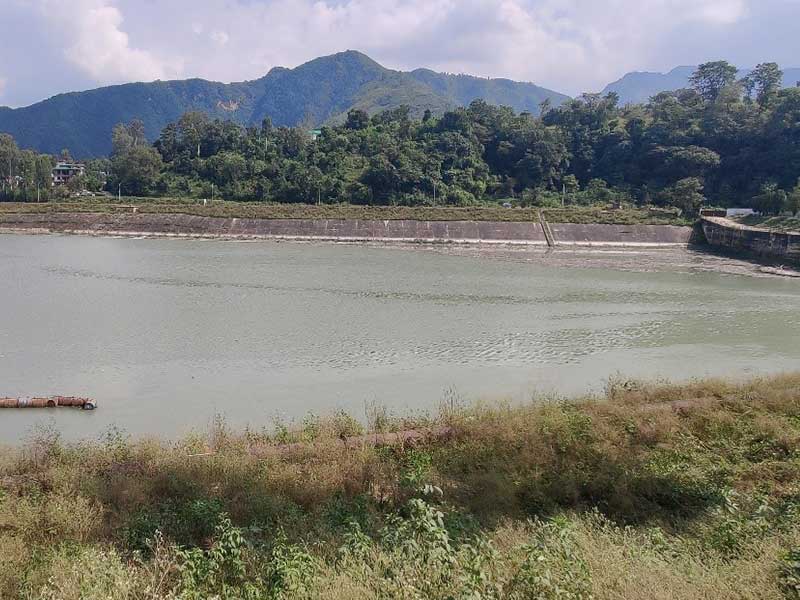
    Cement giants, Ambuja Cements and ACC Limited, have jointly announced a mammoth project to remove plastic waste by commissioning its second phase of bubble barrier technology in BBMB Lake located in Sunder Nagar, Himachal Pradesh

    Cement giants, Ambuja Cements and ACC Limited, have jointly announced a mammoth project to remove plastic waste by commissioning its second phase of bubble barrier technology in BBMB Lake located in Sunder Nagar, Himachal Pradesh. The cleaning project will be undertaken by the in-house waste management arm, Geocycle.

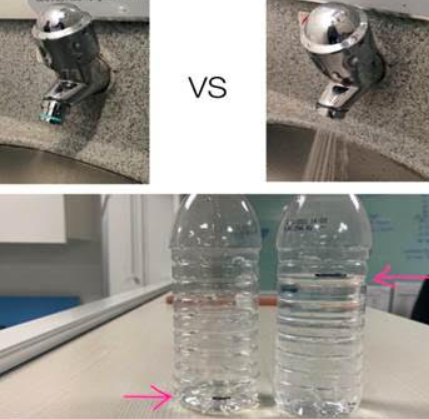
    Bubble Barrier is an intelligent and non-invasive technology used to remove plastic from the water bodies, reducing the problem of marine plastic pollution in our country.

    The CEO India Holcim and Managing Director cum CEO of Ambuja Cements. Neeraj Akhoury said, “We are committed to building a sustainable future by adopting clean and green technologies. Our efforts and expertise in co-processing have created a unique solution to sustainable disposal of the marine plastic waste that creates pollution. This initiative will also contribute towards promoting a circular economy. Taking this mission ahead, we will continue our efforts to implement this innovative technology across the country.”

    The company has received a NOC from BBMB to install this innovative technology which will remove approximately 1500 tonnes per year of waste from the lake.

    The BBMB Lake has been floating with light organic material, which has been accumulated over the years resulting in choking at the discharge point of the lake. The Company’s Geocycle Bubble Barrier technology will collect plastic and lighter materials like floating debris, organic wastes, etc., from the lake, thus reducing the chances of choking.

    This technology has been installed in Himachal Pradesh with ACC Gagal Plant, which will serve as the co-processing centre for the plastic recovered from the lake. This project aims to co-process only a non-recyclable portion of the material collected, thus moving it to the existing waste disposal site of Sunder Nagar.

    The recovered recyclable plastics will be sent to recycling facilities. In contrast, the non-recyclable plastics will be taken to Geocycle’s facility for pre-processing, then co-processing in ACC cement kilns at the Gagal plant.

    The collection of plastics from leaking into the rivers will help the local community around the plant. Furthermore, the company has commissioned its pilot project in Agra, which has removed 500 tonnes of plastic waste from the Yamuna River. The company has recently received a NOC from Varanasi Municipal Corporation to install another bubble barrier technology.

  • Alstom partners with UWB for rural development

    Alstom partners with UWB for rural development

    Alstom has partnered with United Way Bengaluru (UWB), an NGO, to kickstart ‘Rural Rising‘– an integrated rural development program as part of its CSR initiative. The project is run at Selakarachal Gram Panchayat, Sultanpet Block in Coimbatore. It aims at improving the overall condition

    Alstom has partnered with United Way Bengaluru (UWB), an NGO, to kickstart ‘Rural Rising‘– an integrated rural development program as part of its CSR initiative. The project is run at Selakarachal Gram Panchayat, Sultanpet Block in Coimbatore. It aims at improving the overall condition of the gram panchayat in the areas of environment, sanitation and education.

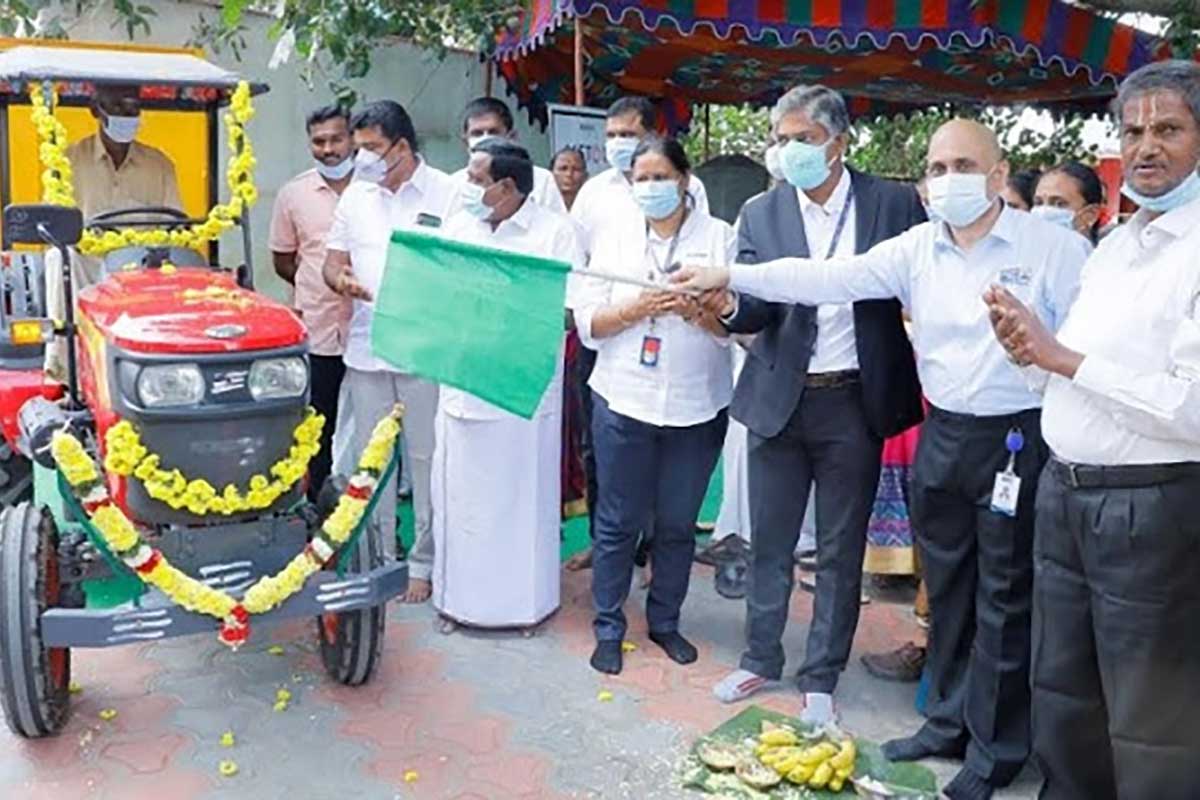
    At the inaugural and Bhoomi Puja, Alstom handed over a tractor to the Gram Panchayat to strengthen the Solid Waste Management (SWM) system. The gram panchayat has been implementing a proper solid waste management system.

    This tractor support will help put in place a systematic door to the door collection process and timely transport of the garbage, ensuring better hygiene and sanitation in the area. Kandasamy V.P. MLA, Sulur Constituency graced the inaugural event; Navamani, Block Development Officer; Maragathavadivu Karupsamy – President, Gram Panchayat and representatives from Alstom and United Way Bengaluru.

    In addition to the Solid Waste Management initiative, community toilet construction and usage awareness activities have commenced helping the gram panchayat to improve the sanitation condition of the village and encourage toilet usage among the community members.

    S Selvakumar, Site MD, Alstom, has said, “This project is a stellar example of Alstom’s commitment to promoting and funding initiatives that improve the living conditions and economic possibilities of communities. We are looking forward to providing holistic development to the people of Selakkarichal Gram Panchayat through this initiative. We have engaged a team of active and passionate employee volunteers who are keen to implement these interventions over the next three years”.

    “Our commitment to helping rural societies develop their education, health and environment situation is echoing with our CSR partner Alstom and the Selakarachal Gram Panchayat. This initiative is a perfect private-public-partnership model of collaboration. This project has been implemented with a vision to empower the community members and ensure long-term sustainability,” said Rajesh Krishnan, Executive Director, United Way Bengaluru.

    Alstom and United Way Bengaluru are also strengthening the Anganwadi Centres by building a new one and upgrading two more Anganwadi Centres with new services, facilities and infrastructure to make the centres happier, safer and conducive for children.

    United Way Bengaluru’s early childhood education program, called the Born Learning Campaign, will be running in these Centres to ensure the enhancement of the developmental domains of children and capacity building of Anganwadi workers and parents. Apart from this, the project will also undertake livelihood initiatives, especially for women and youth. Overall, the Rural Rising initiative in Selakkarichal Gram Panchayat will benefit a population of approximately 6000 over the next three years.

  • Lodha developer commits to lower carbon emission

    Lodha developer commits to lower carbon emission

    Real estate developer, Lodha, has committed to setting carbon emissions targets in line with climate science with the Science-Based Targets initiative. This aligns with Lodha’s earlier pledge on World Environment Day to go carbon neutral by 2035. Lodha has received an exceptional score in S&P Global

    Real estate developer, Lodha, has committed to setting carbon emissions targets in line with climate science with the Science-Based Targets initiative. This aligns with Lodha’s earlier pledge on World Environment Day to go carbon neutral by 2035.

    Lodha has received an exceptional score in S&P Global Corporate Sustainability Assessment that demonstrates its focus on sustainability and its net-zero goals.

    Commenting on the announcement, Raunika Malhotra, President – Marketing and Corporate Communications, Lodha said, “As a leading real estate company, we recognize the crucial role that businesses play in minimizing the risk that climate change poses to our planet. Combating climate change has become imperative, and corporates like us have a major responsibility in promoting the transition to a low carbon economy”.

    She added, “With a commitment to provide a better Earth to our future generations, we established a North star goal of becoming carbon neutral by 2035 and now taking a step ahead with setting science-based targets for reducing significant emissions. We expect that India’s stated goals and Maharashtra’s focus on Urban Renewal communicated at COP26 will enable us to implement the targets faster through the facilitation of technological options and favourable regulations.”

    Science-based targets give a clear roadmap for companies to reduce greenhouse gas (GHG) emissions, thereby helping avert climate catastrophe and safeguarding businesses from climate risks. Lodha will align its roadmap with global best practices and emerging opportunities during the target-setting exercise. The company’s carbon neutrality road-mapping formulated earlier this year covers a broad scope encompassing energy efficiency, energy procurement, embodied carbon, waste, water, and transportation. Successful pilot projects will provide opportunities to scale up feasible solutions and achieve significant emission reductions for the overall buildings’ portfolio, including construction development.

    The goal of halving the Greenhouse Gas emissions by 2030 and reaching net-zero by 2050 is critical for all stakeholders – governments, corporations, and the public. With climate change emerging as a primary concern, leading corporations need to declare their carbon neutrality roadmaps and plan of action for a zero-carbon future. This will bring the necessary awareness in the industry and the workforce – thereby causing a chain reaction and fostering innovation in the space, accelerating the solutions to decrease emissions.

  • DBS Bank India extends support towards environmental sustainability initiatives

    DBS Bank India extends support towards environmental sustainability initiatives

    Amid climate change concerns, private lender DBS Bank India has tied up with two NGOs to pilot a food forest project and as well as extend support to mitigate human-wildlife conflict in Maharashtra. A pilot project to develop food forest in rural Maharashtra has been collaborated

    Amid climate change concerns, private lender DBS Bank India has tied up with two NGOs to pilot a food forest project and as well as extend support to mitigate human-wildlife conflict in Maharashtra.

    A pilot project to develop food forest in rural Maharashtra has been collaborated with Raah Foundation, while a grant is being extended to the Wildlife Conservation Society (WCS) to support its ongoing endeavour to mitigate human-wildlife conflict in Mumbai’s Sanjay Gandhi National Park.

    According to DBS Bank, the pilot food project aims to establish a prototype of long-term carbon sinks through a scientifically designed forestry consisting of several seasonal fruit and vegetable plants.

    This approach can provide various benefits and deliver long-term social, economic and environmental value, it said in a statement.

    Separately, the bank has extended a grant to the Wildlife Conservation Society (WCS) to support its ongoing endeavor to mitigate human-wildlife conflict in Mumbai’s Sanjay Gandhi National Park.

    WCS’ initiative aims to engage local communities and conduct awareness and rescue training programmes, reducing the risk of such conflicts and providing a safer habitat for leopards and other wild animals.

    Speaking about these partnerships, DBS Bank India Executive Director, Group Strategic Marketing and Communications, Shoma Narayanan said: “We understand our role as a financial institution in nurturing social, economic and environmental sustainability. These initiatives are crucial in the broader context of climate change and sustainable development.”

    “We are confident that our partnership with the Raah Foundation and Wildlife Conservation Society will result in long-term environmental and social impact,” she added.

    Raah Foundation Founder Sarika Kulkarni said”With the support from DBS Bank, we are creating a food forest which will have 200 species of trees/shrubs/grasses/tubers/climbers for the tribals living in Jawhar, in the Palghar district of Maharashtra. We have ambitious plans to create 1,000 acres of food forests in the years to come. We are truly in gratitude to DBS Bank for their immense support.”

    Studies have revealed that climate change poses a severe threat to the food security of vulnerable communities. Multi-tiered food forests are a low-maintenance, sustainable, plant-based food production system that yields direct uses to humans.

    DBS Bank India’s contribution to Raah Foundation will be utilised towards the installation of a solar pump, drip irrigation, procurement of saplings, organic manure and geo-tagging the trees. Additionally, the funds will also help in conducting a baseline biodiversity assessment and hydrogeology assessment.

    Growing food forests will address a variety of issues in terms of reducing vulnerability to climate change impact while safeguarding essential ecosystem services such as air and water purification, pollination, providing nutrition, controlling soil erosion and carbon sequestration, the bank said.

    Wildlife Conservation Society-India Country Director Dr Vidya Athreya said,”The project to study the Mumbai leopards is extremely important to address the issue of human leopard conflict. The generous support of DBS Bank has been crucial in the success of our work.”

    DBS Bank has been committed to conducting business more sustainably and managing its environmental footprint. The bank has undertaken several initiatives to support and address crucial environmental, social, and governance (ESG) challenges through strategic partnerships.

    The bank firmly believes in the need to change the way we approach food production and consumption. With this as the mission, DBS Bank introduced a Towards Zero Food Waste (TZFW) initiative in 2020.

    DBS also advocates the scaling up of transition finance and supporting like-minded clients and their ecosystem of supply chain partners to adopt sustainable business practices.

  • Ambuja Cement saves 70 mln litres water at construction sites with water conservation efforts

    Ambuja Cement saves 70 mln litres water at construction sites with water conservation efforts

    Taking a lead in the industry’s efforts to tackle the effects of climate change, Ambuja Cement Ltd on Wednesday said it has saved 70 million litres of water at its construction sites with focus on water conservation efforts

    Taking a lead in the industry’s efforts to tackle the effects of climate change, Ambuja Cement Ltd on Wednesday said it has saved 70 million litres of water at its construction sites with focus on water conservation efforts.

    In 2020, Ambuja facilitated the installation of Rooftop Rain Water Harvesting systems at 268 construction sites, Modular Curing at 2391 construction sites and Concrete Mix Proportion services at 14271 construction sites, the company said in a statement.

    “These initiatives (Concrete Mix proportions, Modular Curing, and Rainwater Harvesting) have helped Ambuja in saving 70 million litres of water,” it added.

    Ambuja Cements Managing Director and CEO Neeraj Akhoury said: “The scope and opportunities for creating a sustainable future are immense. ….I am pleased with the progress that we have made through our efforts, and we will continue to put into action the bolder plans for emission reduction, resource optimisation and water conservation to build a sustainable future of India.”

    As part of the global organisation, Holcim, Ambuja Cement’s ambition is to be a part of the solution to the sustainability challenges faced today, he said.

    In 2020, Ambuja Cement also developed and revived 83 water harvesting and recharging structures and 14 dams for the benefit of the community, amounting to a storage capacity of 600 million litres, taking the total count to 14060 water harvesting and recharge structures, 458 check dams and 59240 million litres, respectively.

    Last year, Ambuja Cement reduced its carbon footprint to 531 kg CO2/tonne of cement and reused 8.2 million tonne of waste in cement production. Furthermore, it also reduced the freshwater withdrawal up to 77 litres/tonne of cementitious material, and added 3 lakh new beneficiaries under its community outreach programmes.

    Green energy is another focus area for Ambuja as the company has invested Rs 525 crores towards Waste Heat Recovery Systems (WHRS), which reduces its conventional fuel consumption.

    Ambuja Cements is a member of Holcim, the global leader in innovative and sustainable building solutions.

    Among the leading cement companies in India with a capacity of 29.65 million tonne, Ambuja Cement has five integrated cement manufacturing plants and eight cement grinding units across the country.

  • Coke and Rajahmundry MC launch Swatchata Hero

    Coke and Rajahmundry MC launch Swatchata Hero

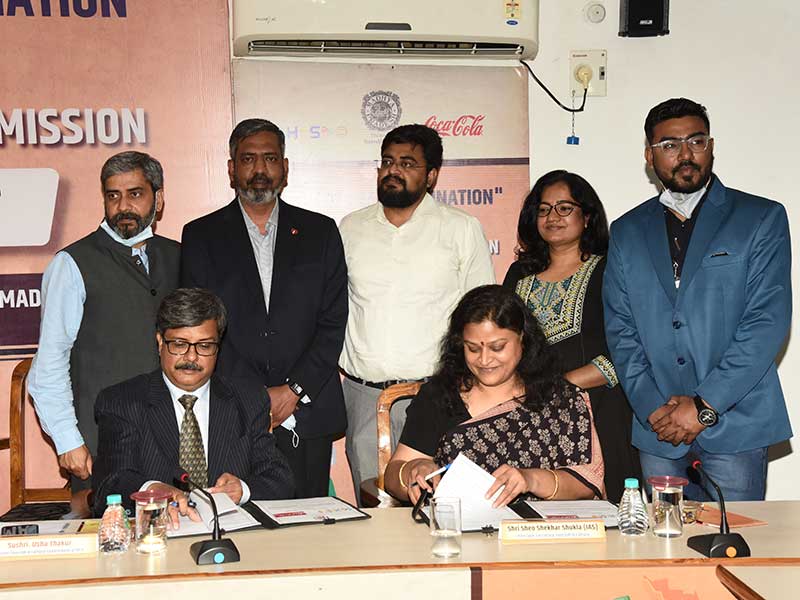
    Sri Sarvaraya Sugars Ltd., the bottling arm of Coca-Cola in India, along with Rajahmundry Municipal Corporation (RMC) jointly launched a citizenship movement, to drive awareness on plastic waste management. Aligned to the Government of India priorities under

    Sri Sarvaraya Sugars Ltd., the bottling arm of Coca-Cola in India, along with Rajahmundry Municipal Corporation (RMC) jointly launched a citizenship movement, to drive awareness on plastic waste management. Aligned to the Government of India priorities under the ‘Swachh Bharat Mission, the Swatchata Hero Initiative is a step towards strengthening the national agenda of responsible waste segregation and management through citizen involvement. The initiative, presently spanning across Rajahmundry and Kakinada in Andhra Pradesh, additionally aims at improving socio-economic conditions of the informal waste sector, raising awareness on waste segregation, influencing attitudinal changes amongst citizens and protecting natural habitats.

    With changing consumption patterns and rapid economic growth, there is an ever-emerging need to formalize and strengthen sustainable waste management through meaningful initiatives that not just engage with the citizens but mobilize them to action. To create awareness around plastic circular economy and responsible waste management, Rajahmundry Municipal Corporation (RMC) partnered with Sri Sarvaraya Sugars Ltd., bottling partner of Coca-Cola to launch a holistic cleanliness drive across the state.

    Under the initiative, several branded kiosks and selfie booths have been set up along with collection vans in 50 wards of Rajamahendravaram. In the first phase which spanned over 35 days, the initiative successfully collected 5 tons (150 kgs per day) of plastic waste from both residential and slum areas. It has garnered active participation from Andhra Pradesh citizens and also gained momentum on social media with participants posting pictures on Facebook, Twitter to further create awareness and engagement.

    Dr. A Vinuthna, Health Officer, Municipal Corporation Rajamahendravaram, said, “Cleanliness and responsible waste disposal is a discipline that we should imbibe in our day-to-day lives. To steer through the challenges around waste management, we need to make simple yet significant commitment to this cause at an individual level. Swatchata Hero Initiative is a right step in that direction to call citizens to action and drive an attitudinal change at large. I would like to extend my heartfelt gratitude to Coca-Cola India for supporting us in our Swatchata Hero Initiative and helping us spread the message of cleanliness and hygiene amongst the citizens of Andhra Pradesh.”

    Commenting on the partnership, Dr. S.B.P.P. Rammohan, Managing Director, Sri Sarvaraya Sugars Ltd, said “The Coca-Cola ecosystem, is driven by the vision of creating a ‘World Without Waste’ and remains committed to its three-pronged strategy – Design, Collect & Partner. We are really proud to liaise with Rajahmundry Municipal Corporation (RMC) to drive, create and accelerate waste collection program in major cities of Andhra Pradesh. The amount of waste being generated today and its subsequent ramifications are alarming, the onus is on each one of us to inculcate a behavioural change at the individual level. Swatchata Hero Initiative will not only contribute towards the Indian government’s Swachh Bharat Mission but also towards creating a green, clean, healthy, safe and sustainable environment.”

    Encouraged by the success of the first phase, Swatchata Hero Initiative has been extended to another 60 days to spread across 4 major cities in Andhra Pradesh. The second phase of the campaign aims at the collection of an additional 10 tons of plastic waste by citizenship movements across Andhra Pradesh. To mobilize citizen participation, Coca-Cola products and merchandise are being distributed on the collection and deposition of plastic waste. The collected waste is being sent to a local recycling partner – Shakti Plastic Industries.

  • Godrej & Boyce, WWF India launch ‘Magical Mangroves’ campaign

    Godrej & Boyce, WWF India launch ‘Magical Mangroves’ campaign

    Consumer goods firm Godrej & Boyce along with WWF India today launched a nationwide campaign for conservation of mangroves. The campaign will span across eight states including Maharashtra, Goa, Gujarat, Andhra Pradesh, Tamil Nadu

    Consumer goods firm Godrej & Boyce along with WWF India today launched a nationwide campaign for conservation of mangroves.

    The campaign will span across eight states including Maharashtra, Goa, Gujarat, Andhra Pradesh, Tamil Nadu, Kerala, Odisha and West Bengal, the company said in a statement.

    The campaign aims to promote awareness on the importance of the mangroves ecosystems and invite citizens to become volunteers to help in promoting the same, it said.

    The volunteers will be engaged for a period of six months and will be part of webinars, film screenings, online quizzes, digital story-telling sessions among other activities.

    Over the last few decades, Godrej & Boyce said its Wetland Management Services team has been actively managing and conserving one of the largest mangroves in Mumbai at Vikhroli.

    Taking their efforts a notch higher, Godrej has officially joined hands with WWF India to further strengthen the conservation efforts and promote awareness at a much larger scale across the country, it said.

    WWF India has been working towards conserving wetlands across the country in the high altitudes, floodplains, urban centres and Ramsar sites for over two decades now.

    Talking about the initiative, Pheroza Godrej said, “This endeavor will combine our strengths further and effectively aid us in educating the community to make them understand how small steps taken by them, as individuals, in conserving the mangroves, will eventually contribute to environmental change on a much larger scale in the future.”

    WWF India CEO and Secretary General Ravi Singh said mangroves act as natural barriers of climate change, serve as nurseries and breeding grounds for a multitude of aquatic species. Their effect on controlling soil erosion is vital to shaping the topography of our coasts.

    “Recognizing the role of younger generations and concerned citizens as major stakeholders in nature conservation in India, this campaign aims at building knowledge about mangroves as essential yet fragile ecosystems and enables positive action for their preservation,” he said.

    The Wetland Management Services team at Godrej has been raising awareness about the mangroves ecosystem through several initiatives such as the launch of the one-of-a-kind Mangroves Mobile App available in 11 languages, a unique children’s story book published last year and poster exhibitions across educational institutes of Mumbai.

  • KARAM Industries plants 3,000 trees in UPSIDC green belt area

    KARAM Industries plants 3,000 trees in UPSIDC green belt area

    Noida-based PPE manufacturing company KARAM Industries today planted 3,000 trees in the green belt area of Uttar Pradesh State Industrial Development Corporation (UPSIDC). The tree plantation drive was organised by the company

    Noida-based PPE manufacturing company KARAM Industries today planted 3,000 trees in the green belt area of Uttar Pradesh State Industrial Development Corporation (UPSIDC).

    The tree plantation drive was organised by the company’s CSR arm KOSHISH in collaboration with UPSIDC and Pollution Control Board (PCB), an official statement said.

    “The company successfully planted over 3,000 trees in the Green Belt area of the UPSIDC today,” it said.

    Speaking about the initiative, KARAM Group Chief Human Resources Officer Kavita Nigam said the company has taken yet another landmark step to address the acute challenges in afforestation and subsequent air pollution through the tree plantation drive.

    “We are looking forward to expanding the programme to cover different parts of the country in the near future,” she said.

    Planting trees has manifold benefits as they release oxygen into the air, maintain biodiversity, conserve water, preserve the soil besides controlling the climate and providing shelter for the fauna of the region.

    KOSHISH was established in 2014 for organizing various corporate social responsibility campaigns.

  • Deutsche Bank celebrates 40 years in India with 40,000 tree planting initiative in Raigad

    Deutsche Bank celebrates 40 years in India with 40,000 tree planting initiative in Raigad

    Celebrating 40 years of operation in India, German lender Deutsche Bank today announced a CSR initiative to plant 40,000 fruit-bearing trees in Raigad district of Maharashtra that will impact lives of 4,000 people living out there

    Celebrating 40 years of operation in India, German lender Deutsche Bank today announced a CSR initiative to plant 40,000 fruit-bearing trees in Raigad district of Maharashtra that will impact lives of 4,000 people living out there.

    The trees, which will begin bearing fruit in 3-4 years, are expected to generate an annual income of Rs 6 crore for the beneficiaries, the bank said in a statement.

    The tree planting initiative will be implemented through NGO partner Swades Foundation.

    “The initiative marks 40 years since Deutsche Bank opened its first branch in the country in Mumbai and also four years of a successful partnership with Swades Foundation in helping transform the lives of tribal and other indigent families in Raigad district,” the bank said.

    Deutsche Bank established its first branch in India in 1980 and currently operates branches in 16 cities.

    Deutsche Bank’s partnership with Swades Foundation, now in its fourth year, has impacted the lives of 43,500 people in the Raigad district so far and has involved the bank’s employees volunteering over 2,500 hours since April 2018.

    Commenting on the new initiative, Deutsche Bank India Chief Country Officer Kaushik Shaparia said, “Supporting small-scale agriculture has a significant impact on reducing rural poverty. ..We’re confident that our partnership with Swades Foundation will meaningfully transform the lives of people in Raigad district.”

    Swades Foundation Founder Ronnie Screwvala said, “Deutsche Bank’s relentless efforts towards rural upliftment in India are noteworthy and we are happy to be part of the shared vision to transform and empower India at a grassroots level.”

    Deutsche Bank has been one of our biggest supporters in rural transformation in the last four years and the Foundation looks forward to celebrating many more exciting milestones together, he said.

    Through its ‘In the Community’ programme, Deutsche Bank has worked with Swades Foundation to touch the lives of over 10,000 rural families, providing sustainable access to clean water in homes as well as in the fields to promote agri-based livelihoods.

    Greater access to potable water alone has improved the standard of living of over 1,000 families in the district and the more judicious use of the resource has brought over 1,200 acres of additional farmland under irrigation, allowing for greater crop rotation, it said.

    In this Covid-19 pandemic, Deutsche Bank and Swades Foundation have together distributed over 11,000 grocery and daily essentials kits in rural homes in Raigad since April.

    In Mumbai, the bank has also supported the NGO in providing nine ventilators and 14 oxygen concentrators to Dr R N Cooper Municipal General Hospital and HBT Trauma Care Hospital, the bank added.

  • Waste Warriors launches fundraiser to save Jim Corbett from plastic pollution

    Waste Warriors launches fundraiser to save Jim Corbett from plastic pollution

    Amid rising plastic pollution in forest area, Dehradun-based waste management NGO Waste Warriors today said it has tied up with Wishonary, a social networking platform for NGOs, for raising funds to keep clean the forests and borders

    Amid rising plastic pollution in forest area, Dehradun-based waste management NGO Waste Warriors today said it has tied up with Wishonary, a social networking platform for NGOs, for raising funds to keep clean the forests and borders of Jim Corbett National Park in Uttarkhand.

    There is an urgency to take steps to save Corbett, India’s first tiger reserve and Asia’s first national park, as the amount of solid waste has increased with rise in tourist flow. Imagine a national park that’s famous for years of plastic waste more than its tigers or elephants. This is where Corbett might be headed if nothing is done, it said.

    In a statement, Waste Warriors said that the fundraising campaign, called ‘Adopt A Village’ aims to support grassroots efforts to reduce the environmental impact on animals and forests caused by habitat degradation and plastic waste pollution by building systems for solid waste management in 20 villages around the Corbett, it said.

    Besides, the fundraiser will support the ongoing efforts of trained local underprivileged youth and women-led self-help groups, thereby keeping villages and forests cleaner, reducing the impact of wildlife and providing meaningful livelihoods at the same time, it added.

    Waste Warriors, in a statement said, it hopes that people, especially wildlife enthusiasts, environmentalists, and even those who have experienced the beauty of nature reserves, will respond to this call to adopt a village and support a cleaner Corbett.

    Commenting on the initiative, Waste Warriors Project Manager Puspendu Mandal said: “Most don’t realize plastic pollution itself is also an unacknowledged pandemic. It is present in the air, water, and soil, building up in our environment. There’s a strong need to work together to prevent and solve this problem.”

    The work being done by Waste Warrior in Corbett shows how this can be replicated in rural areas across India, he said.

    Mandal had earlier worked as Tourism Manager at Madhya Pradesh’ famous Satpura Tiger Reserve and knows of the challenges and benefits of good systems and working with communities and authorities.

    According to Wishonary Chief Operating Officer (COO) Vivek Saxena, this partnership is an extension to the company’s effort in creating community-level engagement for bringing social change.

    “We wanted to share the true picture of wildlife conservation in our country and support the waste warriors with the community that can enable Waste Warriors with financial support and visibility they need to save wildlife at Corbett,” he said.

    According to Waste Warriors, over 200,000 tourists came to Corbett in 2019 and left behind a mountain of waste for local villages to deal with. In January 2020, a tigress and her cubs were photographed chewing plastic drums in Corbett, but this is just one of the countless unnoticed incidents over the years.

    Since 2013, the team at Waste Warriors Corbett, initiated by local resident Minakshi Pandey and consisting of nine local youth and 15 self-help group women, have managed over 450 tonnes of solid waste in local villages like Dhikuli, Sunderkhal, and Kyari.

    Apart from over 450 clean-ups with 6500 volunteers, including with forest and CTR authorities, the teams regularly engage villages and schools to change behaviors and build SWM systems. But much more support is needed to continue their efforts, it added.