Category: News

  • Fixderma sun protection drive aids Hyderabad traffic police

    Fixderma sun protection drive aids Hyderabad traffic police

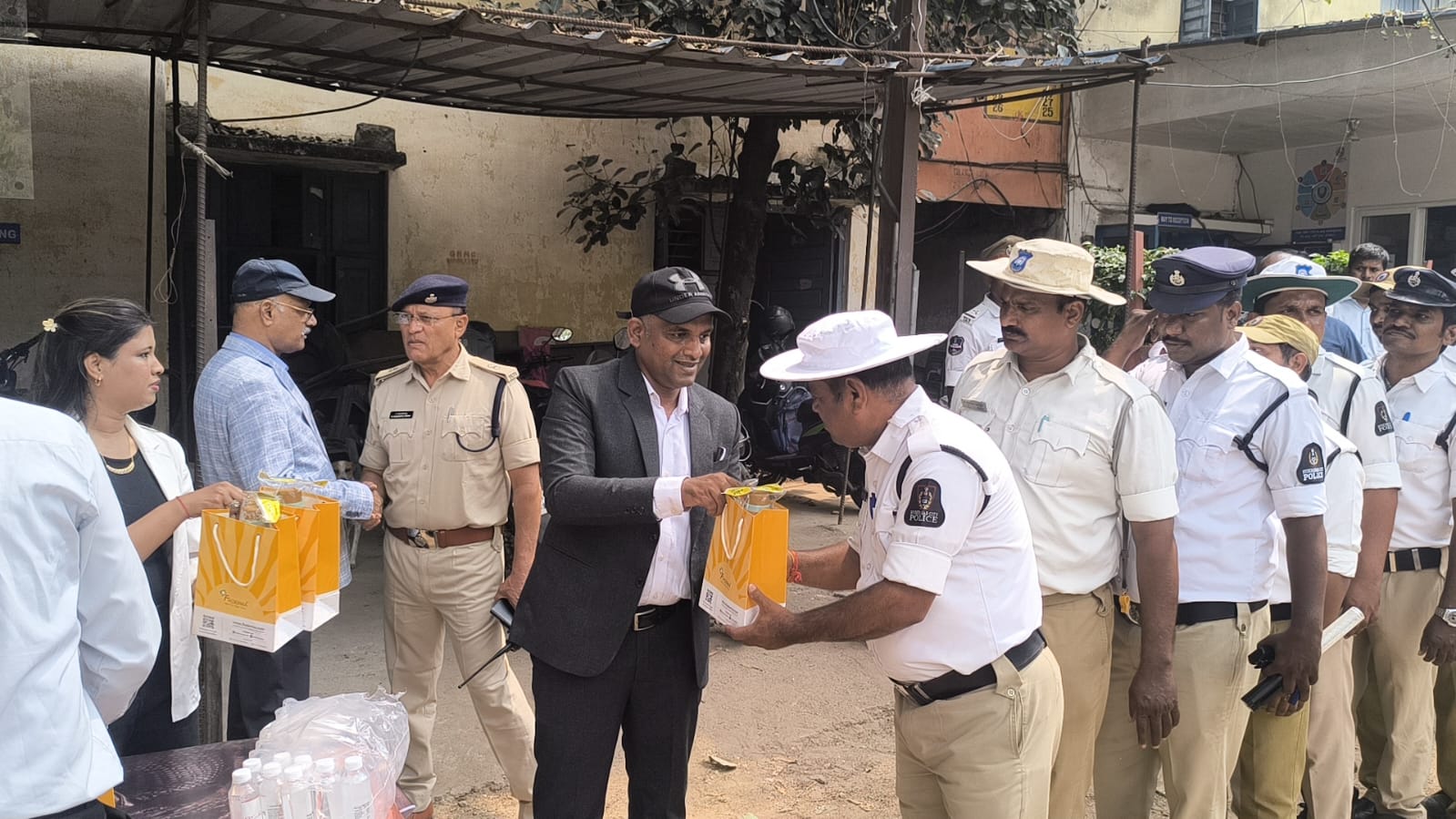
    Fixderma, a leading dermatologist-prescribed skincare brand, launched a sun protection drive to support Hyderabad Traffic Police personnel who endure prolonged sun exposure while on duty.

    The company distributed reusable water flasks and its bestselling Shadow Sunscreen range to traffic officers across the city. The initiative aims to combat dehydration and sun-related skin damage amid rising summer temperatures and intense UV exposure.

    Traffic police personnel, who manage public safety for extended hours in harsh outdoor conditions, are among the most vulnerable to heat-related issues. Fixderma’s drive underscores the vital importance of daily hydration and broad-spectrum sun protection for frontline workers.

    “Traffic police personnel work tirelessly every day to keep the city moving smoothly, despite challenging weather conditions,” said Shaily Mehrotra, CEO and Co-Founder of Fixderma & FCL.

    “Through this Fixderma sun protection initiative, we express our gratitude and contribute to their well-being. Sun protection should be an essential part of everyday health and preventive care.”

    Fixderma’s Shadow sunscreen range is widely recommended by dermatologists for its lightweight, broad-spectrum protection tailored to Indian skin and climate. The brand, founded in 2010, is trusted by over 15,000 dermatologists and exports to more than 40 countries.

  • IFAD launches transformative India rural development roadmap worth USD 4.2 billion

    IFAD launches transformative India rural development roadmap worth USD 4.2 billion

    The International Fund for Agricultural Development (IFAD) and the Government of India have launched a transformative eight-year rural development strategy, committing to scale investment, strengthen climate resilience and accelerate inclusive agricultural growth across the country’s vast rural economies.

    The new Country Strategic Opportunities Programme (COSOP) 2026–2033 was unveiled at the IFAD–India Partnership for Rural Prosperity event held at Bharat Mandapam in New Delhi on April 12, bringing together senior government representatives, IFAD leadership, development partners and private sector actors.

    The strategy sets two core objectives: enhancing the social, economic and climatic resilience of rural communities; and strengthening knowledge systems to scale proven models domestically and share them across the Global South.

    The announcement marks a pivotal expansion of one of IFAD’s largest country partnerships. Across 35 projects, USD 1.36 billion in IFAD financing has mobilised more than twice as much from partners, for a total investment of USD 4.2 billion.

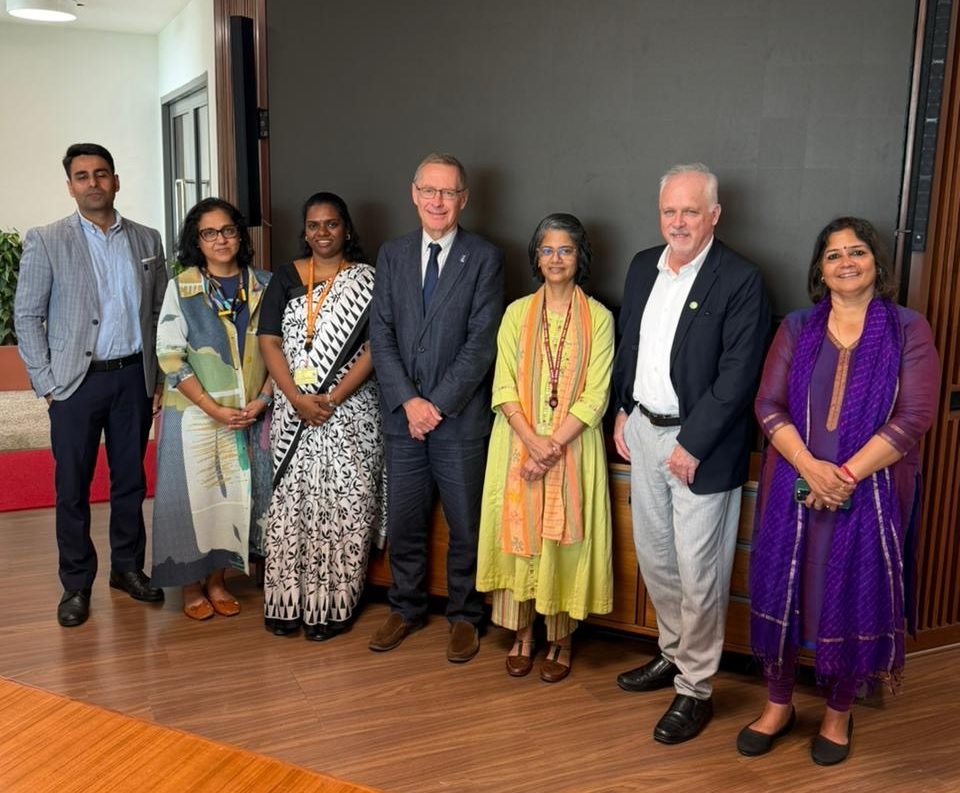
    A senior IFAD delegation led by Associate Vice-President Donal Brown held talks with officials from India’s Ministry of Finance, Ministry of Agriculture and Farmers Welfare, and Ministry of Rural Development. Discussions covered smallholder support, digital agriculture, climate-resilient crops such as millets, and expanding farmer producer organisations.

    Brown said the partnership goes beyond individual projects and focuses on building systems that connect institutions, finance, infrastructure and markets for long-term rural development, IFAD said in a statement.

    The strategy places significant emphasis on strengthening grassroots institutions including self-help groups, farmer producer organisations and cooperatives, expected to play a key role in linking finance, technology, infrastructure and markets.

    On the financing front, IFAD signed a strategic partnership with NABARD on the sidelines of the event to expand rural finance and innovation. NABARD Chairman Shaji K V said the two institutions share a conviction that rural financial systems work best when built from the community up. International Fund for Agricultural Development

    The new strategy also positions India as a knowledge leader in rural development, with plans to share successful models in digital agriculture, inclusive rural finance and climate-resilient value chains with partner countries across Africa, Southeast Asia and Latin America.

    The IFAD delegation also undertook field visits to Meghalaya’s Ri-Bhoi district to review community-led initiatives under the Meghalaya Livelihoods and Access to Markets Project, and held talks with Meghalaya Chief Minister Conrad Sangma and Assam Chief Minister Himanta Biswa Sarma on future agricultural cooperation.

    India and IFAD have partnered for nearly 48 years, financing 35 rural development projects worth approximately USD 4.2 billion, with six ongoing projects focused on market linkages, climate-resilient agriculture and training programmes.

    “India is not only transforming its own rural economy — it is generating solutions that are relevant globally,” said Reehana Raza, IFAD Regional Director for Asia and the Pacific.

  • Gates, Wadhwani sign MoU for India Innovation Network

    Gates, Wadhwani sign MoU for India Innovation Network

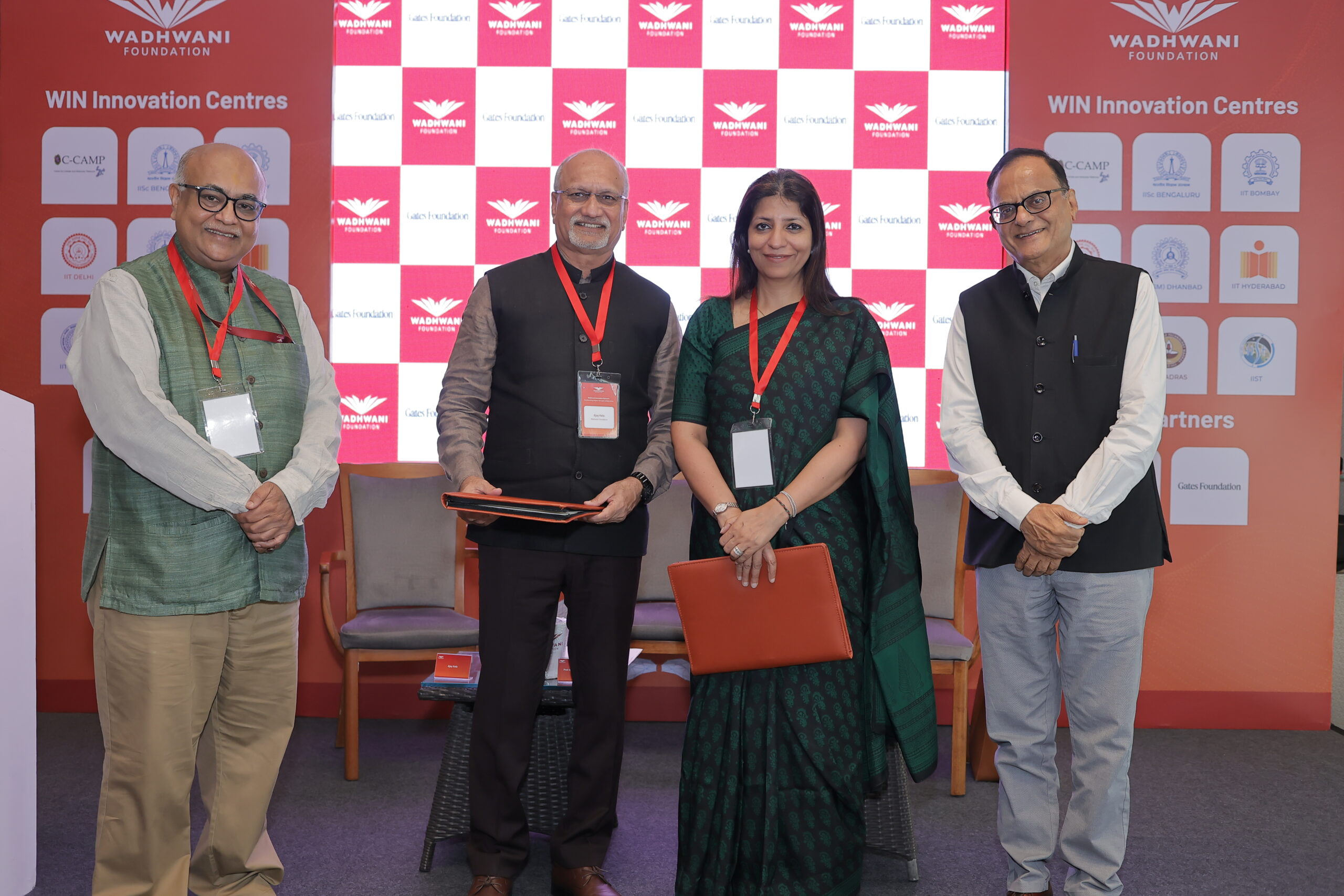
    Wadhwani Foundation and the Bill & Melinda Gates Foundation have signed a landmark Memorandum of Understanding to accelerate India’s push from laboratory research to commercial deployment, backing a national-scale programme called the National Innovation Network (NIN).

    The partnership targets translational research in health, nutrition, biotechnology, genomics and medical technology — sectors the Indian government has identified as national development priorities.

    Under the agreement, the Gates Foundation will fund five NIN Centres of Excellence over five years, with two centres receiving support in the current year. The centres will help researchers move innovations past the laboratory stage toward real-world applications, covering prototyping, validation, pilot deployments, intellectual property management and venture creation.

    The India Innovation Network builds on the Wadhwani Innovation Network (WIN), launched by Prime Minister Narendra Modi on April 29, 2025. Since its debut, WIN has backed more than 50 high-potential projects spanning healthtech, medtech, biotechnology and quantum technologies, establishing research hubs at IIT Bombay, IIT Delhi, IIT Kanpur, IIT Hyderabad, IIT(ISM) Dhanbad, the Indian Institute of Science and C-CAMP.

    Two flagship “Super Hubs” are under development: the Wadhwani School of AI & Intelligent Systems at IIT Kanpur and the Wadhwani Health & Bio Hub at IIT Bombay.

    “WIN has demonstrated that India’s innovation potential can be unlocked when researchers, institutions, industry and capital come together with a shared mission,” said Ajay Kela, Chief Executive and Board Member of Wadhwani Foundation. “Through NIN, we now have the opportunity to democratize innovation across India and help position the country as a global leader.”

    Archna Vyas, Director of the Gates Foundation’s India Country Office, said the most consequential health and nutrition breakthroughs of the next decade would likely originate in Indian institutions. “Our collaboration with Wadhwani Foundation will help support the opportunity for these innovations by investing in translational pathways,” she said.

    NIN aims to establish more than 250 Centres of Excellence across India within three to five years, drawing participation from government agencies, corporate partners, philanthropies and academic institutions under a shared governance framework managed by the Wadhwani Foundation.

    The network’s longer-term targets include translating thousands of innovations annually from research settings to market-ready products, with projected impact across millions of jobs and livelihoods.

  • Elan Group powers World Earth Day run 2026 in Gurugram

    Elan Group powers World Earth Day run 2026 in Gurugram

    Elan Group brought the World Earth Day Run 2026 to life at Elan Mercado, Sector 80, Gurugram on April 19, 2026, flagging off at 5:30 AM in a powerful display of community-driven environmental commitment. Organised in partnership with PikuSports, the event drew enthusiastic participation from runners spanning diverse age groups and fitness levels.

    The run, positioned as an immersive outdoor fitness experience, featured four race categories — a 10 km timed run, a 5 km timed run, and 5 km and 3 km non-timed fun runs — ensuring the event was accessible to first-time participants and seasoned athletes alike. Top male and female finishers in each timed segment, alongside age-category winners, were recognised, reflecting the event’s dual emphasis on competitive performance and broad inclusivity.

    Participants received event T-shirts, hydration and energy support, finisher medals, and digital certificates, complemented by post-run refreshments. On-ground medical assistance was deployed throughout, with photography and videography teams documenting key moments across the course.

    “World Earth Day serves as a powerful reminder of our shared responsibility towards the environment. At Elan Group, we are committed to building not just developments, but experiences that reflect a forward-looking and conscious way of living,” said Vidhi Attri, Head of Marketing, Elan Group.

    The event drew substantial corporate backing across specialised categories. Fortis Memorial Research Institute provided healthcare support; Red FM 93.5 served as radio partner; while Vault, Fast&Up, Bikano, Bagrry’s, Whatr, Recovery Room, Agnishila, BlissClub, Xplurger, Sirona and Spinex covered fitness, energy, gifting, breakfast, hydration, recovery, outfit, social media, hygiene and physiotherapy respectively.

    Elan Mercado’s location in Sector 80 provided a strategically positioned and well-planned environment suited for an early morning large-format run. The event concluded on a high note, underlining Elan Group’s broader strategy of experience-led engagement that integrates lifestyle, wellness and purpose-driven community initiatives.

  • Malabar Gold pledges bold Rs 200 cr CSR push in 2026-27

    Malabar Gold pledges bold Rs 200 cr CSR push in 2026-27

    Malabar Gold & Diamonds has kicked off its most ambitious Corporate Social Responsibility cycle to date, with a bold Rs 200 crore programme for 2026-27 now under way across 19 states.

    The retail jewellery group unveiled the plan earlier this week at the Dr. Ambedkar International Centre in New Delhi, where Union Minister for Commerce and Industry Piyush Goyal inaugurated the distribution of educational scholarships for 33,000 girl students.

    The Malabar Gold CSR 2026-27 initiative spans 15 major programmes at more than 3,000 locations and is designed to benefit over two lakh people by the end of the financial year.

    “Malabar Gold & Diamonds’ decision to allocate INR 200 crore towards CSR will further strengthen the nation’s progress,” Goyal said at the launch event Wednesday. He emphasised that India’s growth is rooted in the empowerment of women and girls.

    Education receives the largest share at Rs 114 crore. Scholarships are now being distributed to students across 284 districts in 18 states — a rollout timed to mark the group’s 33rd anniversary. Micro-learning centres for street children, run in partnership with the Pratham Education Foundation, are also being expanded this year from 1,543 to 2,500 locations across 17 states, with enrolment targets rising from 64,000 to one lakh students.

    Group Chairman M.P. Ahammad said “human resource development is the backbone of national growth,” and added that the scholarship programme gives students the means to contribute to national development. Pratham CEO Rukmini Banerji, who attended the New Delhi launch, called the micro-learning model a proven route to reaching the hardest-to-reach children.

    Food security is the second-largest priority. The Hunger Free World project, allocated Rs 30 crore, already provides daily nutritious meals to 1,15,000 people in India, Zambia, and Ethiopia — a figure the group aims to grow through this cycle. The Grandma Home initiative for destitute mothers anchors the Rs 25 crore housing allocation, while Rs 14.2 crore funds healthcare access, including subsidised medicines through Malabar-Thanal pharmacies.

    Environmental protection receives Rs 10 crore, with the remaining Rs 6.8 crore directed at other humanitarian activities.

    The programmes are administered by the Malabar Charitable Trust, which channels five per cent of the company’s net trading profit into CSR activities annually. The group operates under ESG principles centred on women’s empowerment, healthcare, and education.

    The launch on Wednesday was attended by Malabar Group Managing Director of India Operations Asher Ottamoochikkal, Executive Directors Nishad A.K. and Abdulla Ibrahim, Kerala House Resident Commissioner Puneet Kumar, and Thanal Chairman Idris.

  • Maruti Suzuki commissions Automated Driving Test Tracks in Tamil Nadu for road safety

    Maruti Suzuki commissions Automated Driving Test Tracks in Tamil Nadu for road safety

    Maruti Suzuki India has commissioned seven Automated Driving Test Tracks (ADTTs) in Tamil Nadu, partnering with the state Transport Department to strengthen road safety and driver licensing.

    Tamil Nadu Chief Minister M K Stalin inaugurated the tracks last week via video conferencing at Regional Transport Offices in Coimbatore (Central), Tiruvannamalai, Krishnagiri, Madurai (North), Sivagangai, Dindigul, and Tiruchirappalli (West).

    This forms part of a Memorandum of Agreement to automate ten ADTTs statewide. Maruti Suzuki achieved the record feat of completing all ten within 150 days, with the remaining three in Tirunelveli, Tuticorin, and Marthandam nearing operational status.

    Rahul Bharti, Senior Executive Officer for Corporate Affairs at Maruti Suzuki, stated: “These Automated Driving Test Tracks, fitted with high-definition cameras, RFID sensors, real-time analytics, and integrated IT systems, deliver a transparent and unbiased evaluation process with zero human intervention.”

    He highlighted India’s 1.77 lakh road accident deaths in 2024 (per Ministry of Road Transport & Highways data), stressing the vital role of rigorous testing in promoting disciplined driving and reducing fatalities.

    The ADTTs support testing for two-wheelers (TW) and light motor vehicles (LMV), ensuring compliance with Central Motor Vehicle Rules through automated, objective assessments.

    Maruti Suzuki‘s road safety push aligns with its 5Es approach (Engineering, Education, Evaluation, Enforcement, Emergency Care). The company has now automated 56 ADTTs across eight states, with expansions planned in Rajasthan (21) and Andhra Pradesh (4), targeting 81 nationwide.

    It also operates 8 Institutes of Driving and Traffic Research and 23 Road Safety Knowledge Centres, plus ITMS surveillance and First Responder training programs.

  • HCLTech champions visually impaired cricket tournament

    HCLTech champions visually impaired cricket tournament

    HCLFoundation, the corporate social responsibility arm of HCLTech, is backing the National T20 Tournament for the Visually Impaired, a breakthrough five-day event running through Feb 19 in Pune that aims to champion inclusive sports across India.

    The tournament, organized by The Poona Blind Men’s Association (PBMA) and the Blind Cricket Association (BCA), brings together eight state teams competing at Deccan Gymkhana Ground and Tembekar Ground in Padmavati.

    Teams from Maharashtra, Rajasthan, Madhya Pradesh, Gujarat, Karnataka, Uttar Pradesh, West Bengal and Punjab are vying for elite status in the visually impaired cricket tournament, which has evolved from a state-level competition into a nationally recognized platform since its 2011 inception.

    “Since its inception in 2011, the T20 Blind Cricket Tournament has grown from a state-level competition in Pune to a nationally recognized platform, hosting multiple state, national and international events—including World Cup league matches and national team selections,” said Ravi Wagh, President of the Cricket Association for the Blind in Maharashtra.

    The event provides comprehensive support to athletes, including accommodation, meals, travel assistance, medical care, sports kits and local transport throughout the tournament.

    Rajesh Shah, President of PBMA, said the organization has consistently championed inclusive sports, providing athletes with visual impairments competitive opportunities across India.

    Dr. Nidhi Pundhir, Director at HCLFoundation, said the visually impaired cricket tournament reinforces the foundation’s belief in sports as a tool to expand access and unlock potential.

    “For the past decade, Sports for Change has enabled inclusive sports pathways across India, with strong focus on gender inclusion, grassroots development and elite coaching,” Pundhir said.

    HCLFoundation’s Sports for Change initiative empowers young athletes from underserved communities and has reached over 64,000 athletes, with 25 para-athletes representing India internationally. The foundation has invested nearly 20 million rupees (USD 240,000) in para sports programs.

    The tournament has previously hosted World Cup league matches and served as a selection ground for national team members.

  • AI-Driven CSR: India’s tech leap for social good as Impact Summit begins

    AI-Driven CSR: India’s tech leap for social good as Impact Summit begins

    By Eldee

    As the India AI Impact Summit 2026 kicks off in the capital from February 16, AI-Driven CSR is emerging as a game-changing force in India’s social development landscape. Artificial intelligence is powering a profound revolution, turning corporate giving into smarter, more scalable and high-impact interventions that deliver real, measurable change.

    In FY 2023-24, CSR spending reached new heights with a record Rs 34,000 crore poured into over 59,000 projects — a strong 12 percent surge year-on-year, per Ministry of Corporate Affairs data. Education commands 38 percent of spending, followed by healthcare, environment and livelihoods.

    Many leading firms decisively exceed the 2 percent mandate, channeling resources through foundations for strategic, transformative alignment with national priorities.

    Reforms have added serious muscle: mandatory third-party impact assessments, the transparent National CSR Data Portal, and the Social Stock Exchange unlocking fresh NGO funding channels. The era of checkbox compliance is giving way to outcome-focused, high-impact philanthropy.

    • AI is the decisive accelerator here. Forward-looking Indian companies are harnessing it to amplify efficiency and reach:
    • Infosys Foundation deploys AI for personalised rural learning, predicting outcomes to target interventions with precision.
    • TCS powers remote healthcare chatbots and disaster analytics.
    • Hindustan Unilever uses image recognition to revolutionize waste segregation and recycling.
    • Reliance Foundation combines AI with blockchain for traceable e-waste management.
    • Intel India drives “AI for All” skilling to boost nationwide employability.

    These initiatives echo global trailblazers — Microsoft AI for Earth tackling climate challenges, Google crisis mapping, IBM sustainability models — but are uniquely anchored in India’s mandatory CSR framework and BRSR reporting.

    Pioneering NGOs like Marpu Foundation showcase the transformative potential: AI-driven real-time dashboards for fund tracking, beneficiary verification, automated need-matching and volunteer coordination. Predictive models forecast dropouts and pollution trends, enabling proactive, high-impact spending. The outcome is amplified accountability, minimized leakages and human effort supercharged — never replaced.

    Challenges persist: funds still concentrate in industrial zones, AI adoption remains uneven among tech-savvy giants, and data privacy, bias and digital divides demand urgent safeguards.

    The India AI Impact Summit 2026 arrives at the perfect moment to pioneer solutions. With global visionaries and policymakers converging under the banner of People, Planet and Progress, the summit must champion inclusive AI-Driven CSR policies: incentives for mandatory spending integration, robust public-private-NGO partnerships for localised models, expanded ethical skilling at scale, and firm benchmarks for responsible deployment.

    India’s IndiaAI Mission already provides a solid foundation — indigenous models, compute infrastructure, capacity building. By positioning AI as essential infrastructure for CSR, not an optional luxury, India can lead the world in proving technology can accelerate equitable progress and fast-track the Sustainable Development Goals.

    This summit is more than optics — it’s about defining commitments that convert bold promise into tangible change for millions. In this pivotal moment, India stands poised to demonstrate that innovation and inclusion are not trade-offs — they are powerful allies. The opportunity is immense. The time to seize it is now.

  • CSR flows to India’s aspirational districts rise 20% in FY24, but concentration persists in mining hubs

    CSR flows to India’s aspirational districts rise 20% in FY24, but concentration persists in mining hubs

    By Eldee

    Corporate Social Responsibility (CSR) spending in India’s 112 Aspirational Districts — the backward regions identified by NITI Aayog for accelerated development — grew by nearly 20 per cent in FY 2023-24, reaching Rs 1,521.44 crore from Rs 1,265.36 crore the previous year, according to the latest data tabled in Parliament by the Ministry of Corporate Affairs.

    The figures, part of a Rajya Sabha response in early February 2026, reflect a gradual shift towards channelling private sector resources into underdeveloped pockets, even as overall national CSR expenditure climbed to Rs 34,908.75 crore in FY24 from Rs 30,932.08 crore in FY23.

    Aspirational districts, which account for some of the country’s highest poverty and lowest human development indices, continue to receive only about 4-4.5 per cent of the total CSR pie — a share that has more than tripled over the past decade from around 1.3 per cent but remains modest given the scale of need.

    The data highlights stark regional and district-level variations. Jharkhand emerged as the top recipient among states, with its aspirational districts attracting around Rs 317 crore in FY24 (up from Rs 263 crore), driven largely by industrial and mining-linked contributions.

    Districts such as Purbi Singhbhum (Rs 94.20 crore) and Ranchi (Rs 80.65 crore) remained heavyweights, benefiting from proximity to corporate operations in steel, coal and heavy industries.

    Madhya Pradesh followed closely, with Singrauli topping the national list at Rs 114.29 crore in FY24 — the single highest district allocation — underscoring the influence of energy and mining sectors.

    Other notable performers included Uttarakhand’s Haridwar (Rs 75.80 crore) and Maharashtra’s Gadchiroli, which saw a dramatic jump from Rs 14.55 crore to Rs 70.15 crore, likely tied to increased focus on tribal and forested areas.

    Yet the pattern reveals persistent clustering. A handful of districts — often those with resource extraction or strategic industrial presence — captured a disproportionate share, while many remote or low-activity aspirational districts received negligible funds.

    Several, including Namsai in Arunachal Pradesh, Bijapur and Narayanpur in Chhattisgarh, and Yadgir in Karnataka, recorded zero or near-zero spending in both years. Others, like Sirohi in Rajasthan, saw sharp declines (from Rs 50.97 crore to Rs 20.67 crore).

    Experts point to the voluntary, board-driven nature of CSR under Section 135 of the Companies Act, 2013, which encourages but does not mandate spending in specific geographies beyond preferring local areas around operations.

    Government-owned companies have been more proactive, directing a higher proportion (around 11 per cent in recent analyses) to aspirational districts compared to private firms.

    Reports from think tanks such as Sattva Consulting note that while private corporations now contribute the majority of aspirational district funding — led by BFSI and energy/mining sectors with natural rural linkages — the overall flow remains aligned more with business footprints than pure equity considerations. Three-fourths of district-mapped CSR often concentrates in metros, Tier-1/2 cities or industrial hubs with lower poverty levels.

    NITI Aayog’s Aspirational Districts Programme, launched in 2018, has used real-time monitoring and convergence with central schemes to drive improvements in health, education, nutrition and infrastructure across these regions.

    The rising CSR inflows complement these efforts, but stakeholders argue for stronger nudges — such as better alignment with district priorities, multi-year commitments and incentives for non-core area spending — to ensure more equitable distribution.

    The Ministry maintains that CSR data is publicly available on csr.gov.in, empowering transparency and stakeholder scrutiny. As national CSR totals approach Rs 35,000 crore annually, the challenge remains translating incremental gains in backward districts into transformative, sustained impact amid uneven corporate priorities.

  • Re Sustainability, Janyu ink MoU for transformative robotics waste management

    Re Sustainability, Janyu ink MoU for transformative robotics waste management

    Re Sustainability Limited, a leading integrated waste management firm, and Janyu Technologies have signed a Memorandum of Understanding (MoU) to pioneer transformative robotics waste management solutions across India.

    The strategic partnership combines Re Sustainability’s three-decade expertise in handling hazardous, bio-medical, and industrial waste with Janyu Technologies’ advanced, remotely operated robotic systems.

    The collaboration targets high-risk areas such as sludge removal, confined-space cleaning, and hazardous waste handling, significantly reducing human exposure while boosting operational efficiency, consistency, and traceability.

    India’s waste management industry, valued at over USD 20 billion, is experiencing rapid growth amid stricter regulations, heightened compliance demands, and rising ESG priorities.

    This alliance accelerates the deployment of automation and deep-tech innovations to tackle complex challenges in regulated waste operations.

    Leveraging Re Sustainability’s extensive nationwide network, regulatory knowledge, and execution prowess alongside Janyu’s indigenous robotics tailored for hazardous environments, the partners aim to deliver scalable, safety-first models that align with India’s circular economy and sustainability goals.

    “Safety, compliance, and operational excellence are core to Re Sustainability,” said Masood Mallick, Managing Director & Group CEO.

    “This partnership with Janyu Technologies marks a transformative leap in integrating advanced robotics into high-risk waste management, minimizing human exposure and elevating efficiency, consistency, and traceability.”

    Abhimanyu Raja, Managing Director of Janyu Technologies, added: “India’s industrial progress must prioritize worker safety and dignity. Our human-enabling robotic systems for hazardous tasks like sludge handling and confined-space cleaning shift workers to safer, skilled roles while generating data for AI-driven analytics. Together with Re Sustainability, we are building safer, more competitive industrial infrastructure through Indian innovation.”

    The partnership establishes a foundation for next-generation, human-safe, technology-enabled waste and environmental infrastructure, promoting safer workplaces, robust compliance, and enduring environmental benefits.