Author: csr-admin

  • Muskurahat Foundation launches ‘Project Saarthi’ to help youth leaving shelter homes find jobs

    Muskurahat Foundation launches ‘Project Saarthi’ to help youth leaving shelter homes find jobs

    Muskurahat Foundation today announced the launch of ‘Project Saarthi’ to help youth leaving shelter homes in rural areas identify and secure job opportunities. The Project Saarthi aims to help youth (18 years and above)

    Muskurahat Foundation today announced the launch of ‘Project Saarthi’ to help youth leaving shelter homes in rural areas identify and secure job opportunities.

    The Project Saarthi aims to help youth (18 years and above) — who are required to leave the shelter homes as per the existing Juvenile Justice (Care and Protection of Children) Act — to find employment on an emergency basis and work with them in the long term to identify and take steps towards building their choice of career.

    The long-term vision of the project is to support the youngsters in equipping them with life skills and mental health support to be able to uplift themselves from their current situation, the Foundation said in a statement.

    As part of the project, the Foundation today conducted job readiness training to a pilot batch of 35 youth in Kolhapur, Maharasthra

    Each of them were paired with one mentor to guide them in identifying their life goals and action plans to achieve it. Additionally, a scholarship has also been made available to all participants to take up skill building courses to bridge their skill gap, it said.

    Commenting on the training, Muskurahat Foundation Founder Himanshu Goenka said: “We realised the lack of NGO penetration in Kolhapur and surrounding areas, a result of which is the lack of exposure for the children in shelter homes. These children anyway grow up with the absence of a family that takes care of your basic needs till the time they are able to earn their own living.”

    “…We took quick decisions to support them in the interim to resolve their immediate requirements while keeping our focus on the long term that is to help them build quality lives for themselves,” he added.

    With the pilot batch underway, the learnings are helping the NGO plan and execute more batches that will serve the large community of youth care-leavers currently in need in Kolhapur.

    The slowdown of the economy rendered these youth jobless and unable to manage their living expenses. While the temporary relief through donations was available during the initial months, it has started dwindling and raised the requirement of a regular earning source for their sustenance.

    The youngsters who leave the shelter homes lack awareness and exposure to career guidance, finding employment and work skills. As a result, they take up low-paying, odd jobs in the unorganized sector, which is one of the worst affected sectors during this pandemic, it added.

  • Waste Warriors launches fundraiser to save Jim Corbett from plastic pollution

    Waste Warriors launches fundraiser to save Jim Corbett from plastic pollution

    Amid rising plastic pollution in forest area, Dehradun-based waste management NGO Waste Warriors today said it has tied up with Wishonary, a social networking platform for NGOs, for raising funds to keep clean the forests and borders

    Amid rising plastic pollution in forest area, Dehradun-based waste management NGO Waste Warriors today said it has tied up with Wishonary, a social networking platform for NGOs, for raising funds to keep clean the forests and borders of Jim Corbett National Park in Uttarkhand.

    There is an urgency to take steps to save Corbett, India’s first tiger reserve and Asia’s first national park, as the amount of solid waste has increased with rise in tourist flow. Imagine a national park that’s famous for years of plastic waste more than its tigers or elephants. This is where Corbett might be headed if nothing is done, it said.

    In a statement, Waste Warriors said that the fundraising campaign, called ‘Adopt A Village’ aims to support grassroots efforts to reduce the environmental impact on animals and forests caused by habitat degradation and plastic waste pollution by building systems for solid waste management in 20 villages around the Corbett, it said.

    Besides, the fundraiser will support the ongoing efforts of trained local underprivileged youth and women-led self-help groups, thereby keeping villages and forests cleaner, reducing the impact of wildlife and providing meaningful livelihoods at the same time, it added.

    Waste Warriors, in a statement said, it hopes that people, especially wildlife enthusiasts, environmentalists, and even those who have experienced the beauty of nature reserves, will respond to this call to adopt a village and support a cleaner Corbett.

    Commenting on the initiative, Waste Warriors Project Manager Puspendu Mandal said: “Most don’t realize plastic pollution itself is also an unacknowledged pandemic. It is present in the air, water, and soil, building up in our environment. There’s a strong need to work together to prevent and solve this problem.”

    The work being done by Waste Warrior in Corbett shows how this can be replicated in rural areas across India, he said.

    Mandal had earlier worked as Tourism Manager at Madhya Pradesh’ famous Satpura Tiger Reserve and knows of the challenges and benefits of good systems and working with communities and authorities.

    According to Wishonary Chief Operating Officer (COO) Vivek Saxena, this partnership is an extension to the company’s effort in creating community-level engagement for bringing social change.

    “We wanted to share the true picture of wildlife conservation in our country and support the waste warriors with the community that can enable Waste Warriors with financial support and visibility they need to save wildlife at Corbett,” he said.

    According to Waste Warriors, over 200,000 tourists came to Corbett in 2019 and left behind a mountain of waste for local villages to deal with. In January 2020, a tigress and her cubs were photographed chewing plastic drums in Corbett, but this is just one of the countless unnoticed incidents over the years.

    Since 2013, the team at Waste Warriors Corbett, initiated by local resident Minakshi Pandey and consisting of nine local youth and 15 self-help group women, have managed over 450 tonnes of solid waste in local villages like Dhikuli, Sunderkhal, and Kyari.

    Apart from over 450 clean-ups with 6500 volunteers, including with forest and CTR authorities, the teams regularly engage villages and schools to change behaviors and build SWM systems. But much more support is needed to continue their efforts, it added.

  • HCL Foundation invites online application from NGOs for Rs 16.5 crore HCL Grants

    HCL Foundation invites online application from NGOs for Rs 16.5 crore HCL Grants

    HCL Foundation today invited online application from NGOs working in rural India for providing institutionalized grants up to Rs 16.5 crore under its flagship programme ‘HCL Grant’. Application has been invited for the sixth edition of HCL Grant

    HCL Foundation today invited online application from NGOs working in rural India for providing institutionalized grants up to Rs 16.5 crore under its flagship programme ‘HCL Grant’.

    Application has been invited for the sixth edition of HCL Grant, the most coveted institutionalized CSR grants of India.

    The last date for submitting the application is August 8, 2020. NGOs can apply on the website https://www.hclfoundation.org/hcl-grant.

    According to the Foundation, the Grant is applicable for NGOs working in the field of education, health and environment and that have an experience of implementing projects in rural India.

    Those organizations are eligible who with innovative, replicable and sustainable models can make a significant contribution towards rural development in the categories of education, health and environment, it said in a statement.

    Three NGOs will be awarded with a grant of Rs 5 crore each for a 3-5 year project. The remaining two finalist NGOs in each category will be awarded a one-year grant of Rs 25 lakh, taking the overall Grant commitment Rs 16.5 crore.

    HCL Grant, an initiative by HCL Foundation — the philanthropic arm of HCL Technologies — is a step towards recognition of the ‘The Fifth Estate’ contributing towards the nation building.

    Started in 2015, it is a commitment by HCL to strengthen transformation in the areas of education, health and environment by reaching out to marginalized, isolated and underdeveloped rural communities, and achieve sustainable socio-economic development.

    A unique aspect of the HCL Grant is that the organizations are recognized not only based on the ‘idea’, but also for their power to transform ideas into implementable projects and thereby transform Indian villages in a sustainable way.

    The Foundation said some changes have been made in the current edition of HCL Grant. From the current edition onward, the eligibility criteria in the education and health categories concerning an NGO’s average annual expenditure over the last three years has been reduced from Rs 1.5 crores to Rs 1 crore.

    Also, henceforth, NGOs will need to submit only a brief concept note of the proposal in Stage 1 (as per the online format). Detailed proposals will be required only in Stage 2 from the shortlisted NGOs.

    “There will be no charge or fees while submitting the application,” it said.

    No authorized individual, third party, company, agency or organization may accept an application on behalf of the HCL Grant or ask for any benefit, either monetary or in kind, for completing the application process, it added.

    In these times of COVID-19 crisis, the Foundation said the HCL Grant’s commitment will remain directed towards the objective of achieving sustainable, replicable and scalable rural development, through long-term strategies.

    “The COVID-19 pandemic has opened a range of challenges in rural India, over and above the already prevailing conditions. While HCL Foundation recognizes that the applicant NGOs will take into consideration these challenges, it requests NGOs to ensure that the HCL Grant proposal remains focused on transformation and impactful rural development, in the areas of environment, health and education, through innovative, relevant and cost-effective strategies,” it noted.

    While applying for the HCL Grant Edition VI, the Foundation said it is imperative that the COVID-19 pandemic situation on the ground should to be taken into consideration.

    The pandemic has impacted various states and districts differently, and therefore it is critical that the situation assessment is done at micro-macro levels while developing long term solutions towards issues related to environment, health and education in rural belt of India, it said.

    The NGOs will be treating COVID-19 as the ‘new normal’ till the world finds a permanent solution to it, yet focusing on regular rural developmental areas while taking all measures to contain the spread of the pandemic. This further calls for NGOs to strengthen the aspects of ‘innovation’ and ‘use of technology’ in their HCL Grant application, it added.

  • COVID-19 crisis: SEA provides food & nutritional support to poor in Maharashtra

    COVID-19 crisis: SEA provides food & nutritional support to poor in Maharashtra

    Edible oil trade body Solvent Extractors’ Association of India (SEA) on Sunday said it has provided food and nutrition support as part of its CSR initiative to labourers, farmers and less privileged people in Maharashtra amid the COVID-19 crisis

    Edible oil trade body Solvent Extractors’ Association of India (SEA) on Sunday said it has provided food and nutrition support as part of its CSR initiative to labourers, farmers and less privileged people in Maharashtra amid the COVID-19 crisis.

    In the last four months, the Association has distributed 10,000 kg of sugar in Thane district and 4,500 kg of edible oil in Mumbai and Thane.

    Besides, 10,000 ready meals were distributed for ten days in Gowandi area of Mumbai, 5,000 ready meals to Majiwada migrant labourers in Thane and another 5,000 ready to eat packs to BMC hospitl staff and police department.

    That apart, 63,000 mini meals containing masala oats and ready khichadi packs were distributed. About ten COVID suraksha boxes to police staff were given, it said in a statement.

    Mumbai-based SEA said it is continuing with the CSR activities to provide relief to the lowest strata of the society and daily wagers.

    SEA with 750 membership is an apex body for vegetable oil industry and trade in India. It is recognized as a NGO by the Union Agriculture Ministry and also as trade promotion organisation by the Union Commerce Ministry.

  • OPPO India to honour 120 innovators for creative solution to tackle COVID-19

    OPPO India to honour 120 innovators for creative solution to tackle COVID-19

    Chinese handset maker OPPO today announced a new initiative in India for honouring 120 innovators who have adopted some out-of-the-box ideas to tackle the COVID-19 pandemic. The initiative called Salute to the Ultimate 120 with the Power of Change

    Chinese handset maker OPPO today announced a new initiative in India for honouring 120 innovators who have adopted some out-of-the-box ideas to tackle the COVID-19 pandemic.

    The initiative called “Salute to the Ultimate 120 with the Power of Change” is in collaboration with Forbes India.

    “This initiative is a testament to salute those leaders who are helping people help each other and offer creative solutions to tackle the pandemic,” the company said in a statement.

    Forbes India will come out with four special issues. Each issue will be centred on each of the four pillars – Innovation, endurance, performance, and style and highlight the creative minds of influencers.

    The same will be featured on other platforms in a video format to highlight the contribution. As part of this collaboration, OPPO has also felicitated the influencers with their recently launched Find X2 Pro smartphone, it added.

  • Fujifilm donates 200 PPE kits to Holy Spirit Hospital in Mumbai

    Fujifilm donates 200 PPE kits to Holy Spirit Hospital in Mumbai

    Japanese photography and imaging major Fujifilm today said it has donated around 200 Personal Protective Equipments (PPEs) kits to healthcare professionals at the Holy Spirit hospital in Mumbai. To combat the spread of the disease

    Japanese photography and imaging major Fujifilm today said it has donated around 200 Personal Protective Equipments (PPEs) kits to healthcare professionals at the Holy Spirit hospital in Mumbai.

    To combat the spread of the disease, Fujifilm is providing these essential PPE kits to doctors, which include surgeon gown, face mask, gloves, preventive eye wear, hood cap and shoe cover, an official statement said.

    Commenting on this, Fujifilm India Pvt Managing Director Mr. Haruto Iwata said: “We all are witnessing an unprecedented and difficult time of our lives due to COVID-19 global pandemic. As Mumbai battles the highest number of coronavirus cases in India, we wanted to show our support to the healthcare professionals and salute these health warriors for stepping up for the country selflessly.”

    In addition, the company is installing Computed Radiology, Digital Radiology systems and imagers across isolation wards at hospitals to ensure effective monitoring and controlling the disease outbreaks. These technologies will empower clinicians to improve efficiency and expedite the early diagnosis of the disease.

  • PROJECT MUMBAI bags UN SDG Action Solidarity Award 2020

    PROJECT MUMBAI bags UN SDG Action Solidarity Award 2020

    PROJECT MUMBAI, an award-winning model of Public-People-Private Participation known for social transformation through initiatives of scale, especially during its fight against COVID-19 in Mumbai, has been selected by the UN SDG Action Campaign

    PROJECT MUMBAI, an award-winning model of Public-People-Private Participation known for social transformation through initiatives of scale, especially during its fight against COVID-19 in Mumbai, has been selected by the UN SDG Action Campaign as one of the global recipients for the Solidarity Award 2020

    Shishir Joshi, CEO and Founder and Project Mumbai are among the 50 chosen globally for this honour, an official statement said.

    Among the top fifty recipients in the world, three from India have made it to the global fifty list of winners, PROJECT Mumbai being one of them and only one from this region.

    Project Mumbai is a 20-month-old not-for-profit and in the last hundred days, launched three mental health helplines, built a network of volunteers to provide groceries and medicines to vulnerable senior citizens and people with disabilities living alone.

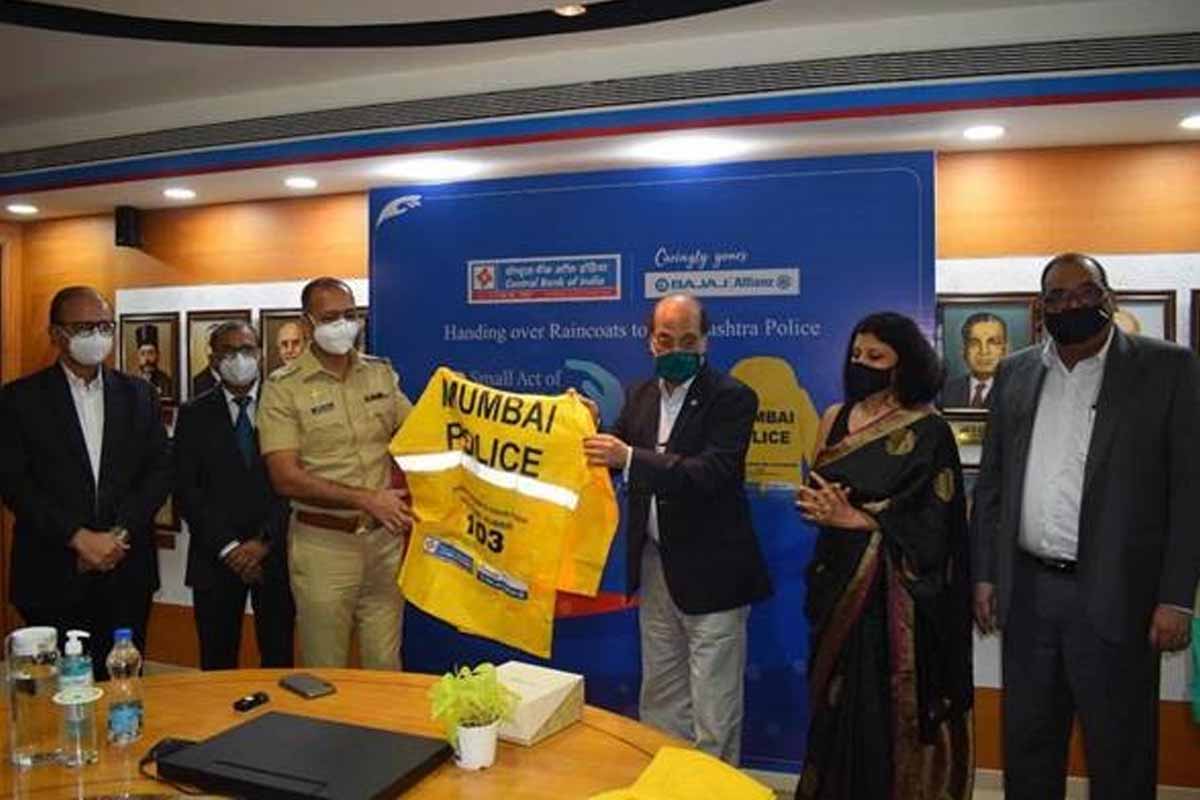
    It also contributed over 2 lakh PPE Kits to doctors, over ten thousand PPE kits and two lakh masks to the Mumbai Police and among its various initiatives provided cooked meals to 45 lakh citizens—homeless and migrants across Mumbai besides providing grocery kits to over 20,000 families.

    Through this initiative, the UN SDG Action Campaign has recognized the most heart-warming and impactful initiatives undertaken and implemented in communities around the world to improve people’s lives, inspired resilience and lifted hopes, amid the ongoing COVID-19 pandemic, the statement said.

    Project Mumbai Founder Shishir Joshi said, “Project Mumbai is founded on the principles of volunteerism. Its support and outreach platform is built on a strong sense of ownership of our city, arising out of every volunteer-citizen’s ability to understand areas that directly affect people’s lives. Each initiative, ranging from mental health helplines and free delivery of essential supplies to grocery and medical support for senior citizens, have been powered by Project Mumbai’s hyper-local volunteer base.

    According to United Nations SDG Action Campaign Global Director Marina Ponti, “In the midst of the global health crisis, we see strong examples of solidarity among people everywhere. We congratulate Project Mumbai for their solidarity and determination to improve others’ lives, inspire resilience and lift hopes in the face of this crisis.”

    The selected initiatives have been announced by United Nations on a day dedicated to Solidarity within the High-Level Political Forum, to inspire people across the world to continue taking action for people and for the planet.

  • FAQs on eligibility of CSR expenditure related to COVID-19 activities

    FAQs on eligibility of CSR expenditure related to COVID-19 activities

    FAQs on eligibility of CSR expenditure related to COVID-19 activities
    In a set of FAQs issued by the Ministry of Corporate Affairs clarified that which COVID-19 related expenditures would qualify under the ‘corporate social responsibility’ (CSR) guidelines. As you may be aware, CSR has been made mandatory

    In a set of FAQs issued by the Ministry of Corporate Affairs clarified that which COVID-19 related expenditures would qualify under the ‘corporate social responsibility’ (CSR) guidelines.

    As you may be aware, CSR has been made mandatory, following an amendment to the Companies Act, 2013 in April 2014. Businesses can invest their profits in areas such as education, poverty, gender equality, and hunger as part of any CSR compliance. Large companies are required to spend 2 per cent of their net profit on CSR activities.

    A set of FAQs along with clarifications are provided below for better understanding of the stakeholders.

    S. No.Frequently Asked Questions (FAQs)Reply
    1. Whether contribution made to ‘PM CARES Fund’ shall qualify as CSR expenditure?Contribution made to ‘PM CARES Fund’ shall qualify as CSR expenditure under item no (viii) of Schedule VII of the Companies Act, 2013 and it has been further clarified vide Office memorandum F. No. CSR-05/1/2020-CSR-MCA dated 28th March, 2020.
    2. Whether contribution made to ‘Chief Minister’s Relief Funds’ or ‘State Relief Fund for COVID-19’ shall qualify as CSR expenditure?Chief Minister’s Relief Fund’ or ‘State Relief Fund for COVID-19’ is not included in Schedule VII of the Companies Act, 2013 and therefore any contribution to such funds shall not qualify as admissible CSR expenditure.
    3. Whether contribution made to State Disaster Management Authority shall qualify as CSR expenditure?Contribution made to State Disaster Management Authority to combat COVID-19 shall qualify as CSR expenditure under item no (xii) of Schedule VII of the 2013 and clarified vide general circular No. 10/2020 dated 23rd March, 2020.
    4. Whether spending of CSR funds for COVID-19 related activities shall qualify as CSR expenditure?Ministry vide general circular No. 10/2020 dated 23rd March, 2020 has clarified that spending CSR funds for COVID-19 related activities shall qualify as CSR expenditure. It is further clarified that funds may be spent for various activities related to COVID-19 under items nos. (i) and (xii) of Schedule VII relating to promotion of health care including preventive health care and sanitation, and disaster management. Further, as per general circular No. 21/2014 dated 18.06.2014, items in Schedule VII are broad based and may be interpreted liberally for this purpose.
    5. Whether payment of salary/wages to employees and workers, including contract labour, during the lockdown period can be adjusted against the CSR expenditure of the companies?Payment of salary/ wages in normal circumstances is a contractual and statutory obligation of the company. Similarly, payment of salary/ wages to employees and workers even during the lockdown period is a moral obligation of the employers, as they have no alternative source of employment or livelihood during this period. Thus, payment of salary/ wages to employees and workers during the lockdown period (including imposition of other social distancing requirements) shall not qualify as admissible CSR expenditure.
    6. Whether payment of wages made to casual /daily wage workers during the lockdown period can be adjusted against the CSR expenditure of the companies?Payment of wages to temporary or casual or daily wage workers during the lockdown period is part of the moral/ humanitarian/ contractual obligations of the company and is applicable to all companies irrespective of whether they have any legal obligation for CSR contribution under section 135 of the Companies Act 2013. Hence, payment of wages to temporary or casual or daily wage workers during the lockdown period shall not count towards CSR expenditure.
    7. Whether payment of ex-gratia to temporary /casual /daily wage workers shall qualify as CSR expenditure?If any ex-gratia payment is made to temporary / casual workers/ daily wage workers over and above the disbursement of wages, specifically for the purpose of fighting COVID 19, the same shall be admissible towards CSR expenditure as a onetime exception provided there is an explicit declaration to that effect by the Board of the company, which is duly certified by the statutory auditor
  • Aide et Action unveils iLead online courses for youth from marginalised section

    Aide et Action unveils iLead online courses for youth from marginalised section

    In an effort to upskill the youth and enable them to make productive use of lockdown, global NGO Aide et Action today launched the “iLEAD Goes Online” initiative through a Facebook Live session. The objective of the programme is to impart vocational

    In an effort to upskill the youth and enable them to make productive use of lockdown, global NGO Aide et Action today launched the “iLEAD Goes Online” initiative through a Facebook Live session.

    The objective of the programme is to impart vocational education to youth from marginalized sections of the society. The initiative encompasses 13 iLEAD courses through a digital medium, an official statement said.

    The development comes amidst the World Youth Skills Day. Amidst the lockdown induced by the COVID-19 pandemic, digital education is a viable option to continue academics.

    After having trained 2,50,000 youths in more than forty domains with the placement of 75 percent, the NGO is launching iLEAD online skill training courses.

    “The training can be undertaken remotely from the safety and comfort of home on a digital platform. The initiative aims to provide livelihood education among the youth from underprivileged families and help them to utilize the lockdown period effectively. And this will also help to develop a new strategy for the organization across the globe” Aide et Action South Asia Board President Rajiva Wijesinha said.

    The iLEAD alumni, along with the current trainees along with trainers and other stakeholders shared their views on this initiative.

    The 13 courses which are now available online are Tally, Computer Operator, Beauty Therapy, Fashion Designing, BSPA, CRR, Automobile, ITeS, Electrician, Hospitality, BSPC, Beautician and Electrical. The platform is available to the registrations through our skill training initiative iLEAD.

  • NGOs: Helping people, changing lives

    NGOs: Helping people, changing lives

    The World Bank defines NGOs as private organisations that pursue activities to relieve suffering, promote the interests of the poor, protect the environment, provide basic social services, or undertake community development

    The World Bank defines NGOs as private organisations that pursue activities to relieve suffering, promote the interests of the poor, protect the environment, provide basic social services, or undertake community development.

    NGOs are legally constituted organisations which operate independently from government and are generally considered to be non-state, non-profit oriented groups who pursue purposes of public interest.

    NGOs and Development: History and Role in India
    NGOs are voluntary organisations (VOs). These are popularly known as NGOs because they are free from governmental control in their functioning. They are democratic and open to all those wishing to become member of the organisation voluntarily and serve the society.

    Therefore, they have assumed a significant space in civil society, which is fast emerging today due to the weakening of the state.

    NGO is a popular term, which has gained currency at global level and commands respect in society due to its welfare services in society. The organization does seek financial assistance from the government but it operates, at least theoretically, on its own principles and programmes.

    NGOs are, in principle, open to voluntary membership.Any one may become member by choice and resign from the organization at one’s own will.

    History of NGOs in India:
    NGO have along history in India. In the past, people in this country have been found to have provided help to others in trouble. Since centuries there exists the tradition of voluntary service to the needy and helpless in the country. In the beginning, these services were rendered by people motivated by their religious feelings.

    They believed that service to people would be the service to God and, therefore, would be a means to attain spiritual salvation and sometimes to atonement for any sinful act. Spirit of charity and altruism guided the voluntary action in the past, which had found expression in diverse forms even outside the formal established religious channels. Many people including rulers have trod the path of service to their fellow beings and adopted it as their life mission.

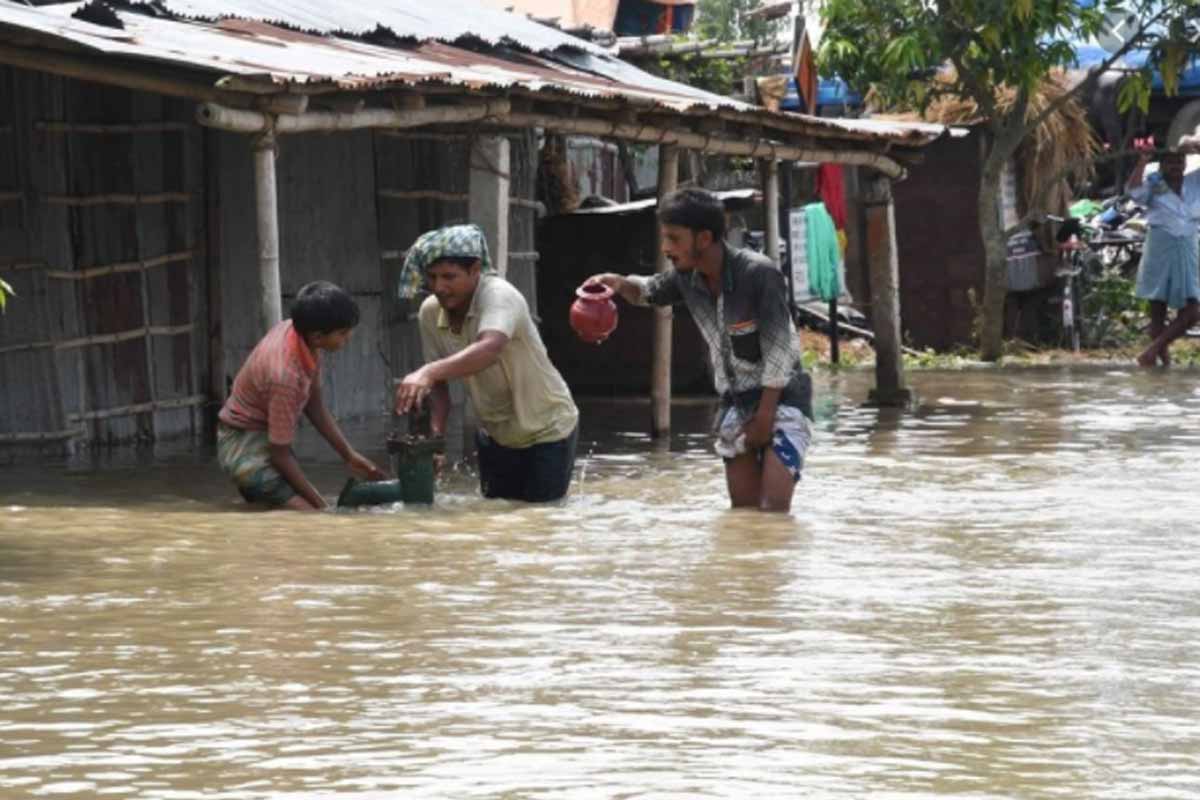
    Floods, fires, earthquakes, epidemic outbreaks and other kinds of calamities were the occasions which motivated people to voluntary help those who were trapped in disastrous situations. Community life was very strong and people were guided by the ‘we’ feeling and selflessness in extending their individual support.

    The help and support used to be individual, spontaneous and transitory.

    It is around the late 18th and early 19th century that associations and organisations were being formed to render such activities in a more organised and permanent profile.

    The reform movements of the 19th century were perhaps the first organised forms of voluntary action in the service of society. This was the period when the caste rigidities were strong, untouchability was in practice, and other social evils like child marriage, cursed status of widows were prevalent in the Indian society against which voluntary organizations came forward to launch reform movements.

    NGOs have gained importance now and are increasing in number very fast. Enhancement of their importance is the result of weakening of the role of state in upholding the welfare and well-being of its citizens and consequent development of the assertive role of civil society to ascertain social welfare and integration. More than half a million voluntary organisations would perhaps be working in the country.

    Role of NGOs in development:
    NGOs have immense role in bringing about social change and development and it is being experienced from different parts of the country. Development, as we have read earlier, is a multi-faceted process, which essentially involves the aggressive participation of the people that would not be possible unless they are educated, awakened and motivated.

    NGOs are taking up this job sportingly and successfully.

    The areas in which we witness active and appreciative role of NGOs are as follows:

    1. The NGOs are active to promote education, particularly among that section of population, which has remained un-benefited or less benefited by the measures adopted by the government.The education of girls, and other deprived people, particularly the SCs and STs, has been their target objective.
    2. Women are the other vulnerable section of society. Gender discrimination is a ubiquitous cultural reality. Girls are discriminated in the upbringing pattern in the family. Larger numbers of the undernourished are from amongst the girls. Retention of girls in schools is much less as compared to boys.
    3. Since the second half of the preceding century started the change in the status of women with their active participation in political,social and economic activities, which gained acceleration since the last quarter of the preceding century. Important in this process has been the role of academicians and NGOs.
    4. The threat to the human life developed due to environmental pollution and imbalance and the depletion of natural resources as a consequence of the nature of development. Here, the role of NGOs is really noticeable and praiseworthy. Thousands of voluntary organisations are at work to awaken people and governments against environmental degradation and depletion of resources.
    5. The NGOs have a major role to play towards the cause of people’s resettlement and are also performing commendable job in this direction. The projects like the construction of dams, road highways and railways have often made some sections of people, particularly in rural areas, vulnerable and are displaced without being properly compensated.
    6. NGOs are also rendering great service in restoring dignity to the deprived and discriminated sections of the people in the society like women suffering from gender discrimination, lower caste people suffering from caste segregation and the status of untouchable, racial and religious discrimination.