Author: csr-admin

  • Maruti Suzuki commissions Automated Driving Test Tracks in Tamil Nadu for road safety

    Maruti Suzuki commissions Automated Driving Test Tracks in Tamil Nadu for road safety

    Maruti Suzuki India has commissioned seven Automated Driving Test Tracks (ADTTs) in Tamil Nadu, partnering with the state Transport Department to strengthen road safety and driver licensing.

    Tamil Nadu Chief Minister M K Stalin inaugurated the tracks last week via video conferencing at Regional Transport Offices in Coimbatore (Central), Tiruvannamalai, Krishnagiri, Madurai (North), Sivagangai, Dindigul, and Tiruchirappalli (West).

    This forms part of a Memorandum of Agreement to automate ten ADTTs statewide. Maruti Suzuki achieved the record feat of completing all ten within 150 days, with the remaining three in Tirunelveli, Tuticorin, and Marthandam nearing operational status.

    Rahul Bharti, Senior Executive Officer for Corporate Affairs at Maruti Suzuki, stated: “These Automated Driving Test Tracks, fitted with high-definition cameras, RFID sensors, real-time analytics, and integrated IT systems, deliver a transparent and unbiased evaluation process with zero human intervention.”

    He highlighted India’s 1.77 lakh road accident deaths in 2024 (per Ministry of Road Transport & Highways data), stressing the vital role of rigorous testing in promoting disciplined driving and reducing fatalities.

    The ADTTs support testing for two-wheelers (TW) and light motor vehicles (LMV), ensuring compliance with Central Motor Vehicle Rules through automated, objective assessments.

    Maruti Suzuki‘s road safety push aligns with its 5Es approach (Engineering, Education, Evaluation, Enforcement, Emergency Care). The company has now automated 56 ADTTs across eight states, with expansions planned in Rajasthan (21) and Andhra Pradesh (4), targeting 81 nationwide.

    It also operates 8 Institutes of Driving and Traffic Research and 23 Road Safety Knowledge Centres, plus ITMS surveillance and First Responder training programs.

  • Jindal Stainless deploys Sanjeevanair purification to cleanse smoke-laden skies above Manikarnika ghat

    Jindal Stainless deploys Sanjeevanair purification to cleanse smoke-laden skies above Manikarnika ghat

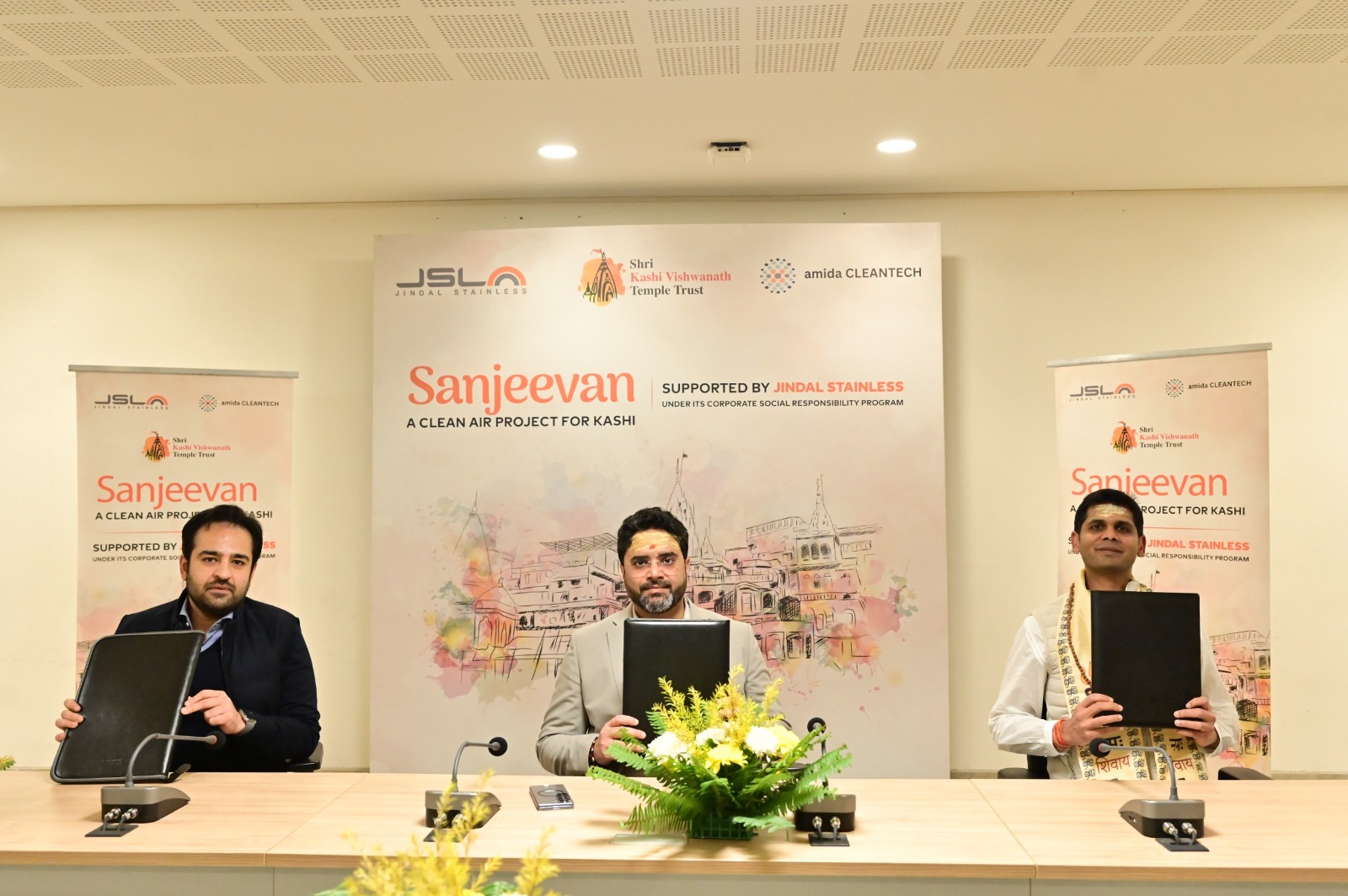
    Jindal Stainless Limited, India’s leading stainless steel manufacturer, has launched Sanjeevan air purification at the Shri Kashi Vishwanath Dham (SKVD) complex in Varanasi, marking the company’s single largest corporate social responsibility initiative to date.

    The breakthrough project targets the dense particulate haze generated by burning funeral pyres at the adjacent Manikarnika Ghat, one of Hinduism’s most sacred cremation sites.

    The programme is being executed in partnership with Amida Cleantech Private Limited (AMIDA), whose proprietary ACE+ technology — independently verified by NITI Aayog — forms the operational backbone of the system. Fifty-eight stainless-steel purification units, installed on the SKVD Ramp Building that flanks Manikarnika Ghat, collectively process more than 3,00,000 cubic metres of ambient air per hour.

    How ACE+ Works

    The acronym ACE stands for Attract, Capture, and Eliminate. The system is engineered to neutralise a broad spectrum of airborne contaminants: nano-black carbon, pollens, organic particulate matter ranging from 100 nanometres to 50 microns, sulphur oxides (SOx), nitrogen oxides (NOx) from vehicular traffic, and microbial pathogens including viruses and bacteria. The technology’s multi-pollutant capability addresses the compounded burden of cremation smoke, temple-corridor exhaust fumes, and biological aerosols — all converging at one of India’s most densely visited religious sites.

    “By improving air quality at Shri Kashi Vishwanath Dham, we aim to enhance the environment for both local residents and the millions of devotees who visit this revered landmark. Our collaboration with Amida Cleantech showcases our support for innovative Indian technology while driving meaningful change.” Jindal Stainless said in a statement.

    Alignment With National Policy

    The Sanjeevan air purification initiative is formally aligned with the National Clean Air Programme (NCAP) launched by India’s Ministry of Environment, Forest and Climate Change, which mandates measurable reductions in particulate pollution at the city, regional, and national level. SKVD authorities have formally approved the installation, a sanction that both companies regard as a critical enabling step for future rollouts at similarly congested heritage sites.

    Amida Cleantech said the system is designed to capture a significant portion of cremation emissions at their source, and to reduce measured PM concentrations along the temple corridor — protecting pilgrims, resident priests, and the ornate stone façades of the SKVD’s historic buildings from accelerated chemical weathering caused by acidic smoke deposits.

    Broader Significance

    Analysts note that Manikarnika Ghat conducts cremations around the clock, 365 days a year, meaning continuous emission loads uncommon at most pollution hotspots. Deploying a validated, scalable ambient purification system in such a demanding environment could serve as a proof-of-concept for other heritage and high-density religious sites across India. Sanjeevan air purification, if it meets its stated targets, would represent a replicable model bridging cultural heritage preservation, public health, and clean-tech commercialisation.

    Both Jindal Stainless and AMIDA were commended by local authorities for their commitment to the project. Amida Cleantech, whose guiding principle is “The Air You Breathe,” said ACE+ innovations are being positioned to address escalating ambient pollution across diverse high-exposure sectors — from industrial corridors to dense urban precincts.

  • HCLFoundation boosts pediatric heart care in UP

    HCLFoundation boosts pediatric heart care in UP

    HCLFoundation, the corporate social responsibility arm of Indian technology giant HCLTech, on Tuesday donated a suite of advanced intensive care equipment to the Saloni Heart Center at Sanjay Gandhi Postgraduate Institute of Medical Sciences (SGPGIMS) in Lucknow — marking a breakthrough in pediatric heart care access for millions of children across Uttar Pradesh.

    Uttar Pradesh records an estimated 75,000 congenital heart disease (CHD) births annually, yet the state until recently lacked a dedicated pediatric cardiac facility. The Saloni Heart Center, established within SGPGIMS as Uttar Pradesh’s first such institution, aims to address that critical gap — and Monday’s donation directly strengthens its post-operative and neonatal intensive care capabilities.

    Life-Saving Equipment Delivered

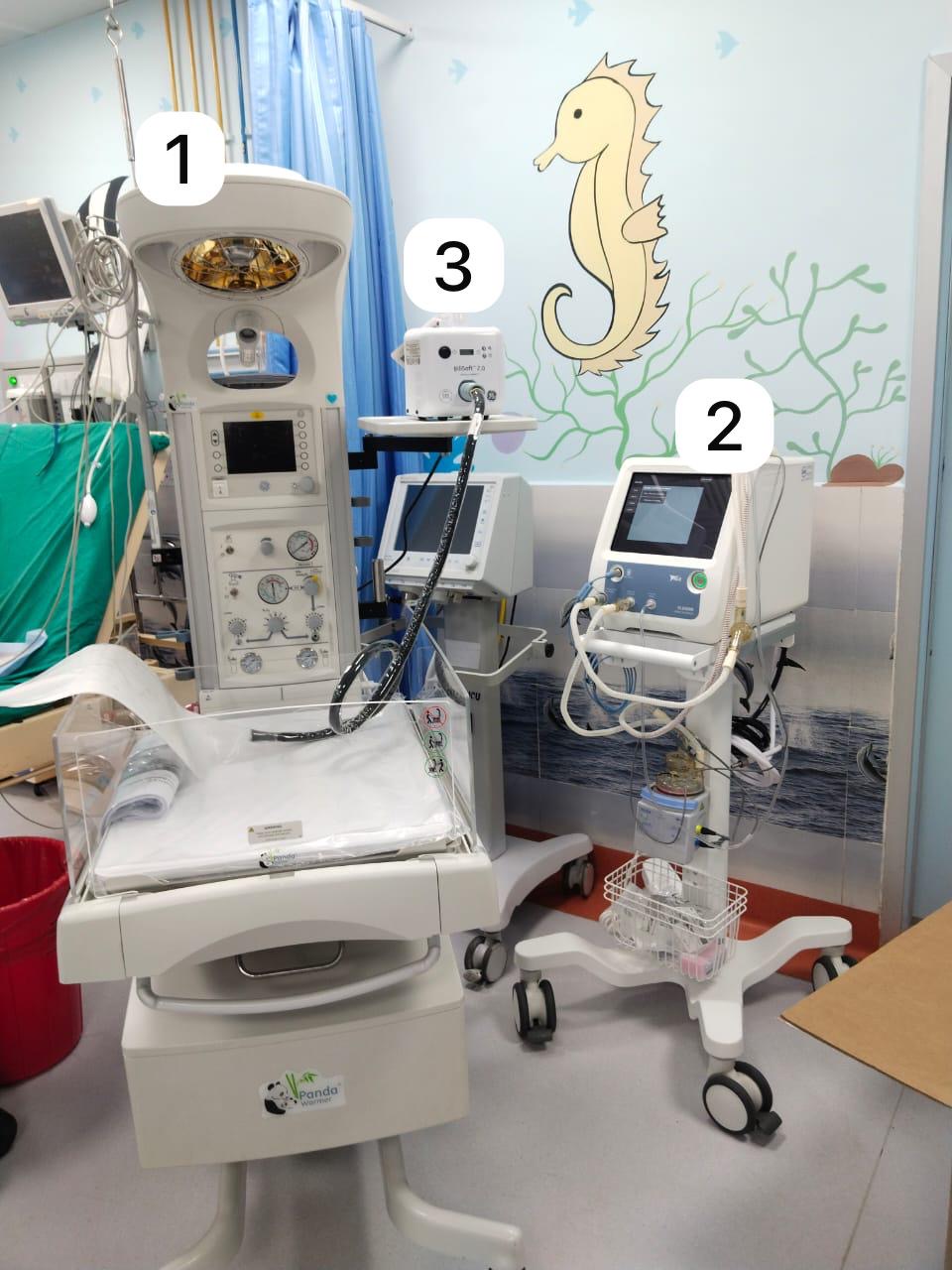
    The donated equipment includes a Panda ResusView Warmer with Resuscitation Trolley to ensure safe thermal regulation and integrated resuscitation support during critical cardiac episodes; an SLE 6000 Paediatric Neonatal Ventilator, a high-precision device designed for newborns and infants requiring controlled respiratory support; and a GE Bilisoft Fibre Optic Phototherapy System for treating neonatal jaundice — a complication particularly hazardous for CHD infants who cannot be routinely transferred to other wards.

    The initiative was attended by senior government officials including Shri Amit Kumar Ghosh, IAS, Additional Chief Secretary for Medical Health and Family Welfare, Government of Uttar Pradesh, and Awanish Kumar Avasthi, IAS, Senior Advisor to the Chief Minister of Uttar Pradesh.

    Also present were Prof. Radha K Dhiman, Director, SGPGIMS; Prof. S.K. Agarwal, Head, Cardiovascular & Thoracic Surgery, SGPGIMS; Shri Himanshu Seth, Executive Chairman, Saloni Heart Foundation; and Rishi Kumar, Senior Vice President, HCLTech.

  • Reckitt Transforms India’s Sanitation Economy, Trains 1.25 Lakh Workers as Entrepreneurs

    Reckitt Transforms India’s Sanitation Economy, Trains 1.25 Lakh Workers as Entrepreneurs

    Reckitt, the British consumer goods company, is pressing forward with a nationwide campaign to build a formal sanitation economy in India by converting informal waste handlers into skilled micro-entrepreneurs, overhauling school sanitation infrastructure, and commissioning the country’s first scientific study of life expectancy among sanitation workers — a group whose average lifespan trails the national mean by nearly 30 years.

    WORKFORCE TRANSFORMATION

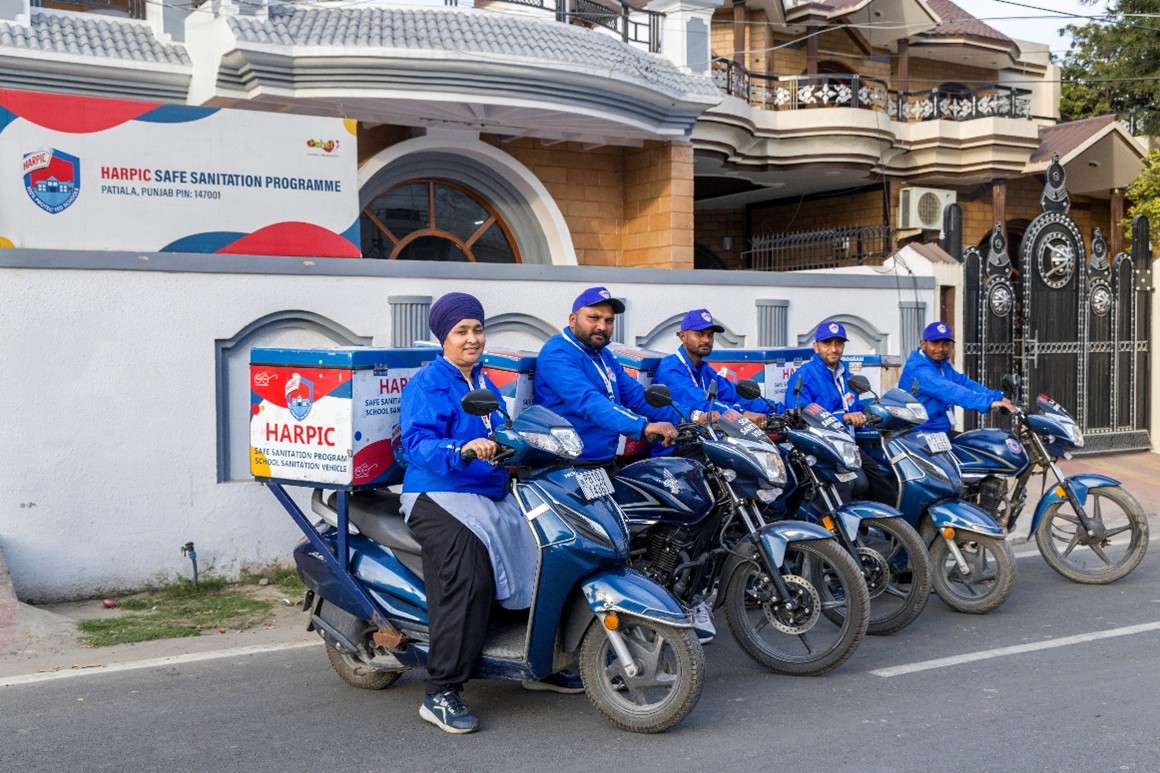
    The company’s Harpic World Toilet College (HWTC), operated in partnership with the World Toilet Organisation and Jagran Pehel, has trained more than 1.25 lakh sanitation workers since its launch, with women accounting for over 45 percent of all trainees. Graduates are equipped to operate mechanised cleaning units, manage school sanitation services, maintain urban drains, and run facility-care operations as independent contractors.

    An independent social return on investment assessment found that every rupee invested in the programme generates Rs 23.20 in social value — driven by gains in worker dignity, safer conditions, and improved financial and health resilience for workers and their families.

    “India has made extraordinary progress in building toilets, but true sanitation progress must also mean longer and safer lives for the people who maintain them.” said Gaurav Jain, Executive Vice President, South Asia, Reckitt

    POWER OF 8: SCHOOL SANITATION REFORM

    Reckitt’s Harpic Safe Sanitation Programme deploys what it calls the “Power of 8” model — an eight-element operational framework designed to guarantee hygiene quality and financial accountability across school sanitation systems.

    The framework bundles assured funding, scheduled cleaning cycles, trained HWTC manpower, professional equipment, supervisory oversight, consumable supplies, drain maintenance and de-clogging, and live digital tracking into a single auditable service package.

    The model is intended to turn sanitation delivery into an enterprise-driven ecosystem, giving HWTC graduates a structured route to operate as service providers and contractors at scale. Behavioural change components — muppet-led sessions, storybooks, pop-up installations, and wall art co-created with Sesame Workshop India — are embedded in the curriculum to establish hygiene habits among schoolchildren.

    LIFE-EXPECTANCY EVIDENCE GAP

    Despite the scale of India’s sanitation workforce, no nationally representative, occupation-linked mortality dataset exists for the sector. Reckitt says the absence of such data leaves policymakers without the evidence needed to design effective mechanisation mandates, personal protective equipment requirements, or compensation frameworks.

    The company is funding what it describes as India’s first comprehensive life-expectancy assessment for sanitation workers, aiming to quantify survival risks from toxic gas exposure, infections, musculoskeletal injury, and socio-economic disadvantage. It says the findings are intended to feed directly into national sanitation economy planning.

    Reckitt has also sought to raise public recognition of sanitation workers. To mark the 25th anniversary of World Toilet Day, the company facilitated the release of commemorative postage stamps honouring the workforce.

    EXPANSION TARGETS

    Reckitt says it plans to extend the Power of 8 framework across additional Indian states, deepen enterprise development through HWTC, and ultimately reach 70 percent of India’s sanitation worker cohort. It describes the combined push — entrepreneurship training, systemic school reform, national recognition and life-expectancy research — as a unified strategy to create a sanitation economy “where every worker can live a longer, healthier and dignified life.”

    India’s Swachh Bharat Mission has overseen the construction of more than 100 million toilets since 2014, a transformation widely credited with expanding sanitation access. However, critics and public-health researchers have long argued that the programme’s focus on infrastructure has not been matched by investment in the workforce that maintains it.

  • HCLTech champions visually impaired cricket tournament

    HCLTech champions visually impaired cricket tournament

    HCLFoundation, the corporate social responsibility arm of HCLTech, is backing the National T20 Tournament for the Visually Impaired, a breakthrough five-day event running through Feb 19 in Pune that aims to champion inclusive sports across India.

    The tournament, organized by The Poona Blind Men’s Association (PBMA) and the Blind Cricket Association (BCA), brings together eight state teams competing at Deccan Gymkhana Ground and Tembekar Ground in Padmavati.

    Teams from Maharashtra, Rajasthan, Madhya Pradesh, Gujarat, Karnataka, Uttar Pradesh, West Bengal and Punjab are vying for elite status in the visually impaired cricket tournament, which has evolved from a state-level competition into a nationally recognized platform since its 2011 inception.

    “Since its inception in 2011, the T20 Blind Cricket Tournament has grown from a state-level competition in Pune to a nationally recognized platform, hosting multiple state, national and international events—including World Cup league matches and national team selections,” said Ravi Wagh, President of the Cricket Association for the Blind in Maharashtra.

    The event provides comprehensive support to athletes, including accommodation, meals, travel assistance, medical care, sports kits and local transport throughout the tournament.

    Rajesh Shah, President of PBMA, said the organization has consistently championed inclusive sports, providing athletes with visual impairments competitive opportunities across India.

    Dr. Nidhi Pundhir, Director at HCLFoundation, said the visually impaired cricket tournament reinforces the foundation’s belief in sports as a tool to expand access and unlock potential.

    “For the past decade, Sports for Change has enabled inclusive sports pathways across India, with strong focus on gender inclusion, grassroots development and elite coaching,” Pundhir said.

    HCLFoundation’s Sports for Change initiative empowers young athletes from underserved communities and has reached over 64,000 athletes, with 25 para-athletes representing India internationally. The foundation has invested nearly 20 million rupees (USD 240,000) in para sports programs.

    The tournament has previously hosted World Cup league matches and served as a selection ground for national team members.

  • SEBI proposes Rs 1,000 SIF investment to boost Social Stock Exchange

    SEBI proposes Rs 1,000 SIF investment to boost Social Stock Exchange

    By Eldee

    Markets regulator SEBI has proposed slashing the minimum investment by individual investors in Social Impact Funds (SIFs) to an accessible Rs 1,000 from Rs 2 lakh, in a bold move to boost retail participation and deepen the Social Stock Exchange (SSE) ecosystem.

    Issued on February 9, 2026, the consultation paper outlines reforms to make social finance more inclusive, following recommendations from the Social Stock Exchange Advisory Committee (SSEAC). The changes aim to encourage greater involvement from not-for-profit organisations (NPOs) and small investors in funding social causes.

    Key proposals include:

    • Reducing the minimum investment threshold in SIFs (which invest in SSE-registered NPO securities) from Rs 2 lakh to Rs 1,000 under SEBI (AIF) Regulations, aligning it with the existing Rs 1,000 minimum for Zero Coupon Zero Principal (ZCZP) applications.
    • Extending NPO registration validity on the SSE (without active fundraising) from two years to three years.
    • Lowering the minimum subscription requirement for ZCZP issuances to enhance fundraising ease.

    These steps build on the SSE framework operationalised since 2023 under SEBI’s (ICDR) and (LODR) Regulations, plus related circulars like the January 2026 Master Circular.

    SEBI has invited public comments on the proposals and draft circular. Submissions can be made via the online portal or emailed to consultationcfd@sebi.gov.in.

    The consultation remains open (typical 21-day period suggests comments likely due early March 2026; check the official SEBI page for the precise deadline).

  • Ambuja Foundation leads breast cancer awareness drive in Gujarat

    Ambuja Foundation leads breast cancer awareness drive in Gujarat

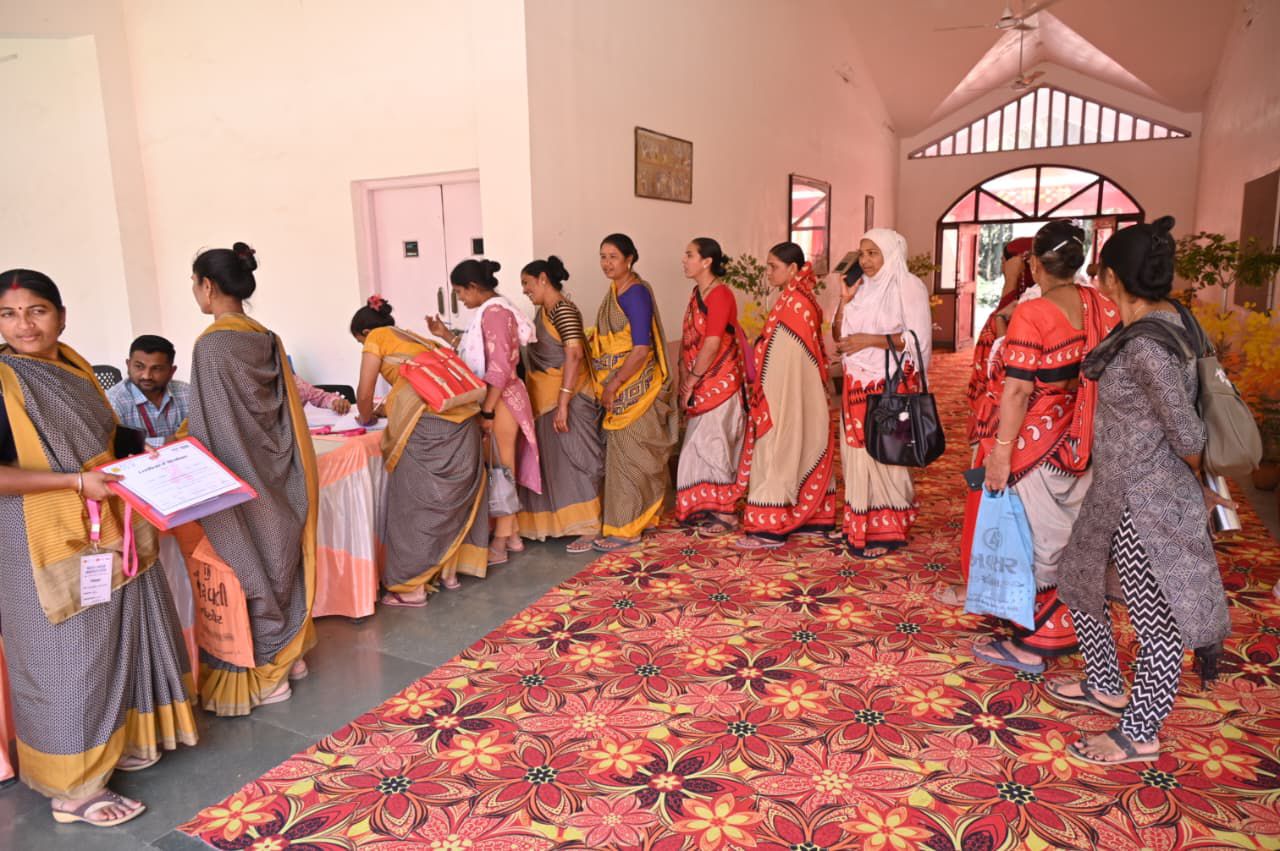
    Ambuja Foundation, backed by Ambuja Cements, hosted a high-impact breast cancer awareness and training camp in Kodinar, Gir Somnath, Gujarat.

    The event was organised with the Association of Breast Surgery UK (ABS), Association of Breast Surgeons of India (ABSI), Gir Somnath District Health Department, and Gujarat Medical Council.

    Dignitaries included Nilesh Jajadia, IPS (IGP Junagadh), representatives from Adani Cements and Ambuja Foundation, senior oncologists from Saurashtra, and health officials.

    Building on earlier camps in Chandrapur and Bathinda, the programme has so far reached: 6,000 women, conducted 3,700 clinical breast exams, and identified & referred 17 high-risk cases.

    Over three days, international and national experts from ABS and ABSI trained 70 plus doctors, 200 plus Community Health Officers (CHOs) and ASHAs in self-breast examination (with prosthesis-based lump detection practice), early diagnosis, and treatment protocols. On day three, 130 plus women received examinations and counselling, while trainees practised under supervision.

    Gujarat has reported – 54,000 breast cancer cases in the last five years; cervical and ovarian cancers also remain high in Saurashtra, especially among women 18–30.

    Since launching NCD cancer interventions in 2023, Ambuja Foundation has expanded evidence-based awareness and capacity building.

    “Since 2023 we’ve worked closely with ABS, ABSI and Gujarat Medical Council experts. We aim to scale this life-saving programme across more rural locations,” said Pearl Tiwari, CEO, Ambuja Foundation.

    “This partnership with Ambuja Foundation has significantly expanded our breast cancer awareness reach in rural India. We remain committed to sharing expertise with frontline health workers,” said Dr. Leena Chagla, FRCS, Past President-Elect, ABS UK.

    “It has been inspiring to witness Ambuja Foundation’s commitment first-hand. With Dr. D G Vijay, ABSI President, joining us in Gujarat, we have strengthened the foundation for long-term impact,” added Dr. Sarah Downey, President, ABS UK.

    Dr. D G Vijay, President, ABSI, affirmed: “As a Gujarati and ABSI President, I am fully committed to sustaining and expanding this vital initiative.”

  • AI-Driven CSR: India’s tech leap for social good as Impact Summit begins

    AI-Driven CSR: India’s tech leap for social good as Impact Summit begins

    By Eldee

    As the India AI Impact Summit 2026 kicks off in the capital from February 16, AI-Driven CSR is emerging as a game-changing force in India’s social development landscape. Artificial intelligence is powering a profound revolution, turning corporate giving into smarter, more scalable and high-impact interventions that deliver real, measurable change.

    In FY 2023-24, CSR spending reached new heights with a record Rs 34,000 crore poured into over 59,000 projects — a strong 12 percent surge year-on-year, per Ministry of Corporate Affairs data. Education commands 38 percent of spending, followed by healthcare, environment and livelihoods.

    Many leading firms decisively exceed the 2 percent mandate, channeling resources through foundations for strategic, transformative alignment with national priorities.

    Reforms have added serious muscle: mandatory third-party impact assessments, the transparent National CSR Data Portal, and the Social Stock Exchange unlocking fresh NGO funding channels. The era of checkbox compliance is giving way to outcome-focused, high-impact philanthropy.

    • AI is the decisive accelerator here. Forward-looking Indian companies are harnessing it to amplify efficiency and reach:
    • Infosys Foundation deploys AI for personalised rural learning, predicting outcomes to target interventions with precision.
    • TCS powers remote healthcare chatbots and disaster analytics.
    • Hindustan Unilever uses image recognition to revolutionize waste segregation and recycling.
    • Reliance Foundation combines AI with blockchain for traceable e-waste management.
    • Intel India drives “AI for All” skilling to boost nationwide employability.

    These initiatives echo global trailblazers — Microsoft AI for Earth tackling climate challenges, Google crisis mapping, IBM sustainability models — but are uniquely anchored in India’s mandatory CSR framework and BRSR reporting.

    Pioneering NGOs like Marpu Foundation showcase the transformative potential: AI-driven real-time dashboards for fund tracking, beneficiary verification, automated need-matching and volunteer coordination. Predictive models forecast dropouts and pollution trends, enabling proactive, high-impact spending. The outcome is amplified accountability, minimized leakages and human effort supercharged — never replaced.

    Challenges persist: funds still concentrate in industrial zones, AI adoption remains uneven among tech-savvy giants, and data privacy, bias and digital divides demand urgent safeguards.

    The India AI Impact Summit 2026 arrives at the perfect moment to pioneer solutions. With global visionaries and policymakers converging under the banner of People, Planet and Progress, the summit must champion inclusive AI-Driven CSR policies: incentives for mandatory spending integration, robust public-private-NGO partnerships for localised models, expanded ethical skilling at scale, and firm benchmarks for responsible deployment.

    India’s IndiaAI Mission already provides a solid foundation — indigenous models, compute infrastructure, capacity building. By positioning AI as essential infrastructure for CSR, not an optional luxury, India can lead the world in proving technology can accelerate equitable progress and fast-track the Sustainable Development Goals.

    This summit is more than optics — it’s about defining commitments that convert bold promise into tangible change for millions. In this pivotal moment, India stands poised to demonstrate that innovation and inclusion are not trade-offs — they are powerful allies. The opportunity is immense. The time to seize it is now.

  • UBL launches transformative project Jal Shakti in Telangana

    UBL launches transformative project Jal Shakti in Telangana

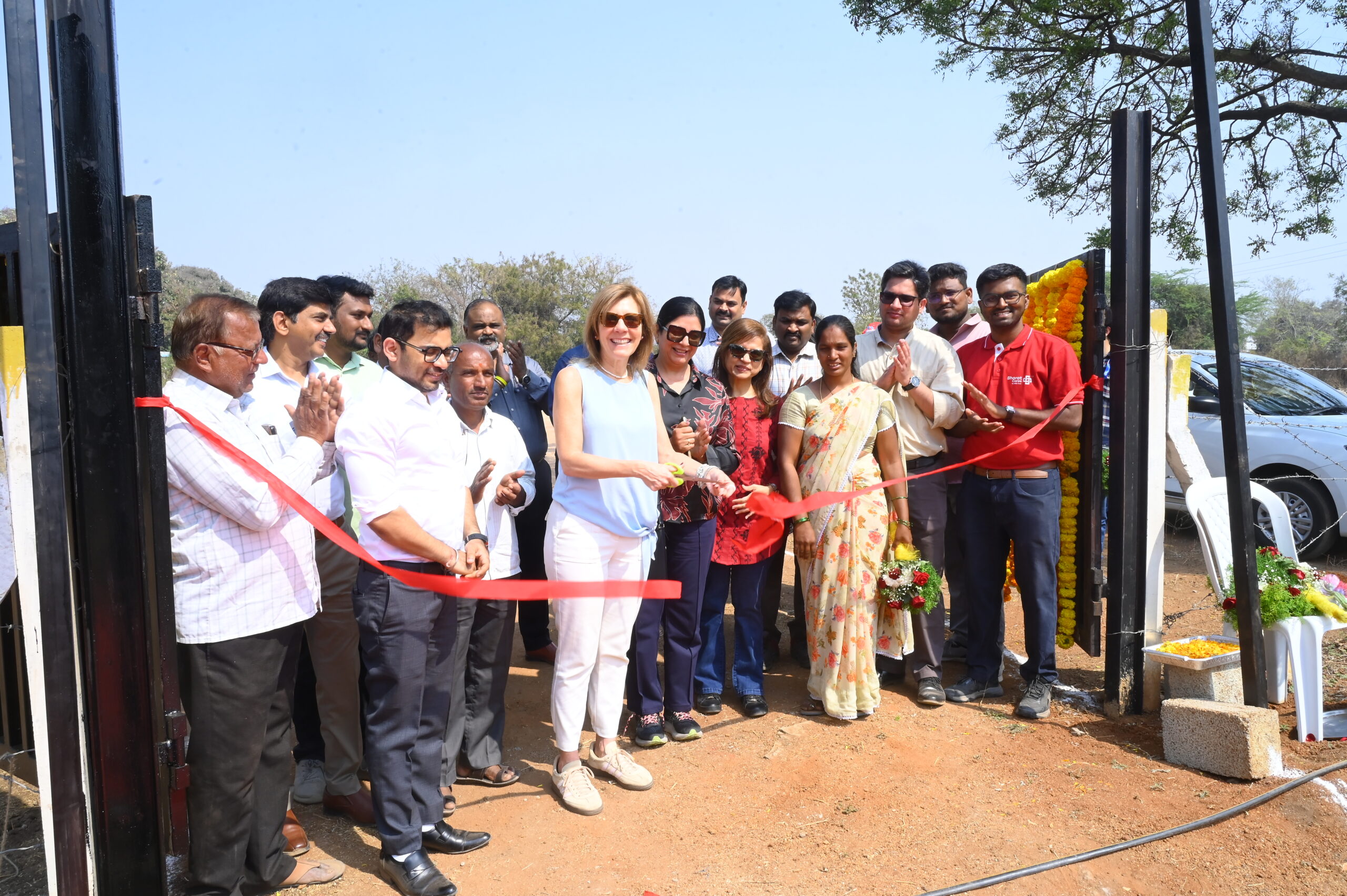
    United Breweries Limited (UBL), a subsidiary of HEINEKEN, has inaugurated its flagship transformative CSR initiative, Project Jal Shakti, in Sangareddy district, Telangana.

    The project, implemented in partnership with BharatCares, focuses on promoting sustainable agriculture, enhancing groundwater recharge, and boosting biodiversity across six gram panchayats: Malkapur, Kothlapur, Guntapalley, Gopulapuram, Haridaspur, and Malepally.

    As part of Project Jal Shakti, two renewable energy-powered Centres of Excellence (CoEs) have been established to empower farmers and local communities.

    The CoEs offer training in sustainable farming practices, soil and water conservation techniques to improve crop productivity. Equipped with automatic weather stations for real-time data and soil testing laboratories, the centres enable data-driven, efficient agriculture.

    To bolster water security, the initiative includes constructing a new check dam, rejuvenating an existing one, and deepening/widening three irrigation channels. Additionally, over 1,200 native saplings are being planted to aid ecosystem restoration.

    The inauguration event featured key attendees including Geetu Gidwani Verma (CSR & ESG Committee Chairperson, UBL), Yolanda Talamo (CSR & ESG Committee Member, UBL), Garima Singh (Chief Corporate Affairs, UBL), Bhomik Shah (Trustee, BharatCares), and Pentani Praveen Kumar (Sarpanch, Kothlapur Gram Panchayat).

    Garima Singh, Chief Corporate Affairs Officer at UBL, stated: “Project Jal Shakti reflects our long-term commitment to sustainable agriculture and water stewardship. By integrating farmer training, water infrastructure, agroforestry, and Centres of Excellence, we are building resilient livelihoods and restoring ecosystems through impactful partnerships.”

    Bhomik Shah of BharatCares added: “We are collaborating closely with communities to advance sustainable farming and water availability. The CoEs will drive long-term resilience for regional farmers.”

    Project Jal Shakti aligns with UBL’s broader sustainability efforts as India’s largest beer producer, marketing brands including Kingfisher and Heineken variants, alongside non-alcoholic beverages.

    BharatCares, the social impact arm of CSRBOX Group, ranks among India’s top social organizations, emphasizing innovation, scalability, and collaborations to tackle education, employability, rural infrastructure, healthcare, entrepreneurship, environmental sustainability, and road safety.

  • Why CSR should not be mapped to parliamentary constituencies

    Why CSR should not be mapped to parliamentary constituencies

    Naveen S Garewal

    In recent parliamentary sessions, a familiar pattern has emerged: Members of Parliament routinely seek granular details on Corporate Social Responsibility (CSR) spending within their Lok Sabha constituencies. Questions range from development works by specific sugar mills in Valmikinagar, Bihar, to targeted interventions in backward or Scheduled Caste-dominated areas of Shahjahanpur, Uttar Pradesh, and even proposals for district-level “CSR project banks” in Amroha to align with local needs in drinking water, sanitation, schools, and skills training.

    The Ministry of Corporate Affairs responds with consistent restraint: CSR expenditure according to parliamentary constituency is not maintained centrally. The framework under the Companies Act, 2013, remains disclosure-based and board-driven. Companies file annual details in the MCA21 registry, and aggregates — state-wise, district-wise, sector-wise, company-wise — are publicly accessible on www.csr.gov.in.

    The government issues no directives on where or how corporates should spend, nor does it track spending by political boundaries or specific communities. This position is not bureaucratic evasion; it is a deliberate design choice that deserves defence.

    The intent of Section 135 of the Companies Act, 2013, was never to create a parallel public funding stream under parliamentary oversight. CSR emerged as a statutory nudge for profitable companies to contribute to society, with boards — advised by CSR committees — deciding priorities based on business strategy, operational footprint, and Schedule VII activities.

    A key guiding principle is preference for local areas around operations, but this is advisory, not mandatory. The regime seeks to harness corporate resources for social good without turning CSR into government-directed allocation. Parliamentary constituencies are political constructs, redrawn periodically through delimitation exercises.

    They rarely align neatly with administrative units like districts or company operations. Imposing central tracking at this level would demand additional compliance burdens — mapping multi-site projects, verifying boundaries, auditing overlaps — on thousands of companies. The cost would outweigh benefits, especially when district-level data already enables scrutiny of local impacts. More critically, constituency-level granularity risks politicising CSR.

    Persistent questions from MPs reflect understandable constituency pressures: elected representatives want visible development in “their” areas. Yet formalising such tracking could foster expectations of informal quotas or invite lobbying, turning a corporate responsibility into an extension of electoral politics.

    Evidence already hints at distortions — higher CSR flows in election years or ruling party strongholds. Codifying constituency data might amplify these tendencies, undermining the board-driven ethos and inviting misuse.

    Transparency exists where it matters. The csr.gov.in portal offers robust, verifiable data: over Rs 4,000-5,000 crore annually from PSUs alone in recent years, spread across states and sectors. District-wise breakdowns allow MPs, civil society, and citizens to analyse flows and advocate for better alignment with local needs. If imbalances persist — say, in aspirational districts or SC/ST areas — the solution lies in incentives, guidelines, or voluntary campaigns, not central mandates that erode corporate autonomy.

    The government’s refusal to maintain constituency-wise data upholds a vital distinction: CSR supplements, but does not substitute, public expenditure or schemes like MPLADS. Politicising it further would blur lines between private philanthropy and state welfare, potentially deterring genuine corporate engagement.

    In an era when development rhetoric often outpaces outcomes, resisting micro-political oversight of CSR preserves its potential as flexible, innovative social investment. Parliamentarians would serve their constituents better by pushing companies directly, leveraging public data, or strengthening convergence with government programmes — rather than demanding a tracking system that the law never envisioned and good policy should avoid. include focus keyword in title and throughout the story