Tag: #WestBengal

  • River lift irrigation empowers 5,700 farmers in Bengal

    River lift irrigation empowers 5,700 farmers in Bengal

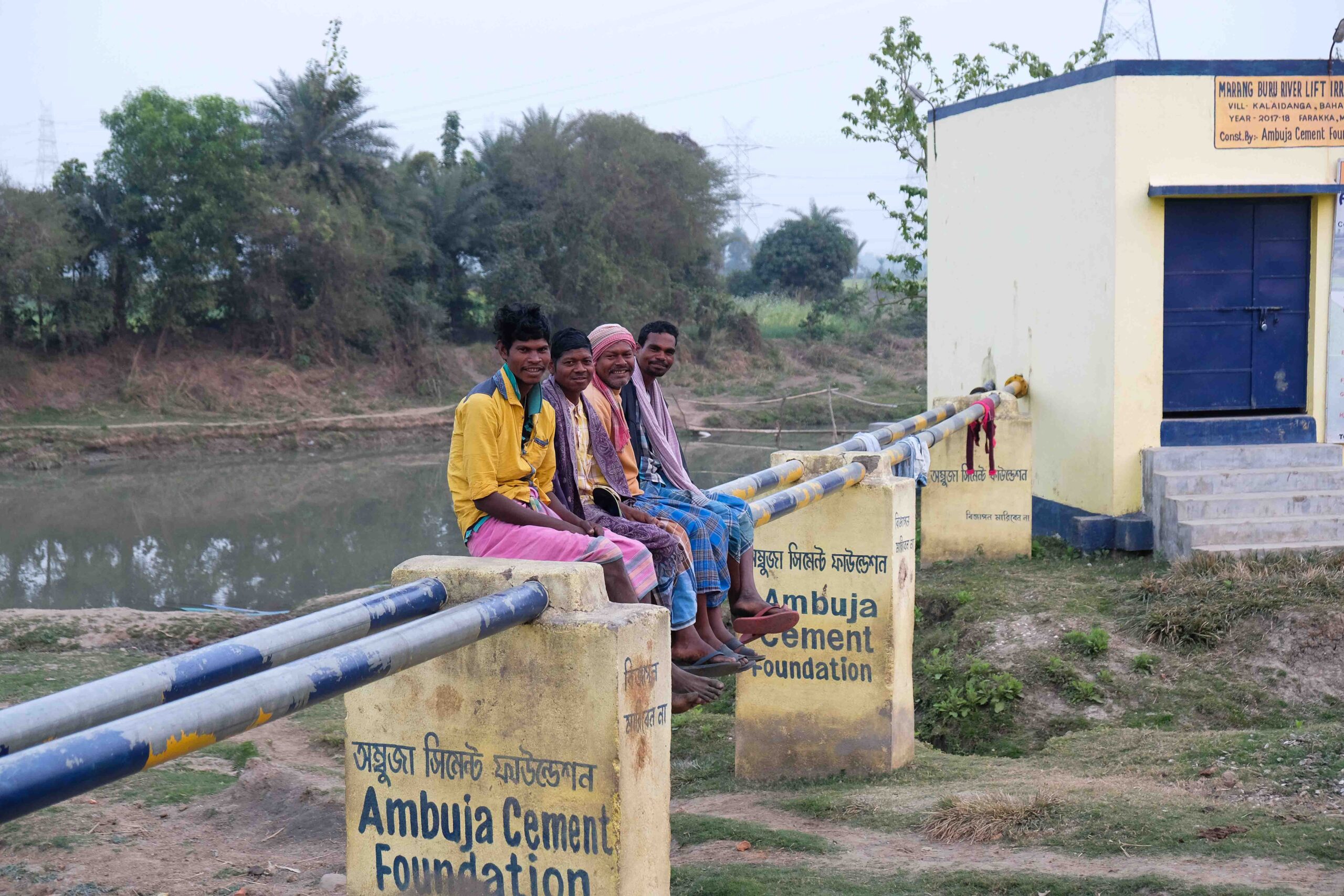
    A River Lift Irrigation initiative led by Ambuja Foundation has transformed farming livelihoods for more than 5,700 farmers across 23 villages in Farakka, Murshidabad district, West Bengal.

    The foundation, working with partners, installed 25 River Lift Irrigation systems covering nearly 747 hectares of farmland, addressing chronic water scarcity that had confined local agriculture to a single crop cycle, the Foundation said in a statement.

    The River Lift Irrigation systems draw water from a nearby river, lift it to higher elevations and distribute it through an underground pipeline network, minimizing land loss and reducing maintenance costs compared with conventional irrigation infrastructure, according to the foundation.

    To sustain the project, Ambuja Foundation established Water User Groups in all 23 villages to manage operations, finances and maintenance, while engaging local pump operators to keep the systems running. The community-led model generates enough revenue to cover operational costs and wages, while building surplus funds for future upkeep, the foundation said.

    The River Lift Irrigation project has lifted cropping intensity in the region from 100% to 250%, while irrigation efficiency has improved by nearly 30%, the foundation said. Farmers who previously grew a single paddy crop are now cultivating Rabi crops such as mustard, wheat and maize, alongside vegetables including cabbage, cauliflower, potato and tomato, enabling two to three harvests a year.

    The economic impact has been significant. Average annual income per acre in the project area has risen to between 80,000 rupees and 150,000 rupees, from 25,000-30,000 rupees before the systems were installed, marking more than a twofold increase, the foundation said. Agricultural land values in the area have also climbed by nearly 20%, strengthening household assets.

    “Ambuja Foundation is committed to bring a meaningful change in rural India. Therefore, we supported rural communities in Farakka with River Lift Irrigation systems which allow families to secure sustainable livelihoods within their own villages,” said Chandrakant Kumbhani, CEO of Ambuja Foundation.

    “We look forward to collaborating on more projects under our sustainable agriculture program to strengthen and support rural communities on their journey toward economic resilience.”

    The initiative forms part of Ambuja Foundation’s broader sustainable agriculture program aimed at improving rural incomes and water resource management across India.

  • IIT Kharagpur study proves speed management cuts crashes

    IIT Kharagpur study proves speed management cuts crashes

    New research from IIT Kharagpur has proved that scientific speed management interventions can significantly cut fatal crash risk, fatalities and crash severity on Indian highways, offering crucial evidence for policymakers as India seeks to halve road crash deaths and serious injuries by 2030.

    The findings were presented at a high-level road safety dialogue organised by the Road Safety Network (RSN) in partnership with IIT Kharagpur, as the country continues to grapple with a severe road safety crisis. More than 1.8 lakh lives were lost in road crashes in 2024.

    The study, carried out on a 51-km stretch of National Highway 16 between Balihati and Kolaghat in West Bengal, examined how design-based speed management measures affected vehicle behaviour and crash outcomes.

    Researchers found the interventions cut operating speeds by 39-45% for cars, 29-33% for heavy vehicles and 18-28% for two-wheelers.

    The study also recorded significant reductions in fatal crashes, fatalities, crash severity and the likelihood of a crash turning fatal at locations where speed management measures were applied.

    Speeding remains a leading cause of road crashes in India. According to the Ministry of Road Transport and Highways’ Road Accidents in India 2024 report, over-speeding accounted for 62% of all road crashes and more than one lakh fatalities nationwide. Pedestrians, among the most vulnerable road users, accounted for 20.6% of all crash fatalities.

    Prof. (Dr.) Bhargab Maitra, Professor, Department of Civil Engineering, IIT Kharagpur, and a Road Safety Network member, said the Safe System approach recognises that while people make mistakes, roads, policies and systems must be designed so those mistakes do not result in death or serious injury.

    He said scientific speed management is central to this approach, and that aligning speeds with road function and the needs of all users, particularly vulnerable ones, significantly improves safety outcomes. He called for greater emphasis on evidence-based interventions as India pursues its road safety targets.

    The findings were unveiled at a dialogue convened by RSN and IIT Kharagpur at the IIT Kharagpur Research Park, bringing together government officials, public health experts, researchers and road safety practitioners to discuss evidence-based approaches to reducing fatalities and serious injuries.

    RSN also presented recommendations to the Ministry of Road Transport and Highways and state and local authorities to strengthen speed management nationwide.

    These included rationalising speed limits based on road function and user risk, adopting context-sensitive speed zoning, strengthening infrastructure and access control, expanding technology-enabled enforcement, improving crash data systems and enhancing coordination across transport, enforcement, health and urban development sectors.

    The recommendations stressed aligning speed management policies with the safety needs of vulnerable road users to support India’s road safety goals.