Tag: #WaterPositive

  • ITC’s women-led water groups transform rural India

    ITC’s women-led water groups transform rural India

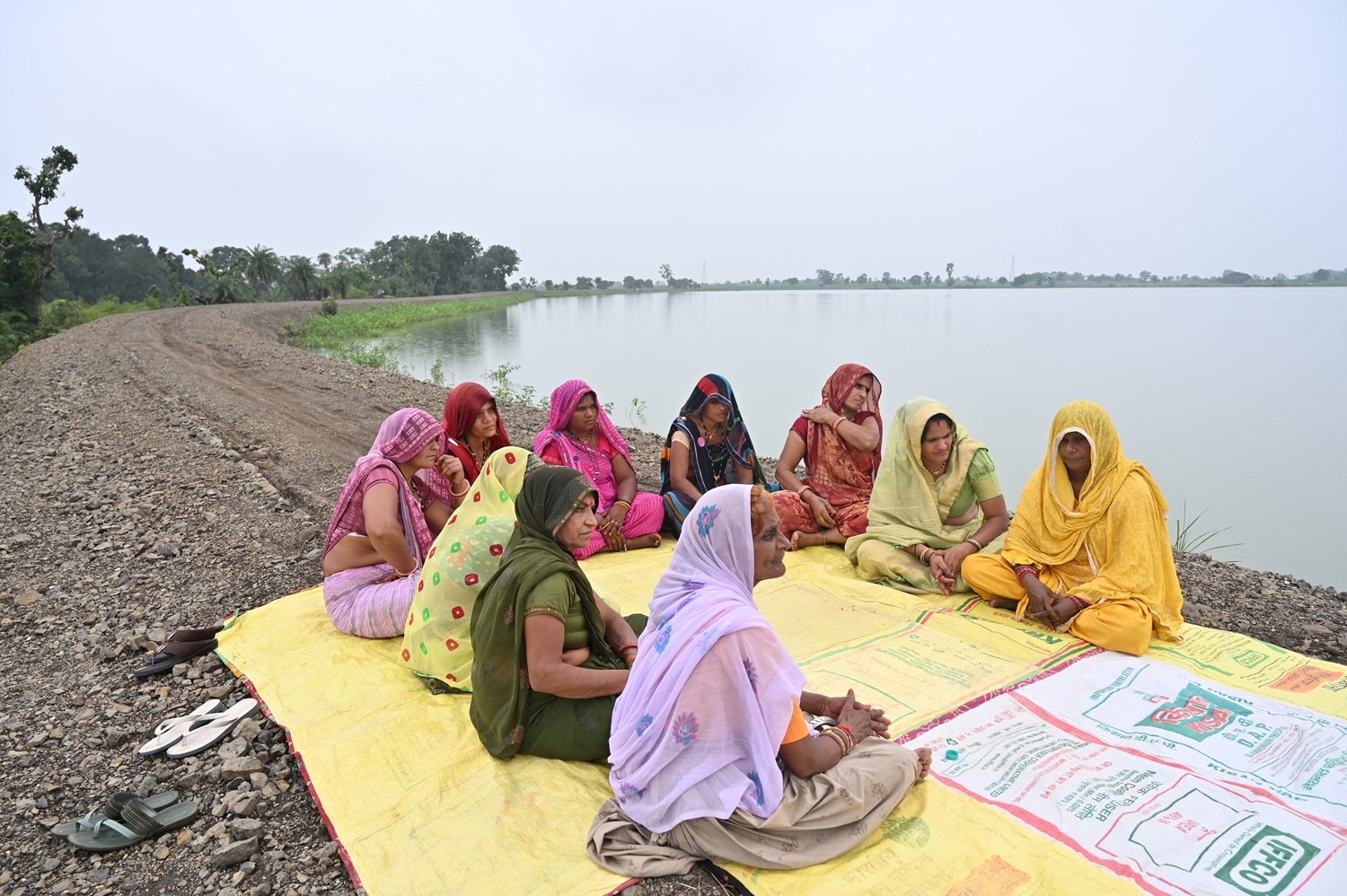
    In Molga village in Madhya Pradesh’s Sehore district, a six-acre lake that once ran dry now brims with water, feeding acres of soybean fields through sluice gates. The turnaround is the work of women — dozens of them — organised into a community water user group under Indian conglomerate ITC Ltd’s watershed initiative.

    The company’s integrated water stewardship programme has established over 5,800 women-led water user groups spanning 17 states, covering 1.89 million acres and benefiting more than 500,000 people. The model centres on a straightforward principle: give women governance over local water, and communities thrive.

    “We used to face a lot of difficulty in getting water earlier,” said Vimla Malvi, a water user group member in Sehore. “I had to carry two pots on my head for long distances. After getting involved with ITC’s water user group, there has been a lot of positive change.”

    Women now oversee maintenance of more than 36,900 water structures — ponds, canals, and check dams — built under ITC’s programmes. Their involvement has ensured equitable water access for marginalised households, where scarcity has historically fallen hardest.

    Beyond infrastructure, ITC’s Krishi Sakhi programme has trained thousands of women as agriculture service providers, promoting drip and sprinkler micro-irrigation and climate-resilient farming. Nearly 200,000 women farmers are part of ITC’s agricultural ecosystem. The company said its water-use efficiency drive enabled potential crop water savings of nearly 1,700 million kilolitres in 2025–26 alone.

    “In inclusive water user groups, women play an active role in decision-making on how water is managed, maintained and shared, ensuring ITC’s interventions are not only equitable and sustainable but also scalable,” said Prabhakar Lingareddy, Executive Vice President, Social Investments, ITC Ltd.

    The programme has helped ITC maintain a water-positive status for over 23 consecutive years, while also operating river basin-level interventions across five major sub-basins.

    The initiative aligns with the United Nations’ World Water Day 2026 theme — “Water and Gender” — carrying the message: “Where water flows, equality grows.” Advocates say ITC’s model demonstrates that empowering women is inseparable from solving the global water crisis.

    Time freed from water collection has flowed into income-generating activities, with women joining micro-enterprises and self-help groups supported by ITC — compounding the social return on what began as an environmental intervention.

  • DS Group achieves landmark water positive certification, joins elite corporate circle

    DS Group achieves landmark water positive certification, joins elite corporate circle

    Dharampal Satyapal Group (DS Group), one of India’s leading FMCG conglomerates, has earned Water Positive Certification from GRIHA (Green Rating for Integrated Habitat Assessment), recording a Water Positivity Index of 1.80 — placing the company among a select few Indian corporations to achieve such a high score.

    The certification, awarded under GRIHA’s Decarbonizing Habitat Programme, follows a two-and-a-half-year assessment across 30 business locations in India, covering divisions spanning food and beverage, mouth freshener, hospitality, and agriculture.

    Scale of Impact

    Conservation interventions by DS Group have created a cumulative water storage potential of 66 lakh kilolitres. The programme integrates rainwater harvesting structures, wastewater reuse systems, recharge wells, water-efficient fixtures, and ecological restoration measures. Projects in Rajasthan and Madhya Pradesh contributed significantly to groundwater recharge outcomes.

    “The whole world is moving rapidly towards sustainability, with global water demand projected to exceed supply by 40% by 2030,” said Rajiv Kumar, Vice Chairman of DS Group.

    “By embedding water-positive practices into our business and community initiatives, DS Group contributes meaningfully to the larger sustainability agenda that India is aiming for.”

    Kumar added that the Group views sustainability “not as a project but as a permanent responsibility,” guided by its philosophy of ‘Create What is Worth Creating.’

    Sanjay Seth, VP and CEO of GRIHA Council and Senior Director at TERI, called the certification “a statement of intent of responsibility and vision,” adding that DS Group had demonstrated that “sustainability, productivity and profitability can go hand in hand.”

    Broader Sustainability Context

    The Water Positive Certification adds to a wider sustainability programme at DS Group that spans water conservation, livelihood development, agricultural initiatives, and energy efficiency. The company’s headquarters holds both LEED Platinum and LEED Zero Carbon certifications from the U.S. Green Building Council.

    The achievement comes ahead of COP30, where water security and climate resilience are expected to be central agenda items.

    Founded in 1929, DS Group markets brands including Rajnigandha, Catch, Pulse, Pass Pass, LuvIt, and L’Opera across domestic and international markets.

    Established in 2007 as a joint initiative between Ministry of New and Renewable Energy and TERI, GRIHA operates as India’s nationally recognised green building rating system and is referenced in India’s Nationally Determined Contributions to the UNFCCC.