Tag: #WaterConservation

  • Andhra farmers smartly beat El Nino with Direct Seeded Rice (DSR)

    Andhra farmers smartly beat El Nino with Direct Seeded Rice (DSR)

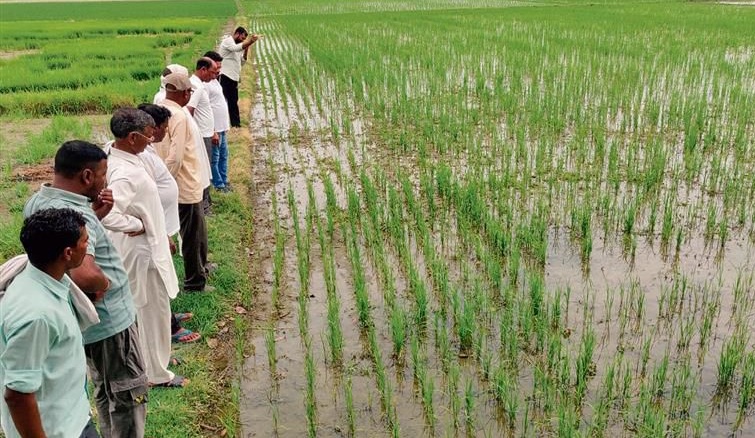
    Majji Satyam has been watching the sky since May. The 52-year-old farmer from JR Puram village in Andhra Pradesh’s Srikakulam district has five acres, two borewells, and a lifetime of growing paddy the way his father did — raise seedlings in a nursery, transplant them into flooded fields, keep the water standing until harvest.

    This kharif season, backed by years of training from the family-owned trust Dr Reddy’s Foundation — one of the beneficiaries of CSR funds of pharma major Dr Reddy’s Laboratories — he is trying something different.

    “Last year, rains had arrived in May itself. This year it has not yet come. I have heard that the rainfall will be less due to El Niño,” Satyam told PTI. “So I have decided to try DSR.”

    DSR — Direct Seeded Rice — skips the nursery entirely. Seeds go straight into the field. No transplantation, no waterlogging, no standing puddles. For a farmer staring down a lean monsoon, it is an attractive proposition.

    Satyam is not alone. Across Srikakulam and Vizianagaram districts, where the Dr Reddy’s Foundation works with farmers in over 1,500 villages covering roughly 10 lakh paddy area as part of the Action for Climate and Environment (ACE) program, a generation of cultivators is being quietly nudged away from water-intensive methods.

    State agricultural departments and Krishi Vighyan Kendras, with whom the foundation works closely, are reinforcing the message — advising farmers to reduce paddy acreage, switch to short-duration crops, or move to pulses and cereals.

    “If El Niño gets severe, we will cultivate paddy for house consumption only,” Satyam said.

    R Sanyas Rao, 50, from the same village, did not wait for a bad year to make the switch. Associated with the Foundation since 2014 — three years before Satyam joined — he tried wet DSR on five acres last kharif and found it worked. Labour costs dropped. Nursery management vanished as a headache. Transplantation costs disappeared.

    This year, Rao is going further: dry DSR on two acres, maize on three. “With borewell facility, I will be able to manage,” he said.

    The numbers make the case bluntly. Conventional paddy cultivation is extraordinarily water guzzling method. DSR and Alternate Wetting and Drying — AWD, a technique where fields are flooded and drained in cycles rather than kept continuously submerged — dramatically cut that demand.

    “Dry DSR method saves around 11-12 lakh litres of water per acre. Wet DSR saves around 4-5.5 lakh litres AWD saves roughly 3-5 lakh litres of water compared to traditional methods,” said Suman Saraswathibatla, Director (Rural Livelihoods and Climate Action) at Dr Reddy’s Foundation.

    Last year, farmers in two districts adopted DSR across 3,667 acres and AWD across 21,963 acres, saving more than 3,000 crore litres of water and reducing over 50,000 tonne equivalent carbon dioxide. With El Nino back in the forecast, those numbers are expected to rise significantly, he said.

    For both techniques to work well, soil moisture must remain consistent in the upper 30–40 cm of the field — a critical condition that shapes when and how farmers decide to sow.

    Being a cyclone and rainfed belt, Srikakulam’s sowing calendar has already changed. Traditionally, paddy went in at the end of June. Over the last three to four years, sowing has shifted to July, with peak transplantation moving to August.

    To bridge the gap, the Foundation has been encouraging farmers to plant short-duration cover crops — black gram, green gram, sesamum — in the May–June window before kharif begins. Green manuring crops like sun hemp and napier help retain soil moisture in the interim.

    Last year, cover crops were grown across 2,372 acres; agro-forestry — mixing timber and fruit plants in coconut orchards — covered 1508 acres. Both are set to expand this season.

    Underlying all of this is a quiet crisis in Srikakulam’s soil health. The foundation through its own state-of-art Hyderabad facility launched in January 2025 is providing soil health test results quickly along with actionable crop advisories.

    Over 5,000 soil health cards were issued last year and the findings are consistent: organic carbon levels are very low. Micronutrients like sulphur, zinc, and boron are deficient. Potash is in excess.

    “Site-specific nutrient management is one of our major interventions this year, especially given the combination of El Nino effects and the fertilizer crunch. We’re pushing hard to bring in as many samples as possible,” Suman said.

    For the past five years, the Foundation has been running awareness campaigns — bulk SMS messages, posters, farm extension meetings — urging farmers to apply fertilisers more precisely, based on what their specific soil actually needs rather than what habit or convenience suggests.

    It is slow work, changing practices that have been handed down across generations. But in a district where water is becoming an annual gamble, farmers like Satyam and Rao are finding that the old ways may no longer be the safest bet.

    “There is more awareness being created to adopt DSR instead of paddy transplantation,” Rao said. “I will decide the sowing operation in July.”

    The monsoon, as ever, will have the final word.

    Source: PTI

  • HDFC Bank Parivartan builds 15,289 water assets, boosts rural India

    HDFC Bank Parivartan builds 15,289 water assets, boosts rural India

    HDFC Bank Parivartan has built and restored over 15,289 water structures across more than 10,430 villages, delivering a powerful boost to rural water security and benefiting 14.92 lakh households.

    The flagship CSR programme has also provided access to safe drinking water in over 950 villages through community purification systems using UV, RO, and multi-stage filtration technology, supported by dedicated water tanks, tap connections, and regular quality monitoring.

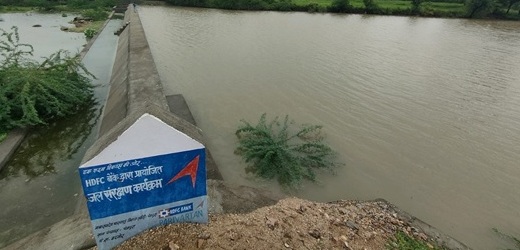
    From farm ponds and check dams to jal minars, rainwater harvesting systems, lift irrigation, and recharge wells, HDFC Bank Parivartan has created diverse water assets tailored to local needs, especially helping tribal farming communities in Central India.

    Powering long-term impact, the bank combines every water structure with agricultural support including micro irrigation systems, shade net houses, Bio-Input Resource Centres, and multilayer farming. These integrated efforts have significantly increased irrigated area, reduced dependence on erratic rainfall, and improved crop yields for smallholder farmers.

    Community ownership remains central to the programme’s success. Women’s Self-Help Groups and Water User Associations actively participate in Village Action Plans, while GIS-based planning and convergence with government schemes like MGNREGA ensure precision and sustainability. Trained water user groups focus on water budgeting and judicious usage to keep assets productive for years.

    “At HDFC Bank Parivartan, we meet communities where they are — whether building ice stupas in the mountains or installing purification plants in villages that never had clean tap water,” said Ms. Nusrat Pathan, Head of CSR, HDFC Bank.

    “Through Parivartan, our work spans watershed development, rainwater harvesting, rejuvenation of water bodies, last-mile irrigation infrastructure, and climate-smart agricultural practices. Over 15,000 water structures and safe drinking water for nearly a thousand villages is a major milestone, but the real success lies in fields now yielding a second crop and children no longer falling ill from contaminated water. We remain committed to building a water-secure India,” she added.

    Natural Resource Management was introduced as a dedicated focus area under Parivartan in FY 2024-25, integrating water conservation with afforestation, soil health, and solar energy. The programme supports Sustainable Development Goal 6 (clean water and sanitation) and SDG 13 (climate action).

    HDFC Bank Parivartan operates across six key pillars — Rural Development, Education, Skill Development & Livelihood Enhancement, Healthcare & Hygiene, Financial Literacy & Inclusion, and Natural Resource Management. As of March 2025, it has positively impacted over 10.56 crore lives across 28 states and 8 Union Territories. In FY 2024-25, HDFC Bank spent Rs. 1,068.03 crore on CSR activities under the Parivartan umbrella.

  • DS Group achieves landmark water positive certification, joins elite corporate circle

    DS Group achieves landmark water positive certification, joins elite corporate circle

    Dharampal Satyapal Group (DS Group), one of India’s leading FMCG conglomerates, has earned Water Positive Certification from GRIHA (Green Rating for Integrated Habitat Assessment), recording a Water Positivity Index of 1.80 — placing the company among a select few Indian corporations to achieve such a high score.

    The certification, awarded under GRIHA’s Decarbonizing Habitat Programme, follows a two-and-a-half-year assessment across 30 business locations in India, covering divisions spanning food and beverage, mouth freshener, hospitality, and agriculture.

    Scale of Impact

    Conservation interventions by DS Group have created a cumulative water storage potential of 66 lakh kilolitres. The programme integrates rainwater harvesting structures, wastewater reuse systems, recharge wells, water-efficient fixtures, and ecological restoration measures. Projects in Rajasthan and Madhya Pradesh contributed significantly to groundwater recharge outcomes.

    “The whole world is moving rapidly towards sustainability, with global water demand projected to exceed supply by 40% by 2030,” said Rajiv Kumar, Vice Chairman of DS Group.

    “By embedding water-positive practices into our business and community initiatives, DS Group contributes meaningfully to the larger sustainability agenda that India is aiming for.”

    Kumar added that the Group views sustainability “not as a project but as a permanent responsibility,” guided by its philosophy of ‘Create What is Worth Creating.’

    Sanjay Seth, VP and CEO of GRIHA Council and Senior Director at TERI, called the certification “a statement of intent of responsibility and vision,” adding that DS Group had demonstrated that “sustainability, productivity and profitability can go hand in hand.”

    Broader Sustainability Context

    The Water Positive Certification adds to a wider sustainability programme at DS Group that spans water conservation, livelihood development, agricultural initiatives, and energy efficiency. The company’s headquarters holds both LEED Platinum and LEED Zero Carbon certifications from the U.S. Green Building Council.

    The achievement comes ahead of COP30, where water security and climate resilience are expected to be central agenda items.

    Founded in 1929, DS Group markets brands including Rajnigandha, Catch, Pulse, Pass Pass, LuvIt, and L’Opera across domestic and international markets.

    Established in 2007 as a joint initiative between Ministry of New and Renewable Energy and TERI, GRIHA operates as India’s nationally recognised green building rating system and is referenced in India’s Nationally Determined Contributions to the UNFCCC.