Tag: ViksitBharat

  • India’s transformative fight against malnutrition via CSR

    India’s transformative fight against malnutrition via CSR

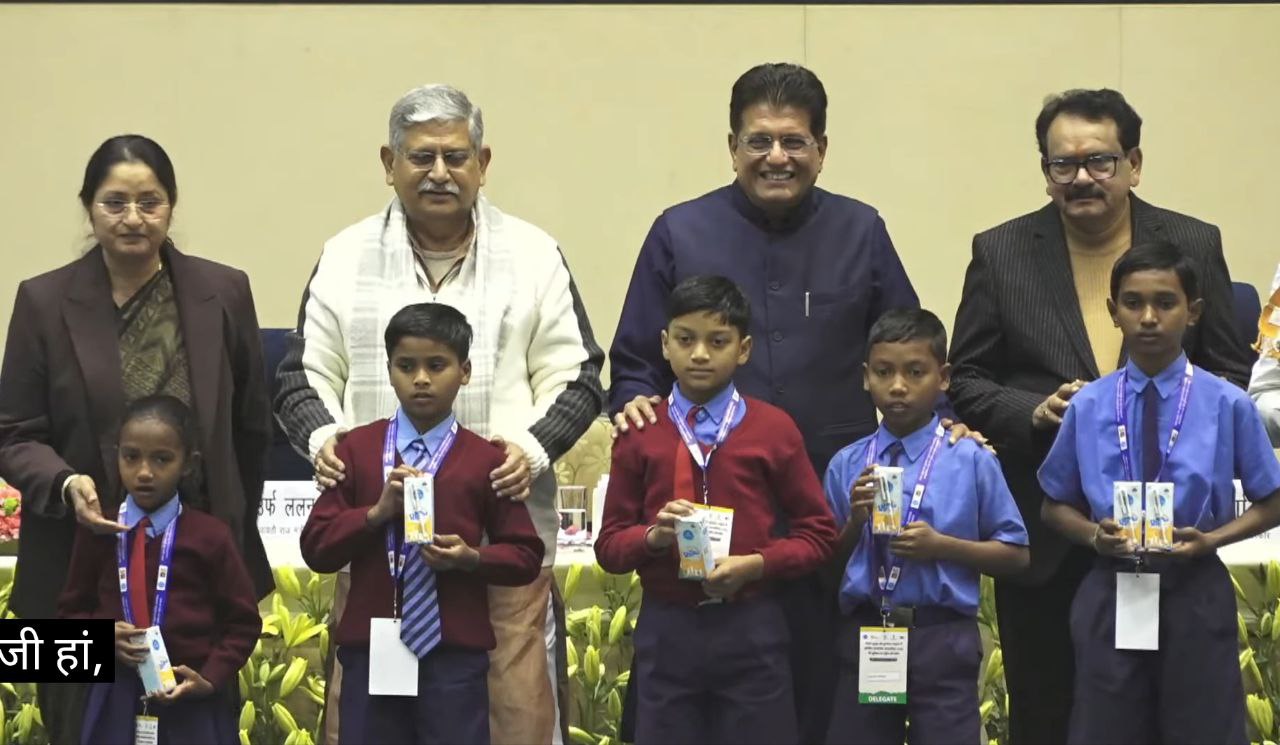
    Commerce and Industry Minister Piyush Goyal on Tuesday called for a transformative fight against malnutrition via CSr against malnutrition via CSR, stressing it as a collective national responsibility shared by government, corporates, communities and individuals.

    Addressing the National Conclave on the Role of Corporate Social Responsibility in Nutrition Security and Malnutrition Mitigation, organised by the National Dairy Development Board (NDDB) Foundation for Nutrition, Goyal said eliminating malnutrition is vital for realising Viksit Bharat by 2047 and ensuring long-term social and economic prosperity.

    He viewed the mandatory 2 per cent CSR spending as a floor, not a ceiling, and framed malnutrition via CSR initiatives as strategic opportunities for businesses to create shared value.

    Goyal praised NDDB programmes like Giftmilk and Shishu Sanjeevani, which deliver fortified milk and supplements to children in schools, anganwadis, aspirational districts and tribal areas via cooperative networks.

    Highlighting inter-ministerial synergy under the Prime Minister’s whole-of-government approach, he noted collaboration among ministries of Commerce, Cooperation, Animal Husbandry, Panchayati Raj, and Women and Child Development.

    NDDB serves as a key facilitator linking industry CSR with grassroots delivery, promoting affordable access to milk and fish as protein-rich foods.

    Goyal emphasised early intervention during pregnancy and childhood to prevent stunting, while advocating saturation coverage to every household.

    He positioned nutrition investments as building India’s future workforce and markets, benefiting corporates through healthier consumers and employees.

    Calling for a people’s movement, Goyal encouraged exceeding CSR obligations and personal contributions to achieve a malnutrition-free India.

  • From struggle to success: How Samadhan Project changed Rajasthan farmers’ lives

    From struggle to success: How Samadhan Project changed Rajasthan farmers’ lives

    In the arid landscapes of Rajasthan, where traditional farming often meant meager earnings and uncertainty, Hindustan Zinc’s Samadhan Project is sparking a quiet revolution. This flagship CSR initiative has reached nearly 1.4 lakh farmers, helping them generate over Rs 192 crore in diversified income in just the past year through modern, sustainable practices.

    Take Shankar Lal Dangi from Chota Guda village near Udaipur. Like many, his family once scraped by on Rs 6,000–7,000 a month, limited by old-fashioned methods, scarce water, and unreliable markets. Through the Samadhan Project, Shankar embraced drip irrigation, scientific cropping, and joined a Farmer Producer Organization for better prices, according to the company statement.

    Today, his yields are higher, milk production has doubled, and his income has soared—bringing stability, pride, and a brighter future for his family.

    Close-up of raw milk being poured into container with dairy cows in background


    Similar hope blooms in Sindesar Kalan village, Rajsamand district, with Dinesh Puri Goswami. He shifted from low-yield crops to diverse vegetables and upgraded dairy practices.

    Using raised-bed nurseries and better animal care, Dinesh earned Rs 78,000 from vegetables in four months, plus Rs 12,000 monthly from milk. “It’s reduced our risks and given us steady income,” he shares.

    Women are at the heart of this change too. Gendi Bai from Ganeshpura village turned one bigha of land into a thriving vegetable plot with drip irrigation and mulching, earning ₹90,000 and gaining recognition as a progressive farmer.

    From leading Farmer Interest Groups to running dairy enterprises, women under Samadhan are driving household prosperity and community strength.

    The project’s multi-pronged approach—crop diversification, precision irrigation, livestock improvement, microenterprises, and farmer-owned institutions—has delivered real results: ₹90 crore in livestock assets, 280 lakh litres of milk worth ₹88 crore, and revenues from farmer-led ventures.

    With 510 Farmer Interest Groups and five Producer Organizations involving over 9,300 shareholders, Samadhan covers 2,449 hectares in climate-smart practices like trellis farming and bio-fortified crops. It’s not just boosting incomes; it’s building resilience, nutrition, and agri-entrepreneurship.

    As a Vedanta Group company, Hindustan Zinc extends its impact beyond farming through education, healthcare, and more, touching 23 lakh lives across 2,300 villages—aligning with India’s vision of inclusive growth.

    These stories of Shankar, Dinesh, Gendi Bai, and thousands more show how the Samadhan Project is turning subsistence into sustainability, one farm at a time.

  • Gates Foundation Appoints Archna Vyas as India Director

    Gates Foundation Appoints Archna Vyas as India Director

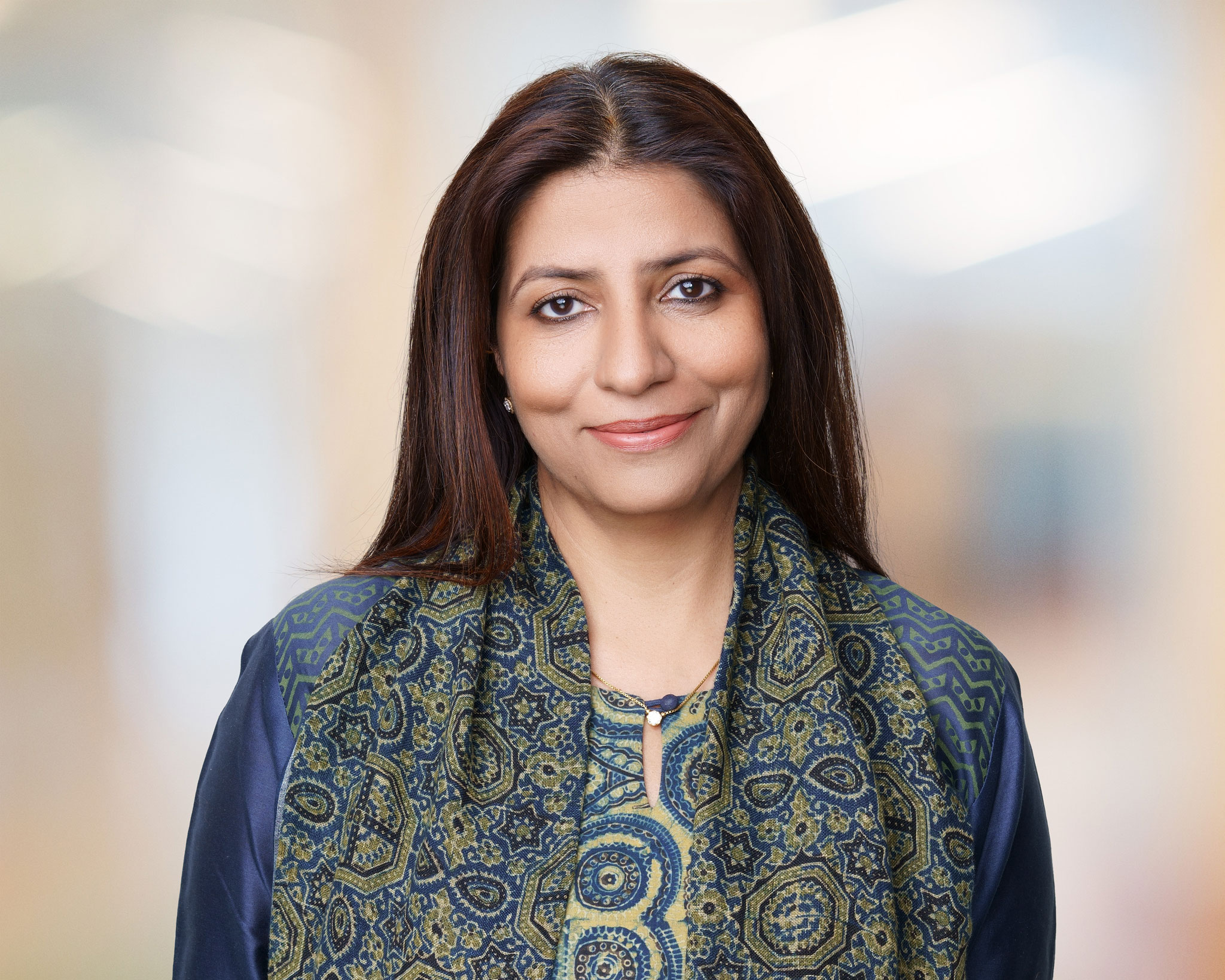
    The Gates Foundation appointed Archna Vyas as its Gates Foundation India Director, the organization said on Tuesday, making her the first woman to lead its operations in one of its most significant country partnerships.

    Vyas will oversee the foundation’s collaboration with Indian government agencies, philanthropists and private sector partners on healthcare, sanitation, gender equality and agricultural development initiatives aligned with India’s development goals, the foundation said in a statement.

    The foundation has operated in India since 2003, working on issues ranging from digital public infrastructure to financial empowerment as the country has lifted millions out of poverty over the past two decades.

    As the new Gates Foundation India Director, Vyas previously served as global director for the foundation’s Global Policy and Advocacy division, leading work on growth, opportunity and empowerment. She joined the organization in 2014 and has worked across its health and poverty alleviation programs.

    “India is our most significant country partnership,” Vyas said in the statement. “I look forward to working closely with governments, communities, philanthropists, and our partners to support the Government of India’s vision of becoming a developed economy by 2047.”

    Before joining the foundation, Vyas led communications and digital marketing for Reckitt across South and Southeast Asia. She holds a master’s degree in physics from the University of Delhi and a postgraduate diploma in business administration from the Institute of Management Technology.

    Ankur Vora, the foundation’s chief strategy officer, said the Gates Foundation India Director brings deep understanding of India’s development landscape and a track record of building impactful partnerships.

    Vyas succeeds Hari Menon, who led the India office since 2019 and will transition to a global leadership role in January 2026, the foundation said.

  • Ambuja Foundation hosts dialogue on empowering skill building for Viksit Bharat

    Ambuja Foundation hosts dialogue on empowering skill building for Viksit Bharat

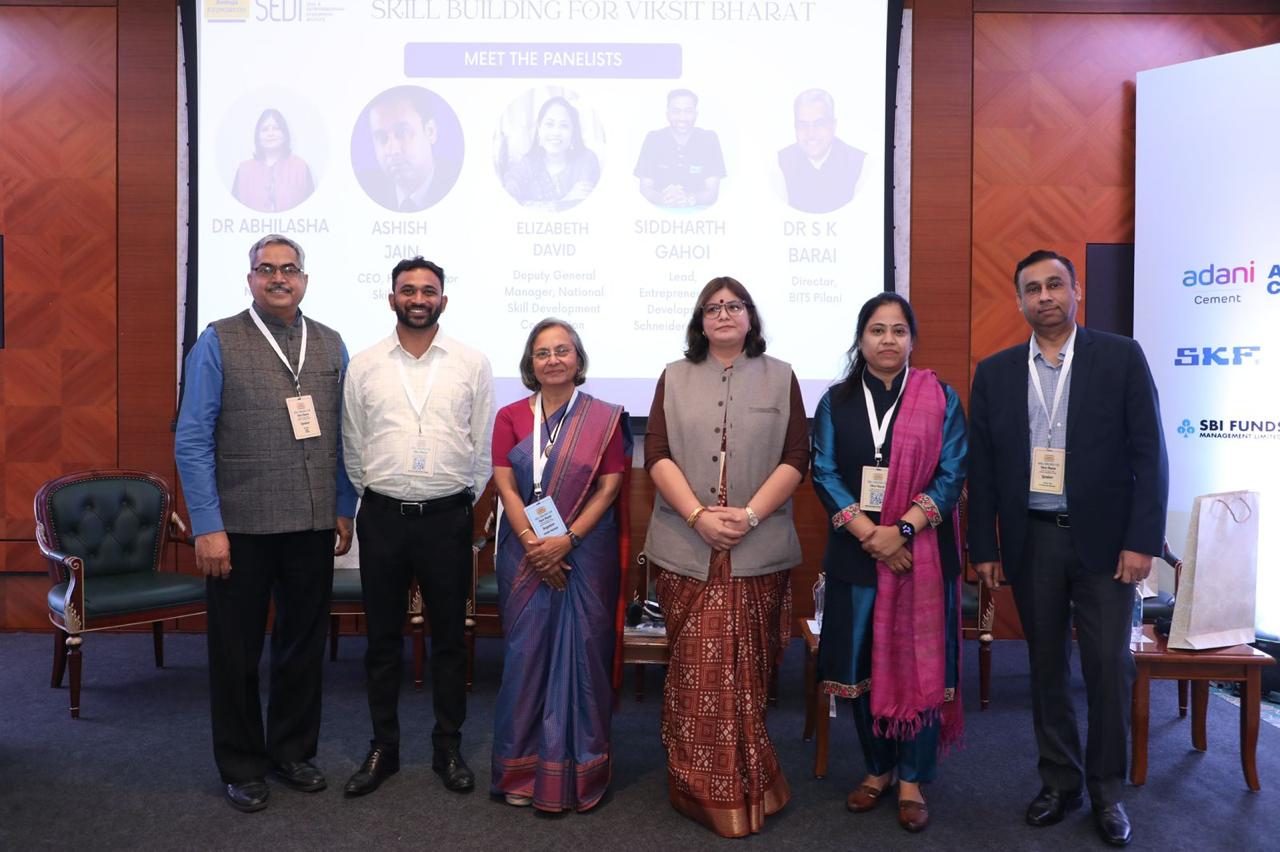
    Ambuja Foundation, an independent pan-India social development group focused on rural transformation, convened an open dialogue on empowering skill building for Viksit Bharat at Bharat Mandapam here on Thursday.

    The event drew over 150 stakeholders, including government officials, global academics, industry leaders and on-ground practitioners, to explore how skill building can reshape tomorrow’s workforce and boost India’s economic trajectory.

    Keynote speakers, among them Dr Rashmi Singh, secretary for women and child development and art, culture and languages in the New Delhi government; Raman Wadhwa, deputy director of the Deendayal Antyodaya Yojana under India’s National Rural Livelihoods Mission; and Col Gunjan Chowdhary, director of the National Council for Vocational Education and Training, outlined national skilling initiatives, access to opportunities and the need for cross-sector collaboration to realise Viksit Bharat.

    Swiss vocational education expert Urs Keller highlighted his country’s dual system, where two-thirds of training occurs on the job and nearly 66% of youth pursue vocational paths, backed by strong parental support and career guidance.

    Two panel discussions followed: one on corporate, agency and academic investments in skill building strategies; the other on industry leaders’ views of evolving sector needs and partnerships between government, business and academia.

    Attendees heard success stories from two graduates of Ambuja’s Skill and Entrepreneurship Development Institutes (SEDI), which have trained 1.34 million rural youth across 51 centres in 13 states for sustainable livelihoods. The event also launched a report on SEDI’s impact.

    “These discussions reaffirm our conviction that skill building will lead the path to Viksit Bharat,” said Pearl Tiwari, CEO of Ambuja Foundation. “Empowering individuals from disadvantaged backgrounds demands collaboration among social organisations, corporates and government for systemic change.”

  • Revolutionary Accessibility in India: Sminu Jindal’s Inclusive Vision

    Revolutionary Accessibility in India: Sminu Jindal’s Inclusive Vision

    When Sminu Jindal’s wheelchair was damaged on an IndiGo flight, it wasn’t just about broken equipment—it was about a year of lost mobility. “A custom wheelchair takes about a year to remake,” she says. “No compensation can replace that.”

    The incident sparked outrage, but for Jindal, founder and chairperson of Svayam, India’s leading accessibility organisation, it highlighted a systemic gap in how the country treats people with reduced mobility. As managing director of Jindal SAW Limited and chair of CII’s India Business Disability Network, Jindal is uniquely positioned to drive change—and she’s not holding back.

    In an exclusive interview to a news agency, Jindal spoke about the urgent need for aviation reforms, how India can leverage accessibility for economic growth, and why the 2036 Olympics bid is a make-or-break moment. Edited excerpts:

    After your wheelchair was damaged, what specific changes do you want to see in aviation industry?

    First, we need to create awareness about what an assistive device actually means to someone with reduced mobility. A wheelchair is almost like a body extension—it’s as integral as your legs or arms. Most devices are custom-made for a person’s particular disability. When you damage it, you’re essentially making someone unable to live a regular life for however long it takes to remake it.

    The aviation industry has very high attrition rates. So once-a-month training should be mandatory. If despite that, assistive devices are still mishandled, there should be bigger penalties and deeper inquiry. Financial impact is the only thing that hurts us all deeply—that’s reality.

    Have you received any assurances from the government?

    Our ministers and educated people around us are quite sensitive. They just don’t realise how important training is because turnover is so high in this industry. I feel monthly training is critical, and private airlines as well as ground staff need to become more conscious.

    This year’s Pandara Road Durga Puja in Delhi was made fully inclusive through Svayam’s collaboration with UN India and UNESCO. Can this model be scaled?

    Absolutely. We always hear that when there’s greater footfall, things can’t be made accessible. I feel if America can do it for 10 people, India can definitely do it for a thousand.

    In Kolkata also, we’ve started conversations about making puja pandals accessible. You start with a role model, and when that becomes successful, people have the courage to follow through. Whatever we’re doing, we hope people see it can be emulated and carried forward at a bigger scale.

    India is bidding for the 2030 Commonwealth Games and 2036 Olympics. How should accessibility be built into these projects?

    We don’t see accessibility as a money-spinner, but we should. We’ve all seen the power para-athletes bring to the nation, the pride they carry when they win medals. When India hosts these games, para-games will follow. Every human being wants to enjoy these games as a family—elderly parents, someone with a temporary setback.

    When people from around the world come to India, they want to see more of the country. When transport is accessible, when tourism sites and hotels are accessible, India has a great opportunity to earn foreign exchange. Hotels, transport, ICT should not miss out on this opportunity.

    But we don’t create awareness about how we’re making things accessible. Communication, information and technology should be used to our advantage—only then will this opportunity bear fruit.

    You’ve argued that accessibility is an economic catalyst, not just a social duty. What’s the business case?

    Look around—we all benefit from accessibility right from when we become independent to go out. We want good education where parents don’t have to give up jobs to drop children to school. As we grow into college, into jobs, even women with stilettos have difficulty on roads because some jobs require that footwear. Pregnant women, parents with small children—all need accessibility for better quality of life.

    As we grow older, we don’t become a burden to our country because we worked 60 years to make the country productive. When we’re older, we have a right to have accessibility in banks so we can withdraw our own money, at archaeological sites we want to visit with grandchildren.

    It’s how you view the world. I want it to be a place where each one of us can live up to our desires, make our dreams come true, and be truly full of freedom and happiness.

    As chair of CII’s India Business Disability Network, where do corporate accessibility standards stand? Should they be part of ESG or CSR reporting?

    People are realising human potential is far greater than we imagine. The problem comes when schools aren’t accessible, children with reduced mobility can’t go there, adults can’t access colleges or skill centres because transport isn’t available, buildings aren’t accessible.

    It should definitely be part of ESG. I’d want it to become part of reportable figures eventually. But there’s a risk—people will just start reporting numbers, make someone a lift operator or tell them to serve water to fulfill quotas. To truly create employment opportunities where they become decision-makers and get important skilled jobs, we need accessible education systems first. That’s foundational.

    With India’s ageing population set to double by mid-century, how must cities redesign infrastructure?

    The question has the answer in it—because life is so vulnerable, taking care of it today will lead to a better tomorrow, not just for us but for generations that follow.

    You prefer the term “reduced mobility” over “disability.” Why does language matter?

    Being disabled myself, sometimes it can be hurtful terminology. As I become older, I may have reduced mobility but it still doesn’t make me disabled. There’s nothing wrong with a body that ages—we should be proud of it because we gather experience. It’s beautiful, and we should embrace it without the sting of disability.

    Disability benefits from accessibility, but so do different people—anyone with reduced mobility. It gives us the dignity of leading a life. By shifting to “reduced mobility,” people can see wider.

    From your audits of airports and monuments, what’s the biggest barrier—attitude, infrastructure or regulation?

    Definitely infrastructure, and with infrastructure comes regulation and mindset. They’re all linked. Last-mile connectivity—the more we stress about it, I don’t think we can stress enough.

    You’ve been recognised in Fortune India’s Most Powerful Women 2025 and received the Mahatma Award. How has visibility helped?

    Every little thing that brings me out in public gives me an opportunity to talk about creating awareness around accessibility. It’s not a disability topic—it’s about creating safety and dignity for anyone to travel to their place of choice without hazard.

    How do you balance being MD of Jindal SAW and running Svayam?

    We all learn to wear many hats. As women, we juggle a lot. I’m also a mother of two—it’s in our genes to take care of multiple things. I’ve had many role models in my family who’ve done it, and they’re not all women.

    You work with UNESCO and the Paralympic Committee. Which international practices could India adapt?

    I want my India to create best practices. There are things we have in India where we can beat the world and become a superpower, a Viksit Bharat by 2047.

    Which emerging technologies—AI, IoT, digital mapping—excite you most for accessibility?

    Nothing can replace physical infrastructure, despite technology adding to it. Physical infrastructure needs to be altered to make a difference in every human being’s life. Right now we’re just talking about cities. We need to look at rural India where 70% of our population lives—physical infrastructure will play an extremely important role there.

    Looking ahead to 2030, what would a truly accessible India look like?

    I don’t talk about my leadership—I really would implore everybody to chip in. This needs to be a revolution. A revolution called accessibility that will make not just India but a better world for each one of us, no matter what circumstances life brings.

    Accessibility is like that hidden substance called salt in our food. If it’s there, it makes it tastier. If it’s not, we all miss it.


    Svayam is one of the CSR implementing agencies of Jindal SAW Ltd.
  • Schneider Electric India Foundation Launches Climate Smart Village in Jharkhand

    Schneider Electric India Foundation Launches Climate Smart Village in Jharkhand

    Schneider Electric India Foundation (SEIF), the social impact arm of Schneider Electric, inaugurated a Climate Smart Village in Kocha, Khunti, an aspirational district in Jharkhand, in partnership with NGO PRADAN, the company announced on Monday.

    This marks SEIF’s third such initiative in the state, following projects in Gumla district, aimed at bolstering food security and fostering self-reliant rural communities through sustainable energy access.

    The launch was led by Jharkhand’s Rural Development and Panchayati Raj Minister Dipika Pandey Singh, alongside Khunti MP Kali Charan Munda, Torpa MLA Sudeep Gudhiya, and Schneider Electric’s Vice President for Strategy, M&A, and CSR, Damini Chaudhari.

    In Kocha, a 40 kW solar-powered mini-grid with smart energy management now powers irrigation pumps, agro-processing units, households, streetlights, a Primary Health Center, and an e-vehicle.

    Previously reliant on a single rain-fed crop, farmers are transitioning to multi-crop cultivation, processing produce locally, and marketing through a women-led Farmer Producer Organization, Torpa Mahila Krishi Bhagwani Saykari Swalambhi Samiti. This shift is boosting agricultural productivity, local value addition, and community livelihoods.

    “Access to sustainable livelihood is the first step towards empowering communities,” said Deepak Sharma, Zone President – Greater India and MD & CEO of Schneider Electric India.

    “The Kocha initiative shows how renewable energy, combined with digital technologies and local entrepreneurship, can transform rural economies, fostering resilient, self-reliant communities.”

    Kocha previously faced low farm productivity, limited livelihood options, and reliance on monsoon rains, restricting farmers to one crop cycle annually. The lack of three-phase power prevented agro-processing, while absent streetlights compromised safety, and migration was common due to insufficient local jobs.

    “The Climate Smart Village in Kocha demonstrates how decentralized energy models can unlock long-term rural prosperity,” said Damini Chaudhari.

    “By integrating solar power with digital technologies, we’re addressing energy gaps and creating a sustainable platform for entrepreneurship and community well-being.”

    SEIF’s initiative aligns with Schneider Electric’s broader commitment to scalable models for energy equity and inclusive growth, supporting India’s vision of Viksit Bharat.

  • India’s Green Giants: Wipro, Tech Mahindra Lead Global Sustainability Charge

    India’s Green Giants: Wipro, Tech Mahindra Lead Global Sustainability Charge

    By Eldee

    When TIME Magazine and Statista rolled out their 2025 World’s Most Sustainable Companies list in June, two Indian IT powerhouses stole the spotlight. Bengaluru’s Wipro (53rd, score: 75.83) and Pune’s Tech Mahindra (57th, 75.13) didn’t just make the global top 100—they were India’s sole representatives there.

    But the story’s bigger: eight other Indian firms, from Mahindra (201st, 66.77) in automotive to Dr. Reddy’s (417th, 59.36) in pharma, also cracked the 500-strong list, signaling India’s rising clout in the global green race.

    As climate alarms blare—from Delhi’s choking smog to Kerala’s relentless floods—this isn’t just a feather in India’s cap; it’s a rallying cry for Corporate India to power our 2047 Viksit Bharat vision of a developed, sustainable nation.

    For years, India’s IT sector was written off as the world’s code mill, churning out software for Western giants. Wipro and Tech Mahindra are torching that stereotype. Wipro’s Lab45 AI platform slashed water use by 40% for US farmers in 2023 with smart irrigation—vital tech for a nation where 600 million battle water scarcity. “Sustainability drives our innovation,” CEO Thierry Delaporte told TIME.

    In 2025, Wipro’s FullStride Cloud tie-up with Pure Storage is supercharging clients’ green transitions, dovetailing with Budget 2025’s push for AI-driven clean tech. Tech Mahindra’s EcoForge platform, meanwhile, helped telecom majors like Vodafone cut emissions by 35% by linking data centres to renewables, while their 1-million-mangrove drive in Maharashtra shields coasts from erosion. “We’re redefining tech for a sustainable future,” CEO Mohit Joshi said, a vision reinforced by their 2025 Terra Carta Seal. These aren’t just firms; they’re India’s green vanguards.

    The list’s ten Indian stars—Mahindra, Airtel (223rd, 65.87), HCLTech (233rd, 65.51), WNS (290th, 63.37), Hindustan Zinc (313th, 62.49), Syngene International (364th, 61.08), Infosys (374th, 60.84), TCS (383rd, 60.65), Godrej Properties (413th, 59.54), and Dr. Reddy’s—show India’s green push spans sectors.

    Mahindra’s electric vehicles, Airtel’s renewable-powered towers, and Dr. Reddy’s eco-conscious drugs prove we’re not just followers but pacesetters. India’s 99th rank on the 2025 SDG Index—our first top-100 finish—rides on 42% renewable energy (we’re the world’s third-largest producer) and a tech market zooming to $60 billion, per Nasscom, with 126,000 new AI and ESG jobs in 2025. But the road’s bumpy: data centres guzzle power, supply chains stay opaque, and EY warns we’ve met just 25% of green investment needs. With net-zero by 2070 in focus and Budget 2025 boosting solar and battery storage, Corporate India must shift gears fast.

    While Schneider Electric (France, 93.85), Telefónica (Spain, 87.68), Brambles (Australia, 86.14), Temenos (Switzerland, 85.95), and Moncler (Italy, 85.87) top the list with European flair, India’s ten-strong contingent, led by Wipro and Tech Mahindra, shows we can hold our own.

    Global trade hiccups like tariffs may sting, but they underline India’s edge: affordable, scalable green tech that the Global South hungers for.

    For 1.4 billion Indians, sustainability isn’t a buzzword—it’s do-or-die. Wipro and Tech Mahindra have cracked the code; now Mahindra’s EVs, TCS’s low-carbon IT, and others must follow. The world’s watching, and India’s ready to lead—not just on rankings, but in scripting a greener future.