Tag: #SwachhBharat

  • Toyota Kirloskar’s CSR hygiene programme did what Swachh Bharat couldn’t

    Toyota Kirloskar’s CSR hygiene programme did what Swachh Bharat couldn’t

    When Toyota Kirloskar Motor (TKM) built toilets in Karnataka village schools nearly a decade ago, it discovered a problem it had not anticipated: nobody was using them.

    Root cause analysis revealed why communities held a deeply ingrained belief that an in-compound toilet was unclean. Going outdoors, they maintained, was the healthier option.

    The finding prompted TKM to stop further construction and redirect its corporate social responsibility effort toward behavioural change, launching what would become the ABCD — A Behavioural Change Demonstration — programme in 2015-16.

    The initiative has since reached 6,69,322 students, teachers and community members across 1,300 government schools in Karnataka and drawn recognition from Harvard Business School, which has featured it as a case study.

    The programme’s early breakthrough came from an unexpected quarter, TKM Country Head and Executive Vice President (corporate affairs and governance) Vikram Gulati told PTI.

    In one Ramanagara village, two girls aged approximately 11 and 12 organised a classmate hunger strike, refusing to eat until their families built home toilets. The strike succeeded.

    “This actually led to the first breakthrough,” Gulati said.

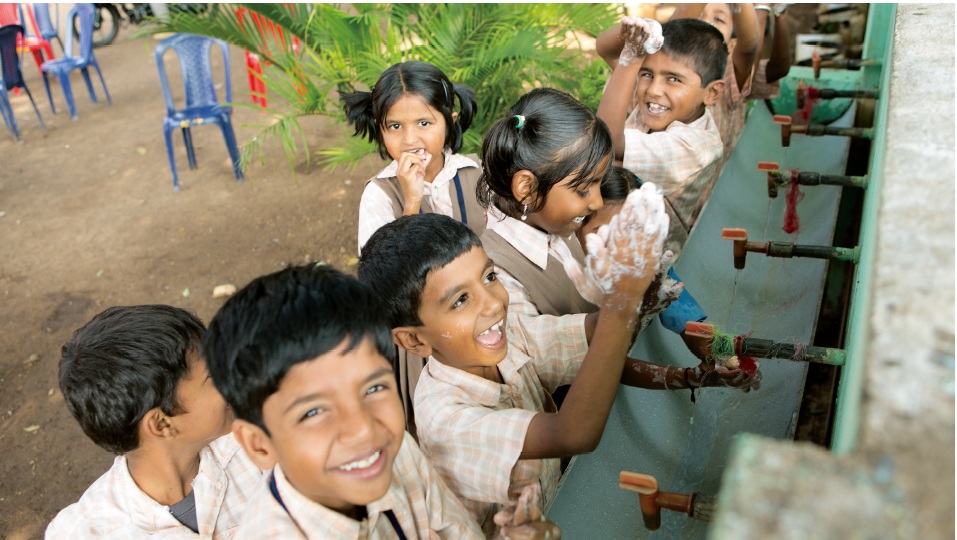
    The programme trained children in handwashing technique, toilet use and personal hygiene, positioning them as agents of behavioural change within their households and wider communities. Schools competed on hygiene standards. Children carried lessons home. The ripple effect — by design — travelled from classroom to household to community.

    When the programme expanded to Raichur, one of India’s government-designated Aspirational Districts, the company said a baseline survey across 500 schools in December 2023 exposed how deep the crisis ran.

    Only 48 per cent of required toilets existed. Of those, just 20 per cent were usable. Twelve per cent of schools lacked a single functional handwashing unit. Ninety per cent of students depended on open tap water. One in four children still practised open defecation.

    At home, the picture was no better: 44 per cent of students had no toilet at all.

    India’s Swachh Bharat, or Clean India, Mission has constructed tens of millions of toilets since its launch in 2014 under Prime Minister Narendra Modi. Independent researchers and government field assessments have repeatedly flagged the gap between construction targets and actual usage, citing behavioural barriers, poor maintenance and water scarcity as persistent obstacles.

    Over two years of implementation in Raichur and neighbouring Lingasuguru, toilet usage among students rose from 76 per cent to 95 per cent, according to TKM data.

    Handwashing compliance increased from 20.5 per cent to 100 per cent.

    Seventy-five toilets and 30 urinals were constructed. Fifty-eight handwash taps were installed or repaired. Twenty-eight schools received safe drinking water access. Menstrual hygiene sessions were conducted for 3,546 adolescent girls.

    At the community level, 1,382 parents were motivated to construct home toilets during the programme period; 38 completed construction.

    Harvard Business School has recognised ABCD as a case study. The Ivey Business School has published it — rare international acknowledgment for a sanitation initiative rooted in rural India, the TKM Said.

    The ABCD programme sits within a broader corporate social responsibility architecture that TKM has been expanding rapidly.

    Since 2001, the company’s CSR work has spanned education, health, environment, skill development, road safety and disaster management, guided by what it describes as a “Child to Community” approach. TKM spent Rs. 104.7 crore on CSR activities in FY 2025-26, reflecting the scale of its social investment commitments.

    In the 2025-26 financial year, TKM significantly widened its geographic footprint, extending its reach from communities around its manufacturing base to 12 states — among them Uttarakhand, Nagaland, Andhra Pradesh, Tamil Nadu, West Bengal and Odisha.

    The company plans to expand further to 22 states in 2026-27, framing the ambition under a stated vision of “Grow India, Grow with India.”

    “TKM is strengthening health infrastructure through preventive and curative interventions, enhancing the quality of education, and improving employability,” Gulati said, describing the overall mission as creating “Mass Happiness for All.”

    The Raichur intervention is ongoing. The earlier Ramanagara phase has stabilised, he added.

    Source: PTI

  • HCLFoundation expands My Clean City program to Agra, donates Sanitation fleet to Nagar Nigam

    HCLFoundation expands My Clean City program to Agra, donates Sanitation fleet to Nagar Nigam

    HCLFoundation, which drives the corporate social responsibility agenda of HCLTech in India, announced on Monday the expansion of its My Clean City program to Agra, Uttar Pradesh — the first city outside the Noida–Greater Noida belt to receive the initiative since its 2019 launch.

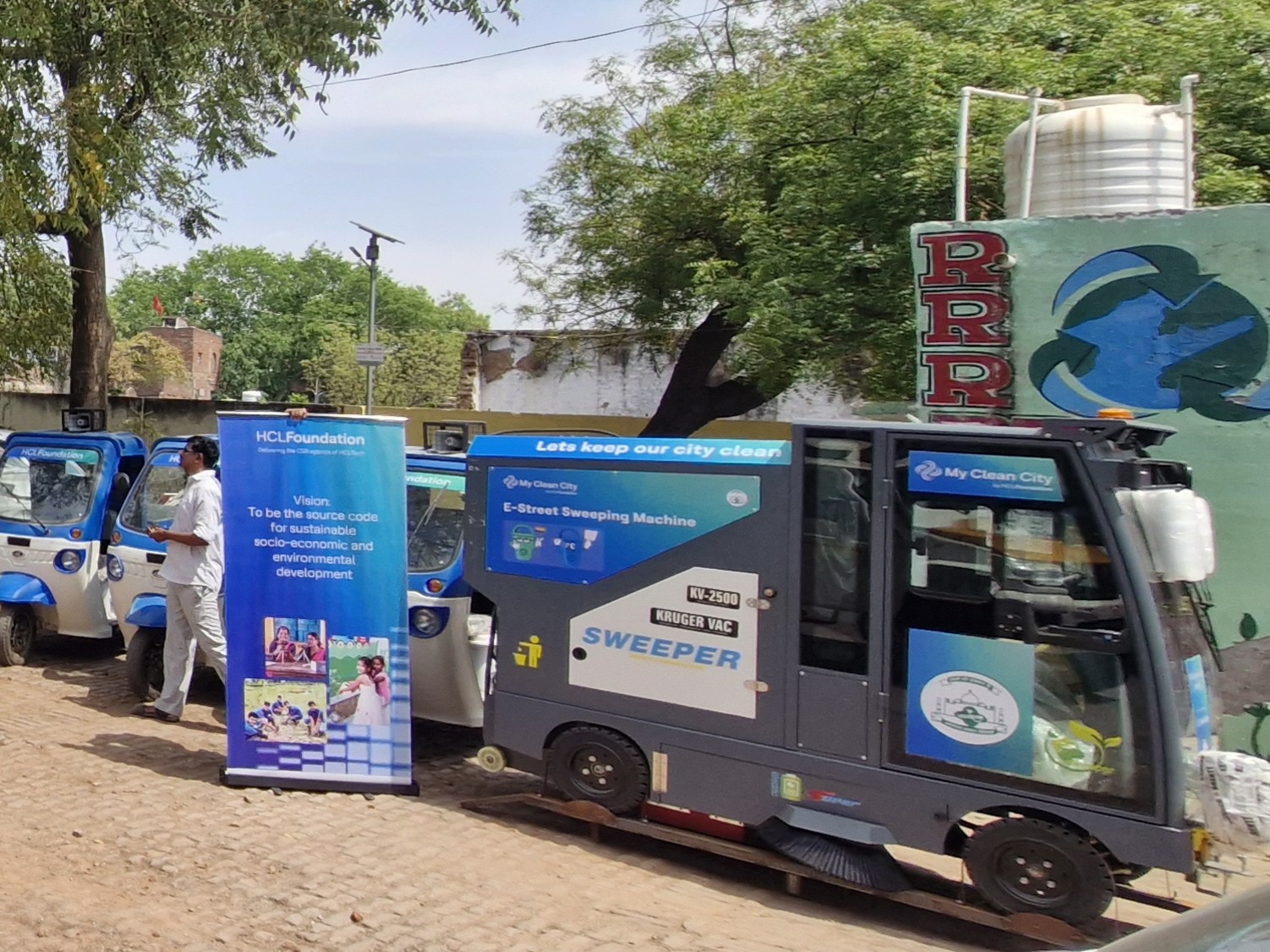
    As part of the rollout, the foundation donated 10 e-drain carts, two e-street sweeping machines and one HomoSep robot — a mechanised septic tank cleaning device — to Agra Nagar Nigam, the city’s municipal body. The equipment is intended to reduce hazardous manual work while improving the scale and consistency of urban waste management.

    The HomoSep robot, already deployed in Gautam Buddha Nagar, has cleared more than 100,000 litres of sludge across 452 manholes and sewer sites — removing sanitation workers from direct exposure to toxic conditions. The device represents a broader pivot within the program toward mechanisation as a tool for worker safety.

    Since its launch, My Clean City has engaged nearly 750,000 citizens through behavioural sensitisation drives and trained more than 61,000 stakeholders on waste management practices. The program has managed over 17,000 tonnes of waste in Noida and Greater Noida, and runs a Waste Champions Club involving more than 2,400 school students.

    The initiative also carries a social welfare component. Under its Social Inclusion of Sanitation Workers program, 200 sanitation worker families in Gautam Buddha Nagar receive support across health, education, financial literacy and skill development — a recognition that sustainable sanitation reform extends beyond infrastructure.

    Five biogas plants, each processing between 1,500 and 1,800 kg of cow dung daily, have been established in the region as part of complementary clean energy efforts, generating fuel from waste material.

    HCLFoundation said the Agra expansion reflects a strategy of replicating proven urban sanitation models in new municipal geographies. The foundation, which reported having positively impacted over 7.5 million lives to date, focuses thematically on education, health and sanitation, skill development, environment, and disaster risk reduction.

  • Reckitt Transforms India’s Sanitation Economy, Trains 1.25 Lakh Workers as Entrepreneurs

    Reckitt Transforms India’s Sanitation Economy, Trains 1.25 Lakh Workers as Entrepreneurs

    Reckitt, the British consumer goods company, is pressing forward with a nationwide campaign to build a formal sanitation economy in India by converting informal waste handlers into skilled micro-entrepreneurs, overhauling school sanitation infrastructure, and commissioning the country’s first scientific study of life expectancy among sanitation workers — a group whose average lifespan trails the national mean by nearly 30 years.

    WORKFORCE TRANSFORMATION

    The company’s Harpic World Toilet College (HWTC), operated in partnership with the World Toilet Organisation and Jagran Pehel, has trained more than 1.25 lakh sanitation workers since its launch, with women accounting for over 45 percent of all trainees. Graduates are equipped to operate mechanised cleaning units, manage school sanitation services, maintain urban drains, and run facility-care operations as independent contractors.

    An independent social return on investment assessment found that every rupee invested in the programme generates Rs 23.20 in social value — driven by gains in worker dignity, safer conditions, and improved financial and health resilience for workers and their families.

    “India has made extraordinary progress in building toilets, but true sanitation progress must also mean longer and safer lives for the people who maintain them.” said Gaurav Jain, Executive Vice President, South Asia, Reckitt

    POWER OF 8: SCHOOL SANITATION REFORM

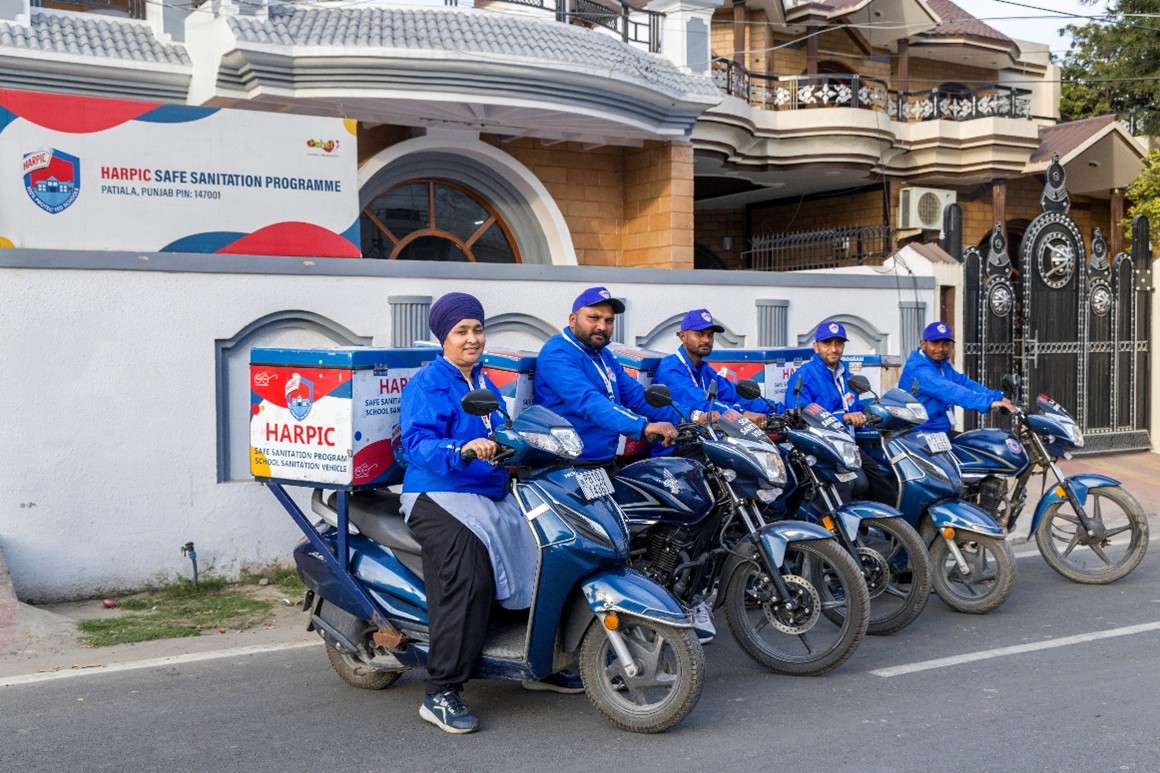
    Reckitt’s Harpic Safe Sanitation Programme deploys what it calls the “Power of 8” model — an eight-element operational framework designed to guarantee hygiene quality and financial accountability across school sanitation systems.

    The framework bundles assured funding, scheduled cleaning cycles, trained HWTC manpower, professional equipment, supervisory oversight, consumable supplies, drain maintenance and de-clogging, and live digital tracking into a single auditable service package.

    The model is intended to turn sanitation delivery into an enterprise-driven ecosystem, giving HWTC graduates a structured route to operate as service providers and contractors at scale. Behavioural change components — muppet-led sessions, storybooks, pop-up installations, and wall art co-created with Sesame Workshop India — are embedded in the curriculum to establish hygiene habits among schoolchildren.

    LIFE-EXPECTANCY EVIDENCE GAP

    Despite the scale of India’s sanitation workforce, no nationally representative, occupation-linked mortality dataset exists for the sector. Reckitt says the absence of such data leaves policymakers without the evidence needed to design effective mechanisation mandates, personal protective equipment requirements, or compensation frameworks.

    The company is funding what it describes as India’s first comprehensive life-expectancy assessment for sanitation workers, aiming to quantify survival risks from toxic gas exposure, infections, musculoskeletal injury, and socio-economic disadvantage. It says the findings are intended to feed directly into national sanitation economy planning.

    Reckitt has also sought to raise public recognition of sanitation workers. To mark the 25th anniversary of World Toilet Day, the company facilitated the release of commemorative postage stamps honouring the workforce.

    EXPANSION TARGETS

    Reckitt says it plans to extend the Power of 8 framework across additional Indian states, deepen enterprise development through HWTC, and ultimately reach 70 percent of India’s sanitation worker cohort. It describes the combined push — entrepreneurship training, systemic school reform, national recognition and life-expectancy research — as a unified strategy to create a sanitation economy “where every worker can live a longer, healthier and dignified life.”

    India’s Swachh Bharat Mission has overseen the construction of more than 100 million toilets since 2014, a transformation widely credited with expanding sanitation access. However, critics and public-health researchers have long argued that the programme’s focus on infrastructure has not been matched by investment in the workforce that maintains it.