PepsiCo said on Thursday its PepsiCo Positive (pep+) sustainability programme is driving measurable growth across its global operations, with India emerging as a key market for the initiative’s expansion.
In its 2025 ESG Performance Update, the company said it has extended regenerative, restorative and protective farming practices to 4.7 million acres across more than 60 countries, achieved 100% water replenishment at company-owned facilities in high-water-risk areas, and cut virgin plastic use in primary packaging by 6%.
“We’re excited by the momentum we’re building as pep+ continues to transform our business end to end,” said Jim Andrew, PepsiCo’s chief sustainability officer. He said the company is “evolving our product portfolio to offer more choices” while strengthening the business for the long term.
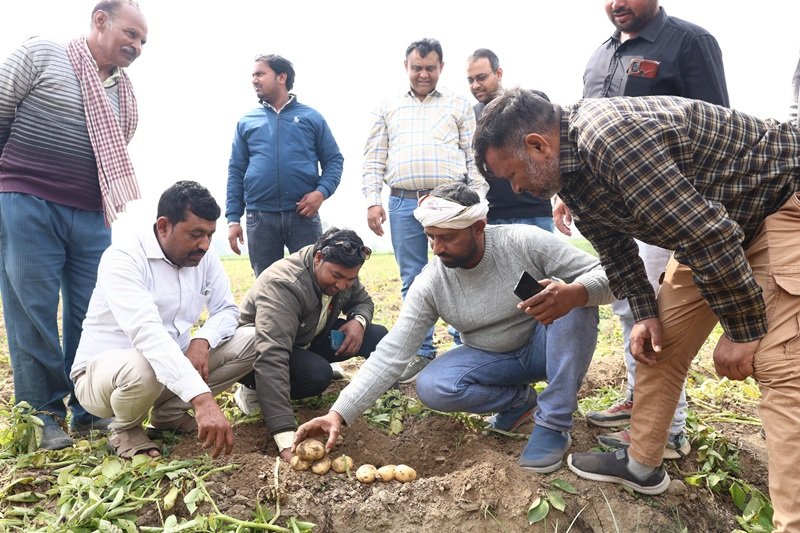
In India, PepsiCo Positive is being implemented through the company’s Partnership for Progress philosophy, which engages roughly 36,000 farmers across 14 states. The company sources 100% of its chip-grade potatoes locally in the country.
“In India, our growth is deeply connected to the strength and resilience of the ecosystem around us,” said Yashika Singh, chief corporate affairs officer and sustainability head for PepsiCo India & South Asia, adding that the approach turns interdependence into shared growth across farmers, communities and consumers.
The company has partnered with start-ups to bring digital tools to its farmer network. Its Mitti Didi initiative offers soil-health diagnostics to thousands of farmers, while the Lay’s Smart Farms programme, developed with Cropin, spans more than 18,000 mapped acres and reaches over 7,000 farmers. Micro-irrigation has reached full adoption across key potato-sourcing regions, including more than 2,300 acres in Uttar Pradesh.
On water, PepsiCo said its Pune manufacturing facility has cut water use by more than 90%, part of a broader effort that has replenished 23 billion litres of water globally since 2010 and reached about 97 million people with safe water access.
The company is also advancing circularity in India, complying with local Extended Producer Responsibility rules and redesigning packaging with mono-material and polyolefin-based structures, alongside a shift to 100% rPET bottles for select beverage products. Biomass now makes up 97% of PepsiCo India’s fuel mix.
On transport, the Kosi–Pataudi EV Green Corridor, run with Kalyani Powertrain Limited and Vayudoot Road Carriers, operates thirteen 32-foot electric trucks covering roughly 6 lakh electric kilometres annually. PepsiCo India has retrofitted more than 800 vehicles for last-mile delivery.
The company said more than half of its beverage portfolio by volume in India is now low- or zero-sugar, alongside new offerings such as Red Rock Deli baked variants with 40% less fat and millet-based Kurkure Jowar Puffs.