Tag: #RuralIndia

  • Toyota Kirloskar’s CSR hygiene programme did what Swachh Bharat couldn’t

    Toyota Kirloskar’s CSR hygiene programme did what Swachh Bharat couldn’t

    When Toyota Kirloskar Motor (TKM) built toilets in Karnataka village schools nearly a decade ago, it discovered a problem it had not anticipated: nobody was using them.

    Root cause analysis revealed why communities held a deeply ingrained belief that an in-compound toilet was unclean. Going outdoors, they maintained, was the healthier option.

    The finding prompted TKM to stop further construction and redirect its corporate social responsibility effort toward behavioural change, launching what would become the ABCD — A Behavioural Change Demonstration — programme in 2015-16.

    The initiative has since reached 6,69,322 students, teachers and community members across 1,300 government schools in Karnataka and drawn recognition from Harvard Business School, which has featured it as a case study.

    The programme’s early breakthrough came from an unexpected quarter, TKM Country Head and Executive Vice President (corporate affairs and governance) Vikram Gulati told PTI.

    In one Ramanagara village, two girls aged approximately 11 and 12 organised a classmate hunger strike, refusing to eat until their families built home toilets. The strike succeeded.

    “This actually led to the first breakthrough,” Gulati said.

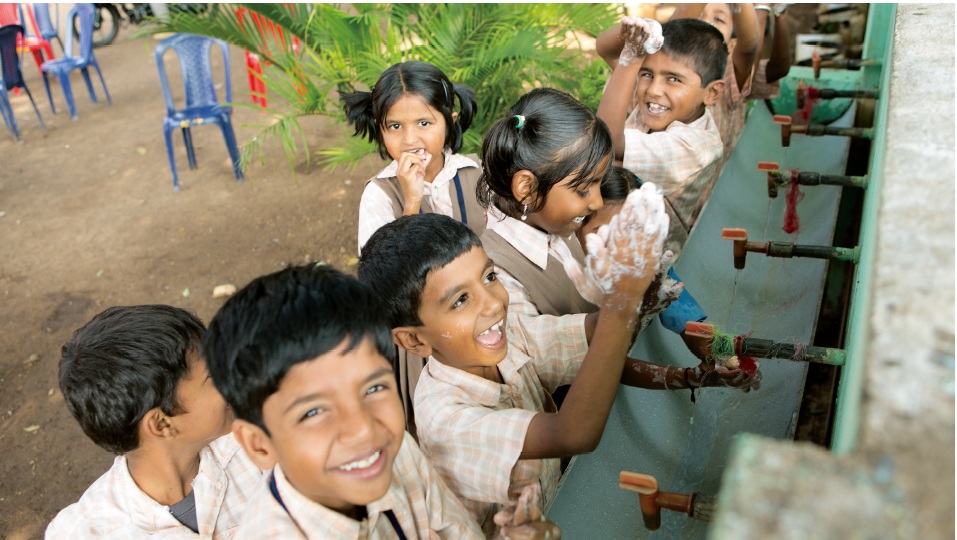
    The programme trained children in handwashing technique, toilet use and personal hygiene, positioning them as agents of behavioural change within their households and wider communities. Schools competed on hygiene standards. Children carried lessons home. The ripple effect — by design — travelled from classroom to household to community.

    When the programme expanded to Raichur, one of India’s government-designated Aspirational Districts, the company said a baseline survey across 500 schools in December 2023 exposed how deep the crisis ran.

    Only 48 per cent of required toilets existed. Of those, just 20 per cent were usable. Twelve per cent of schools lacked a single functional handwashing unit. Ninety per cent of students depended on open tap water. One in four children still practised open defecation.

    At home, the picture was no better: 44 per cent of students had no toilet at all.

    India’s Swachh Bharat, or Clean India, Mission has constructed tens of millions of toilets since its launch in 2014 under Prime Minister Narendra Modi. Independent researchers and government field assessments have repeatedly flagged the gap between construction targets and actual usage, citing behavioural barriers, poor maintenance and water scarcity as persistent obstacles.

    Over two years of implementation in Raichur and neighbouring Lingasuguru, toilet usage among students rose from 76 per cent to 95 per cent, according to TKM data.

    Handwashing compliance increased from 20.5 per cent to 100 per cent.

    Seventy-five toilets and 30 urinals were constructed. Fifty-eight handwash taps were installed or repaired. Twenty-eight schools received safe drinking water access. Menstrual hygiene sessions were conducted for 3,546 adolescent girls.

    At the community level, 1,382 parents were motivated to construct home toilets during the programme period; 38 completed construction.

    Harvard Business School has recognised ABCD as a case study. The Ivey Business School has published it — rare international acknowledgment for a sanitation initiative rooted in rural India, the TKM Said.

    The ABCD programme sits within a broader corporate social responsibility architecture that TKM has been expanding rapidly.

    Since 2001, the company’s CSR work has spanned education, health, environment, skill development, road safety and disaster management, guided by what it describes as a “Child to Community” approach. TKM spent Rs. 104.7 crore on CSR activities in FY 2025-26, reflecting the scale of its social investment commitments.

    In the 2025-26 financial year, TKM significantly widened its geographic footprint, extending its reach from communities around its manufacturing base to 12 states — among them Uttarakhand, Nagaland, Andhra Pradesh, Tamil Nadu, West Bengal and Odisha.

    The company plans to expand further to 22 states in 2026-27, framing the ambition under a stated vision of “Grow India, Grow with India.”

    “TKM is strengthening health infrastructure through preventive and curative interventions, enhancing the quality of education, and improving employability,” Gulati said, describing the overall mission as creating “Mass Happiness for All.”

    The Raichur intervention is ongoing. The earlier Ramanagara phase has stabilised, he added.

    Source: PTI
  • HDFC Bank Parivartan builds 15,289 water assets, boosts rural India

    HDFC Bank Parivartan builds 15,289 water assets, boosts rural India

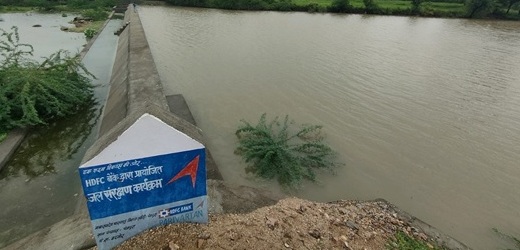
    HDFC Bank Parivartan has built and restored over 15,289 water structures across more than 10,430 villages, delivering a powerful boost to rural water security and benefiting 14.92 lakh households.

    The flagship CSR programme has also provided access to safe drinking water in over 950 villages through community purification systems using UV, RO, and multi-stage filtration technology, supported by dedicated water tanks, tap connections, and regular quality monitoring.

    From farm ponds and check dams to jal minars, rainwater harvesting systems, lift irrigation, and recharge wells, HDFC Bank Parivartan has created diverse water assets tailored to local needs, especially helping tribal farming communities in Central India.

    Powering long-term impact, the bank combines every water structure with agricultural support including micro irrigation systems, shade net houses, Bio-Input Resource Centres, and multilayer farming. These integrated efforts have significantly increased irrigated area, reduced dependence on erratic rainfall, and improved crop yields for smallholder farmers.

    Community ownership remains central to the programme’s success. Women’s Self-Help Groups and Water User Associations actively participate in Village Action Plans, while GIS-based planning and convergence with government schemes like MGNREGA ensure precision and sustainability. Trained water user groups focus on water budgeting and judicious usage to keep assets productive for years.

    “At HDFC Bank Parivartan, we meet communities where they are — whether building ice stupas in the mountains or installing purification plants in villages that never had clean tap water,” said Ms. Nusrat Pathan, Head of CSR, HDFC Bank.

    “Through Parivartan, our work spans watershed development, rainwater harvesting, rejuvenation of water bodies, last-mile irrigation infrastructure, and climate-smart agricultural practices. Over 15,000 water structures and safe drinking water for nearly a thousand villages is a major milestone, but the real success lies in fields now yielding a second crop and children no longer falling ill from contaminated water. We remain committed to building a water-secure India,” she added.

    Natural Resource Management was introduced as a dedicated focus area under Parivartan in FY 2024-25, integrating water conservation with afforestation, soil health, and solar energy. The programme supports Sustainable Development Goal 6 (clean water and sanitation) and SDG 13 (climate action).

    HDFC Bank Parivartan operates across six key pillars — Rural Development, Education, Skill Development & Livelihood Enhancement, Healthcare & Hygiene, Financial Literacy & Inclusion, and Natural Resource Management. As of March 2025, it has positively impacted over 10.56 crore lives across 28 states and 8 Union Territories. In FY 2024-25, HDFC Bank spent Rs. 1,068.03 crore on CSR activities under the Parivartan umbrella.

  • Ambuja Cements Drives Women Empowerment, Hands E-Autos to 10 SHG Women in Gujarat

    Ambuja Cements Drives Women Empowerment, Hands E-Autos to 10 SHG Women in Gujarat

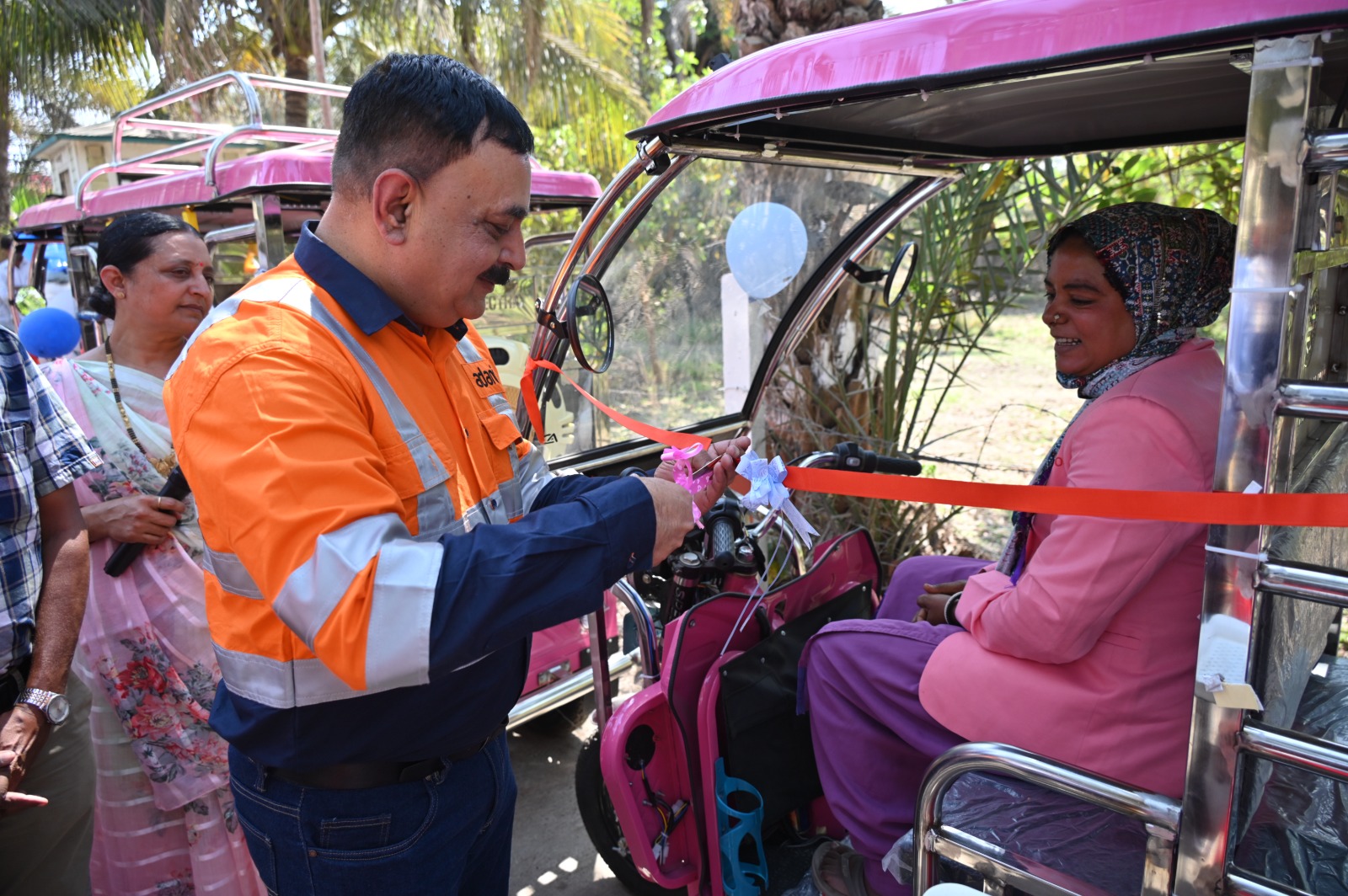
    Ambuja Cements, the ninth-largest building materials solutions provider globally and part of the Adani Portfolio, has handed over electric auto-rickshaws to 10 women from Self-Help Groups (SHGs) in the Kodinar region of Gujarat, opening a new chapter in rural women empowerment and self-employment on International Women’s Day.

    The handover ceremony was held at Ambujanagar, marking the culmination of a structured skilling and financing initiative designed to equip women with both the capability and capital to operate independent transport businesses.

    Women associated with Sorath Mahila Vikas Sahakari Mandali and local SHGs underwent two months of specialised e-auto driving training at the Skill and Entrepreneurship Development Institute (SEDI), Ambujanagar. The programme focused on building safe driving skills and operational confidence among participants.

    Following training, participants purchased the e-autos with extended loan support from Sorath Mahila Vikas Sahakari Mandali, ensuring financial access remained no barrier to ownership.

    The trained women will operate e-autos in and around Kodinar, providing passenger transport services and ferrying school-going children — addressing a critical rural mobility gap while generating sustainable household income.

    Ambuja Cements officials, present at the handover, encouraged the women to embrace their self-employment journey, reaffirming the company’s commitment to income-generating opportunities for women in underserved rural communities.

    The initiative reflects Ambuja Cements’ wider strategy of linking skill development with livelihood creation, particularly for women in regions surrounding its plant operations. The company’s SEDI centres across India have trained thousands of rural youth and women in vocational skills since inception.

    The e-auto programme aligns with India’s broader push for electric mobility adoption in rural areas and dovetails with national priorities around women-led development and the SHG movement under the National Rural Livelihoods Mission.