Tag: RuralEmpowerment

  • Amara Raja Skill Centre in Mahabubnagar achieves 98.85% placement rate for first batch

    Amara Raja Skill Centre in Mahabubnagar achieves 98.85% placement rate for first batch

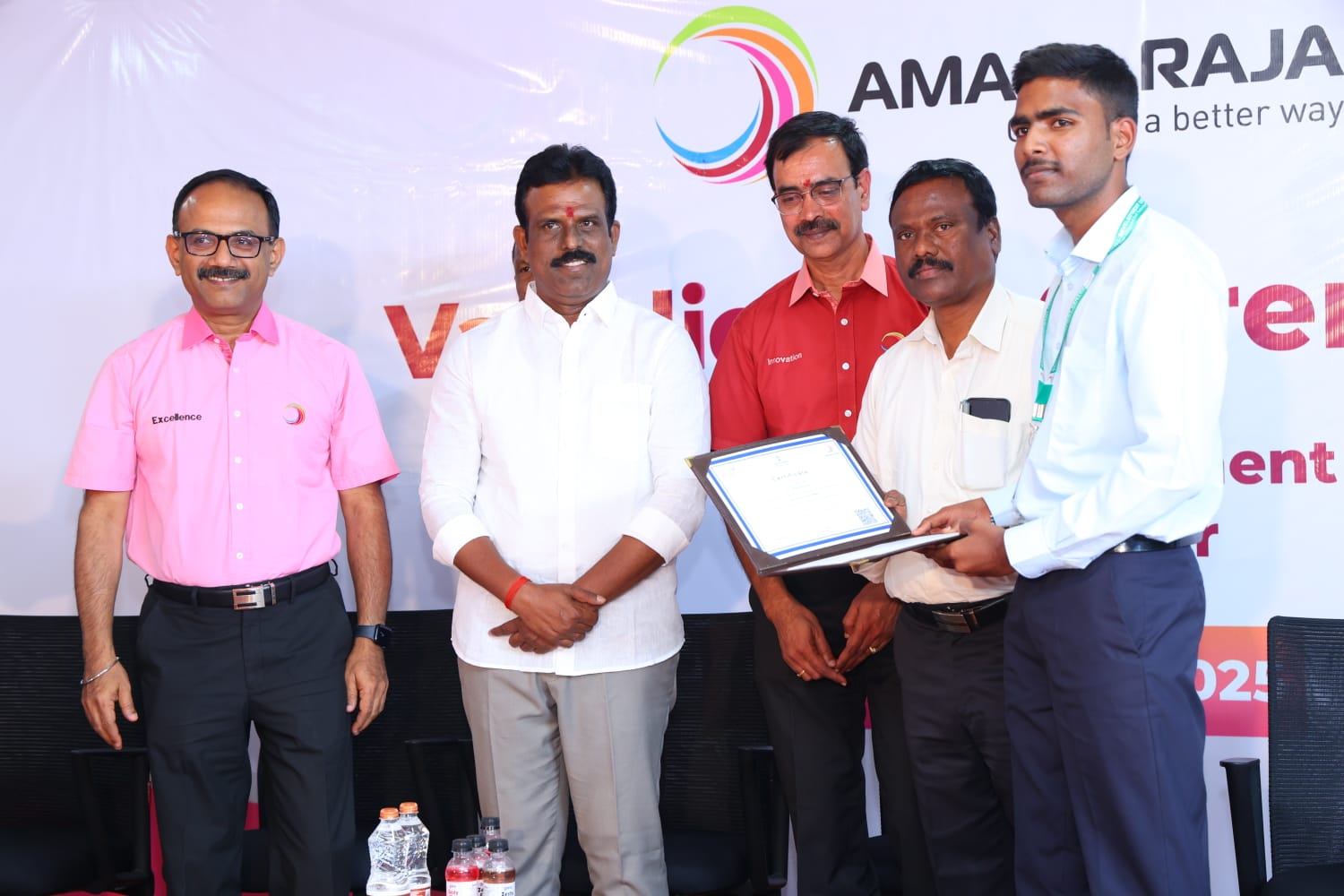
    The Amara Raja Skill Development Centre (ARSDC), a joint initiative of Amara Raja Advanced Cell Technologies and the Rajanna Foundation, marked a significant achievement on Tuesday with the valedictory of its inaugural batch, where 98 trainees from local villages secured placements in key industries at a near-perfect rate of 98.85%.

    Inaugurated on August 10 this year in partnership with the Electronics Sector Skills Council of India (ESSCI), the centre targeted underprivileged youth who had completed Class 10 or 12, selecting the cohort through a competitive screening process.

    The three-month programme offered free vocational training in high-growth areas such as heating, ventilation and air conditioning (HVAC), domestic and industrial electricals, electric vehicle service and repair (EVSR), and EV battery pack assembly. It combined theoretical classes, lab sessions and on-site practicals, culminating in NCVET-recognised certifications that enhance employability.

    The event drew prominent attendees, including Devarakadra MLA Madhusudan Reddy, District Collector Viziendira Boyi and TGIIC Vice-Chairman and Managing Director K Shashanka, alongside Amara Raja Group’s senior leadership.

    For many graduates from low-income families, the placements—offering stable salaries in leading firms—represent their first formal jobs, alleviating economic distress and stemming rural-to-urban migration.

    The centre’s model, which included complimentary transport and meals, addressed longstanding barriers to skill acquisition in Mahabubnagar, a district poised for industrial expansion with the upcoming Giga Corridor. Officials highlighted how such interventions could catalyse local development, with the second batch slated to commence on December 15.

    As India’s push for skilling gains momentum amid the green energy transition, ARSDC exemplifies the potential of targeted CSR efforts to build a resilient workforce, one certification at a time.

  • Ambuja Cements builds water security in Marwar Mundwa through farm ponds

    Ambuja Cements builds water security in Marwar Mundwa through farm ponds

    Ambuja Cements, India’s ninth-largest building materials provider and part of the Adani Group, has constructed 170 farm ponds and 3,410 rooftop rainwater harvesting systems in the Marwar Mundwa region to enhance water security and support sustainable agriculture for local farmers.

    The corporate social responsibility (CSR) initiatives, focused on water-smart interventions including irrigation innovations and horticulture, aim to reduce climate dependency and boost rural incomes in Rajasthan’s arid Nagaur district.

    In Didiya Kalan village, Ambuja supported farmers Bau Devi and Ganpatram with a 1,782 cubic metre farm pond and rooftop rainwater harvesting system, the company said in a statement.

    The couple now grows cumin in the dry season and earned Rs 15,000 last year by selling excess water, enabling year-round farming.

    Twenty farmers in the same gram panchayat benefited from farm pond construction, harvesting a total of 38,147 cubic metres of water for irrigation.


    In Mundwa village, Bhauram Ji and Pipudi Devi addressed saline groundwater issues with a 1.7 million litre farm pond and rainwater system funded by Ambuja.

    The family shifted to year-round cultivation of cumin, isabgol and cotton, raising annual income to 600,000 rupees from 200,000 rupees, including savings on outsourced water for drinking and crops.

    Dharmendra Mundel in the region expanded his farmland from 15 to 30 bighas with a 2,178 cubic metre poly-lined farm pond backed by Ambuja, alongside sprinkler systems and a Pan Methi Cutter tool. His income rose to Rs 15-18 lakh annually, with Rs 200,000 saved on irrigation.

    In Rupasar village, farmer Jagdishram received a 1.24 million litre farm pond and a horticulture “wadi” plantation from the company. He earned an extra Rs 100,000 from off-season cumin on 8 bighas, with the orchard expected to add Rs 50,000 yearly.

    Ambuja‘s efforts in Marwar Mundwa, which include ongoing farmer training, target broader water security and economic resilience in rural India.

  • Empowering Climate-Resilient Farming: ACC’s Solar Boost

    Empowering Climate-Resilient Farming: ACC’s Solar Boost

    In the hot, dry lands of Chhatatand village in rural India, farmers like Bhagywati Devi used to worry every day about rain. No rain meant no crops, no food, and no money. But now, things are different. ACC, a big company in cement and building materials from the Adani group, is working with the Adani Foundation to bring climate-resilient farming to places like this. They use smart ways to save water and grow food better, even when weather is bad. This helps farmers fight low crop yields and crazy rain patterns through climate-resilient farming practices.

    Bhagywati is 47 years old. She has three kids and a husband who works hard as a daily labourer. Life was tough. School fees piled up, and food was always short. “We waited for rain like kids wait for sweets,” she says. When it didn’t come, her fields turned brown. She had to use diesel pumps for water, but they cost too much money and made dirty smoke. Crops failed often, and her family went hungry.

    In 2024, everything changed for Bhagywati. She was one of 20 farmers picked for the Adani Foundation’s solar irrigation project. ACC helped make it happen. Now, a solar pump sits in her small half-acre field. It uses free sunshine to pull water from the ground and send it straight to her plants. No more waiting for rain or paying for diesel. “It’s like a magic machine from the sky,” Bhagywati laughs, her face lighting up.

    With steady water, her crops grow strong all year. She plants rice and veggies without fear. Yields doubled fast. Before, she earned just enough to scrape by. Now, she makes an extra Rs 6,000 each month. That’s big money here—it pays for better food, fixes the house roof, and saves for her youngest girl’s college dreams. “I used to work sun-up to sun-down just to eat. Now, I have time for my family,” she says. She cooks hot meals, helps kids with homework, and chats with neighbors. Her tired hands still work the soil, but her heart feels lighter.

    ACC didn’t stop at water. They taught her trellis farming too. It’s a simple trick: Grow climbing veggies like beans and gourds on tall frames made from sticks or wire. This saves space on her tiny plot. Plants grow up, not out, so she fits more in. “My land was too small before. Now, veggies climb high like happy kids on a swing,” she jokes. Extra harvest means more to sell at the market. Buyers pay good prices for fresh, clean produce. Her income grew again, and people in the village notice. Once, folks saw her only as a wife helping out. Now, they call her for advice on farming. She speaks up in meetings, proud and strong.

    Bhagywati’s story shows the power of climate-resilient farming. ACC brings easy tools like solar pumps and trellis setups to far-off villages. These aren’t fancy gadgets—they’re helpers that fit real life. Farmers learn to use less water, grow more food, and earn steady cash through climate-resilient farming methods. No more chasing rain or burning fuel. Instead, they build safe futures.

    Take Bhagywati’s family: The extra money bought new clothes for festivals. Her middle son dreams of being a teacher, not a labourer. The little girl studies without worry. “ACC gave us more than tools. They gave us hope,” Bhagywati says, watching her kids play under the green vines.

    Across India, thousands like her face the same fights—hotter days, less rain from climate change. But with ACC and Adani Foundation’s work, rural spots like Chhatatand are turning green again. One farmer, one field at a time, they’re proving small changes make big waves. Solar power waters the land. Smart farming lifts spirits. And stories like Bhagywati’s spread, inspiring others to try climate-resilient farming.

    In the end, it’s not just about crops. It’s about families thriving, kids learning, and villages growing strong. ACC builds more than cement—they build lives that last, rain or shine.

  • Schneider Electric India Foundation Launches Climate Smart Village in Jharkhand

    Schneider Electric India Foundation Launches Climate Smart Village in Jharkhand

    Schneider Electric India Foundation (SEIF), the social impact arm of Schneider Electric, inaugurated a Climate Smart Village in Kocha, Khunti, an aspirational district in Jharkhand, in partnership with NGO PRADAN, the company announced on Monday.

    This marks SEIF’s third such initiative in the state, following projects in Gumla district, aimed at bolstering food security and fostering self-reliant rural communities through sustainable energy access.

    The launch was led by Jharkhand’s Rural Development and Panchayati Raj Minister Dipika Pandey Singh, alongside Khunti MP Kali Charan Munda, Torpa MLA Sudeep Gudhiya, and Schneider Electric’s Vice President for Strategy, M&A, and CSR, Damini Chaudhari.

    In Kocha, a 40 kW solar-powered mini-grid with smart energy management now powers irrigation pumps, agro-processing units, households, streetlights, a Primary Health Center, and an e-vehicle.

    Previously reliant on a single rain-fed crop, farmers are transitioning to multi-crop cultivation, processing produce locally, and marketing through a women-led Farmer Producer Organization, Torpa Mahila Krishi Bhagwani Saykari Swalambhi Samiti. This shift is boosting agricultural productivity, local value addition, and community livelihoods.

    “Access to sustainable livelihood is the first step towards empowering communities,” said Deepak Sharma, Zone President – Greater India and MD & CEO of Schneider Electric India.

    “The Kocha initiative shows how renewable energy, combined with digital technologies and local entrepreneurship, can transform rural economies, fostering resilient, self-reliant communities.”

    Kocha previously faced low farm productivity, limited livelihood options, and reliance on monsoon rains, restricting farmers to one crop cycle annually. The lack of three-phase power prevented agro-processing, while absent streetlights compromised safety, and migration was common due to insufficient local jobs.

    “The Climate Smart Village in Kocha demonstrates how decentralized energy models can unlock long-term rural prosperity,” said Damini Chaudhari.

    “By integrating solar power with digital technologies, we’re addressing energy gaps and creating a sustainable platform for entrepreneurship and community well-being.”

    SEIF’s initiative aligns with Schneider Electric’s broader commitment to scalable models for energy equity and inclusive growth, supporting India’s vision of Viksit Bharat.