Tag: #NABARD

  • NABARD-IMD sign MoU to boost farmer weather data

    NABARD-IMD sign MoU to boost farmer weather data

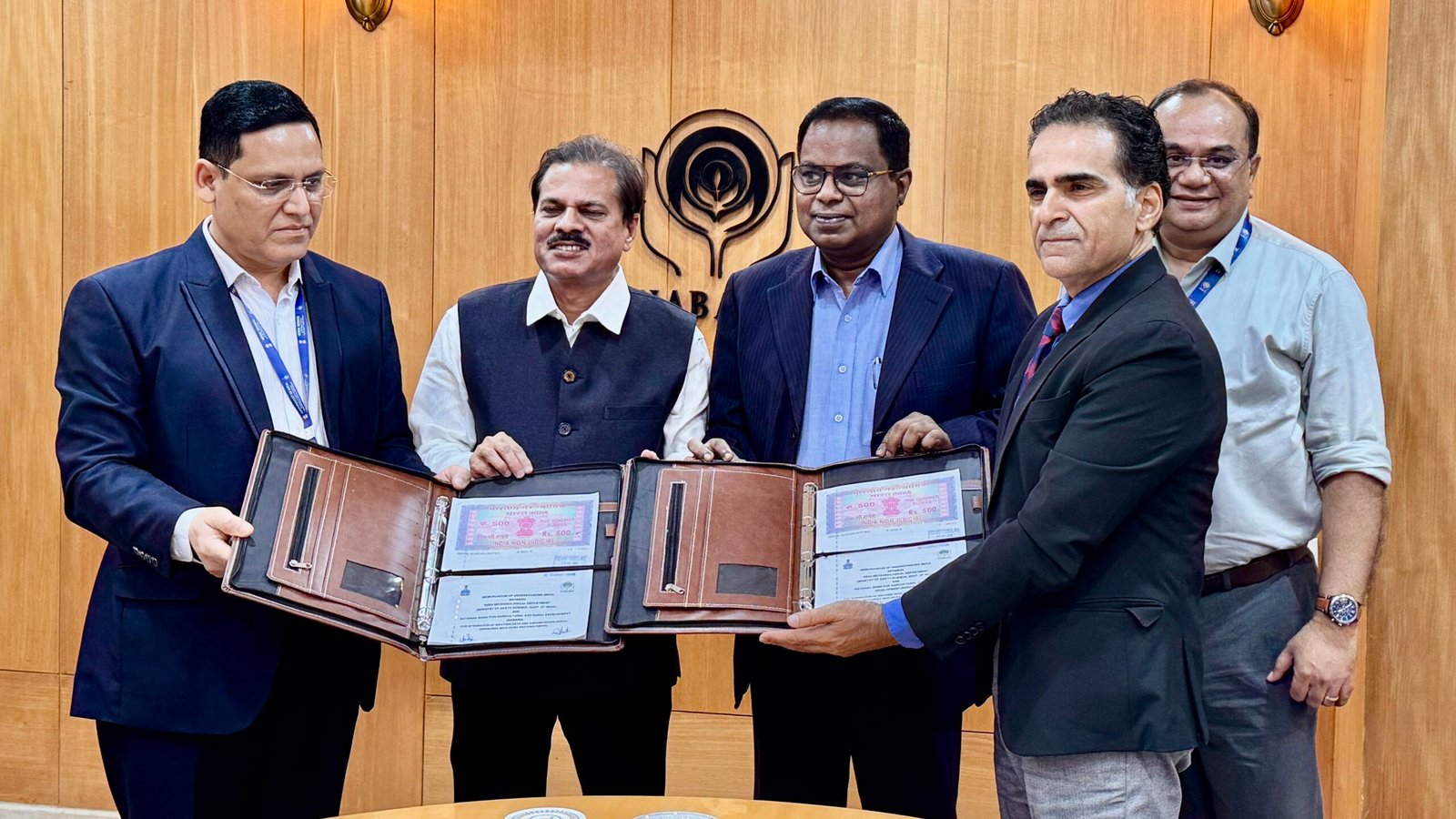
    National Bank for Agriculture and Rural Development (NABARD) and the India Meteorological Department (IMD) signed an MoU on Monday to integrate IMD’s agro-meteorological data products into DiCRA (Data in Climate Resilient Agriculture), an open-source digital platform backed by the United Nations Development Programme (UNDP) and NABARD.

    The agreement aims to make weather and climate data freely accessible to farmers, financial institutions, policymakers and researchers across the country, an official statement said.

    The MoU was signed by Sanjeev D Rohilla, Chief General Manager, Department of Climate Action and Sustainability at NABARD, and Bikram Singh, Scientist-G and Head of the Regional Meteorological Centre in Mumbai.

    NABARD Chairman Shaji Krishnan V, IMD Director General of Meteorology Mrutyunjay Mohapatra, and senior officials from both organisations were present at the ceremony.

    Under the deal, IMD will supply district and block-level weather forecasts, agromet advisories, in-situ observations and weather alerts through a dedicated Weather Portal on DiCRA. The data will sit alongside DiCRA’s existing geospatial datasets on soil moisture, vegetation health, crop conditions and climate vulnerability, giving users decision-ready insights at the local level.

    “Climate risk cannot be treated as a standalone issue; it has to be integrated into our development and financing decisions,” Krishnan said, adding that the partnership would help “forewarn both the farmer and the bank.”

    Mohapatra said Indian weather forecasting accuracy has improved by 40 to 50 percent over the past decade, with forecasts now reaching the panchayat level, but that reaching every farmer in a usable format remained the next challenge.

    NABARD will use DiCRA’s open APIs to distribute district-level advisories, seasonal risk alerts and weather-linked vulnerability assessments to credit officers, field staff, researchers and farmers via web, mobile and API channels. The Weather Portal integration also supports NABARD’s own weather portal on DiCRA, which is currently under development.

    NABARD, India’s apex rural development bank, was established in 1982. IMD, founded in 1875, is India’s national meteorological service under the Ministry of Earth Sciences. DiCRA, recognized as a Digital Public Good in 2022, is jointly maintained by NABARD with technical support from UNDP.
  • NABARD vigilance seminar strengthens integrity, governance

    NABARD vigilance seminar strengthens integrity, governance

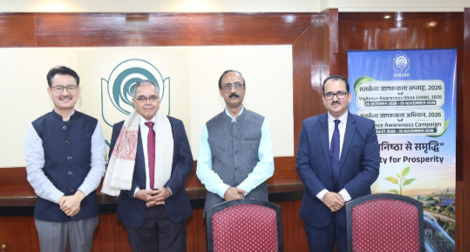
    The National Bank for Agriculture and Rural Development (NABARD) organised a seminar titled “Vigilance: Strengthening Integrity and Good Governance” at its Head Office in Mumbai, part of the Vigilance Awareness Campaign 2026 running from August 17 to November 16 under the theme “Probity for Prosperity.”

    Suresh N. Patel, former Central Vigilance Commissioner of India, attended as chief guest and delivered the keynote address, reinforcing NABARD’s push to strengthen institutional integrity and governance across its operations.

    Senior officials including Deputy Managing Directors G S Rawat and Ajay K Sood, along with Chief Vigilance Officer U Dinesh Shanbhag, joined employees from Head Office, Regional Offices, Training Establishments, Subsidiaries and District Development Managers nationwide.

    Shanbhag welcomed Patel, citing his extensive background in governance, public administration, banking and vigilance, and credited him for advancing transparency and accountability in public institutions.

    Rawat, addressing the gathering, said vigilance must be viewed as a preventive tool rather than a purely punitive mechanism, and urged employees to participate actively in campaign activities that strengthen NABARD’s culture of probity. He said robust systems and procedures remain central to an effective preventive vigilance framework, a message that continues to strengthen the bank’s governance priorities.

    In his keynote, Patel spoke on the role of vigilance in promoting ethical governance and building public trust. He addressed banking frauds, complaint-handling frameworks, and the need for prudent management of non-performing assets, alongside strict adherence to systems and stronger appraisal standards — measures he said strengthen accountability and good governance at financial institutions.

    The seminar closed with NABARD reaffirming its commitment to transparency, accountability and ethical governance as it carries out its developmental mandate.

  • IFAD launches transformative India rural development roadmap worth USD 4.2 billion

    IFAD launches transformative India rural development roadmap worth USD 4.2 billion

    The International Fund for Agricultural Development (IFAD) and the Government of India have launched a transformative eight-year rural development strategy, committing to scale investment, strengthen climate resilience and accelerate inclusive agricultural growth across the country’s vast rural economies.

    The new Country Strategic Opportunities Programme (COSOP) 2026–2033 was unveiled at the IFAD–India Partnership for Rural Prosperity event held at Bharat Mandapam in New Delhi on April 12, bringing together senior government representatives, IFAD leadership, development partners and private sector actors.

    The strategy sets two core objectives: enhancing the social, economic and climatic resilience of rural communities; and strengthening knowledge systems to scale proven models domestically and share them across the Global South.

    The announcement marks a pivotal expansion of one of IFAD’s largest country partnerships. Across 35 projects, USD 1.36 billion in IFAD financing has mobilised more than twice as much from partners, for a total investment of USD 4.2 billion.

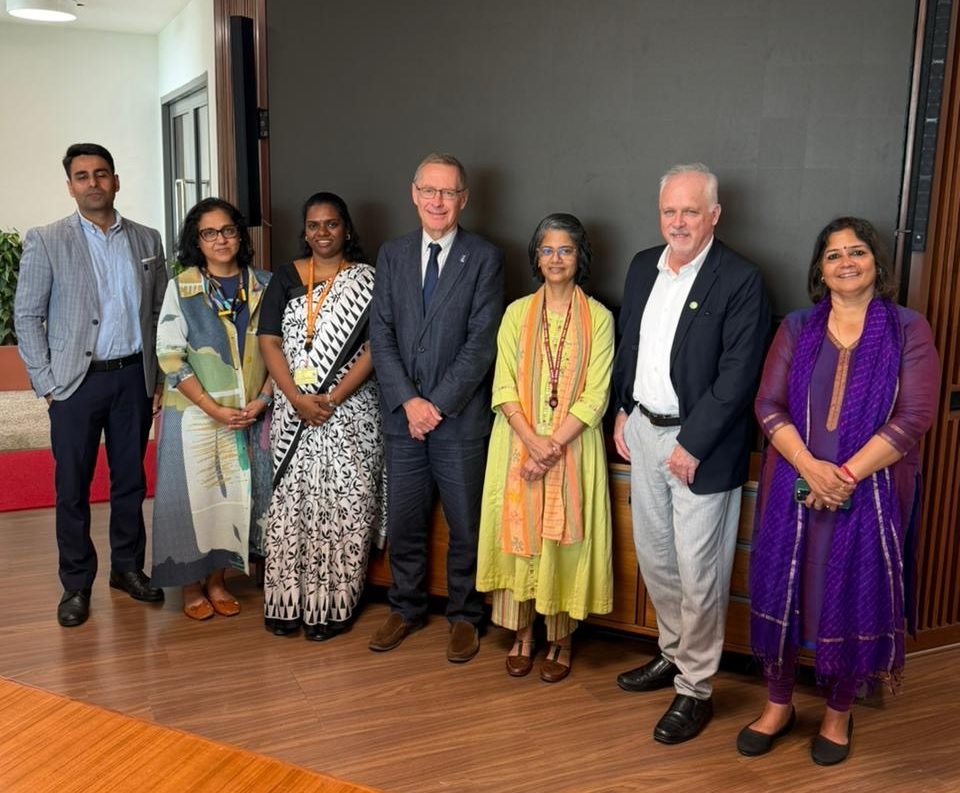
    A senior IFAD delegation led by Associate Vice-President Donal Brown held talks with officials from India’s Ministry of Finance, Ministry of Agriculture and Farmers Welfare, and Ministry of Rural Development. Discussions covered smallholder support, digital agriculture, climate-resilient crops such as millets, and expanding farmer producer organisations.

    Brown said the partnership goes beyond individual projects and focuses on building systems that connect institutions, finance, infrastructure and markets for long-term rural development, IFAD said in a statement.

    The strategy places significant emphasis on strengthening grassroots institutions including self-help groups, farmer producer organisations and cooperatives, expected to play a key role in linking finance, technology, infrastructure and markets.

    On the financing front, IFAD signed a strategic partnership with NABARD on the sidelines of the event to expand rural finance and innovation. NABARD Chairman Shaji K V said the two institutions share a conviction that rural financial systems work best when built from the community up. International Fund for Agricultural Development

    The new strategy also positions India as a knowledge leader in rural development, with plans to share successful models in digital agriculture, inclusive rural finance and climate-resilient value chains with partner countries across Africa, Southeast Asia and Latin America.

    The IFAD delegation also undertook field visits to Meghalaya’s Ri-Bhoi district to review community-led initiatives under the Meghalaya Livelihoods and Access to Markets Project, and held talks with Meghalaya Chief Minister Conrad Sangma and Assam Chief Minister Himanta Biswa Sarma on future agricultural cooperation.

    India and IFAD have partnered for nearly 48 years, financing 35 rural development projects worth approximately USD 4.2 billion, with six ongoing projects focused on market linkages, climate-resilient agriculture and training programmes.

    “India is not only transforming its own rural economy — it is generating solutions that are relevant globally,” said Reehana Raza, IFAD Regional Director for Asia and the Pacific.