Tag: #MoU

  • KCG, Urbaser sign moU for waste management drive

    KCG, Urbaser sign moU for waste management drive

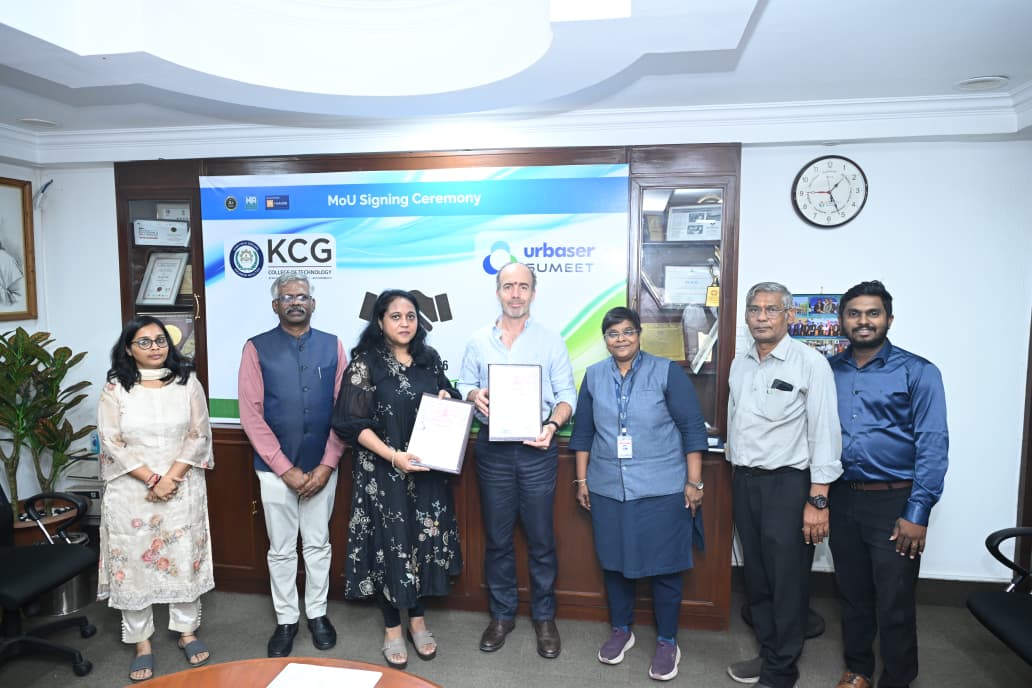
    KCG College of Technology, a unit of the Hindustan Group of Institutions, has signed a transformative Memorandum of Understanding with Sumeet Urban Services (Chennai) V Pvt Ltd, known as Urbaser Sumeet, to deepen industry-academia collaboration in waste management, sustainability and skill development.

    The partnership aims to build a long-term, industry-integrated sustainability model that directly engages students in solving real-world urban environmental challenges across Chennai.

    Under the agreement, students will participate in clean-up drives, waste management awareness campaigns, sustainability workshops, internships and innovation challenges. The collaboration will also cover hackathons, practical training and professional certification programmes focused on circular economy practices and environmental sustainability.

    A key initiative under the MoU is “Edubridge,” a programme designed to support the education and empowerment of children of frontline conservancy workers — a measure both institutions described as central to social inclusion and community impact.

    Urbaser Sumeet will also serve as the hygiene partner for major institutional events at KCG, demonstrating best practices in source segregation, solid waste management and urban cleanliness systems.

    “Engineering education today must go beyond laboratories and classrooms,” said Anand Jacob Varghese, Chairman, Hindustan Group of Institutions. “When our students walk alongside conservancy workers, manage waste drives and design recycling solutions for their own city, they are not just learning — they are becoming the kind of engineers and citizens Chennai needs.”

    Annie Jacob, Director of KCG College of Technology, said embedding Urbaser Sumeet’s operational expertise into campus programmes would give students direct exposure to one of Chennai’s most critical urban services. “From internships in waste vehicle operations to the Edubridge initiative, this collaboration is built around real impact — not just awareness,” she said.

    Albert Gleiser Ignacio, Managing Director of Urbaser Sumeet, said lasting change in urban waste management begins with how the next generation thinks about it. “Partnering with KCG gives us the opportunity to bring that ground reality into an academic setting and build a pipeline of professionals genuinely invested in sustainable urban systems,” he said.

    The partnership is expected to generate research-oriented projects in waste segregation, recycling systems, circular economy models and smart urban sustainability solutions. Both organisations said they intend to develop a scalable and replicable model for sustainable campus-community partnerships.

    The collaboration promotes the principles of Reduce, Reuse and Recycle and seeks to foster environmentally conscious practices across the student community and beyond.
  • Gates, Wadhwani sign MoU for India Innovation Network

    Gates, Wadhwani sign MoU for India Innovation Network

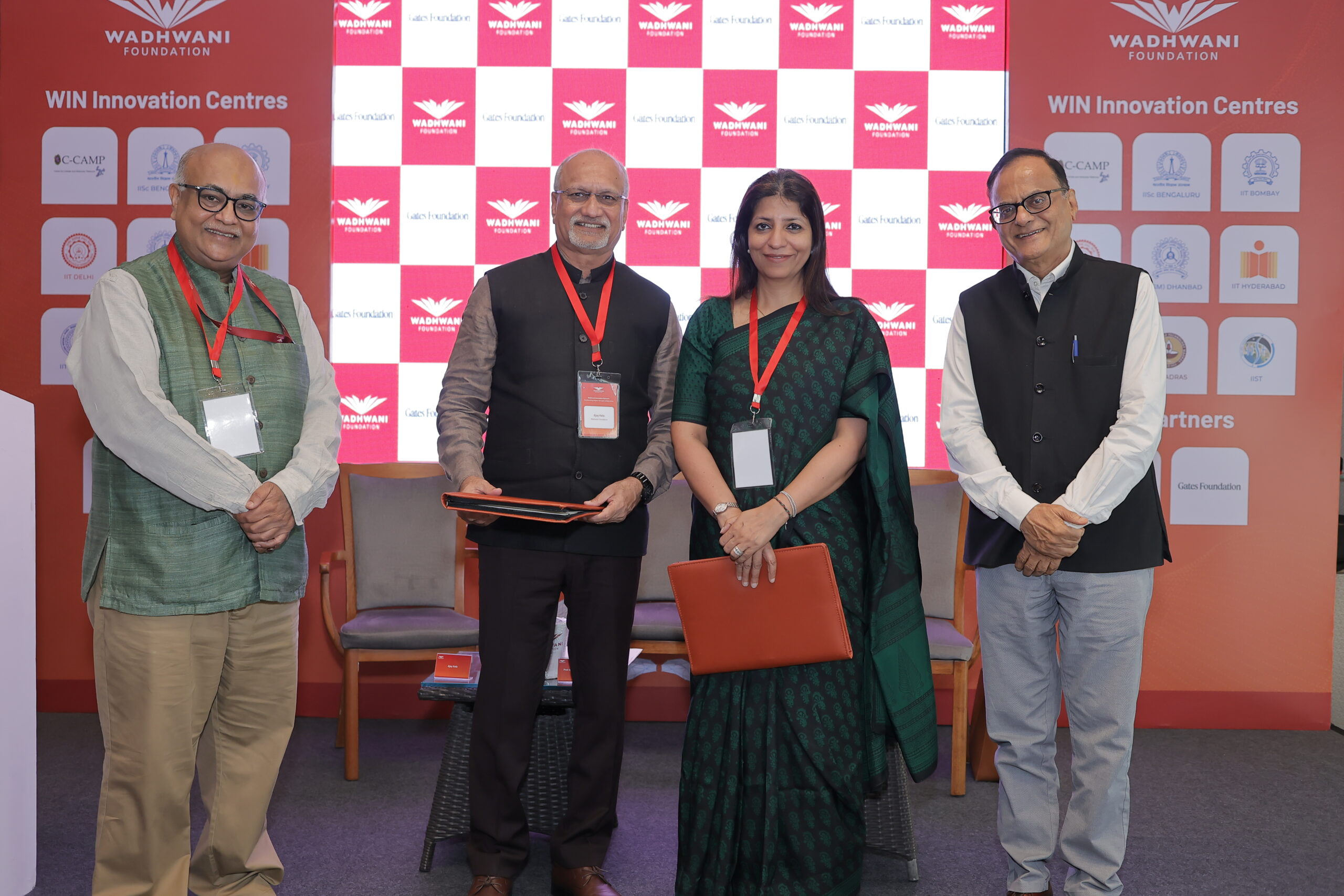
    Wadhwani Foundation and the Bill & Melinda Gates Foundation have signed a landmark Memorandum of Understanding to accelerate India’s push from laboratory research to commercial deployment, backing a national-scale programme called the National Innovation Network (NIN).

    The partnership targets translational research in health, nutrition, biotechnology, genomics and medical technology — sectors the Indian government has identified as national development priorities.

    Under the agreement, the Gates Foundation will fund five NIN Centres of Excellence over five years, with two centres receiving support in the current year. The centres will help researchers move innovations past the laboratory stage toward real-world applications, covering prototyping, validation, pilot deployments, intellectual property management and venture creation.

    The India Innovation Network builds on the Wadhwani Innovation Network (WIN), launched by Prime Minister Narendra Modi on April 29, 2025. Since its debut, WIN has backed more than 50 high-potential projects spanning healthtech, medtech, biotechnology and quantum technologies, establishing research hubs at IIT Bombay, IIT Delhi, IIT Kanpur, IIT Hyderabad, IIT(ISM) Dhanbad, the Indian Institute of Science and C-CAMP.

    Two flagship “Super Hubs” are under development: the Wadhwani School of AI & Intelligent Systems at IIT Kanpur and the Wadhwani Health & Bio Hub at IIT Bombay.

    “WIN has demonstrated that India’s innovation potential can be unlocked when researchers, institutions, industry and capital come together with a shared mission,” said Ajay Kela, Chief Executive and Board Member of Wadhwani Foundation. “Through NIN, we now have the opportunity to democratize innovation across India and help position the country as a global leader.”

    Archna Vyas, Director of the Gates Foundation’s India Country Office, said the most consequential health and nutrition breakthroughs of the next decade would likely originate in Indian institutions. “Our collaboration with Wadhwani Foundation will help support the opportunity for these innovations by investing in translational pathways,” she said.

    NIN aims to establish more than 250 Centres of Excellence across India within three to five years, drawing participation from government agencies, corporate partners, philanthropies and academic institutions under a shared governance framework managed by the Wadhwani Foundation.

    The network’s longer-term targets include translating thousands of innovations annually from research settings to market-ready products, with projected impact across millions of jobs and livelihoods.