Tag: #MakeInIndia

  • ZED Certification proves its worth for India’s MSMEs, one factory at a time

    ZED Certification proves its worth for India’s MSMEs, one factory at a time

    By Eldee

    For years, “sustainability” and “quality” have been treated as costs that small manufacturers in India could ill afford. The government’s ZED Certification Scheme is quietly rewriting that assumption, and the early evidence from factory floors across the country suggests it deserves more attention than it has received.

    Consider Finex Industries Pvt. Ltd., a metal and wooden furniture maker based in Dindori, Nashik, Maharashtra. After earning ZED Silver Certification on July 14, 2025, the company cut its Cost of Poor Quality by 11%, reduced rework by 10% and trimmed defects by 1%, while also improving workplace safety and resource utilization. The enterprise reported additional gains from better energy efficiency, smarter space utilization and lower consumable usage. This is not abstract policy language – it is money saved and processes fixed.

    Or take Concept Clothing Pvt. Ltd. in Jalandhar, Punjab, which achieved ZED Silver Certification a month earlier, on June 14, 2025. The results were striking: an 80% drop in workplace incidents, a 50% cut in Mean Time to Repair, a 7.4% reduction in rework and a 4% fall in rejection rates, alongside meaningful savings from quality, environmental and workplace initiatives.

    What both cases illustrate is a simple but underappreciated truth: ZED Certification is not a bureaucratic badge. It is a structured pathway that pushes MSMEs to confront inefficiencies they might otherwise tolerate indefinitely – excess rework, safety lapses, wasted energy – and gives them the tools and, increasingly, the financing to fix them.

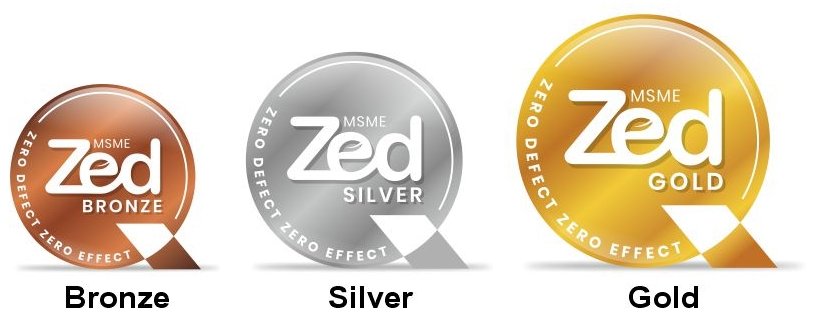
    That argument is bolstered by the scale the scheme has now reached. As of July 7, 2026, close to 949,000 MSMEs had registered under the ZED Certification Scheme, with over 667,000 Bronze, 6,700 Silver and 4,800 Gold certifications awarded nationwide. More than 9.13 billion rupees in financial support has flowed to enterprises adopting quality and sustainable manufacturing practices – hardly a token gesture.

    The scheme’s design also deserves credit for addressing one of India’s most persistent economic gaps: the underrepresentation of women in manufacturing. Since November 11, 2023, the government has offered a 100% subsidy on ZED Certification costs for women-owned MSMEs, making certification effectively free. This removes what has long been a real barrier – upfront cost – and gives women entrepreneurs a genuine shot at building process discipline and market credibility on equal footing.

    Skeptics might ask whether certification schemes like this simply add paperwork without changing outcomes. The Finex and Concept Clothing examples argue otherwise. Both firms point to concrete, measurable improvements in cost, safety and efficiency – the kind of numbers that boards and lenders take seriously, not the kind that exist only in a compliance file.

    There is also a structural case for ZED beyond individual firms. Twenty-two states and union territories have now folded ZED into their industrial policies, offering additional incentives to certified enterprises, while 19 financial institutions extend concessions on processing fees and interest rates to ZED-certified MSMEs. That is the beginning of an ecosystem where quality and sustainability are not just encouraged in theory but rewarded in practice – through cheaper capital and better market access.

    None of this means the scheme is without room to grow. Awareness among smaller, unregistered enterprises remains uneven, and Gold certifications – the scheme’s highest tier – still number only in the thousands against a base approaching a million registrants. Scaling that last mile will determine whether ZED becomes a genuine driver of India’s manufacturing competitiveness or a program that plateaus at Bronze-level participation.

    But the direction is encouraging. If more MSMEs follow the path taken by Finex Industries and Concept Clothing, ZED Certification could become less a government initiative and more a standard expectation – one that strengthens India’s position in domestic and global value chains, enterprise by enterprise.

    For details, please visit https://zed.msme.gov.in/
  • Maruti Suzuki signs Gujarat MoU for five ITI labs

    Maruti Suzuki signs Gujarat MoU for five ITI labs

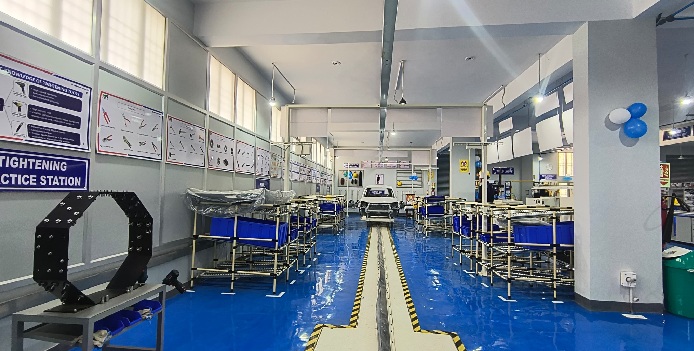
    Maruti Suzuki India Limited has signed a Memorandum of Understanding with the Directorate of Employment and Training (DET), Government of Gujarat, to establish Advanced Manufacturing Labs (AMLs) at Industrial Training Institutes in Palanpur, Bhavnagar, Surendranagar, Godhra, and Dahod, the company announced.

    The initiative, developed under Maruti Suzuki’s Corporate Social Responsibility program, is aligned with the Government of India’s Skill India mission and aims to build a future-ready automotive workforce across the state.

    The Advanced Manufacturing Labs replicate real-world shop-floor conditions and provide hands-on training in assembly, welding, painting, machining, mechatronics, and industrial safety — areas directly relevant to modern automotive manufacturing.

    EXPANDING MANUFACTURING FOOTPRINT

    The Skill India push in Gujarat coincides with a significant expansion of Maruti Suzuki’s manufacturing operations in the state. The company is set to commission a fourth production line at its Hansalpur facility this year, raising total annual capacity there from 750,000 units to 1 million units.

    In addition, Maruti Suzuki is constructing a new plant at Sanand with a capacity of 1 million units annually. Once operational, the company’s combined annual production capacity in Gujarat will reach 2 million units.

    EXECUTIVES SPEAK

    Rahul Bharti, Senior Executive Officer, Corporate Affairs, Maruti Suzuki India Limited, said the company’s Skill India alignment was central to creating livelihood opportunities for young people.

    “Through Advanced Manufacturing Labs, we are equipping students with experiential learning and confidence in modern equipment, nurturing professionals who can seamlessly integrate into the evolving automotive ecosystem,” Bharti said.

    He added that each manufacturing expansion brought with it a demand for skilled, job-ready talent, and that the AMLs were designed to meet that need directly.

    Ms. Stuti Charan, IAS, Director, DET, Government of Gujarat, said the initiative bridges a longstanding gap between classroom instruction and industry expectations.

    “This initiative will empower our youth and strengthen Gujarat’s position as a hub for the automotive sector, in line with the Prime Minister’s vision of Viksit Bharat and the Chief Minister’s guidance toward Viksit Gujarat 2047,” Charan said.

    NATIONAL SCALE

    Maruti Suzuki currently supports 31 ITIs across India in manufacturing-related trades. The company has established 18 AMLs nationwide to date. With the five new Gujarat labs, the total will rise to 23 AMLs operating across seven states and union territories — Gujarat, Haryana, Uttar Pradesh, Bihar, Madhya Pradesh, Punjab, and Chandigarh.

    The company also operates four Japan-India Institutes for Manufacturing in Gujarat, at Mehsana and Gandhinagar, and in Haryana, at Manesar and Sonipat. The institutes were established as a bilateral initiative between the Governments of India and Japan to develop a skilled manufacturing workforce.

  • Lava deploys 20,941 MDM-enabled smartphones for anganwadi digital empowerment in UP

    Lava deploys 20,941 MDM-enabled smartphones for anganwadi digital empowerment in UP

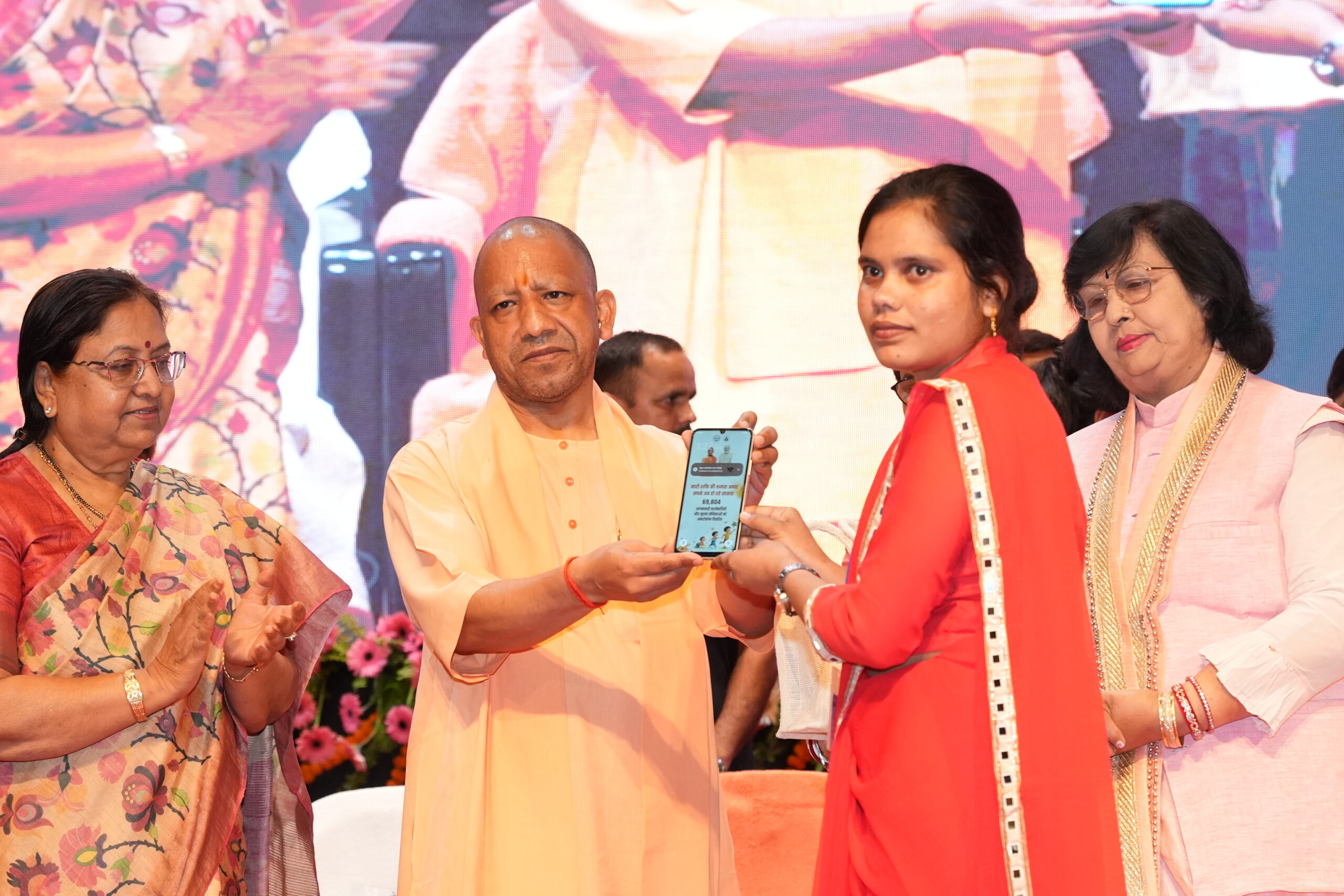
    Lava International Limited has partnered with the Government of Uttar Pradesh to deliver Lava smartphones to 20,941 Anganwadi workers statewide, a transforming rollout under the Integrated Child Development Services (ICDS) framework aimed at replacing manual record-keeping with real-time, data-driven service delivery at the grassroots level.

    The handover ceremony was held at Lok Bhavan, Lucknow in March 2026, under the theme “Suposhit Uttar Pradesh, Sashakt Bharat” — Nourished Uttar Pradesh, Empowered India.

    UP Chief Minister Yogi Adityanath presided over the event alongside Women’s Welfare Minister Baby Rani Maurya, Additional Chief Secretary Leena Johri, and WCD Director Sarneet Kaur Broca. Approximately 1,000 Anganwadi workers attended in person.

    Lava supplied handsets from its Storm Play series, factory-configured for field deployment with Mobile Device Management (MDM) capabilities, a supervisor monitoring application, and state-specific interface integrations aligned to WCD and ICDS digital systems.

    The Anganwadi digital empowerment initiative enables workers to record maternal and child health data in real time, track attendance digitally, monitor nutrition distribution for newborns and lactating mothers, and feed information directly into centralised dashboards.

    “Digital transformation at the grassroots is not just about access to devices, but about building systems that work reliably at scale for those delivering essential services on a day-to-day basis. This initiative is a testament of our ability to design and deliver technology solutions tailored for real-world public sector needs,” said Llyod D’souza, Chief Business Officer, Enterprise Business, Lava International Limited.

    The deployment directly addresses longstanding bottlenecks in welfare delivery. Supervisors can now remotely monitor field activity, track stock availability of food packets for at-risk households, and receive early alerts on potential health and nutrition risks — capabilities previously dependent on paper-based reporting cycles.

    Officials said the initiative supports the UP government’s broader ambition to bridge the digital divide through scalable, technology-led interventions and strengthen last-mile delivery of public welfare programmes.

    For Lava, the contract extends a record of enterprise public-sector deployments as the company positions itself as a domestic alternative in India’s government mobility procurement market.