Agropak, a biotech startup building a natural fibre materials platform for bio-based packaging, has won the Big Pi Grant, India’s largest non-dilutive grant for early-stage climate startups, organisers The Sustainability Mafia (SusMafia) said.
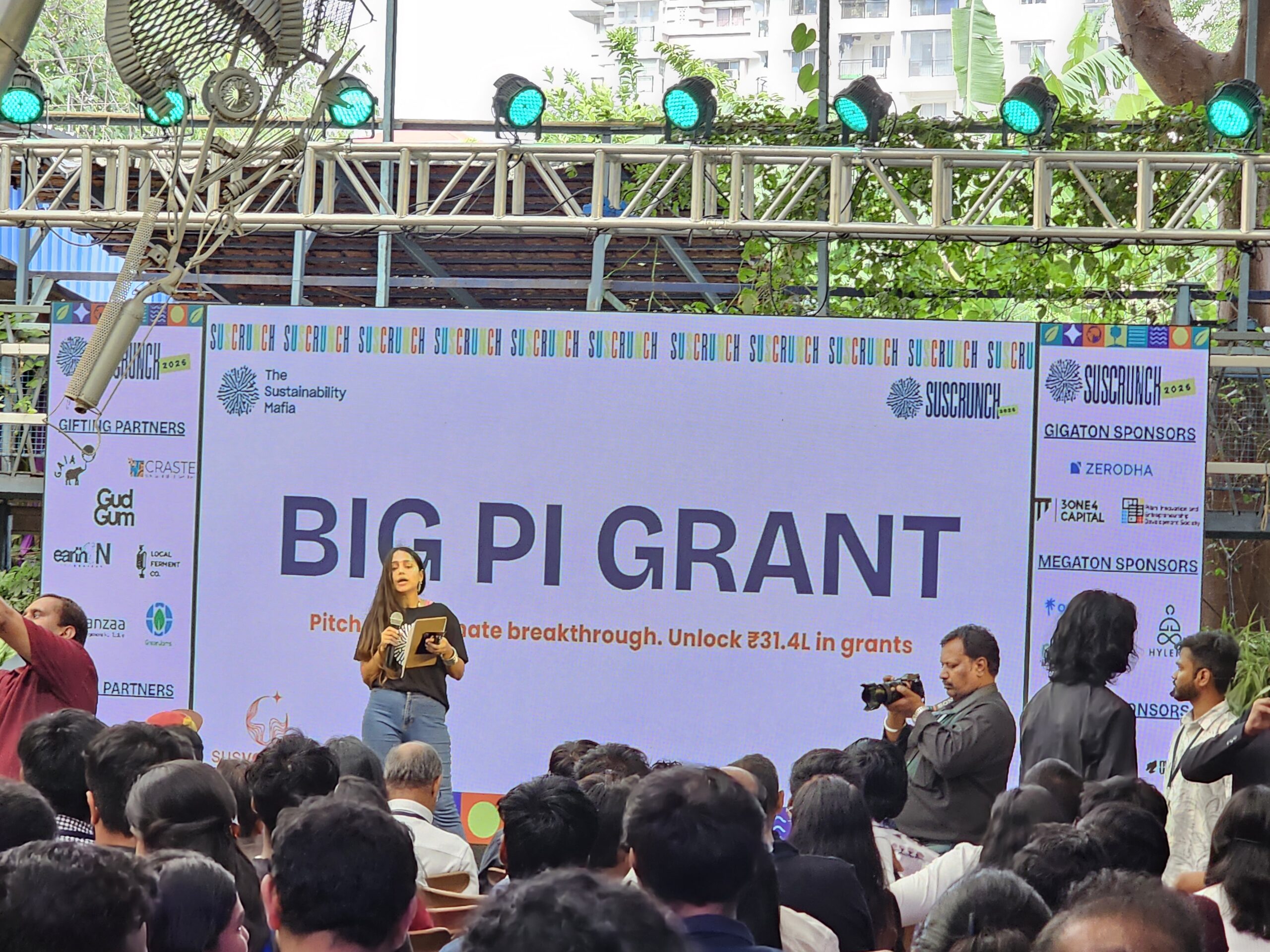
The Rs 31.4 lakh Big Pi Grant, presented at the third edition of SusCrunch 2026, is designed to boost climate startups through innovation support, commercial validation and market adoption without diluting founder equity, SusMafia said in a statement.
Agropak’s win adds to a growing set of resources for the company, including mentorship, strategic guidance and access to incubators and government programmes through SusMafia’s investor, fellowship and grant network.
The grant’s name draws on the mathematical constant pi (3.14), a nod meant to symbolise bold thinking and breakthrough innovation, according to the organisers.
SusCrunch 2026 drew investors including Zerodha and 3one4 Capital, along with corporates such as Reliance, Biocon, Zomato and Apollo Hospitals, underscoring rising industry interest in climate-focused startups.
The Big Pi Grant announcement comes as India’s climate-tech sector has drawn nearly USD 12.8 billion in funding across 1,583 startups between 2008 and June 2026, according to the Tracxn India Climate Tech 2026 Report.
Global early-stage climate funding, however, has slipped to a five-year low, the State of Climate Tech 2025 report found, a trend organisers say makes non-dilutive grants like the Big Pi Grant increasingly critical to bridging the gap between research and commercial scale.
Backed jointly by SusMafia and the BITS Pilani PIEDS Accelerator, the Big Pi Grant drew more than 50 applications from founders across BITS Pilani, IIT and the wider SusVentures network. Five startups spanning water and waste management, climate intelligence, sustainable materials and the built environment were shortlisted before Agropak was named the winner.
Past recipients have used the grant as a springboard. BioCompute, the 2024 winner, has since built laboratory infrastructure, expanded into the Bay Area and raised more than Rs 5 crore from investors including WTF Fund, Grad Capital and 1517 Fund. Bisket Labs, the 2025 recipient, went on to secure Karnataka’s ELEVATE Grant.
“Every founder needs access to business, capital and talent. No founder can build all three alone,” said Ganesh Shankar, co-founder of The Sustainability Mafia and founder of FluxGen.
SusMafia, a founder-led climate community, says its network of 84 active climate founders and more than 700 “Climate Ninjas” has collectively raised over $350 million, employs more than 3,000 people and generates Rs 2,100 crore in annual revenue, while diverting over 363,000 tonnes of waste from landfills and mitigating roughly 1.56 million tonnes of CO2 equivalent annually.
At a separate “Climate Sitdown” session, Neeraj Jain, co-founder of Solar Square, a Series C rooftop solar company that has raised over USD 100 million, said the SusMafia community “feels like the start of a movement,” speaking alongside Ashish Goel, founder of Urban Ladder and an investor in more than 30 startups.
Organisers say initiatives like the Big Pi Grant will remain central to India’s climate innovation push as the country works toward its net-zero goals, with early-stage grants, founder communities and industry partnerships seen as key complements to venture capital.