Tag: #GreenIndia

  • Balrampur Chini launches Bioyug Green Command 2026 to drive India’s bioplastics revolution

    Balrampur Chini launches Bioyug Green Command 2026 to drive India’s bioplastics revolution

    Balrampur Chini Mills Limited (BCML) formally launched Bioyug Green Command 2026 on Friday, marking World Environment Day with a first-of-its-kind platform aimed at accelerating India’s bioplastics revolution and reducing the nation’s dependence on conventional petroleum-based plastics.

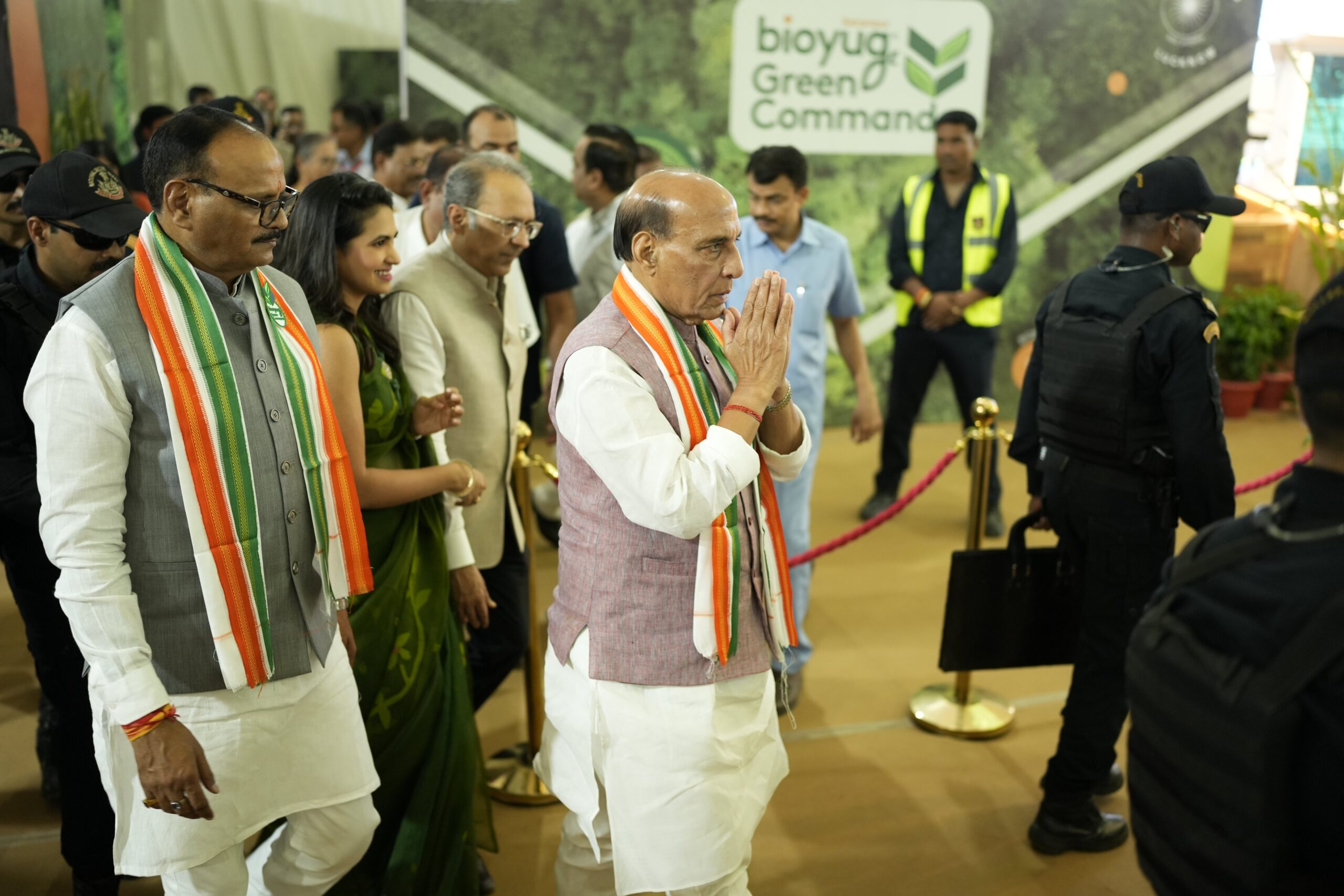
    The launch, held in collaboration with the Lucknow Cantonment Board, was presided over by Union Defence Minister Rajnath Singh as chief guest, signalling growing government support for bio-based indigenous manufacturing as a strategic national priority.

    The event formalised a landmark collaboration between Balrampur Bioyug and the Lucknow Cantonment Board following an earlier memorandum of understanding and BCML’s first institutional order for compostable polylactic acid (PLA)-based products. PLA, derived from sugarcane, is a fully organic bioplastic that breaks down within 180 days and converts into compost rather than waste.

    Speaking at the launch, BCML Chairman and Managing Director Vivek Saraogi said India stood at a defining moment where economic growth and environmental responsibility must advance together.

    “Through Bioyug Green Command 2026, we are bringing together government, industry, institutions and communities to accelerate this transition and demonstrate how innovation-led solutions can contribute meaningfully to a cleaner, greener and more self-reliant India,” Saraogi said.

    Executive Director Avantika Saraogi framed the shift to biomaterials as an economic opportunity as much as an environmental necessity.

    “The last century belonged to oil and petrochemicals; the next can belong to farmers and fields,” she said. “The materials of the future will not only be mined from beneath the earth but cultivated above it, through the power of agriculture.”

    Addressing the gathering, Defence Minister Singh drew attention to the accelerating public health toll of microplastics, citing scientific research indicating that approximately 350,000 people die globally each year due to microplastic exposure, with plastic particles now detectable in the blood of newborns.

    Singh highlighted the national security dimension of the transition to bioplastics, noting that India’s existing 20% ethanol blending programme had shielded the domestic economy from supply chain disruptions triggered by recent West Asian geopolitical turbulence.

    “By generating resources from our sugarcane, rice, and organic waste, we will strengthen our security framework,” Singh said. “While fulfilling our environmental obligations, we can become a self-reliant, bio-based economy.”

    Two high-level panel discussions formed a centrepiece of the programme. The first, titled “Mandate to Market: Unlocking the Bioplastics Value Chain in Uttar Pradesh,” examined policy support and market opportunities required to scale bioplastics adoption. The second, “From Mess to Mission: Bioplastics for Defence,” explored sustainable material integration within defence establishments.

    A parallel highlight was the felicitation of meritorious ITI girl students from Lakhimpur Kheri, Uttar Pradesh, participating in the “Building Skills. Transforming Futures” initiative — a women-focused 3D printing training programme using Bioyug PLA, run by Balrampur Foundation in partnership with ITI Mohammadi.

    BCML, one of India’s largest integrated sugar companies, is currently developing the country’s first PLA plant with a capacity of 80,000 tonnes per annum. The company operates ten sugar factories across Uttar Pradesh with an aggregate crushing capacity of 80,000 TCD.

    The event drew participation from over 2,000 stakeholders spanning government, industry, academia, defence, and civil society.

    Bioyug Green Command 2026 is anchored in the proposition that “the future of materials is grown, not drilled,” positioning India’s agricultural base as the foundation of its emerging circular bioeconomy.
  • EBG Foundation launches Sambhav Hai to build carbon-neutral villages across India

    EBG Foundation launches Sambhav Hai to build carbon-neutral villages across India

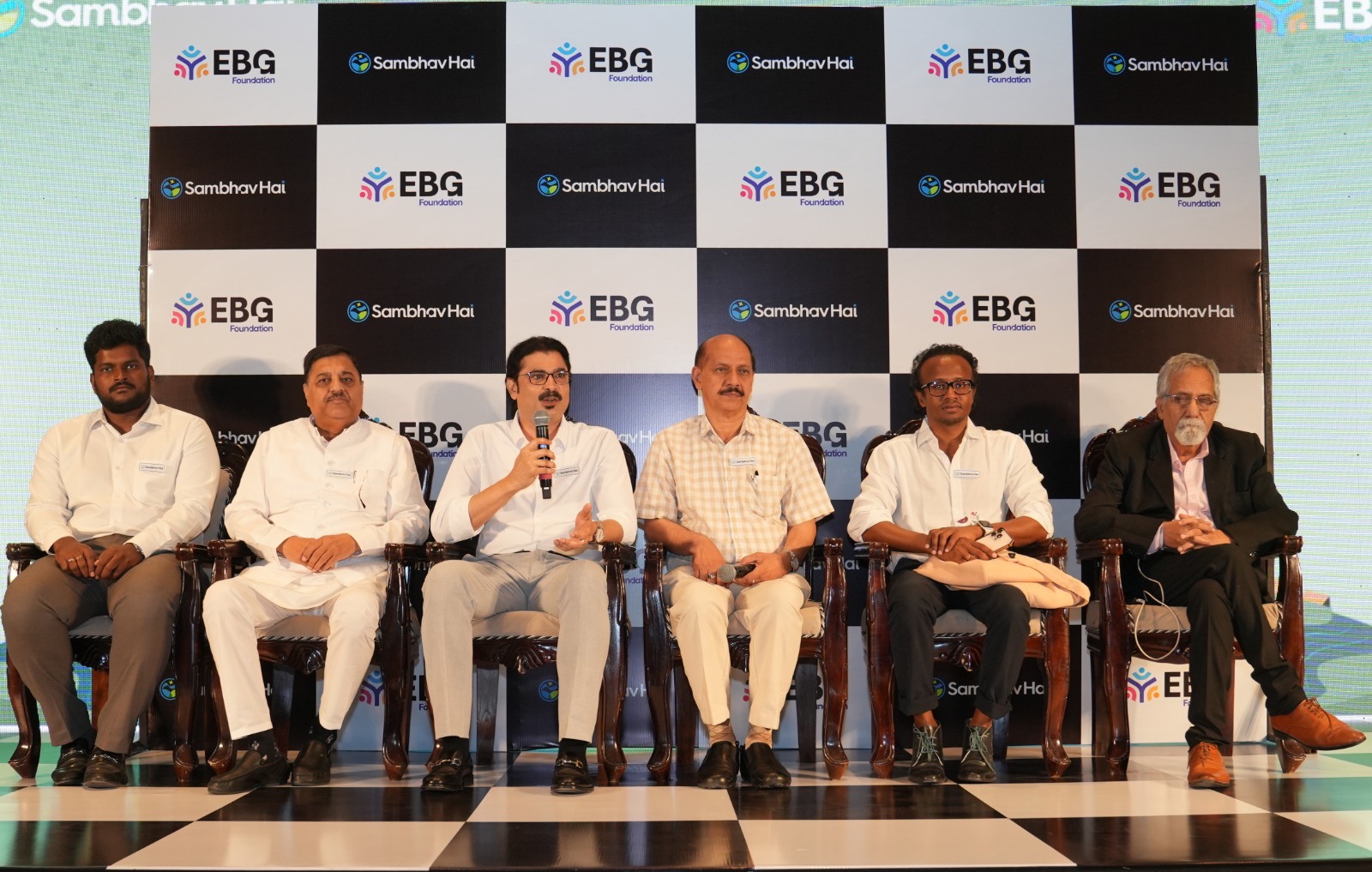
    EBG Foundation launched Sambhav Hai on Earth Day, a nationwide rural sustainability programme spearheaded by EBG Group Founder and Chairman Dr Irfan Khan, targeting carbon-neutral villages across India through a phased, data-driven framework that begins with the adoption of Charla Thanda village in Telangana’s Nalgonda district.

    The initiative marks one of the most ambitious grassroots climate programmes announced in India this year, with a Rs 30 crore allocation for its first phase covering 50 villages, expanding to 150 villages in Year 2 and scaling to 750 villages in Year 3 with government institutional support. The programme aims to reduce carbon emissions by 10 to 20 percent within the first year, progressing toward full carbon neutrality within three years.

    “Real change cannot come from isolated interventions. With Sambhav Hai, we are building a model where environmental sustainability, economic progress, and community ownership go hand in hand. Our aim is to empower villages with the tools, data, and accountability systems they need to lead their own transformation and contribute meaningfully to India’s climate goals,” said Dr Irfan Khan, Founder and Chairman, EBG Group

    At Charla Thanda, on-ground interventions have already begun with household-level data mapping to establish a comprehensive climate and resource baseline. The programme will focus on improving access to safe drinking water, strengthening groundwater recharge systems and implementing structured waste segregation and composting solutions. Afforestation drives and regenerative land practices will run in parallel, with local volunteers trained to sustain efforts over the long term.

    The village is being developed as a live demonstration of the Foundation’s Minus One Village model — a replicable blueprint designed to be scaled across regions and geographies.

    “Sambhav Hai’s success will be tracked through a robust framework that integrates water, energy, waste, food and land systems, along with carbon footprint metrics under the Minus One Village model. This ensures that the impact is measurable, accountable, and scalable across geographies.” — Suresh Goyal, Additional Director, EBG Foundation

    “What began as a simple idea has evolved into a powerful movement for large-scale transformation. By placing villages at the centre of climate action and bridging the gap between policy and on-ground implementation, Sambhav Hai creates a pathway for communities to actively lead India’s journey towards environmental resilience.” — Ranjitha M, Additional Director, EBG Foundation

    In parallel with its phased village rollout, the Foundation said it would initiate work across multiple states as part of a broader national expansion, extending the programme’s footprint beyond Telangana into a pan-India rural sustainability movement.

  • HCLFoundation expands My Clean City program to Agra, donates Sanitation fleet to Nagar Nigam

    HCLFoundation expands My Clean City program to Agra, donates Sanitation fleet to Nagar Nigam

    HCLFoundation, which drives the corporate social responsibility agenda of HCLTech in India, announced on Monday the expansion of its My Clean City program to Agra, Uttar Pradesh — the first city outside the Noida–Greater Noida belt to receive the initiative since its 2019 launch.

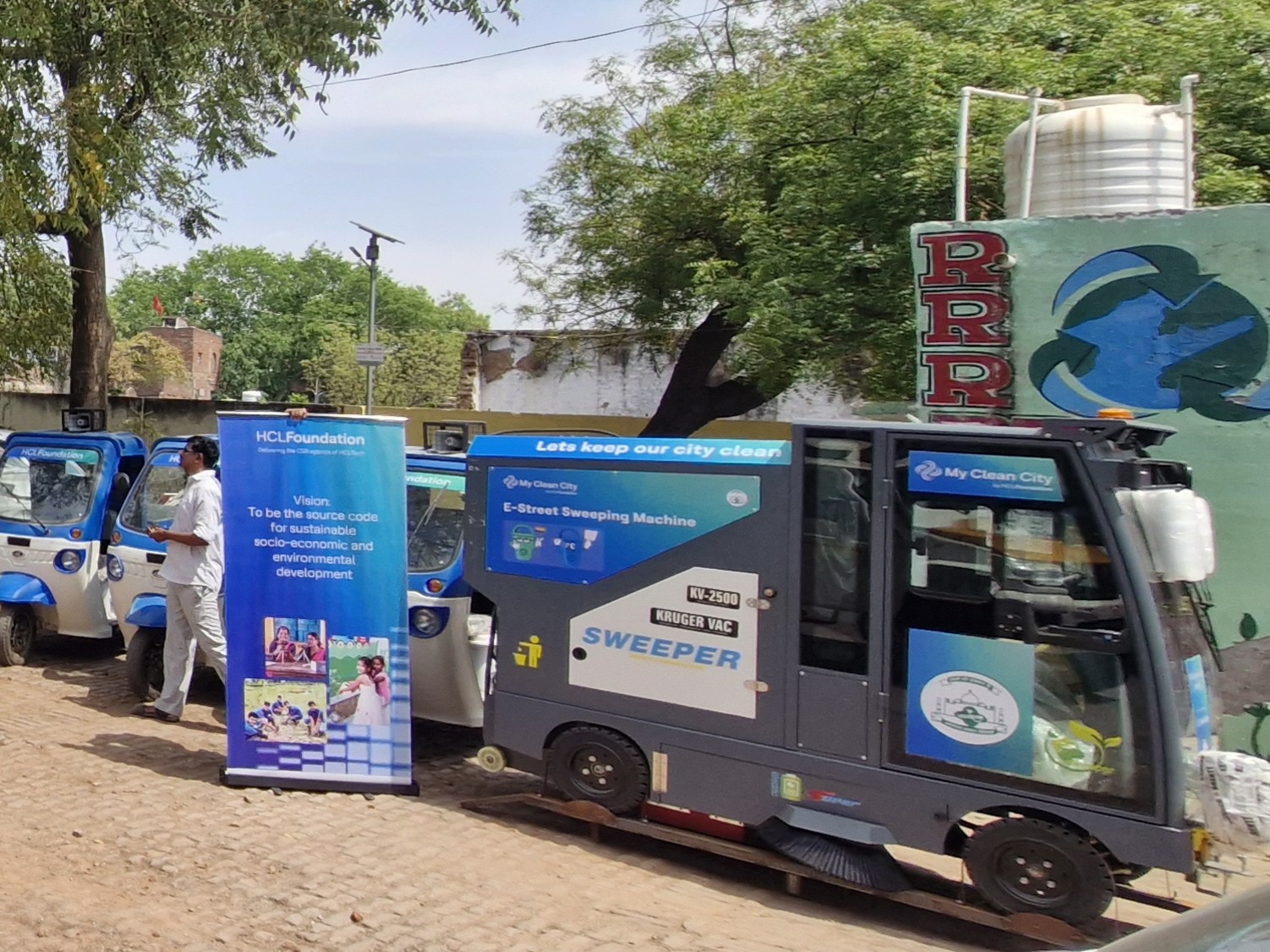
    As part of the rollout, the foundation donated 10 e-drain carts, two e-street sweeping machines and one HomoSep robot — a mechanised septic tank cleaning device — to Agra Nagar Nigam, the city’s municipal body. The equipment is intended to reduce hazardous manual work while improving the scale and consistency of urban waste management.

    The HomoSep robot, already deployed in Gautam Buddha Nagar, has cleared more than 100,000 litres of sludge across 452 manholes and sewer sites — removing sanitation workers from direct exposure to toxic conditions. The device represents a broader pivot within the program toward mechanisation as a tool for worker safety.

    Since its launch, My Clean City has engaged nearly 750,000 citizens through behavioural sensitisation drives and trained more than 61,000 stakeholders on waste management practices. The program has managed over 17,000 tonnes of waste in Noida and Greater Noida, and runs a Waste Champions Club involving more than 2,400 school students.

    The initiative also carries a social welfare component. Under its Social Inclusion of Sanitation Workers program, 200 sanitation worker families in Gautam Buddha Nagar receive support across health, education, financial literacy and skill development — a recognition that sustainable sanitation reform extends beyond infrastructure.

    Five biogas plants, each processing between 1,500 and 1,800 kg of cow dung daily, have been established in the region as part of complementary clean energy efforts, generating fuel from waste material.

    HCLFoundation said the Agra expansion reflects a strategy of replicating proven urban sanitation models in new municipal geographies. The foundation, which reported having positively impacted over 7.5 million lives to date, focuses thematically on education, health and sanitation, skill development, environment, and disaster risk reduction.

  • DS Group achieves landmark water positive certification, joins elite corporate circle

    DS Group achieves landmark water positive certification, joins elite corporate circle

    Dharampal Satyapal Group (DS Group), one of India’s leading FMCG conglomerates, has earned Water Positive Certification from GRIHA (Green Rating for Integrated Habitat Assessment), recording a Water Positivity Index of 1.80 — placing the company among a select few Indian corporations to achieve such a high score.

    The certification, awarded under GRIHA’s Decarbonizing Habitat Programme, follows a two-and-a-half-year assessment across 30 business locations in India, covering divisions spanning food and beverage, mouth freshener, hospitality, and agriculture.

    Scale of Impact

    Conservation interventions by DS Group have created a cumulative water storage potential of 66 lakh kilolitres. The programme integrates rainwater harvesting structures, wastewater reuse systems, recharge wells, water-efficient fixtures, and ecological restoration measures. Projects in Rajasthan and Madhya Pradesh contributed significantly to groundwater recharge outcomes.

    “The whole world is moving rapidly towards sustainability, with global water demand projected to exceed supply by 40% by 2030,” said Rajiv Kumar, Vice Chairman of DS Group.

    “By embedding water-positive practices into our business and community initiatives, DS Group contributes meaningfully to the larger sustainability agenda that India is aiming for.”

    Kumar added that the Group views sustainability “not as a project but as a permanent responsibility,” guided by its philosophy of ‘Create What is Worth Creating.’

    Sanjay Seth, VP and CEO of GRIHA Council and Senior Director at TERI, called the certification “a statement of intent of responsibility and vision,” adding that DS Group had demonstrated that “sustainability, productivity and profitability can go hand in hand.”

    Broader Sustainability Context

    The Water Positive Certification adds to a wider sustainability programme at DS Group that spans water conservation, livelihood development, agricultural initiatives, and energy efficiency. The company’s headquarters holds both LEED Platinum and LEED Zero Carbon certifications from the U.S. Green Building Council.

    The achievement comes ahead of COP30, where water security and climate resilience are expected to be central agenda items.

    Founded in 1929, DS Group markets brands including Rajnigandha, Catch, Pulse, Pass Pass, LuvIt, and L’Opera across domestic and international markets.

    Established in 2007 as a joint initiative between Ministry of New and Renewable Energy and TERI, GRIHA operates as India’s nationally recognised green building rating system and is referenced in India’s Nationally Determined Contributions to the UNFCCC.

  • Jindal Stainless deploys Sanjeevanair purification to cleanse smoke-laden skies above Manikarnika ghat

    Jindal Stainless deploys Sanjeevanair purification to cleanse smoke-laden skies above Manikarnika ghat

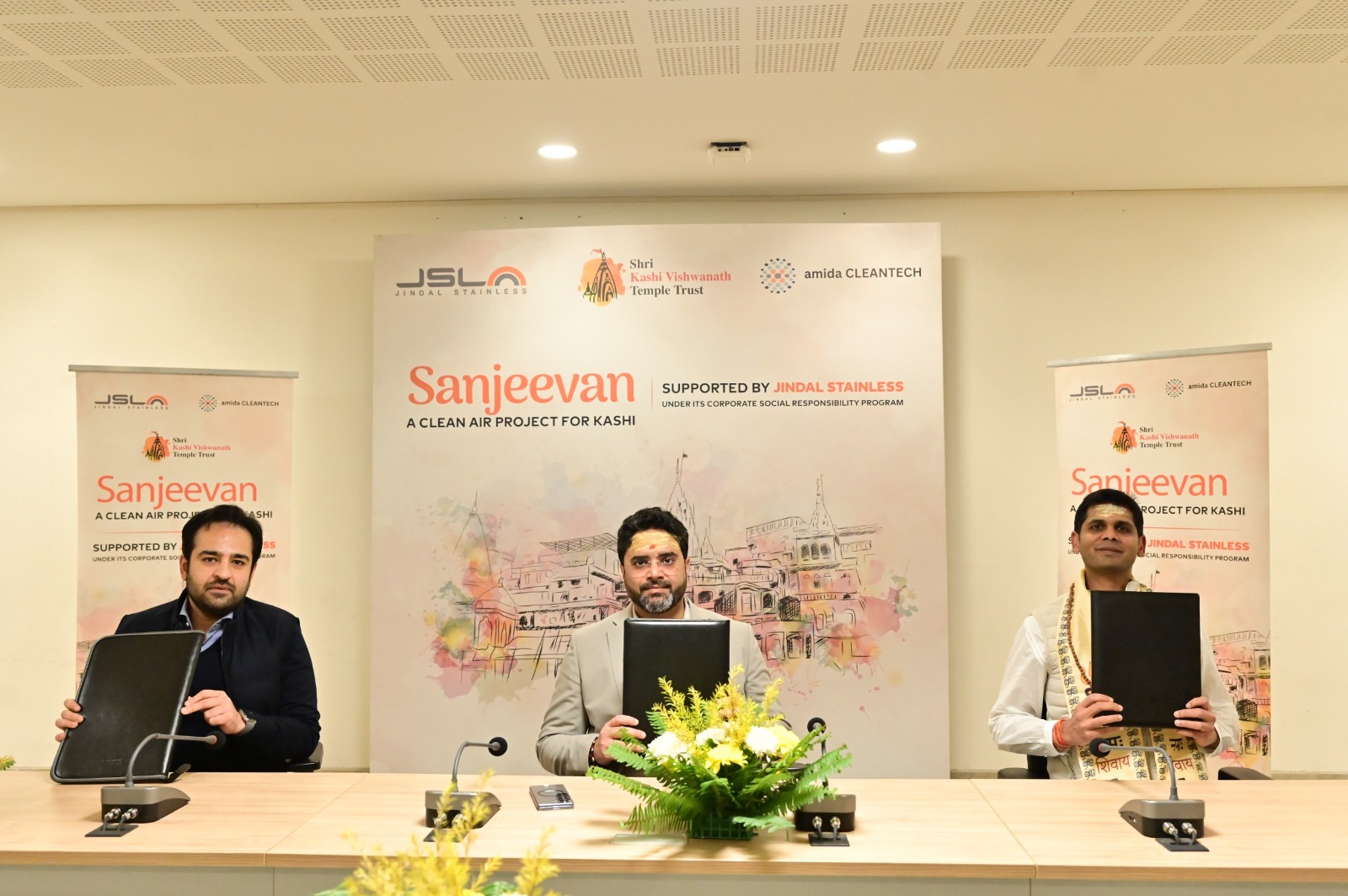
    Jindal Stainless Limited, India’s leading stainless steel manufacturer, has launched Sanjeevan air purification at the Shri Kashi Vishwanath Dham (SKVD) complex in Varanasi, marking the company’s single largest corporate social responsibility initiative to date.

    The breakthrough project targets the dense particulate haze generated by burning funeral pyres at the adjacent Manikarnika Ghat, one of Hinduism’s most sacred cremation sites.

    The programme is being executed in partnership with Amida Cleantech Private Limited (AMIDA), whose proprietary ACE+ technology — independently verified by NITI Aayog — forms the operational backbone of the system. Fifty-eight stainless-steel purification units, installed on the SKVD Ramp Building that flanks Manikarnika Ghat, collectively process more than 3,00,000 cubic metres of ambient air per hour.

    How ACE+ Works

    The acronym ACE stands for Attract, Capture, and Eliminate. The system is engineered to neutralise a broad spectrum of airborne contaminants: nano-black carbon, pollens, organic particulate matter ranging from 100 nanometres to 50 microns, sulphur oxides (SOx), nitrogen oxides (NOx) from vehicular traffic, and microbial pathogens including viruses and bacteria. The technology’s multi-pollutant capability addresses the compounded burden of cremation smoke, temple-corridor exhaust fumes, and biological aerosols — all converging at one of India’s most densely visited religious sites.

    “By improving air quality at Shri Kashi Vishwanath Dham, we aim to enhance the environment for both local residents and the millions of devotees who visit this revered landmark. Our collaboration with Amida Cleantech showcases our support for innovative Indian technology while driving meaningful change.” Jindal Stainless said in a statement.

    Alignment With National Policy

    The Sanjeevan air purification initiative is formally aligned with the National Clean Air Programme (NCAP) launched by India’s Ministry of Environment, Forest and Climate Change, which mandates measurable reductions in particulate pollution at the city, regional, and national level. SKVD authorities have formally approved the installation, a sanction that both companies regard as a critical enabling step for future rollouts at similarly congested heritage sites.

    Amida Cleantech said the system is designed to capture a significant portion of cremation emissions at their source, and to reduce measured PM concentrations along the temple corridor — protecting pilgrims, resident priests, and the ornate stone façades of the SKVD’s historic buildings from accelerated chemical weathering caused by acidic smoke deposits.

    Broader Significance

    Analysts note that Manikarnika Ghat conducts cremations around the clock, 365 days a year, meaning continuous emission loads uncommon at most pollution hotspots. Deploying a validated, scalable ambient purification system in such a demanding environment could serve as a proof-of-concept for other heritage and high-density religious sites across India. Sanjeevan air purification, if it meets its stated targets, would represent a replicable model bridging cultural heritage preservation, public health, and clean-tech commercialisation.

    Both Jindal Stainless and AMIDA were commended by local authorities for their commitment to the project. Amida Cleantech, whose guiding principle is “The Air You Breathe,” said ACE+ innovations are being positioned to address escalating ambient pollution across diverse high-exposure sectors — from industrial corridors to dense urban precincts.