Tag: #DigitalInclusion

  • Indus Towers CSR empowers 33.88 million lives in FY26

    Indus Towers CSR empowers 33.88 million lives in FY26

    Indus Towers Limited said its Indus Towers CSR programmes, Saksham and Pragati, positively impacted 33.88 million lives in FY26, taking the company’s cumulative reach to 90 million people across India.

    The company said the programmes aim to create “capability equality,” ensuring every individual, irrespective of geography, gender or socio-economic background, has access to the opportunities, skills and resources needed to take part in India’s growth.

    Indus Towers CSR empowers communities with digital skills, education, healthcare access, livelihood opportunities and sustainable infrastructure. The company said it works with local stakeholders, government institutions, implementation partners and beneficiary groups to identify needs, create solutions and build long-term community ownership.

    “India’s development journey will be truly transformative only when growth becomes inclusive and participatory,” said Prachur Sah, Managing Director and CEO of Indus Towers Limited.

    “At Indus Towers, we believe that sustainable progress begins with capability equality, ensuring that every individual has the opportunity, resources and support needed to realise their potential. Through our CSR programmes, we are focused on empowering communities with knowledge, skills and opportunities that help them participate meaningfully in India’s economic and social progress. By working closely with communities, implementation partners and government institutions, we aim to create lasting impact that strengthens resilience, fosters inclusion and contributes to nation-building. As we look ahead, we remain committed to expanding our reach and deepening our contribution towards a more inclusive, empowered and future-ready India,” Sah said.

    The programmes are aligned with national priorities and flagship government initiatives, including Digital India, Skill India Mission, Beti Bachao Beti Padhao, National Education Policy 2020, PM eVIDYA and the Aspirational Districts Programme. They also contribute to several United Nations Sustainable Development Goals.

    The company has built a diverse portfolio of interventions to address development challenges in underserved regions. It has set a long-term ambition of positively impacting 150 million lives by 2030 through scalable, high-impact interventions with measurable and sustainable outcomes.

    Drawing on its nationwide presence, technology-led approach and understanding of local realities, Indus Towers said it will continue to contribute to India’s priorities on digital inclusion, human capital development, environmental sustainability, women’s empowerment and equitable economic growth.

  • Gates Foundation AI push: bold USD 1 billion health pledge

    Gates Foundation AI push: bold USD 1 billion health pledge

    The Gates Foundation said on Tuesday it would spend at least USD 1 billion over the next two years to widen access to artificial intelligence, a bold bet that the technology can narrow rather than widen the gap between rich and poor countries.

    The commitment was unveiled alongside the foundation’s 10th annual Goalkeepers Report, titled “Make This Matter: AI, Equity, and the Choice We Can’t Delay.” The report argues that the window to shape who benefits from AI, and how quickly, is closing fast.

    Under the plan, 40% of the money will go to education, including AI tutoring designed to individualize student learning and teaching tools for classrooms in the United States and abroad. Another 40% is earmarked for health care, spanning diagnostics, clinical decision support for frontline health workers, maternal and newborn care tools, and drug and vaccine discovery.

    A further 10% will support agriculture, including AI-generated advice tailored to smallholder farmers’ soil, weather and crop conditions. The remaining 10% will fund digital infrastructure, such as building datasets in languages current models do not yet understand.

    The Gates Foundation AI strategy rests on three priorities set out in the report: making tools work in every language people speak, designing them around the contexts where they will actually be used, and investing in the people and access needed for communities to shape the technology themselves.

    More than 90% of the data used to train early large language models came from English-language sources, the report said, leaving many communities poorly represented in the systems built on that data. It also calls for countries and communities to decide how their own data is managed and protected.

    Bill Gates, chair of the foundation, wrote that the organization was created in part to address a basic market failure, in which those with the greatest needs have the least power to steer innovation and investment. AI presents the same challenge, he wrote, only at far greater speed, because the most capable tools will be built first for those most able to pay.

    “We can harness AI for good. But it won’t happen by accident,” Gates wrote, adding that success should be measured not only by what AI does for the most profitable users but by what it does for the people who stand to gain the most.

    The foundation said its funding would scale up partners already working to close access gaps, with examples cited from clinics, classrooms and small farms. It also urged technology companies, governments and other philanthropies to commit resources, expertise and public advocacy, noting that affordable access will require action from industry as well as public investment.

    The Seattle-based foundation is led by Chief Executive Mark Suzman under the direction of Gates and its governing board. Goalkeepers is its campaign to accelerate progress toward the United Nations Sustainable Development Goals.

  • SOS Children’s villages launches mobile digital learning bus

    SOS Children’s villages launches mobile digital learning bus

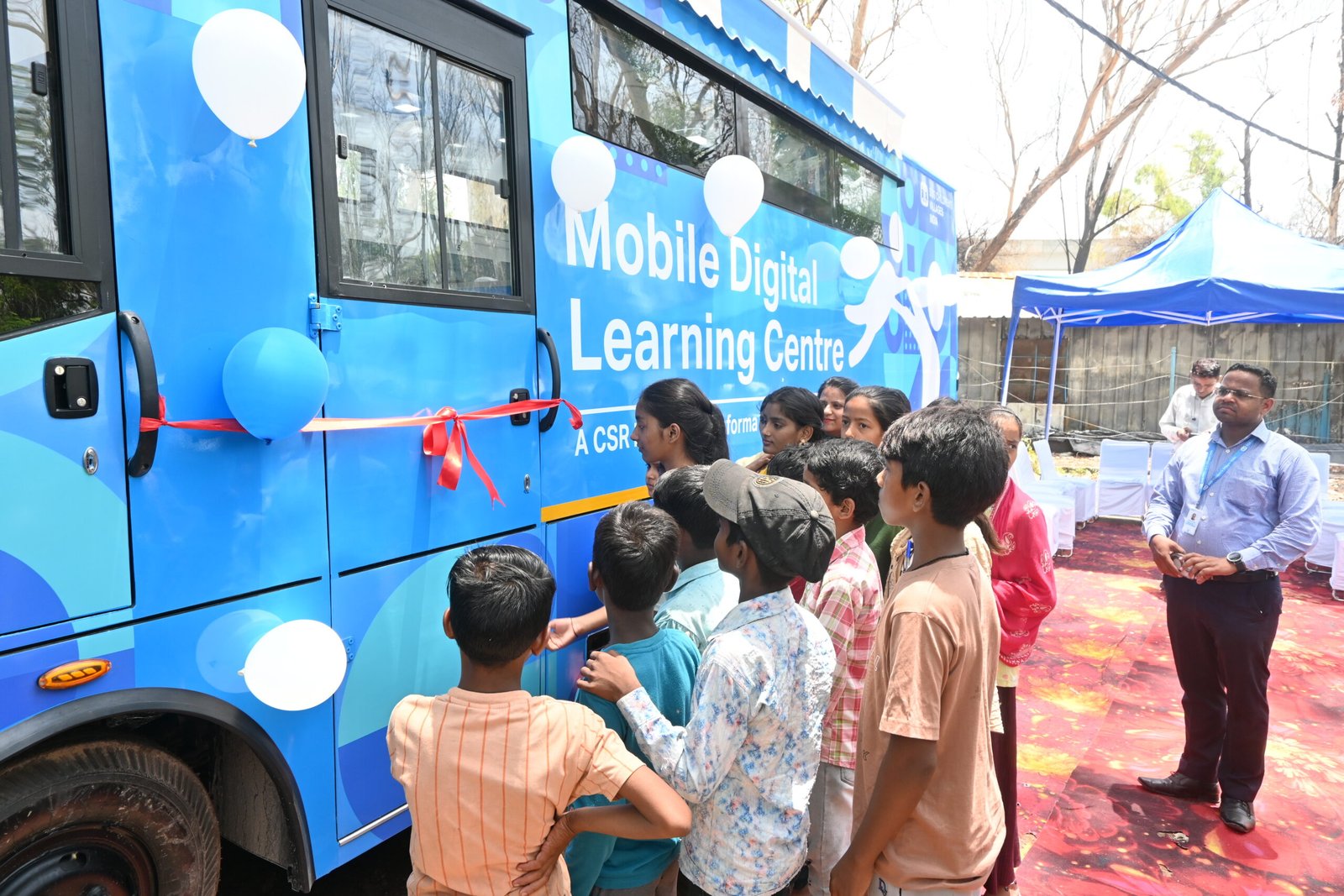
    SOS Children’s Villages India has launched its second Mobile Digital Learning Centre in the capital, in partnership with Informa Exhibitions India Pvt Ltd, part of Informa Markets in India, as part of efforts to expand digital literacy in underserved neighbourhoods.

    Children from a vulnerable community in North-West Delhi boarded the bus, fitted with desktops and a projector screen, at the inauguration of the new Mobile Digital Learning Centre.

    The initiative currently operates in three cities — Delhi, Pune and Raipur — reaching more than 800 beneficiaries, including 152 children. With the new centre, Delhi alone is targeting over 800 additional beneficiaries in the coming year.

    The Mobile Digital Learning Centre programme provides free digital skills training, job-readiness support and confidence-building for youth and women from marginalised communities.

    “Digital inclusion is a necessity for education, employability, and social mobility,” said Sumanta Kar, CEO of SOS Children’s Villages India.

    “Through our Mobile Digital Learning Centres, we are taking technology directly to their neighbourhoods, ensuring that learning is not limited by geography or economic circumstances.”

    Yogesh Mudras, Managing Director of Informa Markets in India, said the company’s continued partnership with SOS Children’s Villages India was helping expand access to digital learning and future-ready skills for children from vulnerable communities.

    North-West Delhi was selected for the second Mobile Digital Learning Centre as the area is home to a large share of the capital’s estimated 60,000 street children, spread across roughly three lakh slum households in 675 clusters.

    Officials said 45% of government school students in the area lack access to smartphones or stable internet, while 77% of youth in the area had no prior exposure to digital literacy.

    The centre offers training across five areas: digital literacy, cyber safety, financial literacy, life skills and certified assessments. In its first year, the programme helped five beneficiaries secure job placements, enabled eight children to re-enrol in school, and facilitated 28 scholarship links and 32 links to higher studies.

    The Mobile Digital Learning Centre initiative is part of a broader network run by SOS Children’s Villages India across seven states and eight cities, encompassing mobile units, standalone vocational training centres for ages 18-27, and after-school centres for ages 14-17. More than 2,610 young people participate in the programme annually.