Tag: CSRIndia

  • AI-Driven CSR: India’s tech leap for social good as Impact Summit begins

    AI-Driven CSR: India’s tech leap for social good as Impact Summit begins

    By Eldee

    As the India AI Impact Summit 2026 kicks off in the capital from February 16, AI-Driven CSR is emerging as a game-changing force in India’s social development landscape. Artificial intelligence is powering a profound revolution, turning corporate giving into smarter, more scalable and high-impact interventions that deliver real, measurable change.

    In FY 2023-24, CSR spending reached new heights with a record Rs 34,000 crore poured into over 59,000 projects — a strong 12 percent surge year-on-year, per Ministry of Corporate Affairs data. Education commands 38 percent of spending, followed by healthcare, environment and livelihoods.

    Many leading firms decisively exceed the 2 percent mandate, channeling resources through foundations for strategic, transformative alignment with national priorities.

    Reforms have added serious muscle: mandatory third-party impact assessments, the transparent National CSR Data Portal, and the Social Stock Exchange unlocking fresh NGO funding channels. The era of checkbox compliance is giving way to outcome-focused, high-impact philanthropy.

    • AI is the decisive accelerator here. Forward-looking Indian companies are harnessing it to amplify efficiency and reach:
    • Infosys Foundation deploys AI for personalised rural learning, predicting outcomes to target interventions with precision.
    • TCS powers remote healthcare chatbots and disaster analytics.
    • Hindustan Unilever uses image recognition to revolutionize waste segregation and recycling.
    • Reliance Foundation combines AI with blockchain for traceable e-waste management.
    • Intel India drives “AI for All” skilling to boost nationwide employability.

    These initiatives echo global trailblazers — Microsoft AI for Earth tackling climate challenges, Google crisis mapping, IBM sustainability models — but are uniquely anchored in India’s mandatory CSR framework and BRSR reporting.

    Pioneering NGOs like Marpu Foundation showcase the transformative potential: AI-driven real-time dashboards for fund tracking, beneficiary verification, automated need-matching and volunteer coordination. Predictive models forecast dropouts and pollution trends, enabling proactive, high-impact spending. The outcome is amplified accountability, minimized leakages and human effort supercharged — never replaced.

    Challenges persist: funds still concentrate in industrial zones, AI adoption remains uneven among tech-savvy giants, and data privacy, bias and digital divides demand urgent safeguards.

    The India AI Impact Summit 2026 arrives at the perfect moment to pioneer solutions. With global visionaries and policymakers converging under the banner of People, Planet and Progress, the summit must champion inclusive AI-Driven CSR policies: incentives for mandatory spending integration, robust public-private-NGO partnerships for localised models, expanded ethical skilling at scale, and firm benchmarks for responsible deployment.

    India’s IndiaAI Mission already provides a solid foundation — indigenous models, compute infrastructure, capacity building. By positioning AI as essential infrastructure for CSR, not an optional luxury, India can lead the world in proving technology can accelerate equitable progress and fast-track the Sustainable Development Goals.

    This summit is more than optics — it’s about defining commitments that convert bold promise into tangible change for millions. In this pivotal moment, India stands poised to demonstrate that innovation and inclusion are not trade-offs — they are powerful allies. The opportunity is immense. The time to seize it is now.


  • Why CSR should not be mapped to parliamentary constituencies

    Why CSR should not be mapped to parliamentary constituencies

    Naveen S Garewal

    In recent parliamentary sessions, a familiar pattern has emerged: Members of Parliament routinely seek granular details on Corporate Social Responsibility (CSR) spending within their Lok Sabha constituencies. Questions range from development works by specific sugar mills in Valmikinagar, Bihar, to targeted interventions in backward or Scheduled Caste-dominated areas of Shahjahanpur, Uttar Pradesh, and even proposals for district-level “CSR project banks” in Amroha to align with local needs in drinking water, sanitation, schools, and skills training.

    The Ministry of Corporate Affairs responds with consistent restraint: CSR expenditure according to parliamentary constituency is not maintained centrally. The framework under the Companies Act, 2013, remains disclosure-based and board-driven. Companies file annual details in the MCA21 registry, and aggregates — state-wise, district-wise, sector-wise, company-wise — are publicly accessible on www.csr.gov.in.

    The government issues no directives on where or how corporates should spend, nor does it track spending by political boundaries or specific communities. This position is not bureaucratic evasion; it is a deliberate design choice that deserves defence.

    The intent of Section 135 of the Companies Act, 2013, was never to create a parallel public funding stream under parliamentary oversight. CSR emerged as a statutory nudge for profitable companies to contribute to society, with boards — advised by CSR committees — deciding priorities based on business strategy, operational footprint, and Schedule VII activities.

    A key guiding principle is preference for local areas around operations, but this is advisory, not mandatory. The regime seeks to harness corporate resources for social good without turning CSR into government-directed allocation. Parliamentary constituencies are political constructs, redrawn periodically through delimitation exercises.

    They rarely align neatly with administrative units like districts or company operations. Imposing central tracking at this level would demand additional compliance burdens — mapping multi-site projects, verifying boundaries, auditing overlaps — on thousands of companies. The cost would outweigh benefits, especially when district-level data already enables scrutiny of local impacts. More critically, constituency-level granularity risks politicising CSR.

    Persistent questions from MPs reflect understandable constituency pressures: elected representatives want visible development in “their” areas. Yet formalising such tracking could foster expectations of informal quotas or invite lobbying, turning a corporate responsibility into an extension of electoral politics.

    Evidence already hints at distortions — higher CSR flows in election years or ruling party strongholds. Codifying constituency data might amplify these tendencies, undermining the board-driven ethos and inviting misuse.

    Transparency exists where it matters. The csr.gov.in portal offers robust, verifiable data: over Rs 4,000-5,000 crore annually from PSUs alone in recent years, spread across states and sectors. District-wise breakdowns allow MPs, civil society, and citizens to analyse flows and advocate for better alignment with local needs. If imbalances persist — say, in aspirational districts or SC/ST areas — the solution lies in incentives, guidelines, or voluntary campaigns, not central mandates that erode corporate autonomy.

    The government’s refusal to maintain constituency-wise data upholds a vital distinction: CSR supplements, but does not substitute, public expenditure or schemes like MPLADS. Politicising it further would blur lines between private philanthropy and state welfare, potentially deterring genuine corporate engagement.

    In an era when development rhetoric often outpaces outcomes, resisting micro-political oversight of CSR preserves its potential as flexible, innovative social investment. Parliamentarians would serve their constituents better by pushing companies directly, leveraging public data, or strengthening convergence with government programmes — rather than demanding a tracking system that the law never envisioned and good policy should avoid. include focus keyword in title and throughout the story

  • From struggle to success: How Samadhan Project changed Rajasthan farmers’ lives

    From struggle to success: How Samadhan Project changed Rajasthan farmers’ lives

    In the arid landscapes of Rajasthan, where traditional farming often meant meager earnings and uncertainty, Hindustan Zinc’s Samadhan Project is sparking a quiet revolution. This flagship CSR initiative has reached nearly 1.4 lakh farmers, helping them generate over Rs 192 crore in diversified income in just the past year through modern, sustainable practices.

    Take Shankar Lal Dangi from Chota Guda village near Udaipur. Like many, his family once scraped by on Rs 6,000–7,000 a month, limited by old-fashioned methods, scarce water, and unreliable markets. Through the Samadhan Project, Shankar embraced drip irrigation, scientific cropping, and joined a Farmer Producer Organization for better prices, according to the company statement.

    Today, his yields are higher, milk production has doubled, and his income has soared—bringing stability, pride, and a brighter future for his family.

    Close-up of raw milk being poured into container with dairy cows in background


    Similar hope blooms in Sindesar Kalan village, Rajsamand district, with Dinesh Puri Goswami. He shifted from low-yield crops to diverse vegetables and upgraded dairy practices.

    Using raised-bed nurseries and better animal care, Dinesh earned Rs 78,000 from vegetables in four months, plus Rs 12,000 monthly from milk. “It’s reduced our risks and given us steady income,” he shares.

    Women are at the heart of this change too. Gendi Bai from Ganeshpura village turned one bigha of land into a thriving vegetable plot with drip irrigation and mulching, earning ₹90,000 and gaining recognition as a progressive farmer.

    From leading Farmer Interest Groups to running dairy enterprises, women under Samadhan are driving household prosperity and community strength.

    The project’s multi-pronged approach—crop diversification, precision irrigation, livestock improvement, microenterprises, and farmer-owned institutions—has delivered real results: ₹90 crore in livestock assets, 280 lakh litres of milk worth ₹88 crore, and revenues from farmer-led ventures.

    With 510 Farmer Interest Groups and five Producer Organizations involving over 9,300 shareholders, Samadhan covers 2,449 hectares in climate-smart practices like trellis farming and bio-fortified crops. It’s not just boosting incomes; it’s building resilience, nutrition, and agri-entrepreneurship.

    As a Vedanta Group company, Hindustan Zinc extends its impact beyond farming through education, healthcare, and more, touching 23 lakh lives across 2,300 villages—aligning with India’s vision of inclusive growth.

    These stories of Shankar, Dinesh, Gendi Bai, and thousands more show how the Samadhan Project is turning subsistence into sustainability, one farm at a time.

  • Amara Raja Skill Centre in Mahabubnagar achieves 98.85% placement rate for first batch

    Amara Raja Skill Centre in Mahabubnagar achieves 98.85% placement rate for first batch

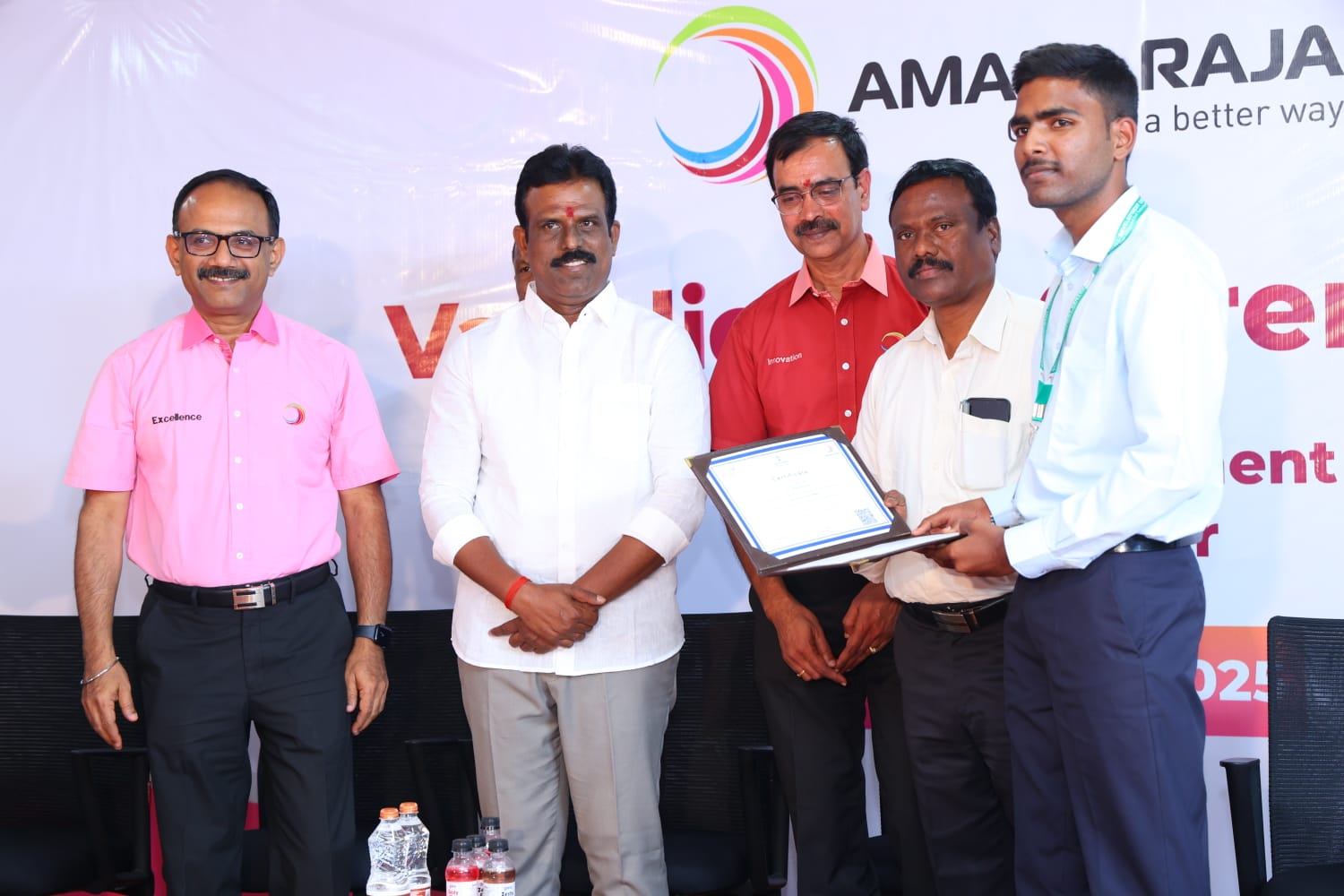
    The Amara Raja Skill Development Centre (ARSDC), a joint initiative of Amara Raja Advanced Cell Technologies and the Rajanna Foundation, marked a significant achievement on Tuesday with the valedictory of its inaugural batch, where 98 trainees from local villages secured placements in key industries at a near-perfect rate of 98.85%.

    Inaugurated on August 10 this year in partnership with the Electronics Sector Skills Council of India (ESSCI), the centre targeted underprivileged youth who had completed Class 10 or 12, selecting the cohort through a competitive screening process.

    The three-month programme offered free vocational training in high-growth areas such as heating, ventilation and air conditioning (HVAC), domestic and industrial electricals, electric vehicle service and repair (EVSR), and EV battery pack assembly. It combined theoretical classes, lab sessions and on-site practicals, culminating in NCVET-recognised certifications that enhance employability.

    The event drew prominent attendees, including Devarakadra MLA Madhusudan Reddy, District Collector Viziendira Boyi and TGIIC Vice-Chairman and Managing Director K Shashanka, alongside Amara Raja Group’s senior leadership.

    For many graduates from low-income families, the placements—offering stable salaries in leading firms—represent their first formal jobs, alleviating economic distress and stemming rural-to-urban migration.

    The centre’s model, which included complimentary transport and meals, addressed longstanding barriers to skill acquisition in Mahabubnagar, a district poised for industrial expansion with the upcoming Giga Corridor. Officials highlighted how such interventions could catalyse local development, with the second batch slated to commence on December 15.

    As India’s push for skilling gains momentum amid the green energy transition, ARSDC exemplifies the potential of targeted CSR efforts to build a resilient workforce, one certification at a time.

  • Empower CSR Careers in India: 2025 Prosperity Surge

    Empower CSR Careers in India: 2025 Prosperity Surge

    By Eldee

    Within the busy corridors of India’s corporate world, CSR careers in India are not a specialty field, but an exciting ecosystem with plenty of opportunities. With the national mandated CSR spend exceeding Rs 25,000 crore in FY 2024-25, young professionals have taken to these career paths, blending ethical impact with enviable paychecks.

    Consider a graduate from an underprivileged background finding a way into a CSR careers in India job description, entering as an officer in a fintech space in Mumbai at Rs 4-6 lakh per year, making it to manager in 5 years at Rs 15 lakh. This is not aspirational marketing; this is a real opportunity in CSR careers in India, when purpose and profit create options with 15-20 % job growth annually.

    However, as climate considerations and the demands for social equity ramps up, one insists, can CSR careers in India democratize access or remain locked in privilege, only the urban elite create value from?

    The magnetic pull of CSR careers in India stems from regulatory firepower and market evolution. The Companies Act 2013’s 2% profit directive has morphed into a strategic imperative, with education gobbling 30% of funds, healthcare 25%, and sustainability initiatives claiming 20%. This fuels diverse CSR careers in India, from impact analysts crunching data for SEBI’s BRSR reports to coordinators spearheading rural skilling programs in Gujarat’s arid belts.

    Salaries for CSR careers in India are better than in many traditional sectors: entry-level CSR careers in India are between Rs 3-6 lakh, mid-management salaries are at Rs 8-15 lakh, and C-suite management salaries in the tech corridors of Bengaluru are Rs 25-40 lakh, with raises at 9.5% that are substantially over the national average. When reviewing LinkedIn’s job pulse report for CSR careers in India, over 600 live opportunities exist for a wide range of matters, including renewable energy in Chennai to community outreach in Delhi, catering for Gen Z’s quest for SDG careers.

    What makes CSR careers in India must have? Digital disruption – we are no longer phenomenon-driven philanthropy, nor CSR careers in India. CSR careers in India require full fluency in the use of technology for social change whether it is estimating community change outcomes using artificial intelligence or engaging in blockchain interaction with NGOs towards accomplishing a transparency agenda to raise aid. In this hybrid, new CSR careers begin to appear: ESG specialists auditing supply chains, or sustainability leads on circled economy initiatives.

    Salaries in CSR careers in India are superior to that of many more traditional career sectors: starting salaries for beginners in CSR careers in India range from Rs 3-6 lakh; mid-career salaries for managers are Rs 8-15 lakh; and senior executives or C-suite roles in tech hotspots in Bengaluru can make Rs 25-40 lakh with annual raises of 9.5% that outpace national averages. LinkedIn’s data shows there are over 600 live resumes in the CSR careers in India field of practice—ranging from renewables in Chennai to community outreach programs in Delhi—symbolizing some of the most exciting employment opportunities for Gen Z students looking to advance careers in CSR and the SDGs.

    What makes CSR careers in India exciting? The answer is digital disruption. Gone are the days of executing passive philanthropy. CSR careers in India today require a level of fluency in technology—using AI to track outcomes in communities or employing blockchain to work with NGOs. This technical fusion is creating exciting and innovative CSR careers in India, such as ESG (environmental, social, governance) specialists working to assess supply chains of products or sustainability lead working with companies on circular economy projects in Maharashtra.

    Further, CSR careers in India that focus on climate action will continue to be a growth area due to India’s goal of net-zero by 2070—everything from training in renewable energy to community drive for water conservation, all straddling corporate priorities with national goals. Newly emerging locations like Bihar offer a wide-open frontier for students seeking CSR careers in India, and the potential of jobs that shape policy and increase mobility and world exposure is very exciting.

    Although CSR careers in India are seen as exciting, there are important factors that take away from the experience. There are not enough qualified people for CSR careers. Seventy percent of the CSR jobs are in the Rs 15-50 lakh salary category. Barriers for entry also prevent many people from Tier-3 towns or non-elite institutions from getting CSR jobs. Examples of barriers include extensive certifications like GRI and field experience with NGOs.

    While women dominate social change work at the grassroots level, many get stuck in glass ceilings in senior CSR jobs in India. Regulatory hurdles can lead to long decisions that help organizations accomplish their CSR goals. Corporations express the need for more analytical and engagement skills, yet underinvest in training initiatives, leading to underwhelming outcomes from well-intentioned plans.

    Reforms are necessary to strengthen CSR careers in India. Governments should finance the establishment of CSR academies within public colleges that will provide ample education, combining analytical frameworks with hands-on programs, improving both the number of people in the CSR pipeline and knowledge. Companies should establish and uphold diversity of talent mandates, shifting gaps in CSR talent to a workforce pipeline of diverse talent.

    For prospective pioneers yearning for CSR careers in India, the formula is straight forward: Start with an internship from Tata Trusts or an initiative with HUL on sanitation; take examples from free Coursera modules on ESG frameworks, and include data informed wins like “I orchestrated a Rs 5 crore initiative that impacted 10,000 lives” in your CV. The compassion and execution in the context of CSR careers in India is not replaceable in a world shape by AI.

    With CSR spending expected to reach Rs 50,000 crore by 2030, India is gearing up to create lakhs of CSR careers that will connect urban prosperity with rural resilience. And this green-collar transformation is not only economic; it’s cultural, changing the notion of work toward the lens of equity. For India’s youth, CSR careers in India beckon not as a sideline, but as the main event: Wear the mantle, and lead the legacy.