Tag: #CircularEconomy

  • Balrampur Chini launches Bioyug Green Command 2026 to drive India’s bioplastics revolution

    Balrampur Chini launches Bioyug Green Command 2026 to drive India’s bioplastics revolution

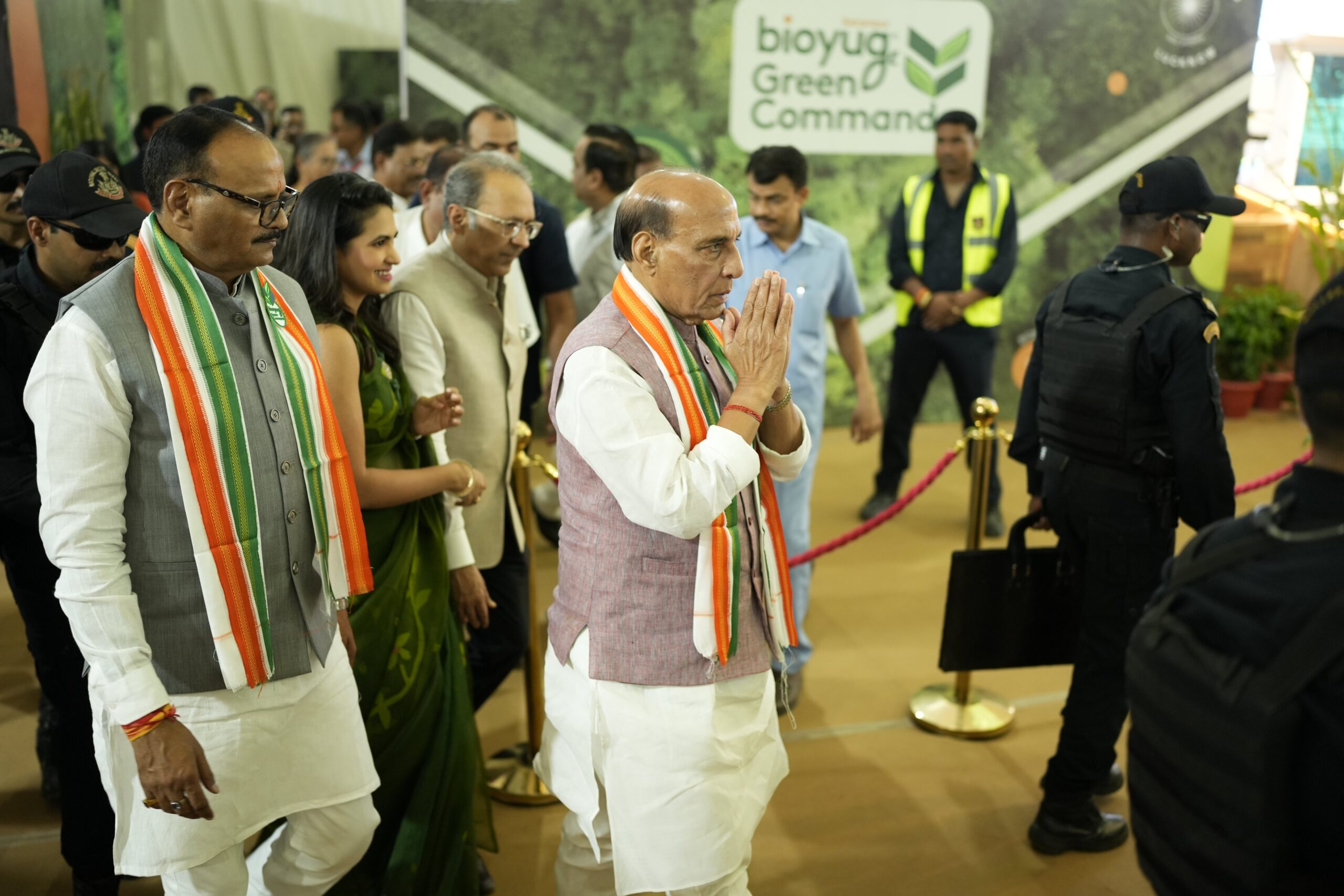
    Balrampur Chini Mills Limited (BCML) formally launched Bioyug Green Command 2026 on Friday, marking World Environment Day with a first-of-its-kind platform aimed at accelerating India’s bioplastics revolution and reducing the nation’s dependence on conventional petroleum-based plastics.

    The launch, held in collaboration with the Lucknow Cantonment Board, was presided over by Union Defence Minister Rajnath Singh as chief guest, signalling growing government support for bio-based indigenous manufacturing as a strategic national priority.

    The event formalised a landmark collaboration between Balrampur Bioyug and the Lucknow Cantonment Board following an earlier memorandum of understanding and BCML’s first institutional order for compostable polylactic acid (PLA)-based products. PLA, derived from sugarcane, is a fully organic bioplastic that breaks down within 180 days and converts into compost rather than waste.

    Speaking at the launch, BCML Chairman and Managing Director Vivek Saraogi said India stood at a defining moment where economic growth and environmental responsibility must advance together.

    “Through Bioyug Green Command 2026, we are bringing together government, industry, institutions and communities to accelerate this transition and demonstrate how innovation-led solutions can contribute meaningfully to a cleaner, greener and more self-reliant India,” Saraogi said.

    Executive Director Avantika Saraogi framed the shift to biomaterials as an economic opportunity as much as an environmental necessity.

    “The last century belonged to oil and petrochemicals; the next can belong to farmers and fields,” she said. “The materials of the future will not only be mined from beneath the earth but cultivated above it, through the power of agriculture.”

    Addressing the gathering, Defence Minister Singh drew attention to the accelerating public health toll of microplastics, citing scientific research indicating that approximately 350,000 people die globally each year due to microplastic exposure, with plastic particles now detectable in the blood of newborns.

    Singh highlighted the national security dimension of the transition to bioplastics, noting that India’s existing 20% ethanol blending programme had shielded the domestic economy from supply chain disruptions triggered by recent West Asian geopolitical turbulence.

    “By generating resources from our sugarcane, rice, and organic waste, we will strengthen our security framework,” Singh said. “While fulfilling our environmental obligations, we can become a self-reliant, bio-based economy.”

    Two high-level panel discussions formed a centrepiece of the programme. The first, titled “Mandate to Market: Unlocking the Bioplastics Value Chain in Uttar Pradesh,” examined policy support and market opportunities required to scale bioplastics adoption. The second, “From Mess to Mission: Bioplastics for Defence,” explored sustainable material integration within defence establishments.

    A parallel highlight was the felicitation of meritorious ITI girl students from Lakhimpur Kheri, Uttar Pradesh, participating in the “Building Skills. Transforming Futures” initiative — a women-focused 3D printing training programme using Bioyug PLA, run by Balrampur Foundation in partnership with ITI Mohammadi.

    BCML, one of India’s largest integrated sugar companies, is currently developing the country’s first PLA plant with a capacity of 80,000 tonnes per annum. The company operates ten sugar factories across Uttar Pradesh with an aggregate crushing capacity of 80,000 TCD.

    The event drew participation from over 2,000 stakeholders spanning government, industry, academia, defence, and civil society.

    Bioyug Green Command 2026 is anchored in the proposition that “the future of materials is grown, not drilled,” positioning India’s agricultural base as the foundation of its emerging circular bioeconomy.

  • Marico calls for boosting India’s circular economy via waste innovation

    Marico calls for boosting India’s circular economy via waste innovation

    Environmental challenges spanning waste management, agriculture, and clean technology are creating significant opportunities for India’s circular economy, according to Suranjana Ghosh, Head of Marico Innovation Foundation.

    India generates an estimated 350 million tonnes of agricultural waste annually, much of which holds substantial industrial and economic potential if converted into valuable resources rather than discarded.

    “Environmental challenges today are increasingly interconnected… Across sectors, we are seeing growing evidence that environmental challenges can be addressed through practical solutions,” Ghosh said.

    She emphasised that sustainability is now viewed as an opportunity to create economic value, citing innovations that convert crop residue into sustainable materials, fuels, and industrial inputs, alongside waste-to-value technologies that strengthen recycling ecosystems.

    “More than innovation itself, the challenge today is creating the right conditions for adoption. Access to markets, industry partnerships and implementation support will be critical,” Ghosh added.

    As World Environment Day 2026 focuses on climate action, Ghosh called for translating innovation into measurable outcomes to build a USD 2 trillion circular economy that could generate 10 million jobs by 2050.

    “India does not lack innovative solutions… the focus must be on translating innovation into measurable outcomes that strengthen circularity, improve resource efficiency, and create long-term impact,” she said.

  • KCG, Urbaser sign moU for waste management drive

    KCG, Urbaser sign moU for waste management drive

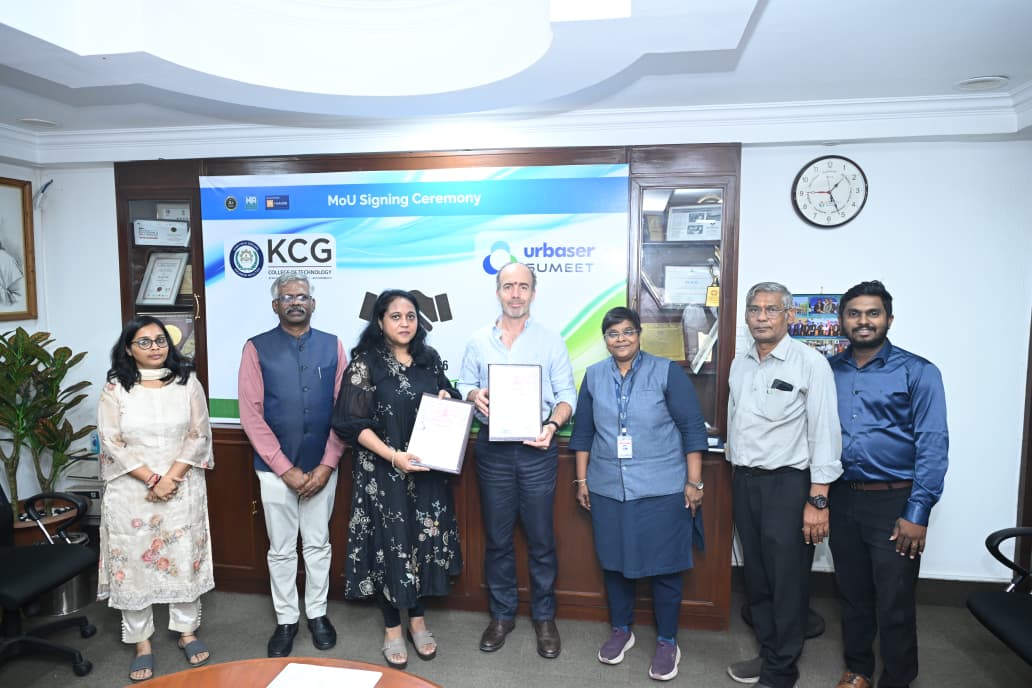
    KCG College of Technology, a unit of the Hindustan Group of Institutions, has signed a transformative Memorandum of Understanding with Sumeet Urban Services (Chennai) V Pvt Ltd, known as Urbaser Sumeet, to deepen industry-academia collaboration in waste management, sustainability and skill development.

    The partnership aims to build a long-term, industry-integrated sustainability model that directly engages students in solving real-world urban environmental challenges across Chennai.

    Under the agreement, students will participate in clean-up drives, waste management awareness campaigns, sustainability workshops, internships and innovation challenges. The collaboration will also cover hackathons, practical training and professional certification programmes focused on circular economy practices and environmental sustainability.

    A key initiative under the MoU is “Edubridge,” a programme designed to support the education and empowerment of children of frontline conservancy workers — a measure both institutions described as central to social inclusion and community impact.

    Urbaser Sumeet will also serve as the hygiene partner for major institutional events at KCG, demonstrating best practices in source segregation, solid waste management and urban cleanliness systems.

    “Engineering education today must go beyond laboratories and classrooms,” said Anand Jacob Varghese, Chairman, Hindustan Group of Institutions. “When our students walk alongside conservancy workers, manage waste drives and design recycling solutions for their own city, they are not just learning — they are becoming the kind of engineers and citizens Chennai needs.”

    Annie Jacob, Director of KCG College of Technology, said embedding Urbaser Sumeet’s operational expertise into campus programmes would give students direct exposure to one of Chennai’s most critical urban services. “From internships in waste vehicle operations to the Edubridge initiative, this collaboration is built around real impact — not just awareness,” she said.

    Albert Gleiser Ignacio, Managing Director of Urbaser Sumeet, said lasting change in urban waste management begins with how the next generation thinks about it. “Partnering with KCG gives us the opportunity to bring that ground reality into an academic setting and build a pipeline of professionals genuinely invested in sustainable urban systems,” he said.

    The partnership is expected to generate research-oriented projects in waste segregation, recycling systems, circular economy models and smart urban sustainability solutions. Both organisations said they intend to develop a scalable and replicable model for sustainable campus-community partnerships.

    The collaboration promotes the principles of Reduce, Reuse and Recycle and seeks to foster environmentally conscious practices across the student community and beyond.

  • HCLFoundation expands My Clean City program to Agra, donates Sanitation fleet to Nagar Nigam

    HCLFoundation expands My Clean City program to Agra, donates Sanitation fleet to Nagar Nigam

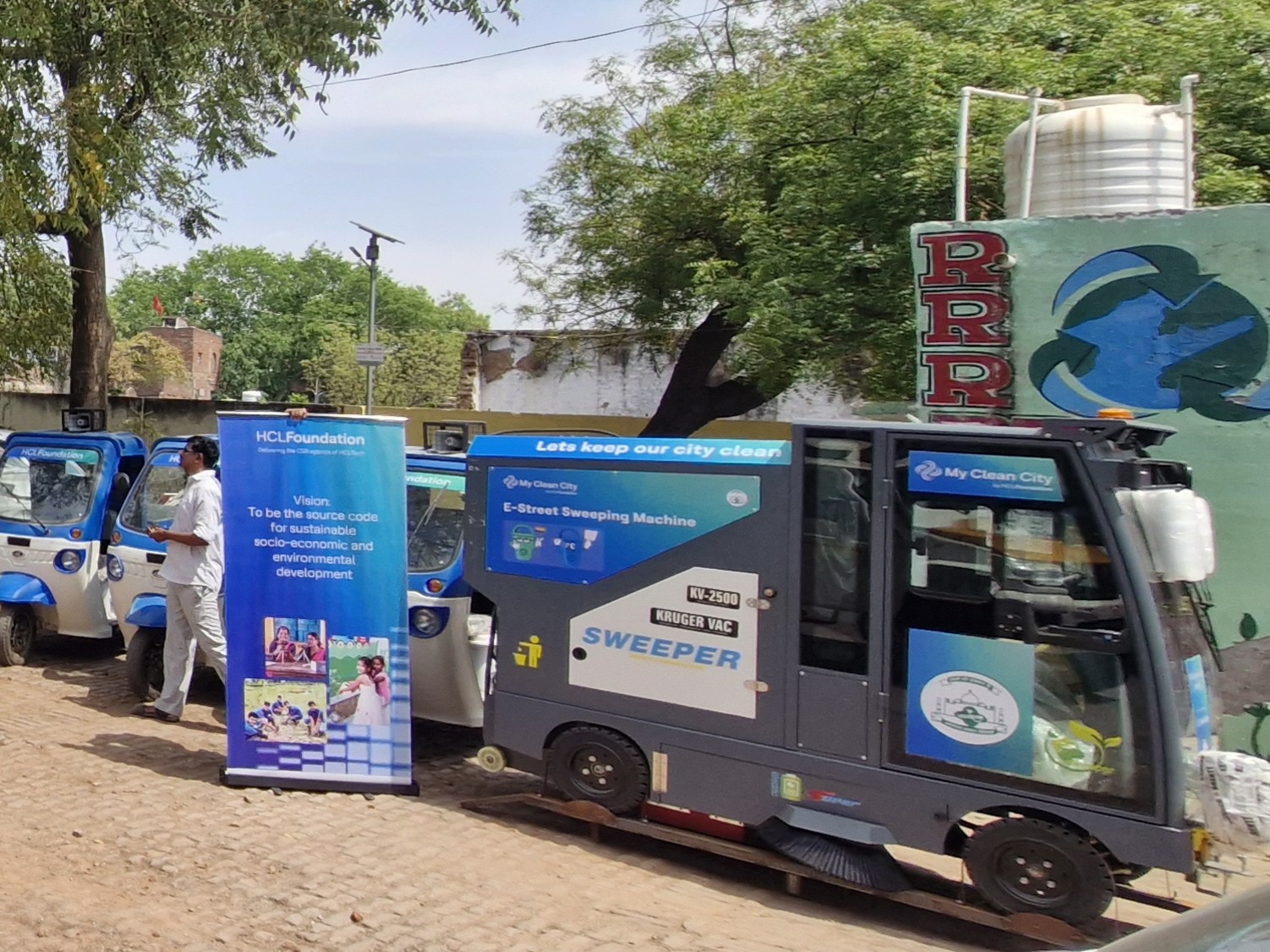
    HCLFoundation, which drives the corporate social responsibility agenda of HCLTech in India, announced on Monday the expansion of its My Clean City program to Agra, Uttar Pradesh — the first city outside the Noida–Greater Noida belt to receive the initiative since its 2019 launch.

    As part of the rollout, the foundation donated 10 e-drain carts, two e-street sweeping machines and one HomoSep robot — a mechanised septic tank cleaning device — to Agra Nagar Nigam, the city’s municipal body. The equipment is intended to reduce hazardous manual work while improving the scale and consistency of urban waste management.

    The HomoSep robot, already deployed in Gautam Buddha Nagar, has cleared more than 100,000 litres of sludge across 452 manholes and sewer sites — removing sanitation workers from direct exposure to toxic conditions. The device represents a broader pivot within the program toward mechanisation as a tool for worker safety.

    Since its launch, My Clean City has engaged nearly 750,000 citizens through behavioural sensitisation drives and trained more than 61,000 stakeholders on waste management practices. The program has managed over 17,000 tonnes of waste in Noida and Greater Noida, and runs a Waste Champions Club involving more than 2,400 school students.

    The initiative also carries a social welfare component. Under its Social Inclusion of Sanitation Workers program, 200 sanitation worker families in Gautam Buddha Nagar receive support across health, education, financial literacy and skill development — a recognition that sustainable sanitation reform extends beyond infrastructure.

    Five biogas plants, each processing between 1,500 and 1,800 kg of cow dung daily, have been established in the region as part of complementary clean energy efforts, generating fuel from waste material.

    HCLFoundation said the Agra expansion reflects a strategy of replicating proven urban sanitation models in new municipal geographies. The foundation, which reported having positively impacted over 7.5 million lives to date, focuses thematically on education, health and sanitation, skill development, environment, and disaster risk reduction.