Category: Woman and Child

  • SOS Village come to aid of women in need

    SOS Village come to aid of women in need

    A five-year-long women empowerment and livelihood intervention from SOS Children’s Villages of India tripled the monthly income and the social status of several Extremely Backward Caste and Scheduled Caste women of Kamruddinpur, a village in Begusarai District of Bihar

    A five-year-long women empowerment and livelihood intervention from SOS Children’s Villages of India tripled the monthly income and the social status of several Extremely Backward Caste and Scheduled Caste women of Kamruddinpur, a village in Begusarai District of Bihar. The case story titled, ‘Empowering women leading to economic development – Alleviating poverty through collective effort capturing this outcome has been adjudged among the top 10 livelihood development case stories in India by the prestigious ‘Sitaram Rao Livelihoods India Case Study Competition 2021’, a national-level initiative to collate the best models of livelihoods’ promotion in the country.

    Conceived under the SOS Children’s Villages’ flagship Family Strengthening Programme, a community outreach model to build the capacity of vulnerable families in order to uphold quality childcare for their children, the Kamruddinpur project consisted of providing livelihood training, forming self-help group (christened as Dhanwanti), and facilitating the reach of welfare schemes of the government to the villagers.

    The highlights of the programme were: an increase in the monthly income of women from Rs 2,500-Rs 3,000 in 2013, prior to the launch of the programme, to Rs. 9,700 at present; access to microcredit at low interest; improved social participation and recognition; access to various welfare schemes from the Central and State governments, and better nutrition and education of children, who belong to these families, among others.

    Commenting about the recognition of the Kamruddinpur case story, Sumanta Kar, Senior National Deputy Director, SOS Children’s Villages of India, said, “It gives us immense satisfaction to know that impact of our intervention in Begusarai, as part of the Family Strengthening Programme is getting recognized as one of the top 10 case stories in developing livelihood opportunities for the vulnerable communities. Since our programme is something that can – and should – be replicated in many disadvantaged communities in the country. I hope the case story inspires civil society, government and the private sector for coming together to transform lives of weaker sections of the society by strengthening the smallest unit- family through empowering women as primary caregivers and preventing their children from losing parental care.”

    He said that the beneficiaries were illiterate women from the Below Poverty Line families living in a village known for its feudalist ideology and patriarchal dominance, and more importantly, their children, who were deprived of quality care and upbringing. We believe that empowering women in households heralds quality childcare and upbringing for their children and hence we work towards their upliftment.

    These women were working in agriculture farms for meagre daily wages. Our intervention involved training them to gain basic literacy and awareness. We organised activities for them to open up and discuss their issues and challenges. These interactions enabled them to learn the importance of savings, education, health, hygiene, and nutrition of their children. It also led to the formation of the Dhanwanti Self Help Group in 2013 with 13 women who chipped in Rs 50 each. SOS Children’s Villages made a small contribution by creating a fund that can be used for extending microcredit to the members of the SHG at a low rate of interest. Within about a year and a half, the corpus of the revolving fund increased enough to fund income-generating activities such as cow rearing.

    “We trained them in bookkeeping, maintaining ledger and other ways of managing finance on one hand, and in communication and conflict management on the other hand. On the livelihood front, the women enhanced their understanding of raising livestock, an area they already had some amount of exposure. But more importantly, they were taught how to assess the fat content of the milk, and how to fix price based on fat content. We also facilitated market linkages for selling their milk. All these sustained efforts on women empowerment and livelihood training helped them more than triple their monthly income – from Rs 2,500- Rs 3,000 in 2013 to Rs.8,000 – Rs 10,000 today. Thanks to the regular inter-loaning and prompt repayment, the corpus of their SHG has increased to Rs 2.66 lakhs now – from about Rs. 650 in 2013.”

    The SHG is currently linked with National Urban Livelihood Mission, and the members now make use of various social security schemes such as Rajiv Gandhi Urban Electrification Scheme, Swachh Bharat Mission and UjjawalaYojna that improve the overall living conditions of their families.

    He further added, “SOS CV India we will be supporting 8000 more children under this programme in 2021 and the caregivers will be getting support for various Income Generating activities. This will help many families, who have lost livelihood due to COVID-19 to build sustainable livelihoods and prevent the abandonment of children.”

  • Women artisans get American Express grant

    Women artisans get American Express grant

    American Express, the credit card major has announced a grant of Rs 1 crore to support women artisans across India. The grant will be disbursed through Dastkar, a society that will use the funds to support over 12,000 women artisans from 19 states

    American Express, the credit card major has announced a grant of Rs 1 crore to support women artisans across India. The grant will be disbursed through Dastkar, a society that will use the funds to support over 12,000 women artisans from 19 states, financially impacted due to the COVID-19 pandemic.

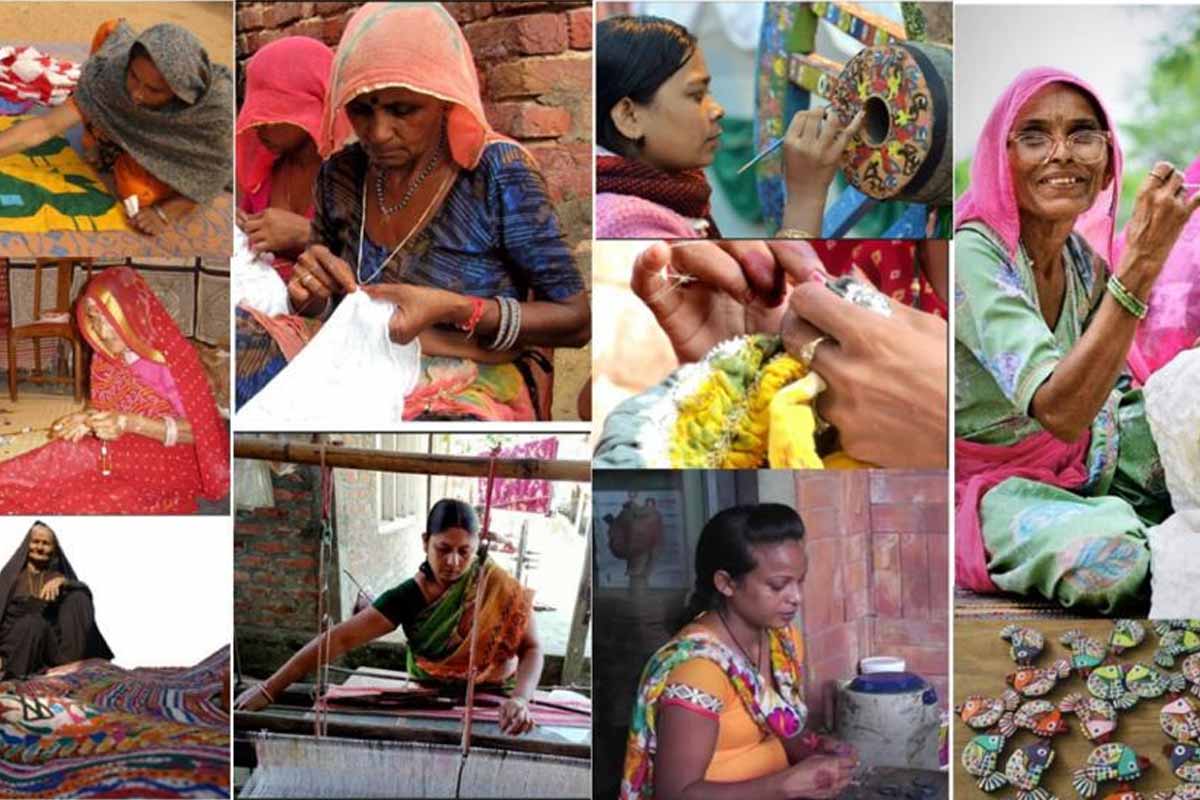
    As part of the company’s CSR initiative, the grant to Dastkar’s Artisan Support Fund will take care of financial needs towards wages and raw materials along with marketing assistance to craftswomen involved in varied arts and crafts, including mirror-work embroiderers, weavers, basket makers, fibre craft artisans, block printers, among others, it said.

    American Express said in a statement that craftswomen from Delhi, Haryana, Rajasthan, Uttar Pradesh, Uttarakhand, Assam, Gujarat, Himachal Pradesh, Madhya Pradesh, West Bengal, Maharashtra, Jammu and Kashmir, Tamil Nadu, Karnataka, Odisha, Jharkhand, Manipur, Telangana and Bihar will be covered for assistance.

    Speaking about the initiative, American Express Banking Corp India Senior Vice President and CEO Manoj Adlakha said: “Through our funding to Dastkar, we will support the sustenance of India’s craft community in the wake of the pandemic. We are proud to contribute towards mitigating the impact and conserving the country’s diverse cultural heritage…”

    Dastkar Chairperson and Founder member Laila Tyabji said, “Locked out of earnings and employment, these craftswomen require assistance – both financial and marketing. The corporate sector has a crucial role to play here. We thank American Express for recognizing the urgency of the situation and providing much-needed capital to help our women artisans recover from the devastating impacts of the pandemic and rebuild their livelihood.”

  • Reliance Foundation to partner W-GDP, USAID to bridge gender digital divide in India

    Reliance Foundation to partner W-GDP, USAID to bridge gender digital divide in India

    Reliance Foundation, the CSR arm of Reliance Industries Ltd, today said it has forged a new partnership with US Agency for International Development and W-GDP to bridge the gender digital divide in India. The partnership was announced

    Reliance Foundation, the CSR arm of Reliance Industries Ltd, today said it has forged a new partnership with US Agency for International Development and W-GDP to bridge the gender digital divide in India.

    The partnership was announced at a Women’s Global Development and Prosperity (W-GDP) event hosted by Deputy Secretary of State of the United States Stephen Biegun and with special guest, Ivanka Trump, Advisor to the President of the United States, and Deputy USAID Administrator Bonnie Glick, it said in a statement.

    Ivanka Trump said that the W-GDP Fund was created to source and scale the most innovative programmes to advance women’s economic empowerment.

    “We are leveraging the resources and expertise of the US government and the private sector so that activities have enduring, deep effects on the communities they reach,” she said.

    Whereas USAID Acting Administrator John Barsa said, “Global prosperity will remain out of reach if we exclude half the population. At the US Agency for International Development (USAID), we believe investment in women is key to unlocking human potential on a transformational scale.”

    The W-GDP Fund at USAID is financing innovative solutions to close the economic gap between women and men and help our partners advance on their Journeys to Self-Reliance, he said.

    At the event, through a virtual video message, Nita M Ambani, Founder and Chairperson, Reliance Foundation, said, “I am delighted and proud to announce that Reliance Foundation is joining forces with W-GDP, through our partnership with USAID. Together, we shall launch the W-GDP WomenConnect Challenge across India, in the fall of 2020. At the heart of this partnership, is our shared goal to help bridge both the gender divide and the digital divide in India.”

    The W-GDP Women’s Connect Challenge (WCC) supports private sector-led approaches that close the gender digital divide, expands business opportunities, and empowers women. As part of programme, W-GDP will partner with the Reliance Foundation to create an India-specific expression of the WCC and incorporate the lessons of previous W-GDP WCC Rounds.

    This year Reliance Foundation is celebrating its 10th anniversary, and over the last decade has impacted the lives of 36 million Indians.

    “Together, Jio and Reliance Foundation will make a tremendous contribution to the W-GDP Initiative in India to help bridge the gender digital divide,” the statement added.

    In February 2019, the White House established the Women’s Global Development and Prosperity (W-GDP) Initiative, the first whole-of-government approach to women’s economic empowerment.

    W-GDP seeks to reach 50 million women in the developing world by 2025 by focusing on three pillars of women prospering in the workforce, women succeeding as entrepreneurs, and women enabled in the economy.

    In its first year alone, W-GDP programs reached 12 million women across the globe. It leverages a new innovative fund, scaling private-public partnerships that address the three pillars.

  • RBL Bank helps low-income women in making face masks; earning livelihood

    RBL Bank helps low-income women in making face masks; earning livelihood

    Private lender RBL Bank has repurposed one of its CSR programmes under which aspiring low-income women entrepreneurs from Maharashtra and West Bengal were trained to manufacture 70,000 face masks which gave them a meaningful work and much needed economic

    Private lender RBL Bank has repurposed one of its CSR programmes under which aspiring low-income women entrepreneurs from Maharashtra and West Bengal were trained to manufacture 70,000 face masks which gave them a meaningful work and much needed economic support to their families during the COVID-19 crisis.

    Among other initiatives been undertaken as part of corporate social responsibility (CSR), the bank provided food relief to 1500 underprivileged families in Mumbai, medical devices to an hospital, laptops and tablets to school children of low income families for e-learning besides supporting migrant labourers, it added.

    In a statement, RBL Bank Human Resources, CSR and Internal Branding Head Shanta Vallury Gandhi said the bank enabled re-purposing of a CSR program managed by the NGO Natarajan Education Society (NES) in Pune (Maharasthra), that gave astounding results.

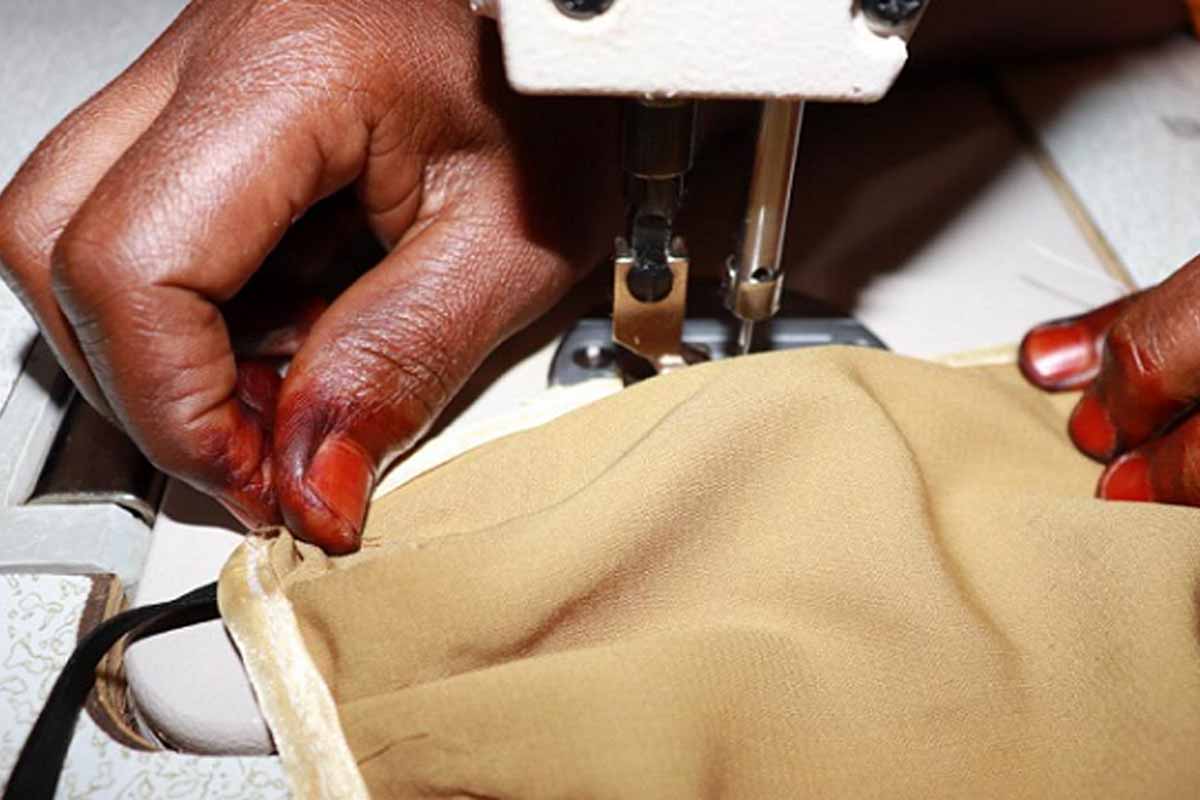
    NES trains women on tailoring and fashion designing to help them set up small business and self-help groups. But the bank gave an opportunity to these women to manufacture three ply cloth mask for distribution to front-line workers, business correspondents and branch staff and customers.

    “In a short duration of over two months, these women beneficiaries manufactured 60,000 masks distributed across the four zones in India,”the bank said.

    The women beneficiaries and NES in a short duration transited from classroom training to completely virtual environment in order to learn making high quality masks.

    Similarly in West Bengal, women Self Help Group (SHG) called Anandadhara manufactured 10,000 masks which were distributed locally in the East and North Eastern states.

    The bank has partnered with the West Bengal State Rural Livelihood Mission (WBSRLM) managed women SHG Anandadhara.

    “These activities hugely helped the women beneficiaries gain meaningful work and provided the much needed economic support that helped hike their overall family’s income, especially during the lockdown phase of COVID-19,” it added.

  • AirAsia earns high praise with its (RED) corporate social responsibility project on HIV/AIDS

    AirAsia earns high praise with its (RED) corporate social responsibility project on HIV/AIDS

    All things being equal. They are not. AIDS is the leading cause of death among young women worldwide. Yet it is treatable. Every two minutes, a teenager is infected with HIV. Yet it is preventable. Today 500 babies will be born with HIV. Same thing tomorrow. And the next day. AIDS no longer has

    “All things being equal. They are not. AIDS is the leading cause of death among young women worldwide. Yet it is treatable. Every two minutes, a teenager is infected with HIV. Yet it is preventable. Today 500 babies will be born with HIV. Same thing tomorrow. And the next day. AIDS no longer has to be a death sentence. One pill a day. For just 20 cents can stop mothers from passing on the virus to their babies. #EndAids.”

    The manifesto above comes from one of AirAsia’s global partners, (RED), a not-for-profit organisation based in the US, fighting for AIDS and HIV prevention around the world.

    Signing an agreement with the organisation at the end of 2018, AirAsia wanted to bring awareness to its message across the ASEAN region and develop products and activations to help raise and contribute funds to (RED) and the Global Fund.

    Using AirAsia’s reach and platform as an opportunity to raise funds for the cause, the company has dedicated the past year to designing key programmes; ensuring that all money raised goes towards supporting HIV/AIDS testing, counselling, treatment and prevention programmes.

    AirAsia’s year-long campaign included five potentially life-saving projects.

  • President Kovind lobbies for orphans and disabled

    President Kovind lobbies for orphans and disabled

    Emphasising that social welfare activities will generate enough goodwill for wealth creators among ordinary people, President Ram Nath Kovind on Tuesday suggested companies to look at ways to contribute more towards CSR spending for orphans and disabled people

    New Delhi, October 29: Emphasising that social welfare activities will generate enough goodwill for wealth creators among ordinary people, President Ram Nath Kovind on Tuesday suggested companies to look at ways to contribute more towards CSR spending for orphans and disabled people.

    “I sincerely hope that innovative solutions to persisting development challenges will emerge from the CSR activities,” he said at the first National Corporate Social Responsibility (CSR) awards function here.

    The CSR provisions under the Companies Act, 2013 came into force from April 1, 2014.

    Under the Act, a certain class of profitable companies are required to shell out at least two per cent of their three-year average annual net profit towards CSR activities in a particular financial year.

    Noting that the response of companies to the CSR framework has been highly commendable, the president said every fiscal since 2014-15, the corporate sector has set aside a total of more than Rs 10,000 crore for social welfare.

    Sharing his vision, Kovind said when it comes to helping those in need in the society, there are resources, the will and a framework too.

    “Whom shall we help most? I have in mind orphan children and Divyang (disabled people). While the government has done what it can to give them a helping hand, society and especially the corporate sector can still do more for them.

    “Can we plan in such a way that within a foreseeable future, every orphan child can get personal care? We can set 2030 as a deadline to ensure providing care to every child and reap the benefits of demographic advantage that we have,” he said.

    Suggesting “food for thought and action”, Kovind said that respect is received by donating wealth and not by storing wealth.

    According to him, it is equally important to internalise social welfare in the corporate culture.

    He asked the companies to motivate their employees and sensitise them to this higher calling in service of the marginalised sections of society.

    This single step would generate enough goodwill for wealth creators among ordinary people, he added.

    “The Companies Act was amended in 2013-14, making it mandatory for companies with a specified level of profit to spend two per cent of it on social welfare. I am told it is one of the world’s largest experiments in promoting CSR,” Kovind said.

    While noting that what is now called CSR is “very much in our DNA”, the president said the legacy was carried forward by entrepreneurs of early industrialism.

    “Illustrious business families like Tata, Birla and Bajaj and many others associated with our freedom struggle were sensitive to their social responsibilities. Mahatma Gandhi developed the principle of trusteeship, not only from his deep understanding of our various religious traditions but also based on the generosity of industrialists associated with him,” he added.

    From now onwards, the National CSR awards — instituted by the Ministry of Corporate Affairs — would be conferred every year on October 2, the birth anniversary of Mahatma Gandhi.

  • ChildFund and NBFC Grameen float bonds for women empowerment

    ChildFund and NBFC Grameen float bonds for women empowerment

    ChildFund India and NBFC Grameen Impact Investments India have launched bond’s to promote women empowerment in Maharashtra and Madhya Pradesh. This is the world’s first domestically funded Sustainable Development Goals (SDG Bond), ChildFund India has said

    ChildFund India and NBFC Grameen Impact Investments India have launched bond’s to promote women empowerment in Maharashtra and Madhya Pradesh.

    This is the world’s first domestically funded Sustainable Development Goals (SDG Bond), ChildFund India has said.

    The Women Holistic Empowerment and Enhanced Livelihood (WHEEL) Impact Bond will help 2000 tribal women in these two states.

    The bond seeks to help these women become self-reliant by providing training of poultry business. It aims to achieve an annual income of Rs 30,000 for these women through this intervention.

    ChildFund will implement this project by utilising Rs 7.5 crore fund committed by Grameen Impact.

    “ChildFund is indeed privileged and proud to launch the first domestically funded SDG Bond focused on women empowerment and livelihood. I am grateful to Grameen Impact for its partnership and resources that they bring to the table,” said Neelam Makhijani, CEO &Country Director, ChildFund India.

    Royston Braganza, CEO of Grameen Impact, said “It is estimated that over $30 trillion is needed to meet the global SDGs target. We believe this can only happen when the government, corporate funding, capital markets and philanthropy join hands. The world is looking at India which is now a global leader in social innovation and impact investing. We at Grameen Impact are delighted to come up with an innovative financing instrument, focused on the SDGs, which uniquely combines impact investing, CSR and social enterprises.”

    ChildFund India is a part of ChildFund International – a child protection and development organization working in 25 countries and annually assisting around 18 million children, youth and their families globally.

    For over 6 decades, ChildFund India has been working with underprivileged children, youth and families from the most remote and extremely backward areas.

    ChildFund India annually reaches nearly 3 million children, youth, and their families across 15 States through its long-term programs by investing nearly 60-70 crore per annum.

    Grameen Impact India is an RBI registered NBFC focused on lending to enterprises engaged in the social sector.

  • PI Industries pitches to help boost Sustainable Agricultural Practises

    PI Industries pitches to help boost Sustainable Agricultural Practises

    Innovative Financial Advisors Private Limited (Fiinovation) along with PI Industries, a leading Agri-sciences based company, and Harsha Trust, a not-for-profit organisation has extended their CSR intervention for another two years in Rayagada district in Odisha

    Innovative Financial Advisors Private Limited (Fiinovation) along with PI Industries, a leading Agri-sciences based company, and Harsha Trust, a not-for-profit organisation has extended their CSR intervention for another two years in Rayagada district in Odisha. Began in 2017, the intervention aims at enhancing agri-based farm income of small and marginal farmers by adopting Good Agricultural Practises (GAP) and market-led interventions. The project has till date benefitted 1300 farmers from forty-five villages of Rayagada district.

    Based on a comprehensive impact assessment conducted by Fiinovation, achieving sustainability becomes the focal point of the project extension. As part of the extension, two Farmer Producer Organisations (FPO) will be set up in the targeted two blocks of Kalyansingh and Bissam Cuttack of Rayagada district. These FPOs will ensure integration of small farmers in the agricultural value chain by training them on ways to increase crop productivity in a sustainable manner and by adopting and promoting usage of good quality inputs and services.

    Speaking on the occasion, Dr. Soumitro Chakraborty, CEO Fiinovation said, “Small producers do not have the large marketable surplus individually (both inputs and produce) to get the benefit of economies of scale. The planned FPOs in these areas will provide the necessary inputs to the members and also serve as knowledge delivery institutions for the farmers.”