Category: Health

  • Toyota Kirloskar’s CSR hygiene programme did what Swachh Bharat couldn’t

    Toyota Kirloskar’s CSR hygiene programme did what Swachh Bharat couldn’t

    When Toyota Kirloskar Motor (TKM) built toilets in Karnataka village schools nearly a decade ago, it discovered a problem it had not anticipated: nobody was using them.

    Root cause analysis revealed why communities held a deeply ingrained belief that an in-compound toilet was unclean. Going outdoors, they maintained, was the healthier option.

    The finding prompted TKM to stop further construction and redirect its corporate social responsibility effort toward behavioural change, launching what would become the ABCD — A Behavioural Change Demonstration — programme in 2015-16.

    The initiative has since reached 6,69,322 students, teachers and community members across 1,300 government schools in Karnataka and drawn recognition from Harvard Business School, which has featured it as a case study.

    The programme’s early breakthrough came from an unexpected quarter, TKM Country Head and Executive Vice President (corporate affairs and governance) Vikram Gulati told PTI.

    In one Ramanagara village, two girls aged approximately 11 and 12 organised a classmate hunger strike, refusing to eat until their families built home toilets. The strike succeeded.

    “This actually led to the first breakthrough,” Gulati said.

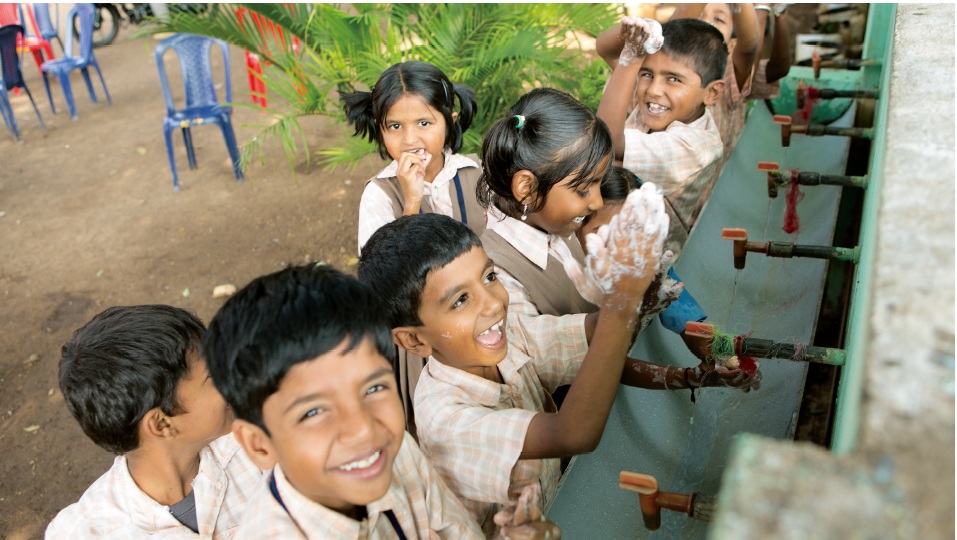
    The programme trained children in handwashing technique, toilet use and personal hygiene, positioning them as agents of behavioural change within their households and wider communities. Schools competed on hygiene standards. Children carried lessons home. The ripple effect — by design — travelled from classroom to household to community.

    When the programme expanded to Raichur, one of India’s government-designated Aspirational Districts, the company said a baseline survey across 500 schools in December 2023 exposed how deep the crisis ran.

    Only 48 per cent of required toilets existed. Of those, just 20 per cent were usable. Twelve per cent of schools lacked a single functional handwashing unit. Ninety per cent of students depended on open tap water. One in four children still practised open defecation.

    At home, the picture was no better: 44 per cent of students had no toilet at all.

    India’s Swachh Bharat, or Clean India, Mission has constructed tens of millions of toilets since its launch in 2014 under Prime Minister Narendra Modi. Independent researchers and government field assessments have repeatedly flagged the gap between construction targets and actual usage, citing behavioural barriers, poor maintenance and water scarcity as persistent obstacles.

    Over two years of implementation in Raichur and neighbouring Lingasuguru, toilet usage among students rose from 76 per cent to 95 per cent, according to TKM data.

    Handwashing compliance increased from 20.5 per cent to 100 per cent.

    Seventy-five toilets and 30 urinals were constructed. Fifty-eight handwash taps were installed or repaired. Twenty-eight schools received safe drinking water access. Menstrual hygiene sessions were conducted for 3,546 adolescent girls.

    At the community level, 1,382 parents were motivated to construct home toilets during the programme period; 38 completed construction.

    Harvard Business School has recognised ABCD as a case study. The Ivey Business School has published it — rare international acknowledgment for a sanitation initiative rooted in rural India, the TKM Said.

    The ABCD programme sits within a broader corporate social responsibility architecture that TKM has been expanding rapidly.

    Since 2001, the company’s CSR work has spanned education, health, environment, skill development, road safety and disaster management, guided by what it describes as a “Child to Community” approach. TKM spent Rs. 104.7 crore on CSR activities in FY 2025-26, reflecting the scale of its social investment commitments.

    In the 2025-26 financial year, TKM significantly widened its geographic footprint, extending its reach from communities around its manufacturing base to 12 states — among them Uttarakhand, Nagaland, Andhra Pradesh, Tamil Nadu, West Bengal and Odisha.

    The company plans to expand further to 22 states in 2026-27, framing the ambition under a stated vision of “Grow India, Grow with India.”

    “TKM is strengthening health infrastructure through preventive and curative interventions, enhancing the quality of education, and improving employability,” Gulati said, describing the overall mission as creating “Mass Happiness for All.”

    The Raichur intervention is ongoing. The earlier Ramanagara phase has stabilised, he added.

    Source: PTI
  • Syngenta India sponsors 650 motorised tricycles to empower specially abled citizens in Madhya Pradesh

    Syngenta India sponsors 650 motorised tricycles to empower specially abled citizens in Madhya Pradesh

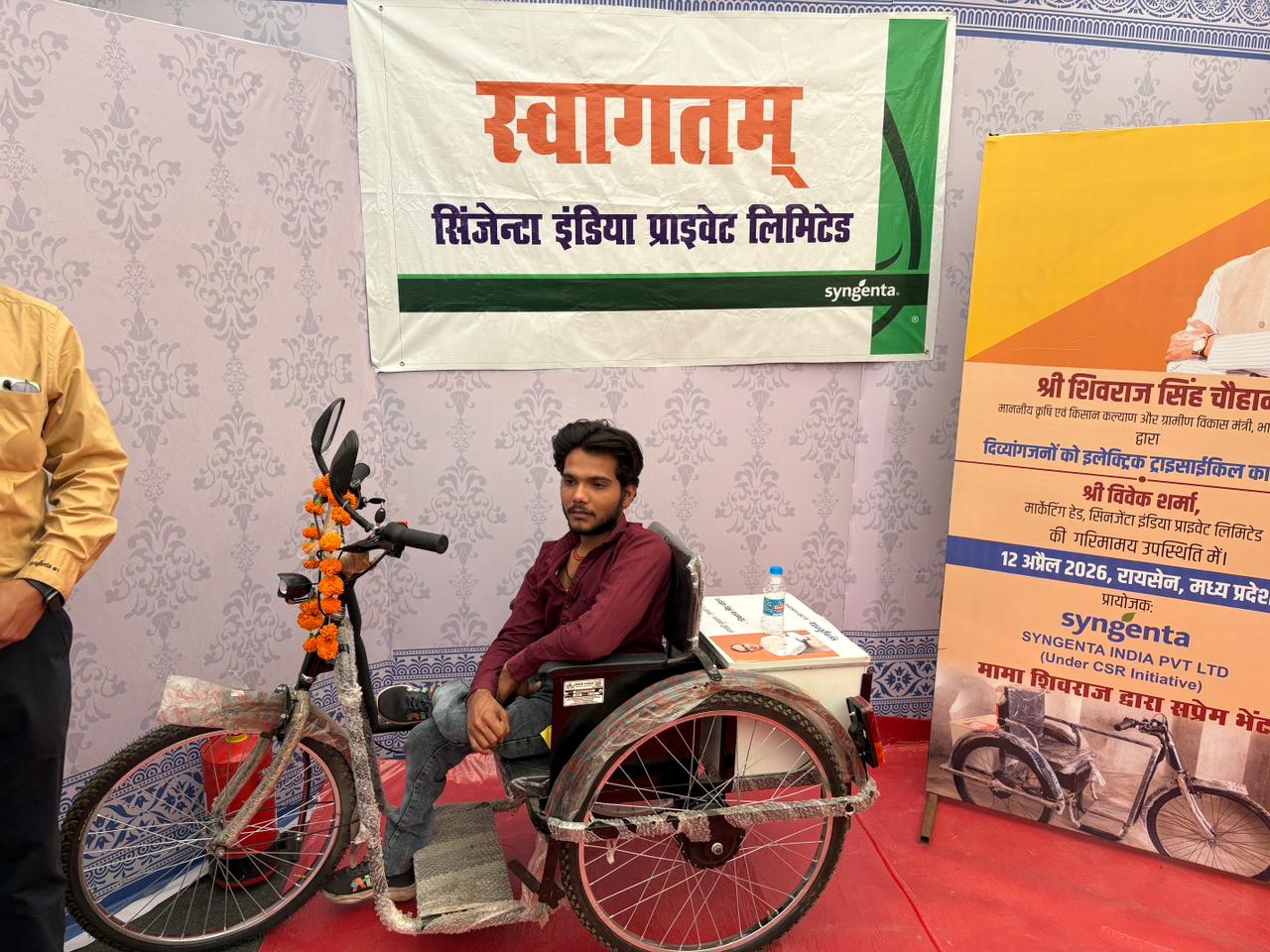
    Agro-innovation company Syngenta India has launched what it called a first-of-its-kind corporate social responsibility initiative, committing to sponsor 650 motorised tricycles for specially abled individuals in Madhya Pradesh, in a move that links agricultural enterprise with disability inclusion.

    The first batch of vehicles was handed over on Sunday by Union Agriculture Minister Shivraj Singh Chouhan at the Unnat Krishi Mahotsav 2026, an agriculture exhibition and conference held in Raisen, Madhya Pradesh, on April 12.

    “Empowering them with mobility is a critical step towards ensuring dignity, inclusion, and self-reliance,” Chouhan said, adding that the government remained committed to addressing the needs of marginalised communities, including the Divyangjan — a Hindi term for persons with disabilities. He singled out the Vidisha region, his parliamentary constituency, as a focus area for broader mobility initiatives.

    Chouhan framed the distribution of motorised tricycles not merely as a mobility intervention but as a pathway to economic participation, saying recipients could use the vehicles as livelihood tools and engage in local rural economies.

    Vivek Sharma, officiating Managing Director and Head of Marketing at Syngenta India, said the initiative was anchored in the company’s sustainability priorities, integrating social inclusion with agricultural advancement. He said the programme aimed to support last-mile connectivity, on-farm engagement and participation in rural enterprises across the agricultural value chain.

    Sharma said Syngenta planned to complement the mobility support with skill development and improved market access, with the stated aim of enabling “long-term transformation at the grassroots.”

    Syngenta India has operated in Madhya Pradesh through several community development programmes, including I RISE, a rural skilling initiative; I CLEAN, a market-access and hygiene awareness programme; and I SAFE, which promotes responsible use of agricultural inputs. At the Raisen exhibition, the company showcased new products and technologies for farmers.

  • HCLFoundation boosts pediatric heart care in UP

    HCLFoundation boosts pediatric heart care in UP

    HCLFoundation, the corporate social responsibility arm of Indian technology giant HCLTech, on Tuesday donated a suite of advanced intensive care equipment to the Saloni Heart Center at Sanjay Gandhi Postgraduate Institute of Medical Sciences (SGPGIMS) in Lucknow — marking a breakthrough in pediatric heart care access for millions of children across Uttar Pradesh.

    Uttar Pradesh records an estimated 75,000 congenital heart disease (CHD) births annually, yet the state until recently lacked a dedicated pediatric cardiac facility. The Saloni Heart Center, established within SGPGIMS as Uttar Pradesh’s first such institution, aims to address that critical gap — and Monday’s donation directly strengthens its post-operative and neonatal intensive care capabilities.

    Life-Saving Equipment Delivered

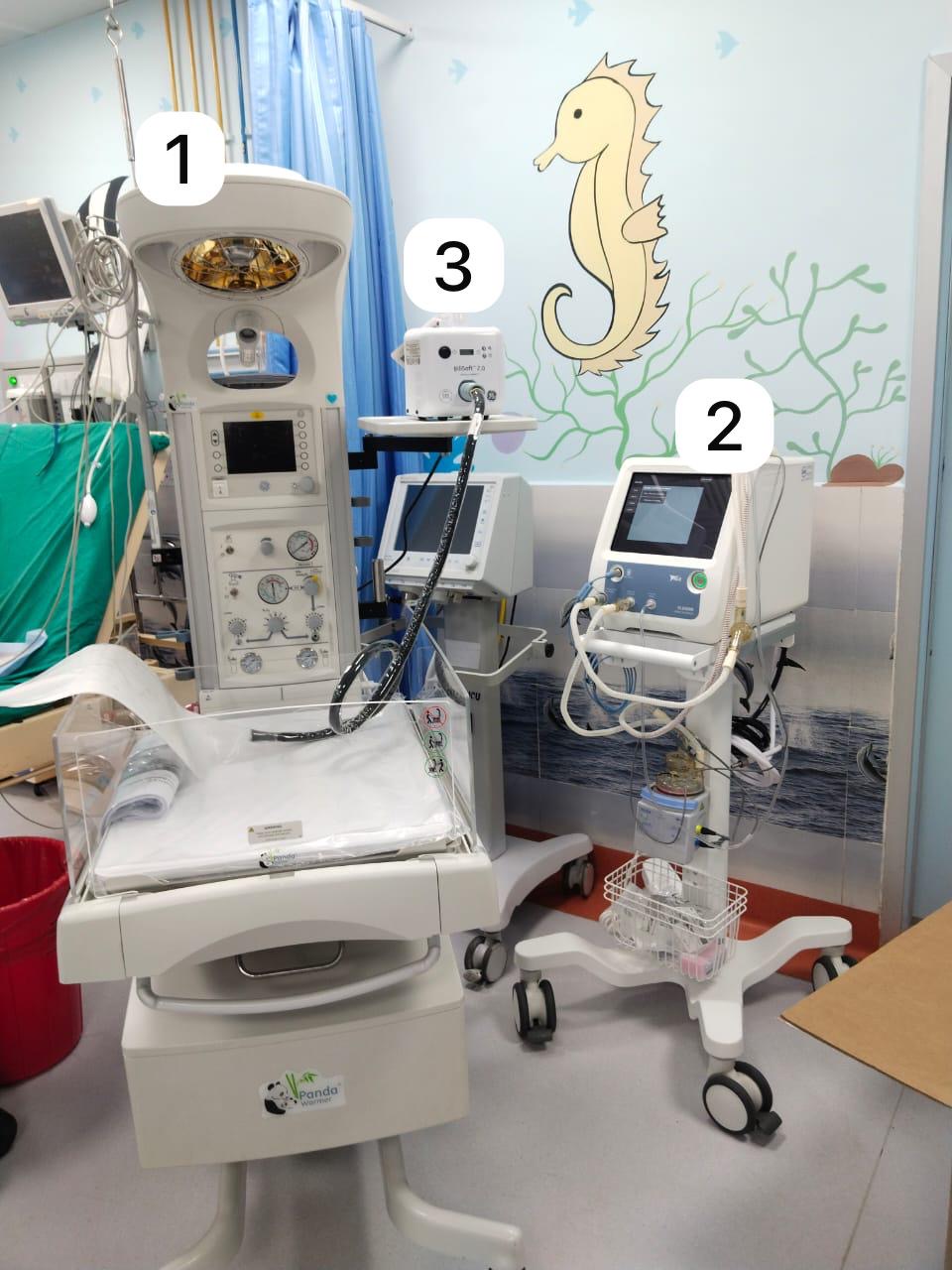
    The donated equipment includes a Panda ResusView Warmer with Resuscitation Trolley to ensure safe thermal regulation and integrated resuscitation support during critical cardiac episodes; an SLE 6000 Paediatric Neonatal Ventilator, a high-precision device designed for newborns and infants requiring controlled respiratory support; and a GE Bilisoft Fibre Optic Phototherapy System for treating neonatal jaundice — a complication particularly hazardous for CHD infants who cannot be routinely transferred to other wards.

    The initiative was attended by senior government officials including Shri Amit Kumar Ghosh, IAS, Additional Chief Secretary for Medical Health and Family Welfare, Government of Uttar Pradesh, and Awanish Kumar Avasthi, IAS, Senior Advisor to the Chief Minister of Uttar Pradesh.

    Also present were Prof. Radha K Dhiman, Director, SGPGIMS; Prof. S.K. Agarwal, Head, Cardiovascular & Thoracic Surgery, SGPGIMS; Shri Himanshu Seth, Executive Chairman, Saloni Heart Foundation; and Rishi Kumar, Senior Vice President, HCLTech.

  • Reckitt Transforms India’s Sanitation Economy, Trains 1.25 Lakh Workers as Entrepreneurs

    Reckitt Transforms India’s Sanitation Economy, Trains 1.25 Lakh Workers as Entrepreneurs

    Reckitt, the British consumer goods company, is pressing forward with a nationwide campaign to build a formal sanitation economy in India by converting informal waste handlers into skilled micro-entrepreneurs, overhauling school sanitation infrastructure, and commissioning the country’s first scientific study of life expectancy among sanitation workers — a group whose average lifespan trails the national mean by nearly 30 years.

    WORKFORCE TRANSFORMATION

    The company’s Harpic World Toilet College (HWTC), operated in partnership with the World Toilet Organisation and Jagran Pehel, has trained more than 1.25 lakh sanitation workers since its launch, with women accounting for over 45 percent of all trainees. Graduates are equipped to operate mechanised cleaning units, manage school sanitation services, maintain urban drains, and run facility-care operations as independent contractors.

    An independent social return on investment assessment found that every rupee invested in the programme generates Rs 23.20 in social value — driven by gains in worker dignity, safer conditions, and improved financial and health resilience for workers and their families.

    “India has made extraordinary progress in building toilets, but true sanitation progress must also mean longer and safer lives for the people who maintain them.” said Gaurav Jain, Executive Vice President, South Asia, Reckitt

    POWER OF 8: SCHOOL SANITATION REFORM

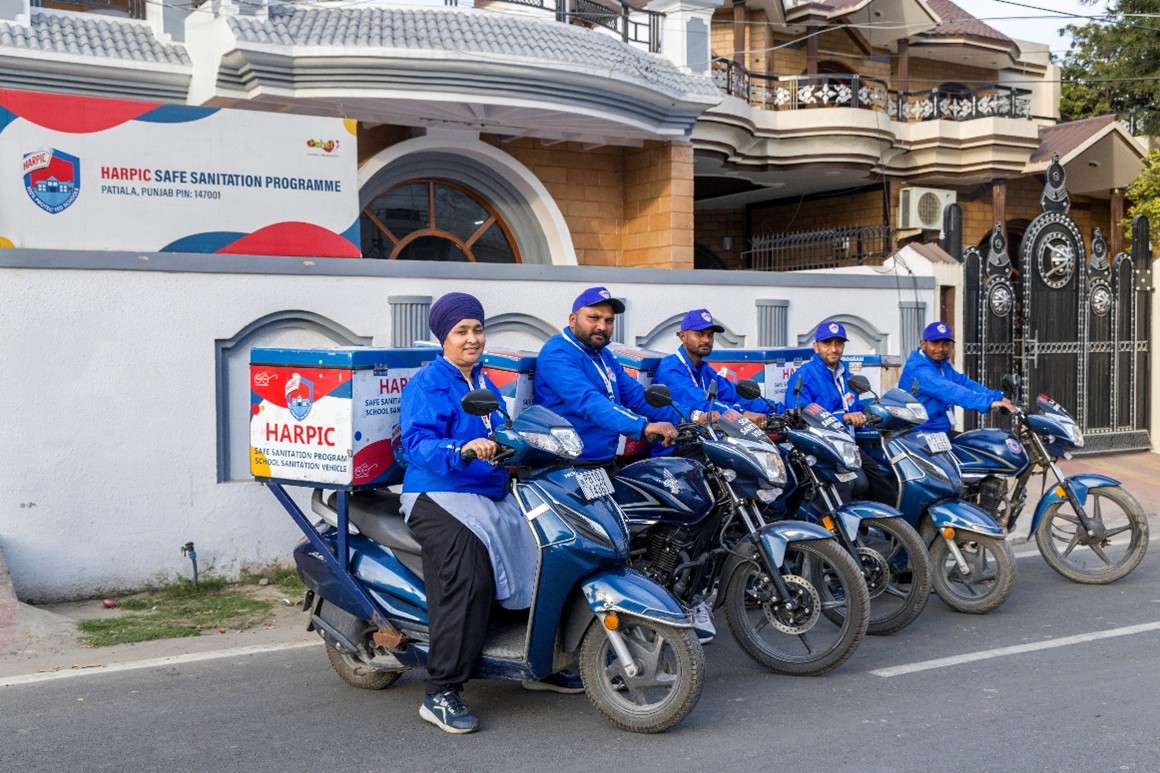
    Reckitt’s Harpic Safe Sanitation Programme deploys what it calls the “Power of 8” model — an eight-element operational framework designed to guarantee hygiene quality and financial accountability across school sanitation systems.

    The framework bundles assured funding, scheduled cleaning cycles, trained HWTC manpower, professional equipment, supervisory oversight, consumable supplies, drain maintenance and de-clogging, and live digital tracking into a single auditable service package.

    The model is intended to turn sanitation delivery into an enterprise-driven ecosystem, giving HWTC graduates a structured route to operate as service providers and contractors at scale. Behavioural change components — muppet-led sessions, storybooks, pop-up installations, and wall art co-created with Sesame Workshop India — are embedded in the curriculum to establish hygiene habits among schoolchildren.

    LIFE-EXPECTANCY EVIDENCE GAP

    Despite the scale of India’s sanitation workforce, no nationally representative, occupation-linked mortality dataset exists for the sector. Reckitt says the absence of such data leaves policymakers without the evidence needed to design effective mechanisation mandates, personal protective equipment requirements, or compensation frameworks.

    The company is funding what it describes as India’s first comprehensive life-expectancy assessment for sanitation workers, aiming to quantify survival risks from toxic gas exposure, infections, musculoskeletal injury, and socio-economic disadvantage. It says the findings are intended to feed directly into national sanitation economy planning.

    Reckitt has also sought to raise public recognition of sanitation workers. To mark the 25th anniversary of World Toilet Day, the company facilitated the release of commemorative postage stamps honouring the workforce.

    EXPANSION TARGETS

    Reckitt says it plans to extend the Power of 8 framework across additional Indian states, deepen enterprise development through HWTC, and ultimately reach 70 percent of India’s sanitation worker cohort. It describes the combined push — entrepreneurship training, systemic school reform, national recognition and life-expectancy research — as a unified strategy to create a sanitation economy “where every worker can live a longer, healthier and dignified life.”

    India’s Swachh Bharat Mission has overseen the construction of more than 100 million toilets since 2014, a transformation widely credited with expanding sanitation access. However, critics and public-health researchers have long argued that the programme’s focus on infrastructure has not been matched by investment in the workforce that maintains it.

  • Ambuja Foundation leads breast cancer awareness drive in Gujarat

    Ambuja Foundation leads breast cancer awareness drive in Gujarat

    Ambuja Foundation, backed by Ambuja Cements, hosted a high-impact breast cancer awareness and training camp in Kodinar, Gir Somnath, Gujarat.

    The event was organised with the Association of Breast Surgery UK (ABS), Association of Breast Surgeons of India (ABSI), Gir Somnath District Health Department, and Gujarat Medical Council.

    Dignitaries included Nilesh Jajadia, IPS (IGP Junagadh), representatives from Adani Cements and Ambuja Foundation, senior oncologists from Saurashtra, and health officials.

    Building on earlier camps in Chandrapur and Bathinda, the programme has so far reached: 6,000 women, conducted 3,700 clinical breast exams, and identified & referred 17 high-risk cases.

    Over three days, international and national experts from ABS and ABSI trained 70 plus doctors, 200 plus Community Health Officers (CHOs) and ASHAs in self-breast examination (with prosthesis-based lump detection practice), early diagnosis, and treatment protocols. On day three, 130 plus women received examinations and counselling, while trainees practised under supervision.

    Gujarat has reported – 54,000 breast cancer cases in the last five years; cervical and ovarian cancers also remain high in Saurashtra, especially among women 18–30.

    Since launching NCD cancer interventions in 2023, Ambuja Foundation has expanded evidence-based awareness and capacity building.

    “Since 2023 we’ve worked closely with ABS, ABSI and Gujarat Medical Council experts. We aim to scale this life-saving programme across more rural locations,” said Pearl Tiwari, CEO, Ambuja Foundation.

    “This partnership with Ambuja Foundation has significantly expanded our breast cancer awareness reach in rural India. We remain committed to sharing expertise with frontline health workers,” said Dr. Leena Chagla, FRCS, Past President-Elect, ABS UK.

    “It has been inspiring to witness Ambuja Foundation’s commitment first-hand. With Dr. D G Vijay, ABSI President, joining us in Gujarat, we have strengthened the foundation for long-term impact,” added Dr. Sarah Downey, President, ABS UK.

    Dr. D G Vijay, President, ABSI, affirmed: “As a Gujarati and ABSI President, I am fully committed to sustaining and expanding this vital initiative.”

  • SOS India holds free eye check-up camp for 137 kids

    SOS India holds free eye check-up camp for 137 kids

    SOS Children’s Villages India, in collaboration with Dr Agarwals Eye Hospital, conducted a one-day free eye check-up camp that screened 137 children and caregivers from its Family Like Care and Family Strengthening Programmes.

    In an era when myopia (near-sightedness) and hypermetropia (far-sightedness) are increasingly prevalent among children in India—with studies showing myopia rates rising with age and affecting learning—early detection is essential to prevent issues like reduced concentration and impaired academic performance.

    Vulnerable children often face limited access to basic healthcare, including eye screenings, making initiatives like this vital for their development.

    Sumanta Kar, CEO of SOS Children’s Villages India, emphasized the importance of the partnership: “Children today are more vulnerable to eye-related issues, and at their young age, they often struggle to articulate challenges they face. Our core commitment is the overall well-being of children and mothers in our care. This collaboration with Dr Agarwals Eye Hospital has enabled timely screening and preventive care, helping participants address vision concerns effectively.”

    The transformative camp focused on early diagnosis of conditions such as weak eyesight, colour blindness, and lazy eye (amblyopia). A team of qualified doctors and staff from Dr Agarwals Eye Hospital provided screenings, basic consultations, and preventive guidance to children and caregivers. For cases requiring further treatment, recommendations for additional diagnosis were offered.

    Dr Karthikeya, Senior Consultant – Vitreoretina, Uvea & ROP at Dr Agarwals Eye Hospital, highlighted the impact: “Many eye problems in children remain unnoticed without regular screening. Early identification prevents these issues from hindering studies and daily activities. Through outreach camps like these, we deliver quality eye care to underserved children who might otherwise miss timely help.”

    This collaboration underscores the shared goal of both organizations to advance children’s healthcare, providing empowering basic medical services to support the holistic growth of vulnerable youth.

  • BrahMos CEO flags alarming digital dementia in youth

    BrahMos CEO flags alarming digital dementia in youth

    In an era of rapid technological advancement, the alarming rise in digital dependency among youngsters and teenagers is triggering serious psychological impacts, akin to symptoms of digital dementia – a term describing cognitive decline from excessive screen time, including memory loss, reduced attention span, and impaired focus.

    Dr Jaiteerth R. Joshi, Managing Director and CEO of BrahMos Aerospace, sounded this warning while inaugurating the fourth edition of Manappuram Foundation’s mental health awareness programme on digital dementia at ITC Kakatiya Hotel in Hyderabad.

    Dr Joshi stressed the urgent need to address these psychological consequences, emphasising that mental health protection and psychological safety must be given equal importance alongside technological progress.

    Leading the session was Dr Manoj Sharma, a renowned de-addiction expert on technology dependence and Professor at NIMHANS, Bengaluru. Dr Sharma detailed various mental ailments emerging from overdependence on digital devices and advocated for judicious use, including regular breaks to maintain health.

    The event, organised by Manappuram Foundation and supported by Manappuram Finance Ltd, received widespread appreciation.

    During the programme, V P Nandakumar, Chairman and Managing Director of Manappuram Finance Ltd, honoured Dr Joshi for his outstanding contributions to India’s defence technology sector.

    “Under Dr Joshi’s leadership, BrahMos Aerospace continues to achieve remarkable technological breakthroughs and global recognition,” Nandakumar noted.

    BrahMos, the India-Russia joint supersonic cruise missile, symbolises national technological excellence with its superior speed, precision, and multi-platform capabilities.

    Approximately 200 prominent business leaders and professionals attended. K M Asharaf, Senior PRO of Manappuram Finance, welcomed the guests, while Lion’s Club International leader Saju Antony Pathadan delivered the vote of thanks.

  • ACC Healthcare Outreach Transforms Life in Remote Tribal Village

    ACC Healthcare Outreach Transforms Life in Remote Tribal Village

    In the heart of a remote tribal hamlet in Gulitand village, Jharkhand where access to basic healthcare often feels like a distant dream, ACC—part of the diversified Adani Portfolio and India’s fastest-growing building materials powerhouse—is scripting stories of hope and renewal through its robust grassroots interventions.

    Community outreach efforts by ACC, in tandem with the Adani Foundation, have spotlighted the silent scourge of preventable blindness plaguing vulnerable families. Among those touched by this lifeline is 59-year-old Bhamuni Devi, whose world had faded into shadows due to untreated cataracts.

    Enter the unsung hero: a trained community volunteer, or “Sangini,” who became Bhamuni’s bridge to salvation. With unwavering support, the volunteer guided her through the process of securing an Ayushman Bharat card under the Pradhan Mantri Jan Arogya Yojana (PM-JAY), India’s flagship health assurance scheme. This paved the way for seamless connection to an empanelled hospital, where free cataract surgery awaited—treatment that was once an insurmountable barrier for her modest means.

    The procedure proved a resounding success, shattering the veil of darkness that had confined Bhamuni. Today, she navigates her daily chores with renewed vigor, from tending to her home to cherishing moments with loved ones. This transformation isn’t just about restored vision; it’s a profound reclaiming of confidence, self-reliance, and dignity.

    ACC’s commitment to such ACC healthcare outreach underscores a broader mission: bridging healthcare gaps in underserved corners of India. By empowering local volunteers and leveraging government schemes like PM-JAY, the initiative is not merely treating ailments but fostering resilient communities. As Bhamuni’s story illustrates, every intervention ripples outward, illuminating paths to a healthier, more equitable future.

    For more on ACC’s social impact, visit Adani Foundation. Learn about PM-JAY at official PM-JAY portal.

  • Amway India Fights Child Malnutrition in Delhi School

    Amway India Fights Child Malnutrition in Delhi School

    Amway India, in partnership with the Nourishing Schools Foundation, hosted interactive workshops on child malnutrition and hygiene for students at a low-cost private school in the capital on Thursday, advancing the fight against childhood malnutrition.

    The event, under Amway’s Power of 5 programme, involved volunteers preparing healthy meals like fruit salads and sprout chaat with the children, followed by painting sessions, drawing contests and role-playing exercises focused on combating child malnutrition through sanitation and balanced diets.

    “Every child deserves the foundation of good nutrition and the opportunity to grow strong and healthy for a better tomorrow,” Rajneesh Chopra, managing director of Amway India, said in a statement.

    He highlighted government initiatives like Poshan Abhiyaan and Mission Saksham Anganwadi, adding that the company aims to embed practical education against child malnutrition early through such activities.

    Archana Sinha, co-founder of Nourishing Schools Foundation, described the sessions as “fun and impactful,” saying they help children internalise health messages.

    “Our shared goal is to empower school children with knowledge that can transform their fight against child malnutrition and future,” she said.

    Launched in 2018, Power of 5 has reached more than 730,000 people across India, including over 100,000 children, by promoting awareness of micronutrients and healthy habits to tackle childhood malnutrition.

    Amway India’s corporate social responsibility efforts also include women’s empowerment programmes that have trained over 4,000 underprivileged women in skills for self-employment, and community projects such as water conservation in seven villages and five telemedicine centres serving 35,000 patients annually.

    The company has received awards including the Golden Peacock CSR Award and CSR Health Impact Award for its initiatives against child malnutrition since 2018.

  • HCL Foundation donates medical equipment to UP hospital

    HCL Foundation donates medical equipment to UP hospital

    HCL Foundation, the corporate social responsibility arm of technology firm HCLTech, has donated advanced medical equipment to a government hospital in Uttar Pradesh state, the foundation said on Tuesday, as part of efforts to improve healthcare infrastructure in the region.

    HCL Foundation provided the equipment to the Government Institute of Medical Sciences (GIMS) in Greater Noida, including a 3 Tesla high energy inductive therapy system for deep tissue healing, an intermittent compression therapy unit, a computerized balance evaluation system, a high power laser therapy unit, and a DEXA scan machine for bone health assessment.

    The new equipment is expected to benefit more than 30,000 patients annually from Noida, Greater Noida, the Delhi National Capital Region and surrounding areas, HCL Foundation said.

    “At HCL Foundation, we believe that quality healthcare should be accessible to everyone,” said Dr Nidhi Pundhir, Senior Vice President for Global CSR at HCLTech and Director at HCL Foundation.

    The donation by HCL Foundation supports the Uttar Pradesh state government’s efforts to strengthen medical infrastructure and expand healthcare access in the region.

    Brig. (Dr.) Rakesh Gupta, Director of GIMS, said the support from HCL Foundation would “significantly strengthen” the institute’s healthcare infrastructure and patient care capacity.